RFK Jr. will be held accountable for the children who have died on his watch.
He has sowed lies and misinformation about lifesaving vaccines for far too long.
Families are paying a terrible price for his disastrous agenda.
Sens. Wyden and Alsobrooks are launching an investigation into whether RFK Jr. lied to Congress about his reason for a 2019 trip to Samoa after The Associated Press and The Guardian published documents in August refuting his testimony. https://t.co/X1CdkfFoRV
This is good news
@AnnieAndrewsMD is not only a fantastic children's doctor but a common sense centrist Democrat who understands that the extreme left of the party is NOT the future
She's gonna be a great Senator for South Carolina
@afshineemrani@POTUS@realDonaldTrump Well said. And I pray he will start a national campaign to stop this terrible measles outbreak to protect our country’s most vulnerable. But I don’t think he will do it.
The History of Reform Judaism
Reform Judaism is the story of Jews confronting modernity after the walls of the European ghettos began to fall. In the late eighteenth and early nineteenth centuries, emancipation promised legal equality and social acceptance. Many German Jews wanted to remain Jewish while fully joining the surrounding culture. They looked to the Enlightenment and the Haskalah for tools that would let them keep ethical monotheism and prophetic ideals without practices that set them apart from their neighbors.
The first concrete steps came from Israel Jacobson, a lay leader in Westphalia. In 1810 he held what is widely regarded as the first Reform service in a school chapel in Seesen. The liturgy was in German rather than Hebrew. An organ and choir accompanied the prayers. Confirmation ceremonies were introduced for both boys and girls. These changes spread. In 1818 the Hamburg Temple opened as the first permanent Reform congregation. Its founders deliberately called the building a temple rather than a synagogue. They omitted prayers for the restoration of sacrifices and for a return to Zion, signaling that they no longer awaited a messianic restoration of the ancient Temple in Jerusalem.
Intellectual leadership soon followed. Abraham Geiger argued that Judaism had always evolved and that historical study, not unchanging law, should guide its future. He saw the essence of the faith in monotheism and ethics. Samuel Holdheim pushed further, treating many traditional legal rules, including parts of marriage and divorce law, as obsolete once Jews lived under modern civil codes. Rabbinical conferences in Brunswick in 1844, Frankfurt in 1845, and Breslau in 1846 gave these ideas a more organized form and showed that Reform was becoming a distinct movement.
The movement found its strongest institutional home in the United States. Early American experiments appeared in Charleston, South Carolina, in the 1820s. Large numbers of German speaking Jews arrived in the mid nineteenth century. Isaac Mayer Wise, who reached America in 1846, became the central organizer. He published the prayer book Minhag America, helped create the Union of American Hebrew Congregations in 1873, founded Hebrew Union College in Cincinnati in 1875 to train rabbis for the American setting, and later established the Central Conference of American Rabbis.
Classical Reform received its clearest statement in the Pittsburgh Platform of 1885. The platform declared that Jews form a religious community rather than a nation. It rejected any expectation of a return to Palestine. It accepted as binding only the moral laws of the Mosaic legislation and discarded rituals, including dietary laws, that reformers judged incompatible with modern civilization. It stressed ethical monotheism, social justice, and harmony with science.
The twentieth century brought revision. The rise of antisemitism in Europe and the mass arrival of Eastern European Jews changed American Jewish life. In 1937 the Columbus Platform reaffirmed progressive principles while recognizing Jewish peoplehood and supporting the building of a Jewish homeland in Palestine. Later platforms continued to balance universal ethics with renewed attention to Hebrew, traditional practices, and particular Jewish identity.
Today Reform Judaism is the largest denomination among affiliated American Jews. Its institutions support hundreds of congregations, rabbinic training, youth education, and social action. The movement’s history remains one of continuous adaptation: an effort to keep Judaism intellectually coherent and practically viable for Jews who live fully inside modern societies.
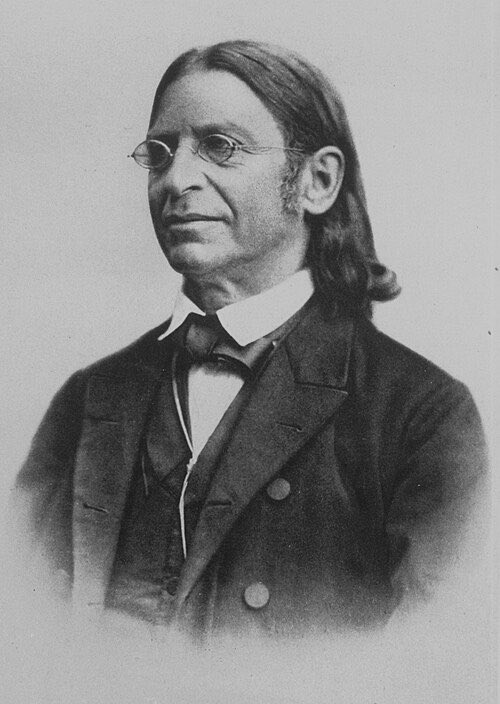
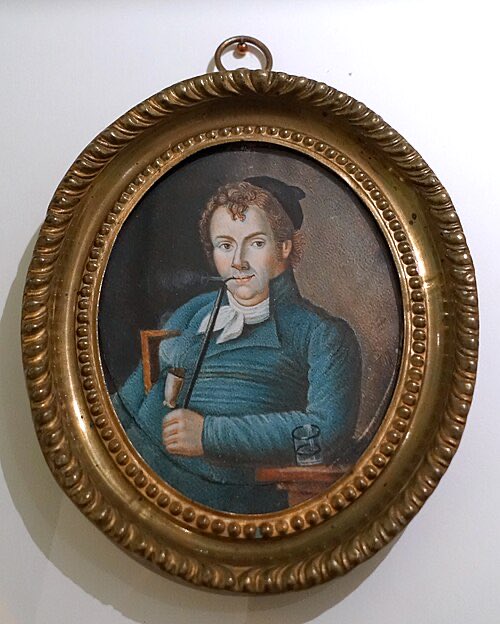
Israel Jacobson left, Abraham Geiger right. Temple Emmanuel NYC, a Reform Siddur. (prayer book).
Curious about Jewish history. Follow today.
Asking RFK Jr “tough questions” is no longer enough. The president should ask for his resignation. If that doesn’t happen, Congress should impeach the HHS Sec.