Read Gabbard's own words, the full DNI press release, and the primary documents yourself. Then decide who lied to you.
Our comprehensive analysis will follow later today.
https://t.co/5l49PrEc1x
I'm a cardiologist. Something just happened today that I genuinely did not see coming — and it could change the future of preventive medicine more than anything I've written about on this platform.
Midjourney — the AI company that became famous for generating images from text prompts — just announced a medical hardware division and unveiled a working prototype of a full-body scanner unlike anything that's ever existed.
It's called the Midjourney Scanner. And it works like this.
You step into a shallow pool of water. You stand on a platform that slowly descends — about two inches per second — through a ring containing roughly half a million tiny ultrasonic transducers, each the size of a grain of sand. Every one of them acts as both a speaker and a microphone, sending ultrasonic waves through your body from every angle and recording what comes back.
60 seconds later, you step out. The scan is done.
No radiation. No magnets. No claustrophobia. No IV contrast. Just sound, water, and an almost incomprehensible amount of computing power — roughly 2 petaflops processing 17 gigabytes per second of raw acoustic data — reconstructing a 3D map of your entire internal anatomy down to half a millimeter resolution.
Organs. Tissues. Blood vessels. Bones. Muscle. Fat distribution. All segmented by AI in real time.
As a cardiologist who has spent months writing about how the standard screening playbook misses the majority of future heart attacks — this is the technology I've been waiting for without knowing it existed.
Here's why this matters for the future of your heart.
Right now, getting a detailed look inside your cardiovascular system requires either a CT scan (radiation), an MRI (magnets, claustrophobia, 45-60 minutes, $1,000+), or a coronary CT angiogram (radiation, IV contrast, limited availability). These are powerful tools. I order them regularly and they save lives.
But they're reactive. You get them when something is already suspected. They're expensive. They're uncomfortable. And for most people, they happen once — maybe twice — in a lifetime.
Imagine instead: a 60-second scan with no radiation that you could repeat monthly or quarterly. Tracking cardiac structure over time. Watching body composition shift. Detecting changes in organ size, fluid distribution, or vascular architecture before symptoms ever develop. Building a longitudinal dataset of YOUR body that AI can analyze for patterns no single snapshot would reveal.
That's what Midjourney is building toward.
The company plans 50,000 scanners worldwide over six years, with capacity for a billion scans per month. The first location — the "Midjourney Spa" in San Francisco — opens at the end of 2027 with 10 scanners alongside saunas, cold plunges, and a gym. The scan costs a few dollars. The experience is designed to feel like wellness, not medicine.
The technology is built on Butterfly Network's ultrasound-on-chip platform — 40 modules per scanner — combined with Midjourney's own AI segmentation and reconstruction stack. David Holz, the founder, claims the system aims for image quality comparable to MRI in many aspects but at nearly 100x the speed with zero radiation.
Now the caveats — because I'm a physician and the caveats matter enormously.
This is a Gen 1 prototype. About a dozen people have been scanned so far. Current scan time is actually closer to 20 minutes, not 60 seconds — the system is bottlenecked by bandwidth and reconstruction algorithms. The 60-second target is aspirational for future hardware generations.
It is not FDA-cleared for diagnostic use. Midjourney is starting with body composition maps — a category below diagnostic imaging in the regulatory hierarchy. The path from "beautiful 3D body scans" to "clinically validated diagnostic tool that your cardiologist can act on" runs through years of clinical trials, comparative studies against MRI and CT gold standards, and FDA review.
No independent clinical validation has been published. The imaging claims come from Midjourney's own demonstrations. Comparative data against established modalities does not yet exist.
And the privacy implications of full-body internal scans at planetary scale — a billion scans per month — is a conversation that hasn't even started yet.
So I want to be precise. This is not ready for clinical medicine today. It may not be ready for years. Many ambitious medical hardware projects have failed in the gap between prototype and product.
But.
The fact that a working prototype exists — producing real segmented 3D anatomy from sound waves and compute alone — means the physics works. The engineering works. The question is no longer "is this possible" but "how fast can it be validated and scaled."
And if it is validated — if the resolution holds up against MRI, if the AI segmentation proves reliable, if the regulatory path clears — then what we're looking at is the most significant new imaging modality in 50 years.
For my entire career, preventive cardiology has been limited by the fact that seeing inside the body is expensive, slow, uncomfortable, and infrequent. We catch disease late because we image rarely. We image rarely because imaging is hard.
A 60-second, no-radiation, spa-based full-body scan that costs a few dollars would demolish every one of those barriers.
I've written about AI detecting inflamed arteries. About gene editing curing cholesterol. About GLP-1 drugs rewriting metabolic medicine. About cellular reprogramming reversing aging.
This is the missing piece: the ability to see inside every human body, routinely, safely, and affordably — so all of those interventions can be deployed before the disease arrives instead of after.
The company that taught AI to generate images from imagination just built a machine that generates images from the human body.
The future of medicine showed up today from the last place anyone expected.
@TonySeruga Prayers for your precious Yolanda's healing and for you too. I know all too well what being a care giver and cancer patient is like, both sides are extremely difficult! God's grace, mercy and miracles upon you all! 💜🙏💜
Your doctor will never tell you about Nattokinase.
But it dissolves clots, lowers blood pressure and a new study showed it shrank arterial plaque by 36%.
No med or statin does that.
Here are all its health benefits (& how to use it properly):🧵
Let me trace the timeline here because nobody's connecting it.
Step 1: Scrape the entire internet. Every book, every article, every conversation, every piece of art, every forum post. Do it without asking. Do it without paying.
Step 2: Train a model on all of it. Call it "artificial intelligence."
Step 3: Go to BlackRock's Infrastructure Summit and announce: "We see a future where intelligence is a utility, like electricity or water, and people buy it from us on a meter."
Step 3 is where you sell people's own knowledge back to them. On a meter.
They took the collective output of human thought, compressed it into a model, and now they want to charge you by the token to access a version of what you and everyone you know already created.
One Reddit user put it perfectly: "They stole all this data from us, the people, our life's work, creativity, art, by devouring the internet and blowing through all copyright laws. Now they want to sell it back to us in the form of a utility."
Imagine if someone photocopied every book in the public library, burned the library down, and then opened a subscription service for the copies.
That's the metered intelligence business model.
And they're pitching it to infrastructure investors as though they invented water.
Tomi Lahren just named the exact reason Gavin Newsom is paying 50 cents per diaper when Target charges 16 cents
— the $20 million contract has to launder the money through his wife’s nonprofit network. Eric Daugherty surfaced the segment and Steve Hilton ran the math.
Newsom’s office announced $20 million of California taxpayer money to send 100,000 babies 400 diapers each at 50 cents per diaper.
The funds are going to a Los Angeles nonprofit called Baby2Baby. Baby2Baby’s co-CEO Norah Weinstein also sits on the board of California Partners Project, the nonprofit run by Jennifer Siebel Newsom, the First Lady of California.
Tomi Lahren explained: “They have to launder the money through the nonprofit that is not only filled with Newsom’s wife’s pals but Democrat donor pals and Hollywood elites. Anytime you see nonprofit, you should be very, very skeptical. If they really wanted to help out mothers, they would do it in the most cost-effective way possible. They would find a way to give vouchers or coupons. But they had to do it through Baby2Baby, through their friends and their pals and through co-CEO Norah Weinstein who also serves on the board of Jennifer Newsom’s California Partners Project.”
This is the modern Democrat fundraising ecosystem in one transaction. The state writes a $20 million check that goes to a nonprofit whose co-CEO sits on the First Lady’s separate nonprofit. Mothers end up with the same diapers they could have bought at Target — at roughly 3x the unit cost.
The other roughly $14 million of markup disappears into salaries, overhead, and the political-donor network that powers California Democrats. Tomi Lahren just laid out the entire Newsom grift in 90 seconds — and the math was Steve Hilton’s.
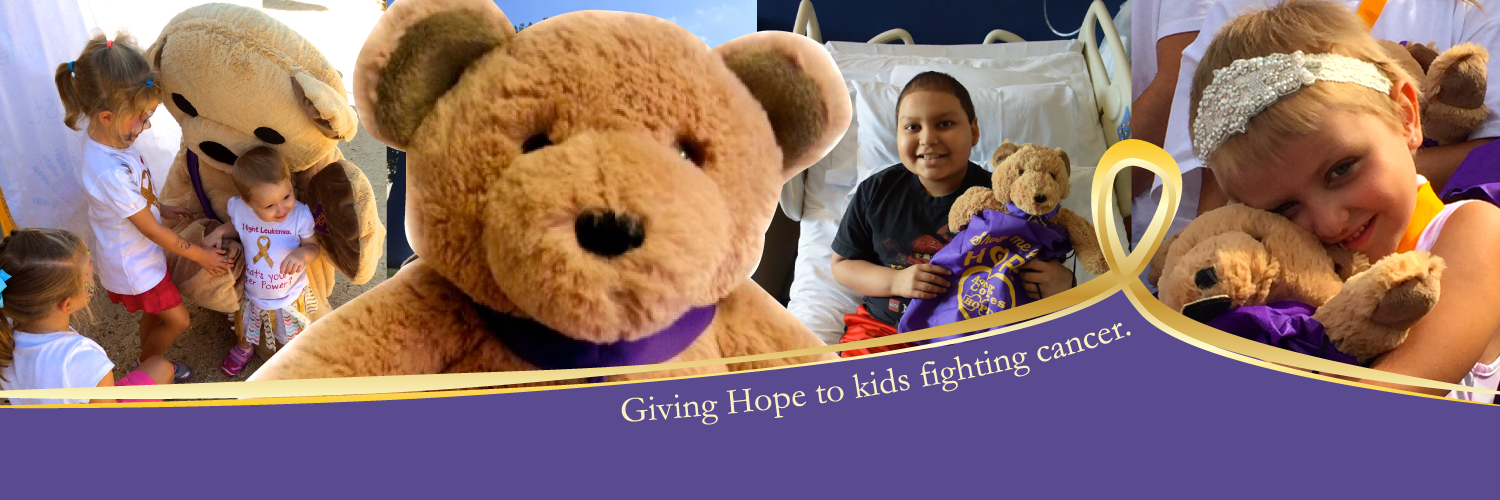
If you’ve ever wondered why #ChildhoodCancer parents post so relentlessly about this, it’s because we’ve lived through something truly devastating. We don’t want any other parent to ever experience the pain we endured. 💔
Most of us are broken in ways that never fully heal… yet that pain has given us an unwavering passion to support & help every family walking this same road. We speak up so others don’t have to walk it alone. 💛
This precious 2 year old boy battling aggressive liver cancer is now cancer free, thanks to a lifesaving liver transplant from his aunt. ❤️
Their story is a powerful reminder of how #LivingDonor donations can save lives. ❤️
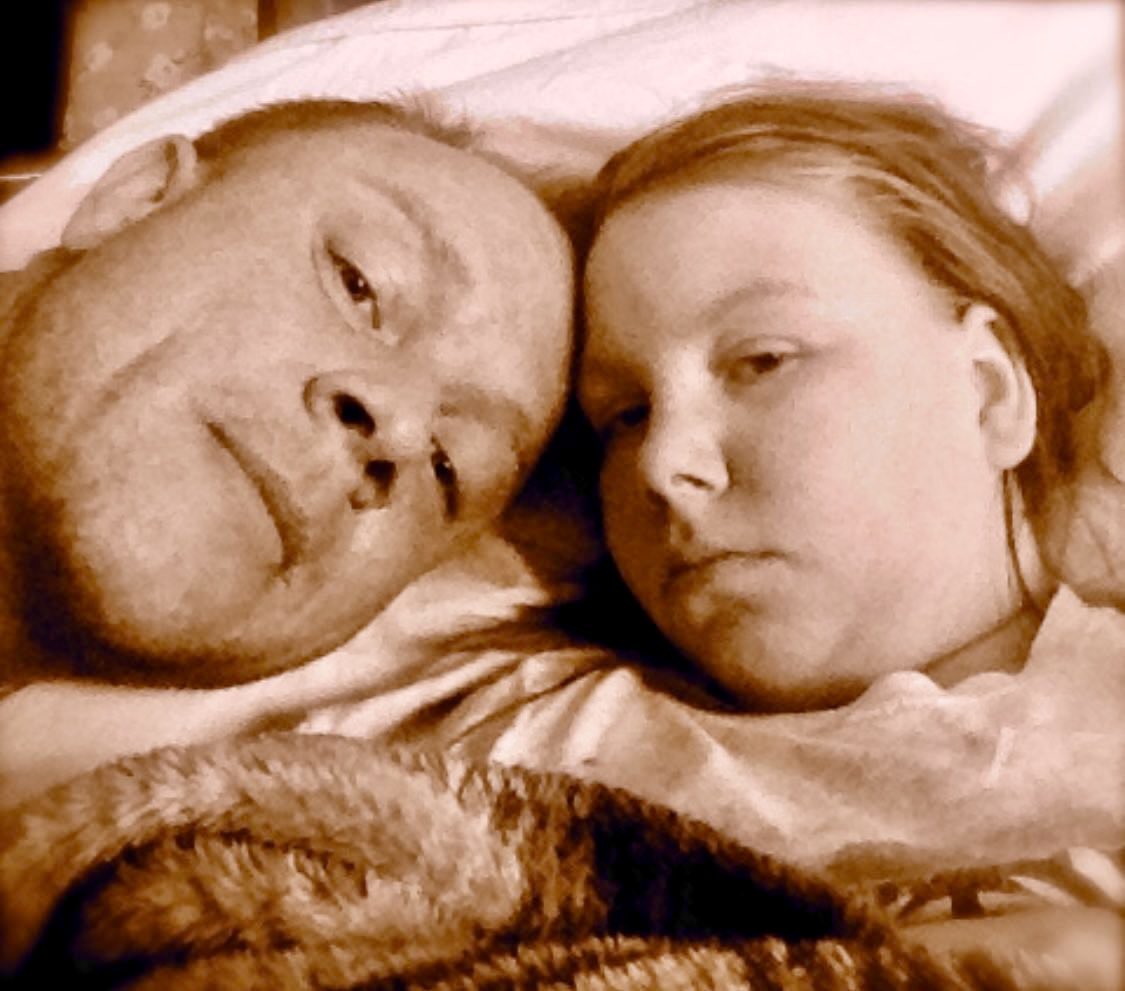
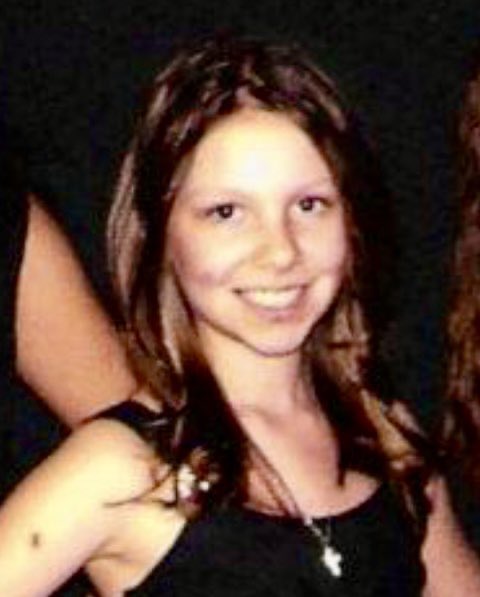
I joined X (Twitter) shortly after losing my 13 year old daughter, Ashley, to brain cancer. It’s become my lifeline, a place to amplify our #ChildhoodCancer community’s voice & connect with incredible friends who inspire me to keep fighting.
My deepest hope is to awaken the world to the heartbreaking toll this disease takes on entire families & to rally the urgent support our brave Children have been denied for far too long.
Your follows & reposts are so appreciated that will help us carry our message even further.
THANK YOU. ❤️