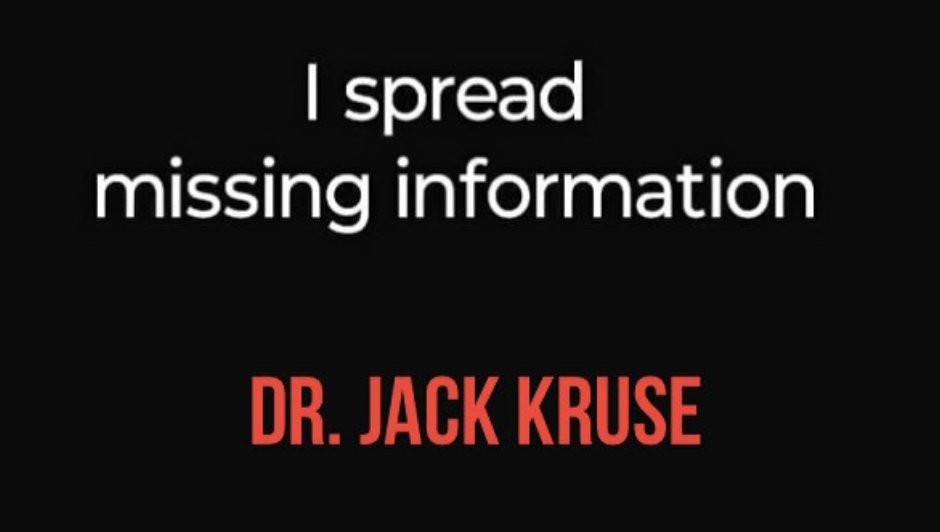
He is telling you he wants the base layer ossified so it becomes digital gold and not money.
Listen when the suitcoiners speak. They always tell you the agenda.
On day before my talk @BTCPrague on the Fabians inside the Gates I was asked by Natalie Brunell to do a podcast with her. At the end of it she asked me what I was going to do and say. I told her to come to the talk and hear it live.
During the podcast she asked me was this an existential challenge to Bitcoin. I told her I would answer that in my talk.
I was just informed that after my presentation at @BTCPrague Natalie wants to censor my podcast and not release it. I believe all the Plebs should be made aware of this development.
Bitcoin media should not be in the business of sheltering their wedding guests from criticisms. Sunshine is the best disinfectant for the the node running Plebs around the globe.
So in the first every Bitcoin morbidity & mortality conference in Prague, where I labeled 5 of 6 "Bitcoiners," and I use that term lightly, FRAUDS, Natalie Brunell has decided to censor what I told her 24 hours before that talk. Ironically, her team never reached out to me, she relayed the message to the meeting organizers who contacted me this AM about this.
For those of you who did not go to Prague, from the stage Natalie got a big call out on her question from the stage to me about the "existential Bitcoin Landauer attack" brought about by those "6 Bitcoiners". When the talk goes live you'll hear it and she'll have to explain her reasoning to you. For me, she has lost all face validity as Bitcoin media.
I have a clean copy of the Prague talk, so if it gets edited I will be releasing it, FYI. I was wearing my own mic. I knew this talk would be censored in some way so I was ready for it. 7 of my slides also never got shown. I have been reasured that this was a technical issue, so I will not say more about it. Plebs should be away that the media heads inside of Bitcoin are also working with Fabians attempting to ossify the base chain of Bitcoin with spam.
We all must be aware that we have a Trojan horse loaded with people we should no longer trust at our gates, and I strongly suggest we not open the door before we employ BIP-110 to limit the pathologic cloud surrounding them at the entrance.
The primary purpose of Bitcoin media regarding transparency is to hold power to account, foster an informed citizenry, and maintain public trust through clear disclosures and open communication. The media facilitates transparency in two distinct ways: the media’s transparency toward the public and the media acting as an agent of transparency for society.
To combat misinformation and build trust, media & their associated organizations apply transparency to their own operations by employing the following:
1. Editorial Clarity: Distinguishing facts from opinions and explaining reporting methods.
Funding & Ownership Disclosure: Revealing financial backers, corporate ownership, and potential conflicts of interest so audiences can weigh potential biases.
Radical Transparency: Openly revealing how news is gathered to let audiences independently assess the reliability of a story.
As far as I am concerned, based on those three characteristics, Brunell is now part of the same problem now because of this censorship. I spread missing information that Plebs who run nodes need. I find it more than ironic her first released podcast was with a past wedding guest. Is the ethos in Bitcoin, "Don't Trust, verify, or do certain Bitcoiner's get a pass now? Apparently Bitcoin is not for everyone as Brunell's twitter page says in the header. It is just for those who she protects. @mattkratter@LukeDashjr@hodlonaut@BitcoinWay
@SimonDixonTwitt The move toward multipolarity was inevitable simply due to the demographic collapse in the western world. This was predicted 15 years ago. The Pandemic expedited it. This would have happened with or without Trump.
The Cantillon Effect is the one idea the political class cannot afford for you to understand.
New money, Cantillon observed, does not enter the economy uniformly. It enters at a specific point. It enters through the hands of a specific set of people first. And those people, because they hold the new money before prices have adjusted higher, are able to purchase real goods at old prices with new money.
New money benefits its first recipients at the expense of its last recipients.
Inflation isn't merely a tax. Inflation is a transfer — from the people farthest from the printing press to the people closest to it.
It is how the political class thrives.
And, when the people eventually understand this is how they've been enslaved, financially, there will be a revolution.
https://t.co/HoAdZgjWv2
@MAGAVoice Yeah? Well here’s the problem: our Founding Fathers didn’t create a democracy. We are a Constitutional Republic.
As Benjamin Franklin once said: a democracy is 2 wolves and a lamb voting on what to have for dinner…
Open your eyes:
An investor who held the Dow from 1999 to now lost about three‑quarters of their wealth in gold terms. Why? Major secular declines in the Dow‑to‑gold ratio (e.g., 1929–1932, 1968–1980, 1999–2026) coincide with periods when monetary inflation and financial repression erode the real value of financial assets.
The economy is broken, because the money is broken. The money is broken because the government is bankrupt and will continue to print.
How can you know?
* The best real-world indicator of wealth is per capita electricity utilization. America's declined from 2000 until the GFC and hasn't risen since.
* Middle‑wage workers’ real hourly pay is up only about 6%, in total, since 1979.
* Housing is now less affordable than the 2006 bubble peak.
Aggressive money creation and falling interest rates have pushed up nominal measures of wealth (stock indices, home prices, nominal wages), but when you translate those same series into real world anchors like gold, energy use per capita, or hours of median work required to buy housing, the “wealth” largely disappears.
America's wealth isn't real.
When the A.I. bubble bursts, most Americans will get wiped out.
Who is most vulnerable? People who are reliant on fixed income investments and payments from the government.
The last person to speak publicly about this had to fake his own death. There's something no one will ever teach you about inflation. Inflation isn't merely an invisible tax.
Inflation is an invisible transfer.
You have probably never heard of Richard Cantillon. And there’s a very real, and powerful reason why not: his ideas are dangerous to bankers.
John Law’s Mississippi Scheme (1720) was the first modern, fiat-driven, paper-money financial bubble. It crashed the French economy and wiped out most of the wealth of the French nobility.
Cantillon, working out of his Paris bank, was one of the most aggressive early buyers of Mississippi Company shares as they went from a few hundred livres in 1718 to roughly 10,000 livres by late 1719. Cantillon had two structural advantages most speculators didn’t. He had privileged access to the share-issuance machinery (he got shares first), and he lent money against shares as collateral, which both generated interest income and gave him critical information about the size and the stability of the speculative leverage in the market. He sold most of his Mississippi position into the late-1719 mania.
To maintain the price of the stock, John Law had to create enormous amounts of new bank notes. More bank notes meant the livre would, eventually, collapse against the British pound sterling. So as Cantillon was liquidating his clients’ collateral shares (as the margin loans were called in), he converted the heavily inflated French currency into sterling. When the livre crashed, the same nominal pile of money was suddenly worth a fortune in hard currency.
Cantillon wrote an intricately detailed account of the entire affair and circulated his notes among a close group of friends. He then retired in London. Or he tried to. All of the investors who’d gotten wiped out using his margin loans sued him for fraud and generally made his life miserable. In May 1734, Cantillon’s London townhouse burned down and his body was found in the wreckage. The coroner ruled it an accident. But there is compelling evidence Cantillon had faked his own death – he had been locked in bitter lawsuits with former clients trying to claw back his fortune – and appears to have sailed for Suriname under an assumed name and lived out his days there in obscurity.
After his real death, the notes he shared with friends were published as a book: Essai Sur La Nature Du Commerce En Général (Essay On The Nature Of Trade In General). It is the first complete work of modern economic theory – predating Adam Smith by almost 50 years. However, it wasn’t translated into English until 1931 – 221 years after his death.
What’s so dangerous about his ideas? They explain the power bankers have over an economy.
No one thinks carefully about what happens when a central bank buys assets (usually Treasury bonds). That new money doesn’t spread through the economy uniformly, like food coloring dropped into a glass of water. Cantillon knew this firsthand. New money, he observed, enters the economy at a specific point, through the hands of a specific set of people first. And those people, because they hold the new money before prices have adjusted higher, are able to profit enormously from the inflation that follows.
In Cantillon’s time, the point of entry was the royal mint. When a king needed money for a war, he ordered the mint to call in the old coins and restrike them with more copper and less silver. The first people to receive the new, debased coins were the royal contractors – the arms merchants, the shipbuilders, the grain suppliers, the army officers. They took their shiny new coins to market and bought steel, timber, wheat, and horses at the old prices. By the time the coins had circulated for a year or two, the country boys delivering wheat to the docks were being paid in coins worth 20% less. The wheat farmers and journeymen paid the full inflation. The royal contractors profited from it.
That is the Cantillon Effect. New money benefits its first recipients at the expense of its last recipients.
This is incredibly important to understand. You’re taught that inflation is an invisible tax. And that’s true – eventually. But the timing matters. Understood more completely, inflation is a transfer. Value is taken from the people farthest from the printing press and given to the people closest to it.
Today, the Federal Reserve does not mint coins. It creates new money electronically. New dollars enter the economy through the primary-dealer system – the 18 or so large banks authorized to transact directly with the Fed’s open-market desk. Those dealers do not lend the new dollars to young families trying to buy their first house. They lend to hedge funds, private-equity firms, and corporate treasurers, who use the money to buy stocks, investment properties, whole companies in leveraged buyouts, farmland, Manhattan office buildings, and Aspen ski chalets – all at yesterday’s prices, using tomorrow’s money.
But there is a second money spigot in this country, even closer to the printing press than Wall Street. It is the federal budget itself.
In fiscal year 1971 – the year President Richard Nixon closed the gold window – total federal outlays were $200.8 billion. In fiscal year 2025, total federal outlays were $7.04 trillion. That is a 35-fold increase in nominal dollars over 54 years, against a roughly four-fold growth in real GDP.
The federal government has been the single largest beneficiary of newly created dollars in the American economy. And you can actually see where those dollars went first. Just look at the map.
In 1971, Loudoun County, Virginia, was a rural dairy and horse-farming county on the Potomac River, west of Dulles Airport, with a population of about 37,000 and a non-descript median household income. In 2024, Loudoun County’s median household income was $177,457 – the highest of any county in the United States, for the 15th consecutive year.
Of the 15 richest counties in America today, five sit in the immediate gravitational orbit of the federal money spigot: Loudoun, Falls Church, Fairfax, and Arlington in Virginia, and Howard County in Maryland. There is no oil field in Loudoun County. There is no gold mine. There is no tech cluster of the Silicon Valley variety. There is no major research university. What there is, in Loudoun County, is a dense concentration of federal contractors, federal employees, federal consultants, and the lawyers and lobbyists who service them.
This is the geography of the Cantillon transfer.
You cannot stop the theft. You do not control the Federal Reserve. You do not control the Treasury. You do not control the federal contracting bureaucracy that built Loudoun County.
What you control is your own balance sheet.
And your balance sheet, if you want it to survive what is coming, has to be arranged so that you are positioned, relative to the next wave of money creation, the way the primary dealers and the contractors in Loudoun County are positioned. You cannot stop being the person from whom money is stolen at the macro level. But you can stop being that person at the personal level. You can move yourself up the Cantillon ladder, into the cohort that receives the new money rather than the cohort that pays for it.
If the government is going to run the printing press, borrow against sound collateral at long-term, fixed rates. Buy assets you know will appreciate when the printing press runs.
If you depend on their paper, you’ll be their slave. If you use their paper to buy high-quality assets, you’ll be a king.
In my new book, 2029: The End of America: Why the Age of Paper Money Is Ending And How to Survive the Coming Global Monetary Reset, I offer three distinct strategies for using leverage safely and effectively in the financial markets. And, the best way, right now, might be trees. To learn more, just read Chapter 8 starting on page 129.
This week only, you can get a Kindle copy of the book for only $4.99.
https://t.co/HoAdZgjWv2
@DaManUpstairs@porterstansb@APompliano Welcome to capitalism. If you paid a broker you would be paying a LOT more than that over the years. I paid for Porter’s Permanent Portfolio which is a one time payment. And after Bitcoin, it’s the Best money I ever spent.
@APompliano did an incredible job on this interview. If you’re concerned about inflation, about the government’s soaring deficits — and most importantly about the future of Social Security— I hope you’ll watch this interview.