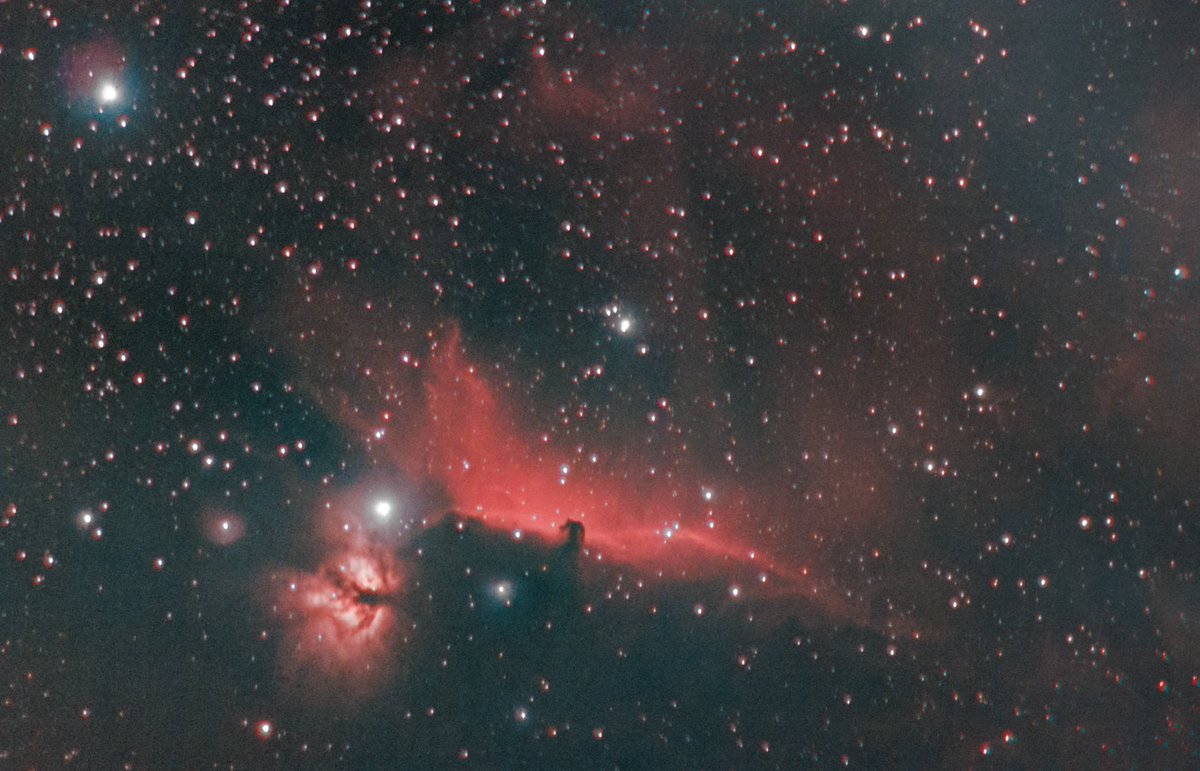
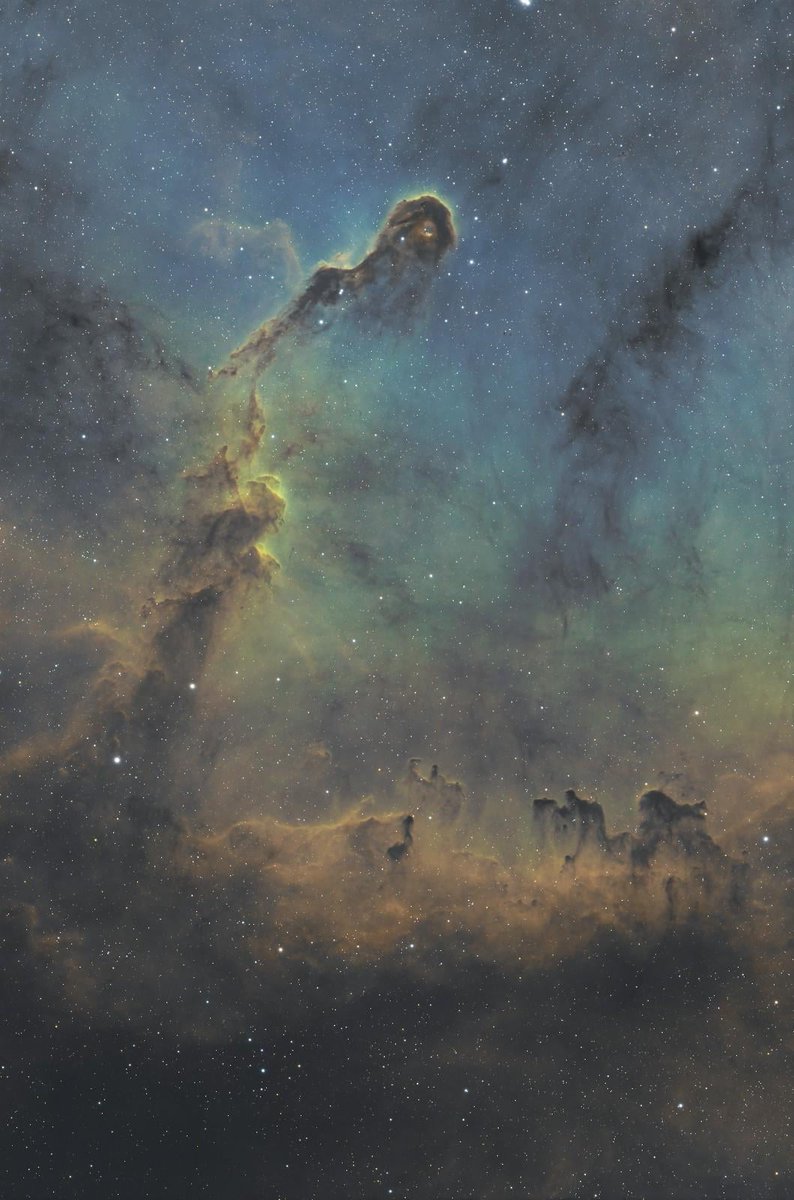
This is the Orion and Horsehead Nebula in a single shot!
I captured this with a wide field lens and created it using RGB and Ha data!!
I love how it came out!
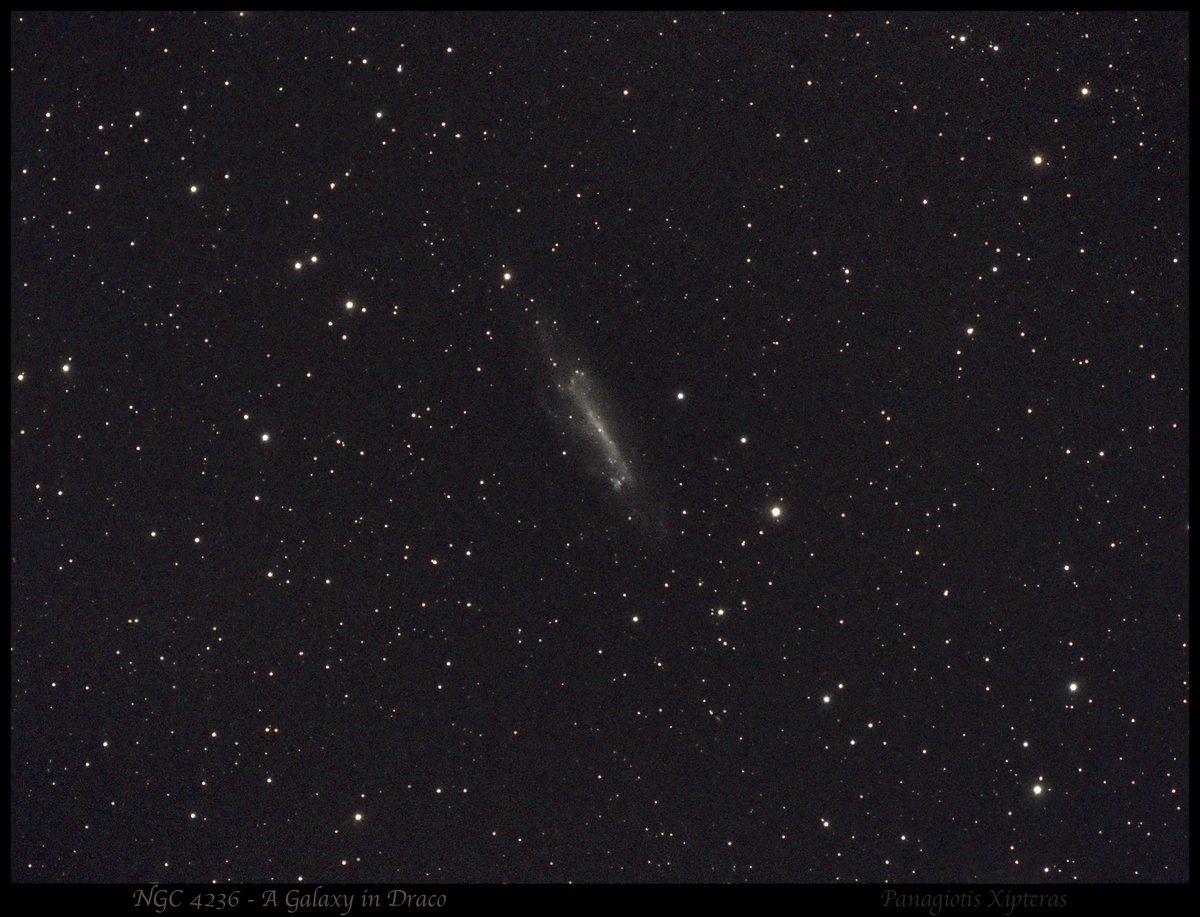
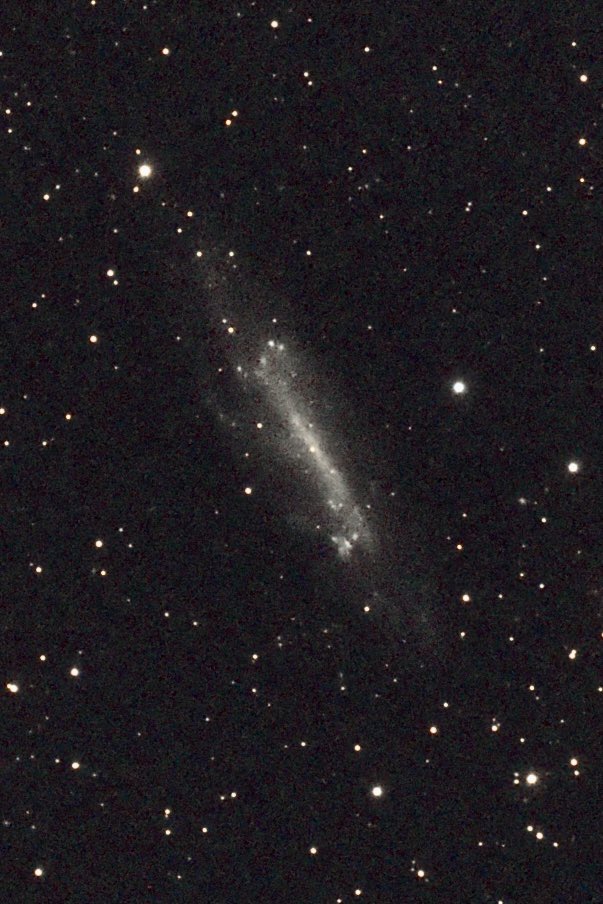
🌌 NGC 4236 — the quiet giant of Draco
Almost nobody points a camera at it, and that’s a shame. This barred Magellanic spiral sits about 11.7 million light-years away, on the far edge of the M81 group of galaxies. Its light is faint at magnitude ~10, but it sprawls roughly 21.9 × 7.2 arcminutes across the sky — about two-thirds the apparent width of the full Moon. The catch is its very low surface brightness: all that glow is smeared thin over a huge area, which is why it stays hidden in plain sight. If you know NGC 55 down in Sculptor, you already know NGC 4236’s twin — same edge-tilted, ragged, off-axis bar, same understated beauty.
🔭 Tucked near the north celestial pole in Draco, it rides high all year and never really sets for me. The frame here came from my smart telescope, and honestly this is the kind of target it quietly excels at — a large, faint object that needs hours, not minutes. The trick with low surface brightness is total integration time, so I let it run deep into the darkest part of the night, well after midnight once Draco is overhead and the sky has settled. Moonless nights only. No filters, no fuss — set it, let it gather, come back to a galaxy most people have never seen.
🏛 The photons landing on the telescope left this galaxy around 11.7 million years ago. There were no cities, no writing, no humans of any kind — our own lineage hadn’t even split from the other great apes yet. Everything we call civilization, every pyramid and poem and telescope, fits into the last few thousand years at the very tip of that light’s journey. The whole of human history is a single blink at the end of an 11-million-year flight.
🦣 When that light set out, Earth was deep in the late Miocene. The continents had nearly drifted into their modern shapes, and the planet was cooling and drying. Forests were giving way to vast open grasslands, and that one shift rewrote life on land — horses, camels, rhinos and the ancestors of deer and elephants spread across the new plains as grazers. The first true saber-toothed cats, primitive bears, hyenas and giraffes were appearing, and in Eurasia and Africa the apes were diversifying. The dinosaurs were already 50 million years gone. The light crossing the lens is older than grasslands themselves were widespread — a strange thing to hold in your hands on a cold night.
✨ This galaxy lives inside the Dragon (Draco) and that part does have a story. The Greeks saw here the serpent Ladon, the hundred-headed dragon that coiled around the tree of golden apples in the garden of the Hesperides, slain by Heracles. So while the light is older than language, the patch of sky it shines through has been a dragon in human eyes for thousands of years. I find something fitting in that: a hidden, glowing thing curled up inside the dragon’s body, waiting for anyone patient enough to discover.
Thanks for reading and Clear Skies /@xipteras
#astrophotography #NGC4236
The "Pillars of Creation" are three colossal, tower-like clouds of interstellar gas and dust located about 6,500 to 7,000 light-years from Earth in the center of the Eagle Nebula (M16). Named for highly active "stellar nurseries" where dense pockets of gas collapse to form stars.