SHOCKING: 99% people using Claude are barely scratching the surface.
Right now, the entire internet is screaming “Claude, Claude, Claude”...
But here’s the truth: just chatting with it won’t change your life.
To unlock its real power, you need to master:
• agentic workflows
• Claude Code
• skills, automation & system-level usage
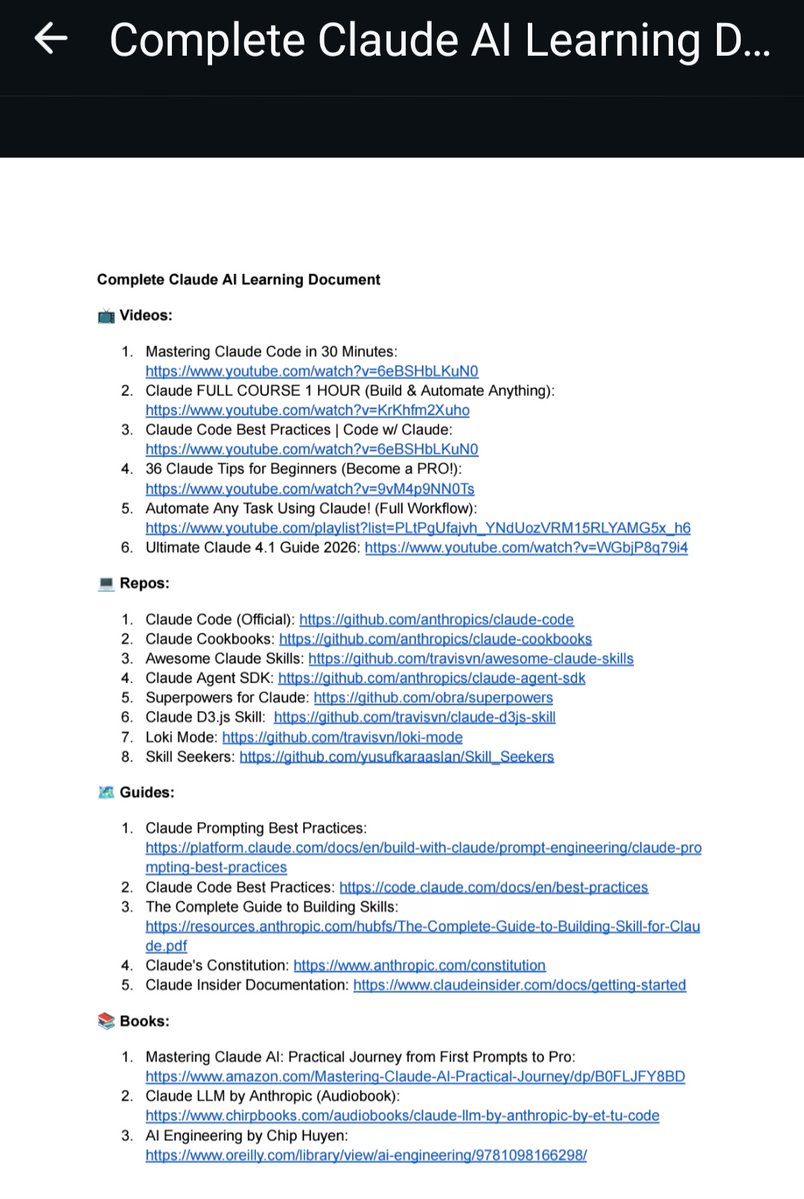
I spent 100+ hours researching and compiled the best Claude resources from across the entire internet — videos, repos, guides, books, and papers.
I’ll give it to only 4,500 people.
To get it:
1. Follow me MUST (so i can dm)
2. Comment “Claude”
3. I’ll DM you the document 📩
If you don’t follow or comment, you won’t receive it
Behind-the-scenes is trending.
We took it one step further.
We cloned the main character.
Want the viral version?
Clone it with Buzzy.@Buzzy_Now
Like · Comment · Repost
🎁 Free credits
I built Microlender Protocol's landing page in a day.
here's exactly how (breakdown + prompts):
— THE BRIEF —
DeFi lending platform.
Needed to convert skeptical TradFi users.
Constraint: look institutional, not "crypto bro."
— THE APPROACH —
step 1: define the visual tension
→ futuristic (it's DeFi) vs trustworthy (it's finance)
→ dark mode for web3 credibility
→ blue/purple accents (trust + innovation)
→ NO neon green, NO random 3D blobs
step 2: structure before style
→ hero: headline + trust badges + single CTA
→ social proof: TVL, users, backed-by logos
→ features: 3-card grid with glassmorphism
→ security section: audits, insurance, compliance
→ final CTA: "Start earning" with APY preview
step 3: prompt engineering
for the glassmorphism cards:
"design a feature card with frosted glass effect. background: rgba(255,255,255,0.05). backdrop-filter: blur(12px). border: 1px solid rgba(255,255,255,0.1). border-radius: 16px. subtle gradient overlay from top-left. icon in linear style, 24px, white at 80% opacity."
for the hero section:
"fintech hero section. dark background #0a0a0f. headline in white, subheadline in gray (#888). primary CTA button with gradient (blue #3b82f6 to purple #8b5cf6). trust badges below: 'Audited by X' 'TVL: $XXM' '$XX+ users'. style: institutional finance meets web3. no cartoon illustrations. clean, sharp, trustworthy."
— THE RESULT —
✓ built in 8 hours
✓ approved by fellow designers first round
✓ "this looks like a $10K site" (their words)
— WHAT MADE IT WORK —
1. constraint clarity (what NOT to do was more important than what to do)
2. structure first, style second
3. specific prompts (blur values, hex codes, exact px)
4. saying no to "cool" things that don't convert
like + reply "LENDER" for the full prompt pack I used.
(must be following for DM)
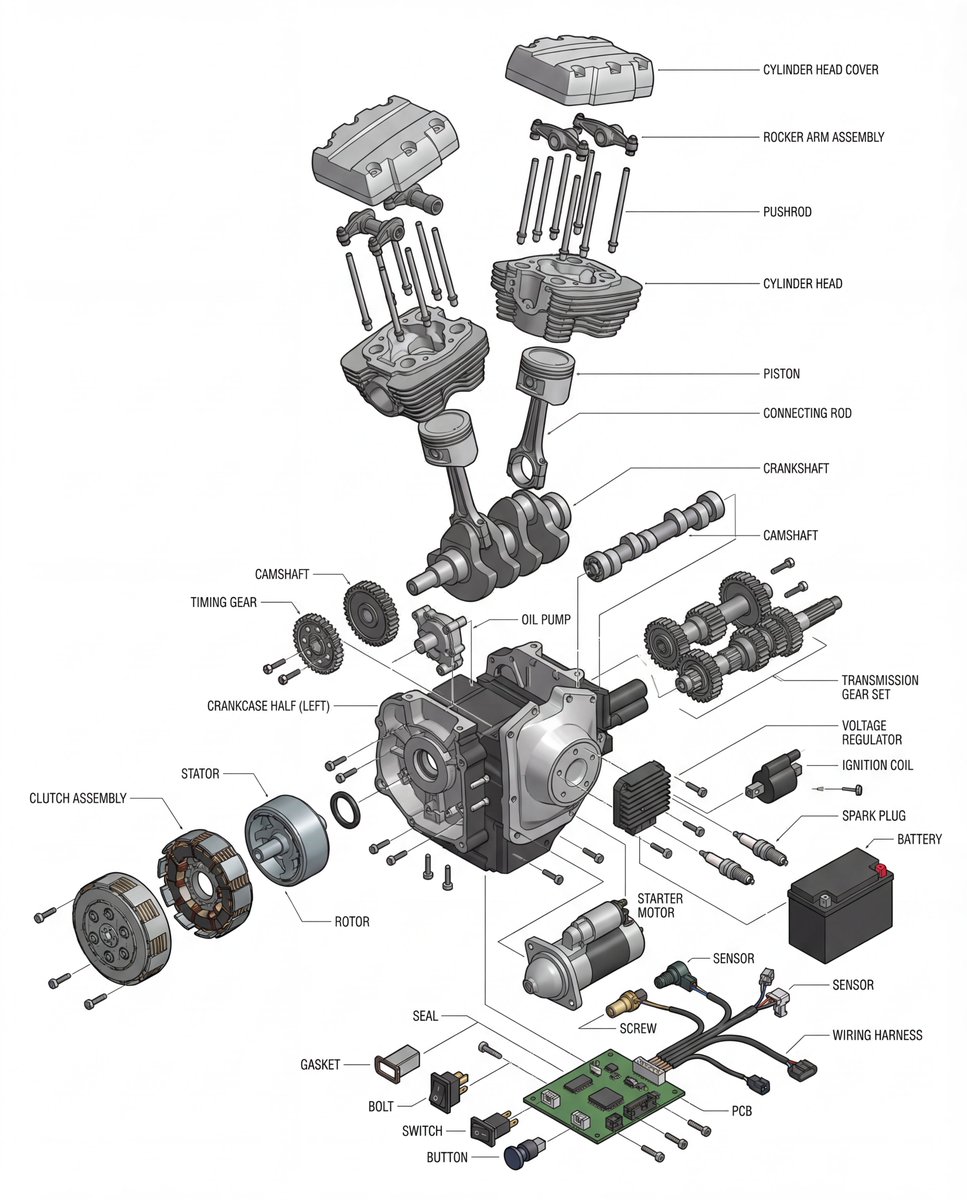
Nano Banana Pro produces clean, accurate, engineering-style exploded diagrams.
I used Nano Banana Pro in 4K to reach maximum clarity and precision.
I built a prompt that converts any image into a full exploded view with engineering-grade detailing.
It's not perfect but you can always do back and forth to achieve accurate result.
If you want the prompt, like, repost, and comment "Prompt" and I’ll DM you.
.
.
.
I created my LinkedIn account 53 weeks ago.
Since then I've generated ~$200,000 in direct rev, built 10,000+ connections and passed 4 million impressions.
Super easy algo to crack.
LinkedIn continues to be one of the strongest channels for inbound, authority, and consistent deal flow.
Use my system before they tighten the algorithm again.
And if you want the full cheat sheet with engagement group templates, carousel playbooks, DM workflows, and my posting system, follow me, repost this, and reply “LinkedIn Growth Guide.”
You must do all 3 to receive the DM.
Here is what is working best on LinkedIn right now:
High impact proof posts are still outperforming everything else.
LinkedIn continues rewarding posts that combine a real metric, a short narrative, and a clear business insight.
These generate both dwell time and strong early engagement, which are the two main distribution levers.
Short story driven posts are pulling huge numbers this month.
Tight stories about client outcomes, small wins, failures, pivots, or lessons learned create emotional engagement and keep people reading longer.
Both factors increase reach.
Conversation starter posts remain one of the most reliable visibility triggers.
You need first hour comments for distribution, and bold questions, stances, and challenges still generate the fastest comment velocity.
Native formats continue to do really well.
Text posts, carousels, and native videos significantly outperform link out posts.
LinkedIn continues suppressing link reach.
If you add a link, either place it in the comments or replace the preview image inside the post.
Dwell time is still one of the strongest ranking factors.
If people read your full post, swipe through multiple carousel slides, or watch your video mostly or fully, you get boosted.
Topic authority continues to grow in importance.
Posting consistently around the same topic or category strengthens your topic score, which increases distribution to users who follow or engage with that topic.
Cross niche engagement amplifies reach.
Commenting in 2 to 3 adjacent categories expands your first hour engagement pool and brings your content into new networks.
Reposting top performers is now practically an official LinkedIn best practice.
Most followers never saw your post the first time. Repost every 2 to 4 weeks with a new hook or framing.
Posts with replies to replies get extended visibility.
Deeper comment threads are weighted highly, and posts with multi level conversations stay in feeds for days.
Here is my current posting routine which still works extremely well:
I post 3 times per day, every day.
Morning is a proof driven post or a strong point of view.
Afternoon is a carousel, teardown, or case study.
Evening is a lesson, system, or mini thread.
Skipping even one day reduces next day reach.
Here are the formats performing best right now:
Carousels with a bold headline on slide 1 tied to a result or pain point, 3 to 5 tight middle slides with steps or visuals, and a final slide with a clear call to action such as “Comment guide if you want the full version.”
Short native videos under 60 seconds with a hook in the first 2 to 3 seconds. Subtitles matter.
Walkthroughs and behind the scenes style videos outperform talking head videos.
Proof breakdowns that show the metric, explain how it happened in 3 to 4 steps, and end with a lesson or takeaway.
Sharp hook text posts with 1 to 2 line paragraphs, 3 to 5 takeaways, and a question at the end to prompt replies.
Conversation posts that generate multi level comment threads.
Here is what is currently losing traction:
Link out posts with no context.
Metrics with no explanation.
Large blocks of text with no spacing.
Generic content that blends in with everything else.
Posts where you never reply to comments in the first hour.
Here is the engagement strategy that is working best right now:
Comment on 20 or more posts per day.
Like 50 or more posts per day.
Reply to every comment on your own posts in the first hour.
Repost top performing content every 5 to 7 days with a new hook.
DM 5 to 10 people per day with specific, contextual value tied to something they posted.
Create deeper comment threads by asking follow up questions, tagging people, or continuing the conversation.
LinkedIn is heavily rewarding repeat engagement from the same people and deeper threads where replies provoke more replies.
Here are the hooks performing best right now:
I started this account 53 weeks ago. Here is what nearly $200,000 in pipeline actually looks like.
This 4 slide carousel booked 5 calls in 24 hours. Here is slide 1.
If I had to rebuild my LinkedIn from zero today, this is the exact system I would use.
My 3 post per day routine for consistent inbound.
I made X this month from LinkedIn. Here is the breakdown.
Back every hook with proof.
Here is the 30 day LinkedIn growth plan that works today:
Post 3 times per day with at least one proof based post.
Comment on 20 or more posts daily with real insight.
Like 50 or more posts per day.
Reply to every comment within the first hour.
Repost a winner weekly.
DM 5 to 10 people daily with context first value.
Track impressions, comment depth, leads, and repeating commenters weekly.
Test hooks, formats, and timing every week.
LinkedIn remains one of the strongest platforms for inbound, authority and deal flow in 2025.
Run this system for 30 days.
Screenshot your Day 31 results.
Tag me when inbound starts.
If you want the full cheat sheet, follow me, repost this, and reply “LinkedIn Growth Guide.”
You must do all 3 to receive the DM.
Made a total of $ x,700 in this week alone.
Celebrating by giving away the system I used to build it.
The Landing Page Stack:
→ The 3-Second Clarity Prompt
→ Trust Bar Formula
→ Conversion-First Hero Structure
→ Objection Killer Framework
→ Mobile Speed Optimization
These prompts built a page that converts at 5.2%.
Like + reply "STACK" to get the full system.
(following required for DM)
Slot just opened up — DM me "PROJECT" if you want one built for you.
Just shipped a high-ticket landing page.
Here's what I learned building it:
Most designers start with layout.
I start with one question:
"What objection kills the sale?"
Then I build the page to destroy it.
Hero → handles the "is this for me?" doubt
Proof section → kills the "does this work?" fear
CTA → removes the "what if I regret it?" anxiety
This framework took me 20+ projects to figure out.
I turned it into a checklist.
Like + reply "OBJECTION" for the framework.
(must be following for DM)
P.S. Just cleared my calendar. Taking on 5 more projects this month.
Just mastered Google Gemini 3.0 prompt styling.
50+ hours of testing.
100+ failed generations.
1 framework that works every time.
The result:
→ Hyper-realistic glass renders
→ Perfect material physics
→ Cinema-grade lighting
→ Zero distortion
Prompts that sound like camera specs, not wishes.
Giving away my entire prompt system.
Like + reply "GLASS" for the full library.
(must be following for DM)
Drop a "🔥" if you want me to break down the technique.
Nano Banana Pro + Linah AI is absolutely insane 🤯
Google just dropped Nano Banana Pro… and I already have it fully integrated inside Linah AI’s Creative Engine.
The use case?
Clone your competitors’ Facebook static ads — but with your product.
Perfect for DTC brands & agencies who spot a winning competitor ad and want the same layout, same aesthetic, same design language… but featuring their product instead.
Nano Banana Pro is SICK:
→ 4K resolution output (studio quality)
→ Up to 14 image inputs in a single generation
→ Perfect text rendering in any language
→ Keeps consistency across up to 5 human subjects
Here’s the workflow inside Linah:
You see a killer competitor ad. Great composition, perfect typography, killer color palette — but obviously it’s not usable because it features their product.
Normally you’d brief a designer… wait 3–5 days… pray they get it right.
With Linah?
It takes 30 seconds:
→ Upload competitor ad
→ Upload your product
→ Click Generate inside Linah
→ Nano Banana Pro swaps ONLY the product
→ Layout, fonts, colors, styling = untouched
→ Linah auto-generates 4 variations instantly
→ Everything saved inside your Linah workspace
Zero design bottlenecks.
Zero recreations from scratch.
Zero guesswork.
What you get:
→ Competitor-inspired ads with your product
→ Identical layout + design language
→ 4 variations per request
→ All stored + organized inside Linah
→ Feels like having a real creative team in your pocket
Built 100% inside Linah AI no n8n, no Airtable, no external tools.
I recorded a 30-minute Loom walking through the entire setup step-by-step.
Want the workflow, the asset stack, and the Loom video for free?
Comment “BANANA”
Like this post
(Must be following so I can DM you)
$180k months come from copying patterns,
→ every niche leaves signals
→ winning formats
→ scaled hooks
→ reused landing pages
the fastest way to lose money is to ignore them
a solid spy tool shows you where demand already exists
your job is to adapt, not reinvent
i made a short guide on how i analyze niches before launching
rt + comment “spy” and i’ll dm it
(follow for dm)