NUCLEAR POWER.
IT DOESN'T CARE IF THE SUN'S SHINING OR THE WIND'S BLOWING.
IT DOESN'T NEED BATTERIES FULL OF COBALT OR LITHIUM DUG UP BY CONGOLESE CHILD SLAVES IN CHINESE-OWNED MINES.
AND IT HAS LOWER LIFETIME GREENHOUSE GAS EMISSIONS THAN SOLAR, AND ABOUT THE SAME AS WIND.
IT'S NOT EVIL DEVIL MAGIC. IT'S METAL THAT GETS HOT AND BOILS WATER TO MAKE STEAM THAT TURNS TURBINES.
THERE'S NO SMOKE. THE SHIT THAT COMES OUT OF THE COOLING TOWER IS JUST STEAM.
NUCLEAR PRODUCES AT LEAST A HUNDRED TIMES LESS RADIOACTIVE POLLUTION THAN COAL WHICH CONTAINS TRACE RADIOACTIVE ELEMENTS WHICH GO INTO THE AIR WHEN BURNED.
NUCLEAR POWER DOESN'T HAVE THIS PROBLEM BECAUSE ALL NUCLEAR WASTE IS CONTAINED, AND NO NUCLEAR WASTE CASKET HAS EVER LEAKED IN THE HISTORY OF AMERICAN NUCLEAR POWER.
NUCLEAR POWER IS SAFE.
IT'S EFFECTIVE.
IT DOES LESS DAMAGE TO THE ENVIRONMENT THAN COAL, OR EVEN WIND AND SOLAR WHICH REQUIRE A FUCK TON OF LAND AND TOXIC METALS FOR WHICH WE HAVE NO PLAN TO DEAL WITH.
NUCLEAR POWER IS THE CLOSEST THING TO A PERFECT ENERGY SOURCE THE HUMAN SPECIES HAS EVER DISCOVERED.
WE'VE HAD THE TECHNOLOGY SINCE THE 1950S. IF WE EMBRACED IT FROM THE START, WE WOULDN'T HAVE CLIMATE CHANGE TODAY. WE COULD HAVE HAD ALL OF THE AIR CONDITIONING WE EVER WANTED, ALONG WITH EVERY OTHER MODERN CONVENIENCE WE'RE CONSTANTLY SHAMED FOR TODAY.
BUT WE SAID NO.
WHAT THE FUCK ARE WE DOING AS A SPECIES?
ARE WE FUCKING RETARDED?
@jmmencia@olgarusu Hay una generación entera que se le dijo que solo valía estudiar carrera. Ahora todo el mundo con carrera están sobrecualificados para el mercado español. El resultado es que emigran, perdiendo el país su activo mas valioso: la gente joven
@JesusFerna7026@martindonato Como siempre el tema está en hacer valer las normas. De nada sirve cambiarlas si no hay consecuencias para los infractores, porque en España tenemos montones de normas pero muchas veces no se hacen cumplir ni por autoridades ni por ciudadanos.
Es sorprendente la transformación semántica de la infravienda. Lo que se veía como distópico bajo el régimen estalinista, se vende como utópico bajo el régimen turbocapitalista.
Nokia could have invented the iPhone. Three years before Apple did, a Nokia engineer walked into a meeting in Finland with a working prototype: a touchscreen phone with full internet access. Management killed it. The device looked too expensive and too risky to sell. The same year, Nokia also rejected a proposal for an online app store. Apple would launch the same idea four years later.
In 2007, Nokia controlled 40% of the world's mobile phone market and was worth more than $150 billion. By 2013, it had sold its phone business to Microsoft for $7.2 billion. The company that defined the cell phone became irrelevant in less time than it takes most kids to finish high school.
In 2016, two professors from INSEAD and Aalto University spent years interviewing 76 Nokia executives, engineers, and consultants for a research paper. Their conclusion: nobody at the company could have an uncomfortable conversation.
Senior leaders were described as "extremely temperamental." One consultant remembered then-CEO Jorma Ollila shouting at people "at the top of his lungs" in front of fifteen other vice presidents. Middle managers learned the rules fast. Bad news got you fired, so they stopped delivering it.
The engineers knew Nokia's operating system could not compete with what Apple was building for the iPhone. One design team submitted 500 separate proposals to fix it between 2001 and 2009. Not a single one got approved. When a middle manager once suggested that a colleague push back against a top executive, the colleague refused. He "didn't have the courage; he had a family and small children."
The top managers were also afraid, just of different things. They worried about looking weak to investors. So they publicly defended the old operating system while privately knowing it was dying. The middle managers heard the demand for optimism and supplied it. For four years, the people who knew the company was sinking could not get that message to the people who could do something about it.
Researchers call this shoot-the-messenger culture. It shows up in cockpit recordings before plane crashes, in hospital records before preventable deaths, and in the investigations of the 2008 financial crisis. The cost of avoiding a difficult conversation is always paid later, with interest.
Nokia's case is unusual because the math is so clean: the silence cost roughly $143 billion in market value and an entire company. The discomfort would have cost a few bad meetings.
Because many of the comments are asking the same Qs, I'll post a general answer here.
Do blind people dream?
Dream circuitry is so fundamentally important that it is found even in people who are born blind. However, those who are born blind (or who become blind early in life) don’t experience visual imagery in their dreams; instead, they have other sensory experiences, such as feeling their way around a rearranged living room or hearing strange dogs barking. This is because other senses have taken over their visual cortex. In other words, blind and sighted people alike experience activity in the same region of their brain during dreams; they differ only in the senses that are processed there. Interestingly, people who become blind after the age of seven have more visual content in their dreams than those who become blind at younger ages. This, too, is consistent with the defensive activation theory: brains become less flexible as we age, so if one loses sight at an older age, the non-visual senses cannot fully conquer the visual cortex.
What about animals: do they dream?
Yes, all animals dream. In the paper shown in the original post we studied 25 species of primates. The defensive activation theory makes a specific prediction: the more flexible an animal’s brain, the more REM sleep it should have to defend its visual system during sleep. That's exactly what we find:
https://t.co/pX74bfClDZ
What about other senses in dreams (hearing, tasting)?
The visual cortex is the only target from the dreaming circuitry that starts in the brainstem. From the visual cortex, activity can sometimes spill over to other senses; however, this is not as common as one might believe. The anatomical precision of the dream circuitry (only going to visual cortex) suggests something about that targeting is biologically important.
For a general introduction to the idea, please see my article in Time magazine:
https://t.co/JF5hT973Wb
A Stanford neuroscientist published a paper a few years ago that quietly answered one of the oldest questions in human history, and almost nobody outside his field has heard of it.
The question is why we dream. Not what dreams mean. Why they exist at all. Why your brain spends a third of its sleep hallucinating images instead of just resting like every other organ in your body.
His name is David Eagleman.
He runs a lab at Stanford. The paper is called "The Defensive Activation Theory", and the moment you read it the explanation collapses every other theory you have ever been taught about dreams.
Freud said dreams were repressed desires. He was guessing. He had no brain scans. He had no electrodes. He had a couch and a notebook and a century of credibility that nobody has been able to fully scrub off the subject since.
Modern neuroscience replaced him with the memory "consolidation theory". The idea that dreams are your brain sorting through the day, filing things away, deciding what to keep. That story is partially true. Sleep does consolidate memory. But it does not explain the single strangest thing about dreams, which is that they are almost entirely visual.
You do not dream in pure sound. You do not dream in taste. You do not dream in smell. You dream in pictures. Vivid, detailed, often impossible pictures that activate the back of your brain so hard a scientist scanning you would think your eyes were wide open.
Eagleman started from one fact almost nobody outside neuroscience knows. The brain is territorial. Every region holds its turf through constant electrical activity. The moment a region goes quiet, its neighbors start invading. They take the silent territory and reassign it to themselves.
This is called "cortical takeover", and it is not slow. It is not a long process measured in years. In experiments where adults are blindfolded, the visual cortex starts processing touch and sound within an hour. One hour of darkness, and the territory is already being annexed.
In congenitally blind people, the visual cortex is fully repurposed. It runs language. It runs hearing. It runs touch. The hardware never went unused. It was just reassigned to whoever showed up first.
Now sit with the implication of that for a second.
Every night, when you close your eyes and fall asleep, the sun has set. The planet has rotated. The visual cortex, which takes up roughly a third of your entire cortex, is suddenly receiving zero input. For eight hours. Every single night. For your entire life. And evolution has shaped your brain inside a planet that has been spinning into darkness for billions of years.
If cortical takeover happens in an hour, the visual cortex should have been lost a long time ago. Stolen by hearing. Stolen by touch. Reassigned by morning. Humans should have evolved into a species whose vision works fine during the day and then degrades every time the sun goes down because the territory keeps getting renegotiated overnight.
But that did not happen. Vision works the moment you open your eyes. Which means something is defending the territory while you sleep.
Eagleman's claim is that dreams are that defense.
Every 90 minutes through the night, a precise burst of activity fires from the brainstem into the visual cortex. Pontine-geniculate-occipital waves. PGO for short. They are anatomically aimed. They are not general arousal.
They are a targeted volley of signal launched directly at the back of the brain where vision lives. The cortex lights up as if it is receiving real images, and you experience that artificial activation as a dream. The bizarre narrative your conscious mind invents around it later is just your brain trying to make sense of the noise.
The dream is not the point. The dream is the side effect. The point is keeping the territory occupied.
The evidence for this is the part that should haunt you.
Newborns spend roughly 50% of their sleep in REM. Adults spend twenty. Old adults spend fifteen. The amount of dreaming you do tracks almost perfectly with how plastic your brain is. Newborns have the most plastic brains on earth. Their visual cortex is in the highest danger of being overrun by neighboring senses while it develops.
So evolution gave them an enormous defense budget. As you age, your brain becomes less plastic, the takeover risk drops, and the defense system scales down accordingly.
Eagleman and his co-author ran the same correlation across twenty-five primate species. The more plastic a species' brain, the higher the proportion of REM sleep. The relationship held across the entire primate family tree. Plasticity and dreaming move together. They are two halves of the same evolutionary equation.
A species that ranks higher on flexibility and learning also dreams more. A species that is born ready to walk and survive dreams less. Plasticity is the asset. Dreaming is the insurance premium.
And the prediction the theory makes is the one that quietly closes the case.
Of all your senses, only one is disadvantaged by darkness. You can still hear in the dark. You can still feel in the dark. You can still smelll and taste in the dark. The only sense that depends on light is vision. Which is exactly the sense your dreams are made of. The defense system is targeted at the only territory that is actually vulnerable while you sleep.
Memory consolidation is real. Emotional processing is real. Your brain does do those things at night. But Eagleman's argument is that those functions piggyback on a much older system whose original job was simpler and more brutal. Keep the lights on inside the visual cortex while the planet is dark, or lose it.
For thousands of years, people have asked what dreams mean. Prophets wrote about them. Poets wrote about them. Freud built a discipline on them. None of them had access to the actual answer, which is that dreams may not mean anything in the symbolic sense at all.
They may be the visible flicker of a defense system running in the background, the way a screen saver protects a monitor by keeping the pixels moving even when nobody is looking.
The strangest thing about the theory is how cleanly it explains why dreams feel so real. Your visual cortex cannot tell the difference between a PGO wave and an actual photon. It is the same hardware lighting up the same way. The cortex does its job. It builds an image. Your conscious mind, half-awake, wraps a story around it and calls it a dream.
You are not seeing your subconscious tonight. You are watching your brain defend a piece of itself from being stolen.
Every animal that has ever closed its eyes on this planet has done the same thing.
Los imperdonables pecados por los que había que amordazar a Jon:
a) Hay que deflactar el IRPF
b) Hay que transitar a un sistema público de pensiones con cuentas nocionales como en Suecia
c) Hay que construir mucho más
d) La baja natalidad y la baja productividad son un problema
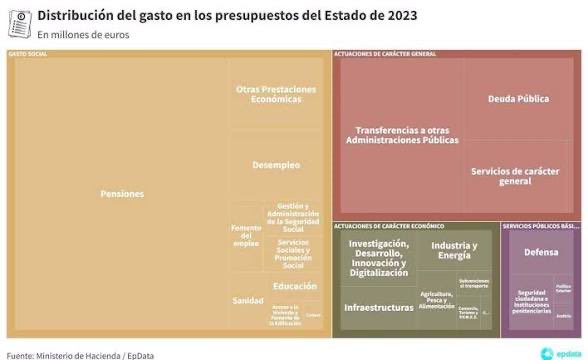
@Pedro_Torrijos El gráfico que mejor describe el problemón de las pensiones es este de aquí, en mi opinión. Y también es la mejor manera de rebatir la manoseada mentira de que pagamos impuestos para “Sanidad y educación” 😅
Estamos viviendo a crédito como nación entera.
Si tienes que financiar un gasto permanente con ayudas destinadas a inversión y crecimiento es que no hay ningún tipo de futuro aquí.
El Gobierno desvió otros 8.500 millones de fondos europeos en 2025 para pagar pensiones y el Ingreso Mínimo Vital por falta de Presupuestos https://t.co/bYLbJHAsV2
El gobierno usó 2.389 millones de euros de los fondos Next Generation para pagar las pensiones.
3 días 9 horas, 7 minutos y 55 minutos.
https://t.co/5bEty4mPk8