Working nationwide to improve quality of life for Canadians affected by Alzheimer's disease and other dementias and advance the search for the cause and cure.
Yesterday, Canadians across the country came together for our National Day of Action during Alzheimer’s Awareness Month, united by a simple but powerful message: no one should face dementia alone.
From sharing photos and wearing Forget-Me-Not pins to speaking up and challenging stigma, people across the country showed what collective action and community can look like. This important conversation was also amplified nationally through our appearance on Global News (https://t.co/TwzauhpV7D), helping bring greater awareness to the realities of dementia and the importance of support.
We’re deeply grateful to everyone who took part and helped remind people that the Alzheimer Society is always here — for individuals living with dementia, for caregivers, and for families. Thank you for standing with us, and for helping ensure we #ForgetNoOne 💙
I'm Christina Scicluna, CEO of the Alzheimer Society of Canada.
On this National Philanthropy Day, I am incredibly grateful for all of our amazing supporters. Whether it's a financial gift, volunteering, advocating, sharing your experience or supporting someone living with dementia, we're all moving together for a better future.
#NationalPhilanthropyDay
Today, we remember all who have served our country, and all who continue to serve.
Lest we forget.
--
Aujourd’hui, nous honorons les personnes qui ont servi notre patrie et celles qui la servent encore.
N’oublions jamais.
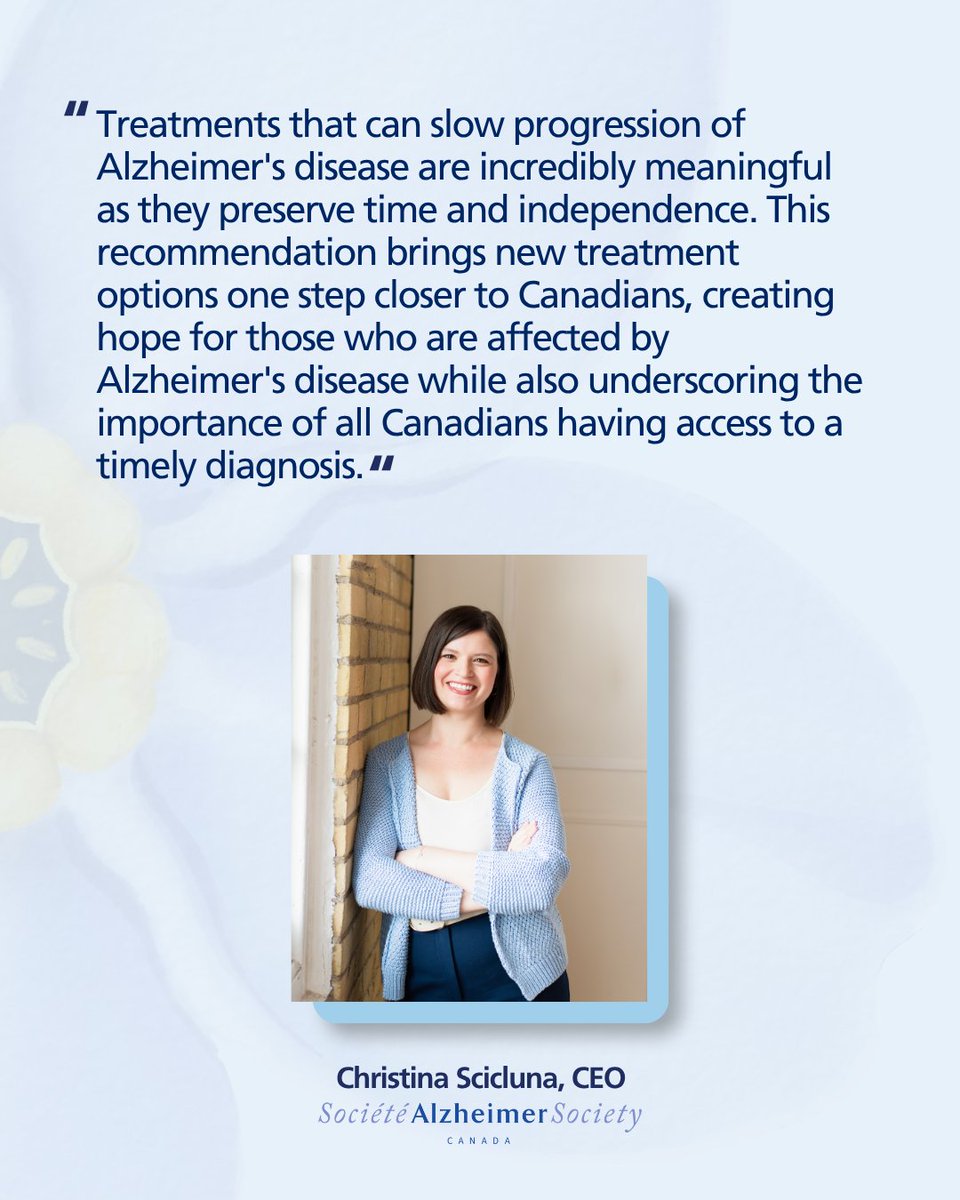
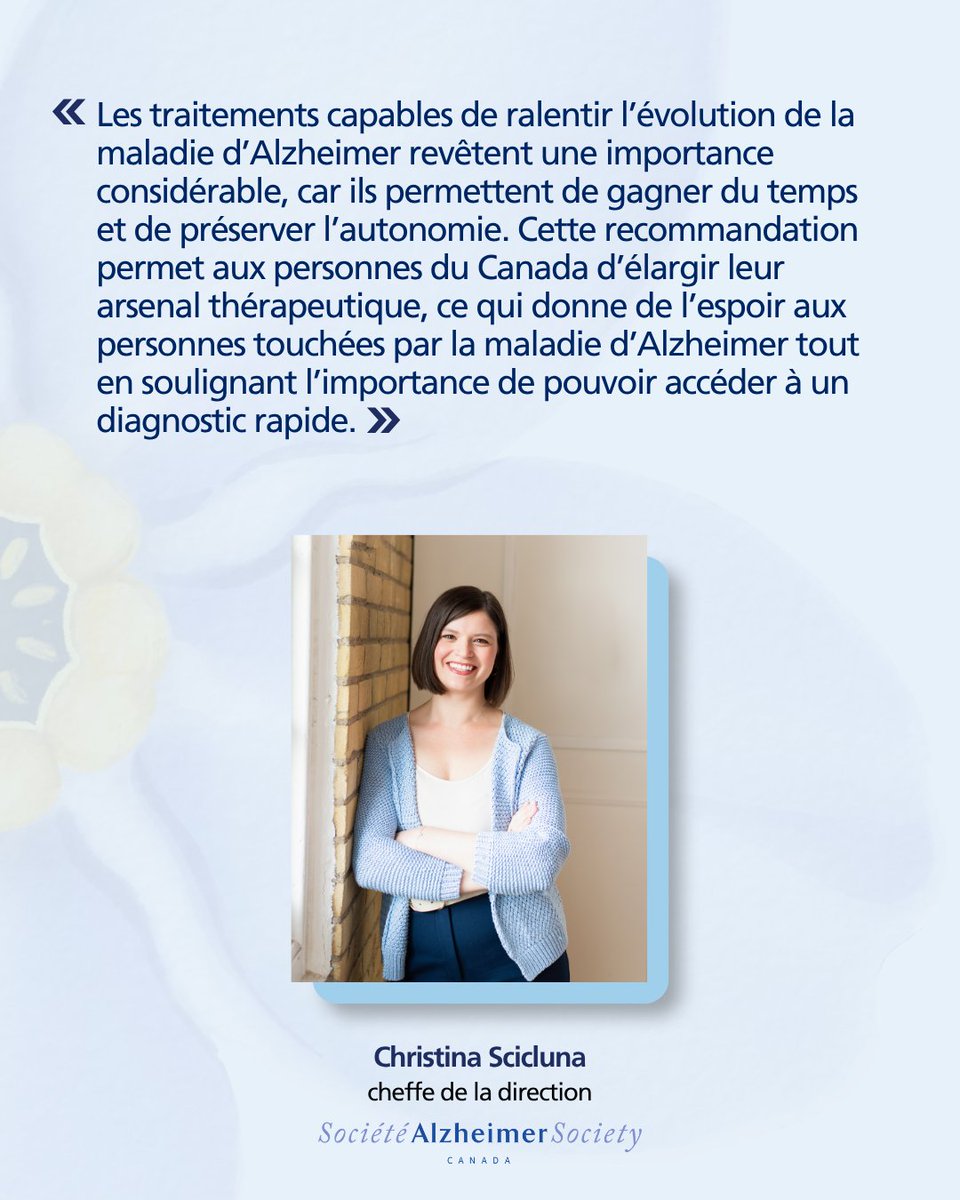
On November 3, 2026 Canada's Drug Agency (CDA-AMC) issued a positive final recommendation to reimburse Kisunla® (donanemab) on public drug plans for eligible Canadians. This treatment is intended for Canadians living with mild cognitive impairment or mild dementia due to Alzheimer’s disease (early-stage Alzheimer’s disease). Donanemab is not a cure, but access to disease-modifying treatments may offer people living with Alzheimer's disease and care partners a new option, supporting efforts to maintain independence and quality of life for as long as possible.
Read more: https://t.co/mCc5kphudZ
--
Le 3 novembre 2026, l’Agence des médicaments du Canada (AMC) a émis une recommandation finale favorable au remboursement de Kisunla® (donanémab) par les régimes publics d’assurance-médicaments pour les personnes du Canada admissibles. Ce traitement est destiné aux personnes vivant avec un trouble cognitif léger ou un trouble neurocognitif attribuable à la maladie d’Alzheimer (stade léger de la maladie d’Alzheimer). Le donanémab n’est pas un remède curatif, mais l’accès à des traitements modificateurs de la maladie pourrait aider les personnes vivant avec la maladie d’Alzheimer à préserver leur autonomie et leur qualité de vie le plus longtemps possible.
En savoir plus: https://t.co/BMpSmEyEe4
Yesterday, the federal government released Budget 2026 — including a proposal to make the existing Canada Caregiver Credit refundable. This will provide eligible care partners with up to $1,260 annually in new funds when they file their taxes. This is by no means insignificant, and we thank the federal government for recognizing this need. However, it does not resolve the broader financial pressures caregivers face.
Read our full response to Budget 2026 and what it means for people living with dementia and their care partners: https://t.co/6xdvisfrYG
--
Hier, le gouvernement fédéral a déposé son budget 2026, qui prévoit de rendre remboursable le crédit canadien pour aidant naturel existant. Elle permettra aux personnes admissibles de bénéficier d’un montant pouvant atteindre 1 260 $ par année lors de la production de leur déclaration de revenus. . Ces chiffres sont loin d’être négligeables, et nous remercions le gouvernement fédéral d’avoir reconnu ce besoin et d’avoir intégré le soutien aux partenaires de soins à ses priorités. Or, ce changement n’allège pas les pressions financières plus larges qui pèsent sur ces personnes.
Lisez la réponse de la Société Alzheimer du Canada au budget et découvrez ses répercussions sur les personnes vivant avec un trouble neurocognitif et leurs partenaires de soins: https://t.co/aQRZX6DfpL
#DementiaMatters #Budget2026 #canpoli
We can never recognize care partners enough.
Yesterday, MP Andréanne Larouche rose in the House of Commons to recognize the invaluable contributions of unpaid care partners and the challenges they face.
As the federal government prepares to unveil Budget 2026 tomorrow, we hope that recognition will be matched by meaningful action.
The Alzheimer Society of Canada has called on the federal government to implement the National Caregiving Strategy for Canada, including stronger financial supports, improved access to benefits and expanded employment protections for care partners.
Recognition matters. So does action.
#NationalCaregiversWeek
Want to know more about the work we do? Our 2025-2026 Annual Report, A New Horizon, is now available.
It looks back at a year of progress for people living with dementia and care partners: more than 150,000 client service interactions across the Alzheimer Society network, and 31 research projects funded through the Alzheimer Society Research Program, totalling $4.1 million.
Thank you to our donors, volunteers, researchers and partners for making this work possible.
“We’re not just dealing with the here and now. We’re changing the course of what this disease will look like in the future. That’s the horizon ahead of us.” Christina Scicluna — CEO, Alzheimer Society of Canada
Read the report: https://t.co/1feFD5QZDp
“Every innovative approach to treatment and care that is available today for Alzheimer’s or other dementias began as an early research question.” – Christina Scicluna, CEO, Alzheimer Society of Canada
At @BrockUniversity, Dr. Newman Sze, whose work has been funded in part through the Alzheimer Society Research Program, is exploring one of those questions. His team is investigating whether proteins in the brain’s blood vessels become damaged as we age, and whether that damage makes it harder for the brain to clear away beta-amyloid (the protein that can clump together between brain cells and form deposits called plaques, which may block signals between brain cells and potentially lead to cognitive decline).
Dr. Sze's work is still in its early stages, and it will take time to learn whether it could lead to new treatments. Still, it's a great reminder of the important dementia research taking place at universities across Canada.
Read more about Dr. Sze's research: https://t.co/fT5ayvCmOU
Photo credit: The Brock News
Next week, the Alzheimer Society of Canada will be in Vancouver for the CCNA 2026 conference, which runs from Monday, October 26 to Wednesday, October 28. We’re proud to be there as a partner of the Canadian Consortium on Neurodegeneration in Aging—@ccna_ccnv—whose mission is to position Canada as a global leader in dementia research. The conference brings together top researchers in the field from across North America.
We’ve been a founding partner of CCNA since it launched in 2014, and our partnership is about more than funding. We share CCNA’s vision of Canada as a leader in dementia prevention and treatment, and its commitment to the meaningful involvement of people living with dementia in research.
If you are attending the conference, come find us at our booth at the Pinnacle Hotel Harbourfront Ballroom. Learn more about the conference here: https://t.co/lg272Dmv7r
At "Women's Mental and Brain Health," a recent Globe and Mail event, our CEO Christina Scicluna spoke about the importance of talking openly about dementia and Alzheimer's. "You can be worried about it," she said, "but there are things that we can all do and it starts with a simple conversation." Speaking openly about the disease reduces stigma, making people more likely to seek a diagnosis — and getting diagnosed sooner means there may be more options available.
Need help getting the conversation started? Check out our tips here: https://t.co/T6KEk3MsMP
Happy Thanksgiving from all of us at the Alzheimer Society of Canada.
We are so grateful for the people living with dementia and care partners who share their stories with us so that we can better serve their needs — as well as for the donors, volunteers and partners who enable us to do the work that we do.
If you're gathering with loved ones who live with dementia this weekend, we have some advice for making your time together enjoyable for everyone: https://t.co/wLblolhQcR
#Thanksgiving
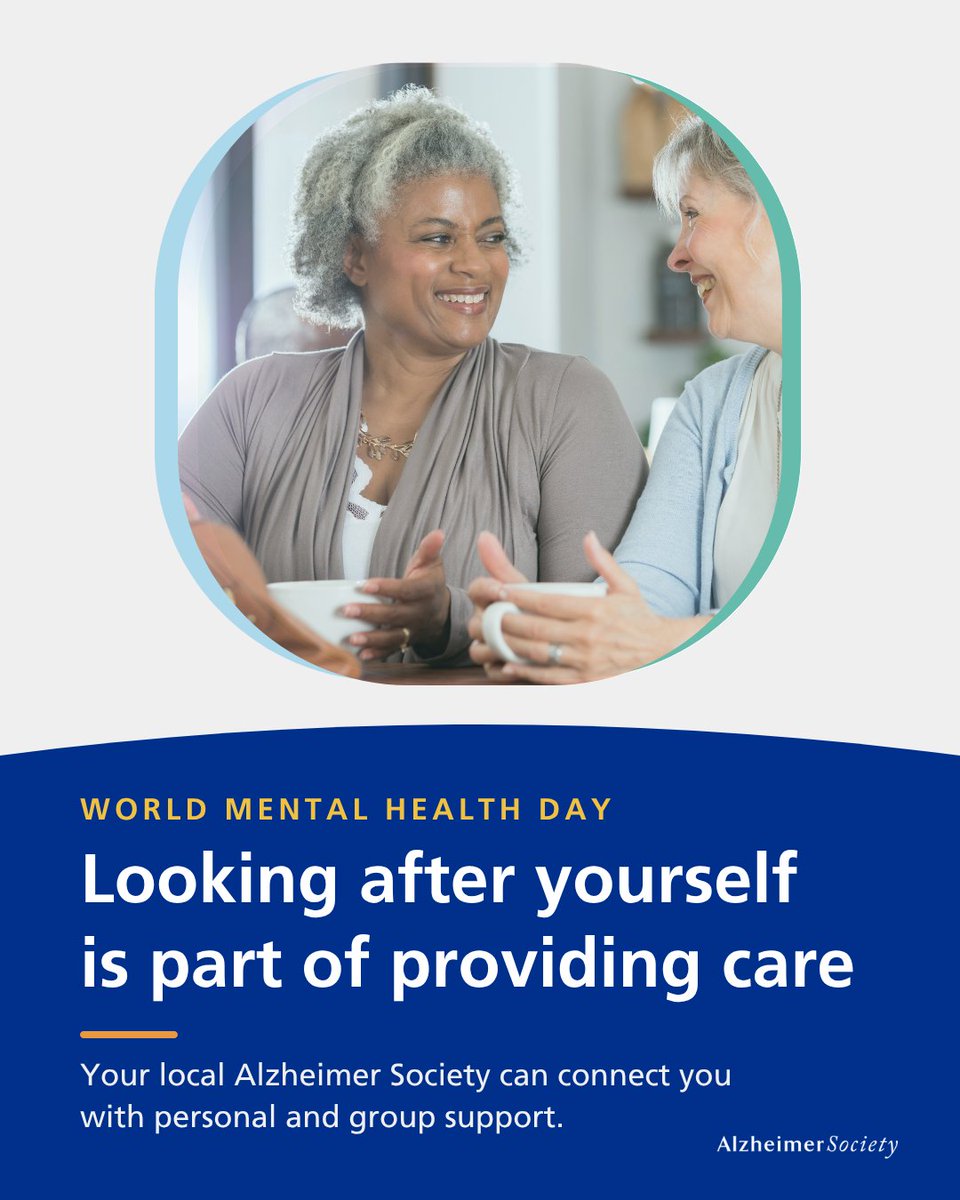
Today is World Mental Health Day.
Caring for someone living with dementia is incredibly meaningful, but it can take a toll on your own health and wellbeing. Feeling worn down or isolated is common.
Looking after yourself is part of providing care. Your local Alzheimer Society can connect you with personal and group support.
Find yours at https://t.co/LkPMKecvhW
#WorldMentalHealthDay
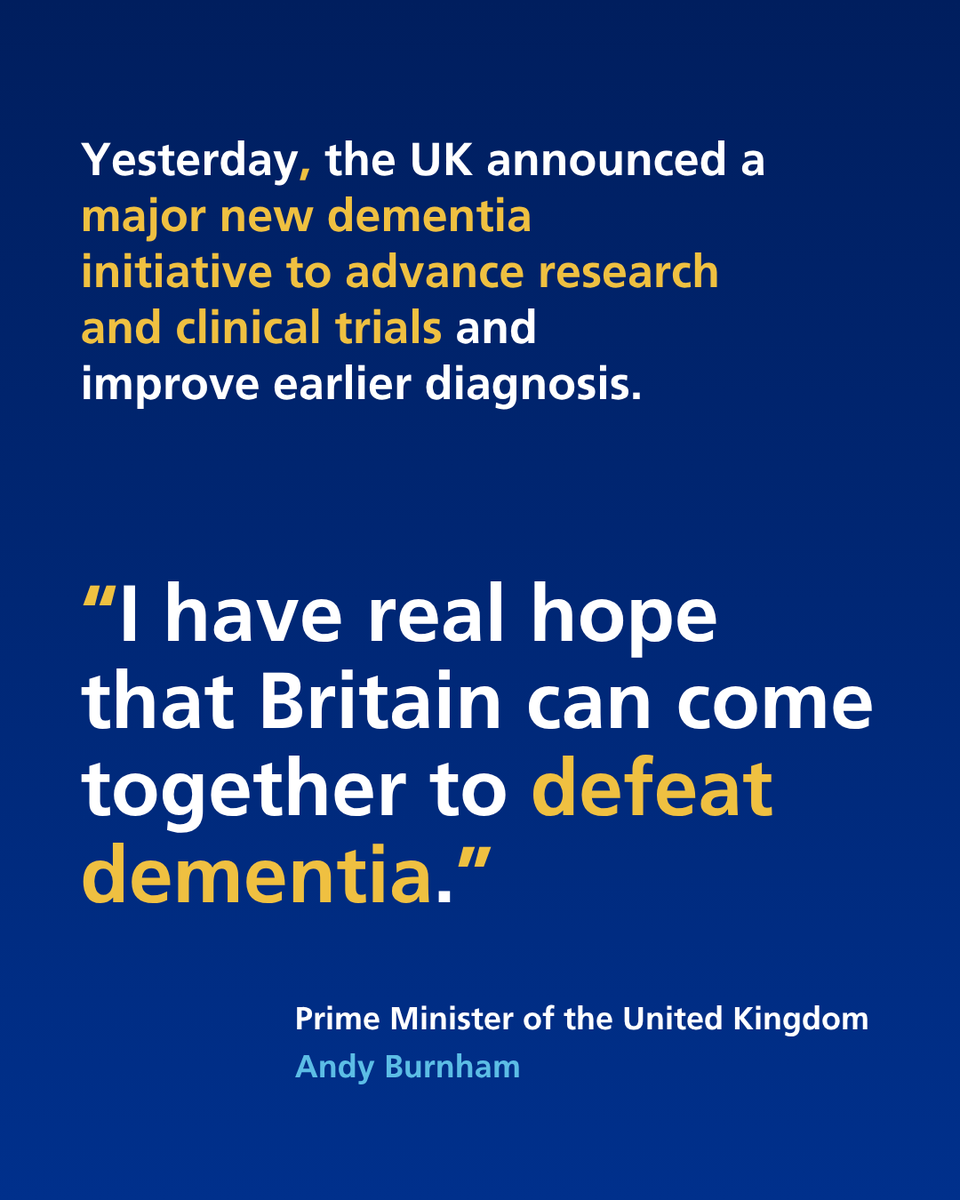
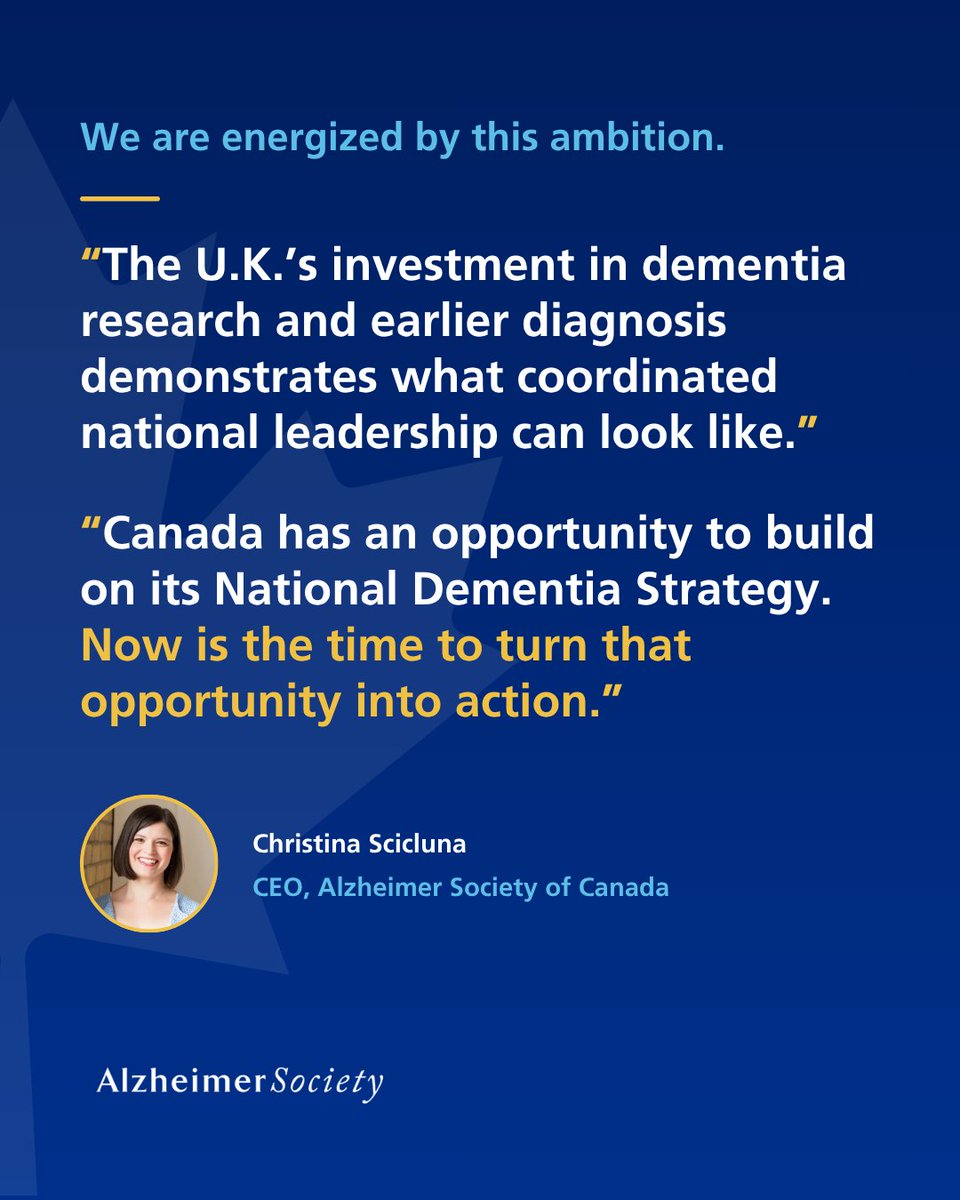
On October 8, the U.K. announced a major new initiative to accelerate progress on dementia, including a £48 million partnership to advance research and clinical trials and an £80 million program to improve earlier diagnosis.
The investments will bring together government, researchers, industry and people with lived experience to accelerate innovation and help promising treatments reach patients sooner.
Canada has an opportunity to build on this momentum. “Through stronger coordination and continued investment in its National Dementia Strategy, meaningful progress on diagnosis, treatment and care can be made,” says Christina Scicluna, CEO of the Alzheimer Society of Canada. “People living with dementia and
their care partners deserve nothing less.”
#Dementia #DementiaResearch #AlzheimersDisease
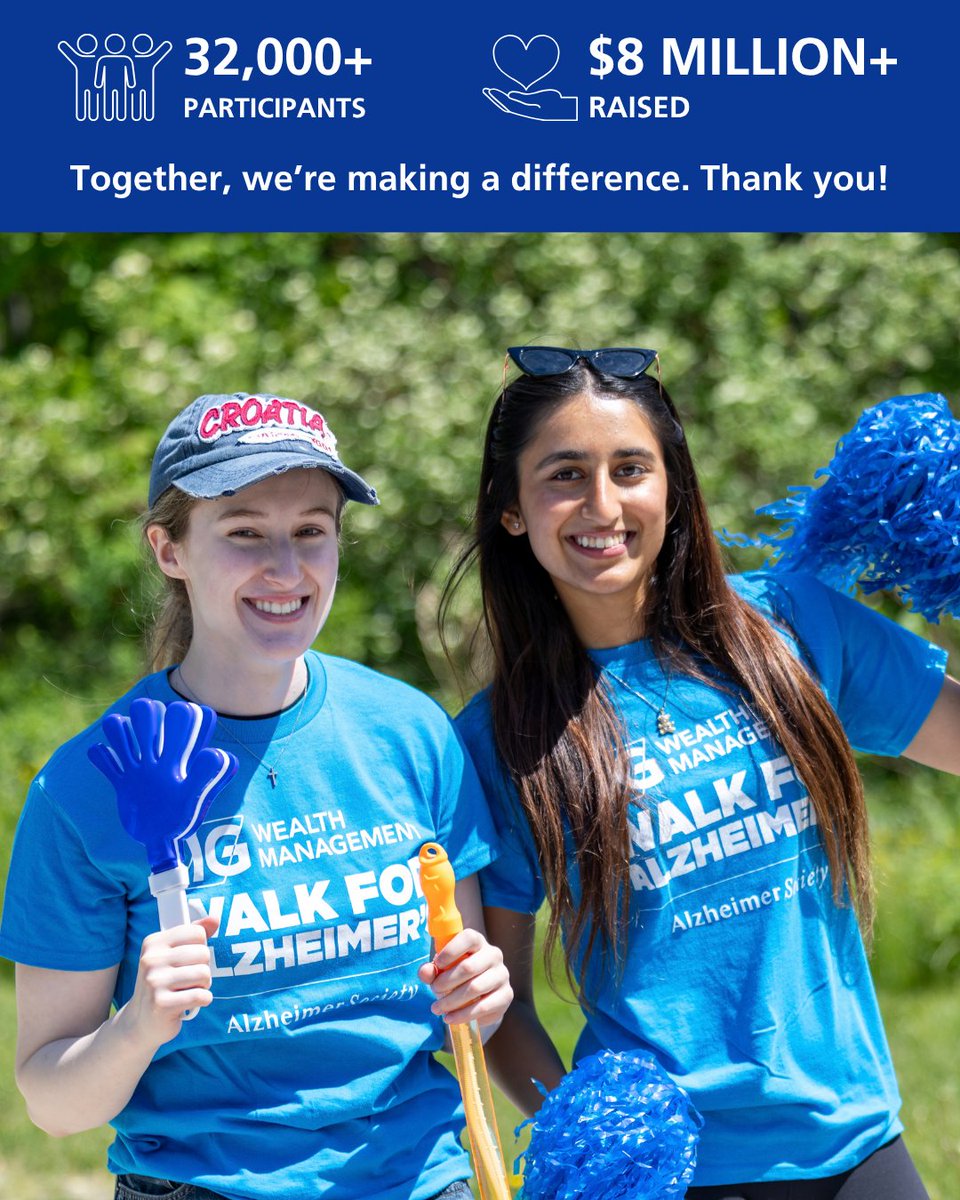
Thank you to everyone who took part in the 2026 IG Wealth Management Walk for Alzheimer's.
Over 32,000 participants in more than 150 communities across Canada raised more than $8 million for Alzheimer Societies across the country, helping people living with dementia and care partners find local support.
Want to join us in ensuring no one faces dementia alone? Visit https://t.co/QJI43I4waS for information on next year's Walk.
--
Merci à toutes les personnes qui ont participé à la Marche pour l’Alzheimer IG Gestion de patrimoine 2026.
Plus de 32 000 participants dans plus de 150 communautés partout au Canada ont amassé plus de 8 millions de dollars pour les Sociétés Alzheimer partout au pays, afin d’aider les personnes vivant avec un trouble neurocognitif et leurs proches aidants à trouver du soutien dans leur communauté.
Vous souhaitez vous joindre à nous pour faire en sorte que personne n’ait à faire face à la maladie dans l’isolement? Visitez https://t.co/IeOXewfX4Q pour en savoir plus sur la Marche de l’an prochain.
Researchers at the University of Alberta, including Dr. Satyabrata Kar, whose work has been funded in part through the Alzheimer Society Research Program, are testing nanoparticles — tiny molecules used to deliver medicine to patients — as a potential new approach to treating Alzheimer's disease, with promising early results in mice.
This research is still in its early stages, and it will take years to determine whether findings like these could lead to treatments for people living with Alzheimer's disease. However, this exciting finding is a great reminder of the important dementia research taking place in laboratories across Canada.
Read the story from CTV News Edmonton: https://t.co/nQgz1pOvKR
Today, on National Seniors Day, we celebrate the invaluable contributions of older adults across Canada and the important role they play in our families, communities and society.
On this day we also want to recognize the importance of understanding brain health as we age. Dementia is not a normal part of aging. Occasional forgetfulness is normal; changes in memory, thinking or behaviour that disrupt daily life may be cause for concern.
On this National Day for Truth and Reconciliation, we honour survivors of residential schools, along with their families and communities, and reflect on the lasting impacts these institutions have had across generations.
Dementia rates among Indigenous peoples are rising, and they face health disparities that are rooted in colonization and ongoing social inequities.
At the Alzheimer Society of Canada, we want to connect Indigenous peoples with culturally appropriate care tools and resources. Visit the link for a list of resources on dementia care for First Nations, Métis and Inuit peoples, compiled in partnership with Indigenous health experts.
Learn more: https://t.co/urisKqWLBh
#NationalDayForTruthAndReconciliation
--
En cette Journée nationale de la vérité et de la réconciliation, nous rendons hommage aux survivant·es des pensionnats autochtones, ainsi qu’à leur famille et à leurs communautés, et nous prenons le temps de réfléchir aux répercussions durables que ces établissements ont à travers les générations.
La prévalence des troubles neurocognitifs chez les peuples autochtones est en hausse, et ces communautés sont confrontées à des inégalités en matière de santé qui trouvent leur origine dans la colonisation et dans les inégalités sociales persistantes.
La Société Alzheimer du Canada souhaite mettre à la disposition des peuples autochtones des outils et des ressources de soins adaptés à leur culture. Cliquez sur le lien pour consulter une liste de ressources sur les soins des troubles neurocognitifs destinées aux Premières Nations, aux Métis et aux Inuits, compilée en collaboration avec des expert·es en santé autochtones.
En savoir plus : https://t.co/AdR1bZGcah
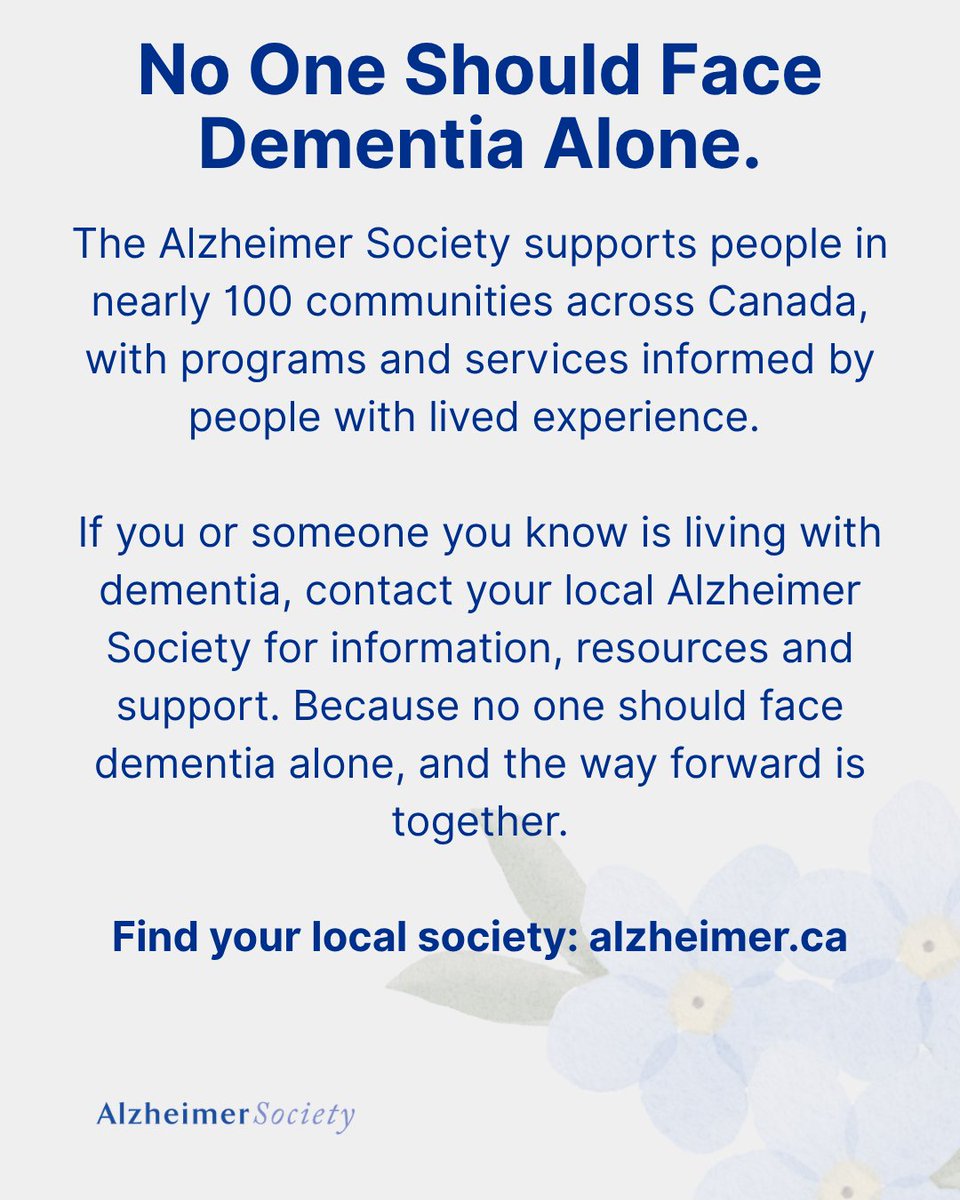
As World Alzheimer’s Month comes to a close, we want to say thank you. Thank you to everyone who shared a post, started a conversation, donated, or simply learned something new about dementia this September. Every action counts. Dementia awareness doesn’t stop on September 30. The Alzheimer Society is here year-round, supporting people in nearly 100 communities across Canada with programs and services informed by people with lived experience. Together, we’re building a more dementia-friendly Canada.
#WorldAlzMonth #DementiaDiagnosisMatters
--
Le Mois mondial de la maladie d’Alzheimer touche à sa fin, et nous tenons à vous remercier. Merci à toutes les personnes qui ont partagé une publication, lancé une discussion, fait un don ou simplement appris quelque chose de nouveau sur les troubles neurocognitifs en septembre. Chaque action compte. La sensibilisation aux troubles neurocognitifs ne s’arrête pas le 30 septembre. Toute l’année, la Société Alzheimer offre des programmes et des services de soutien éclairés par de l’expérience vécue dans près de 100 régions au Canada. Ensemble, nous bâtissons un Canada plus accueillant pour les personnes vivant avec un trouble neurocognitif.
#MoisMondialAlzheimer #LeDiagnosticCompte