Founder-led sales question:
A prospect photographed every page of my product demo (10+ pages), said they’d share it with their team, then didn’t reply to my follow-up email.
How would you interpret this? Would you follow up again?
#buildinpublic
One thing I’m learning as an early-stage founder:
You don’t need all the answers to make a decision. You need enough information to make the next testable decision.
Make an educated guess, test it, gather evidence, and repeat with better information.
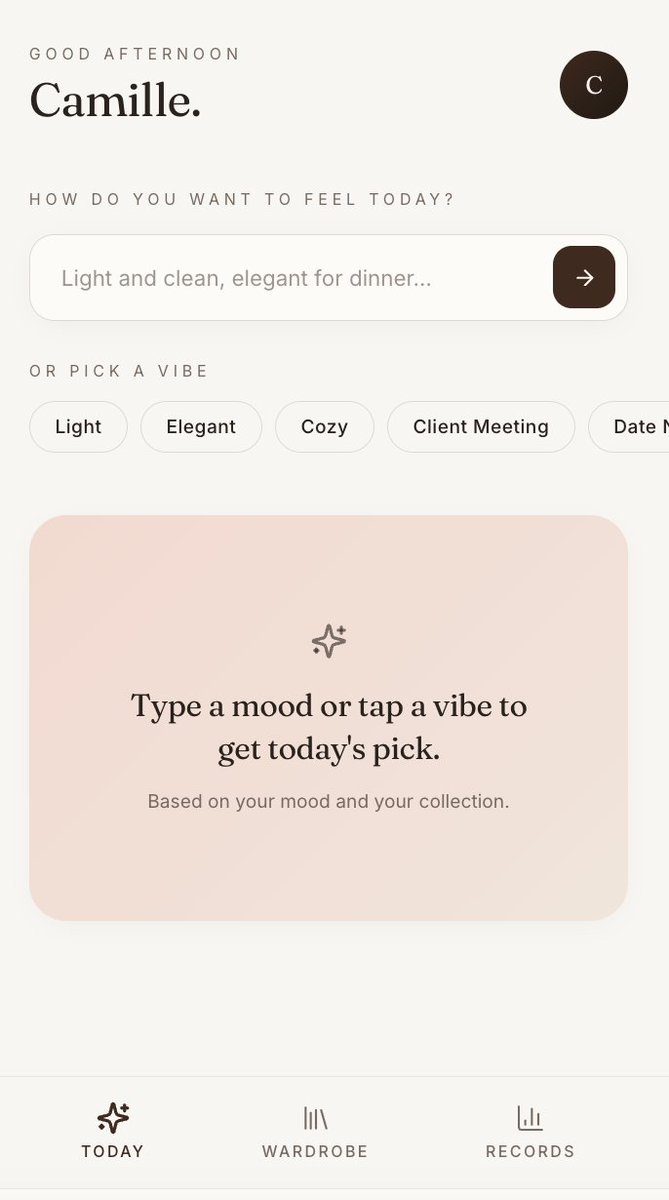
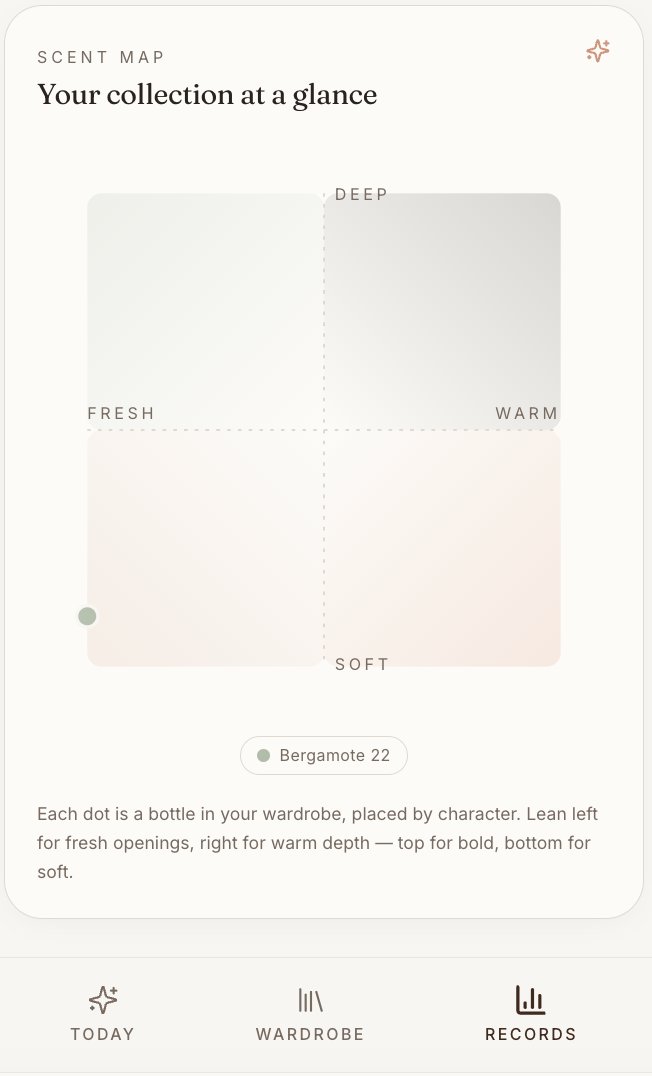
Fragrance lovers, I’m building a small app that helps you choose what to wear based on mood.
You log how you want to feel today, and it recommends from your own collection.
Would you use this? What features would you want most?
#PerfumeApp#BuildInPublic
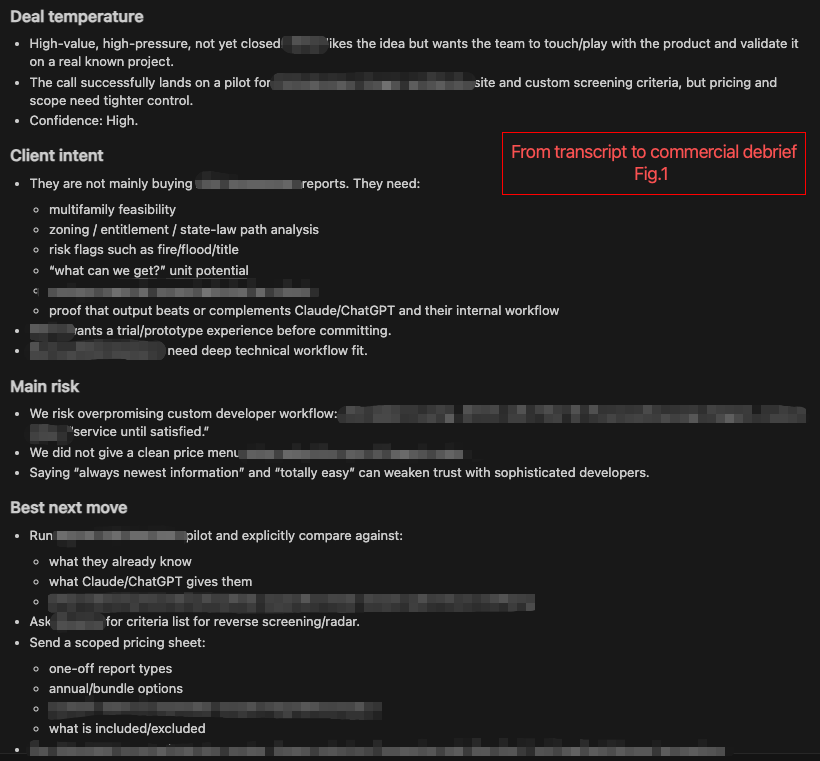
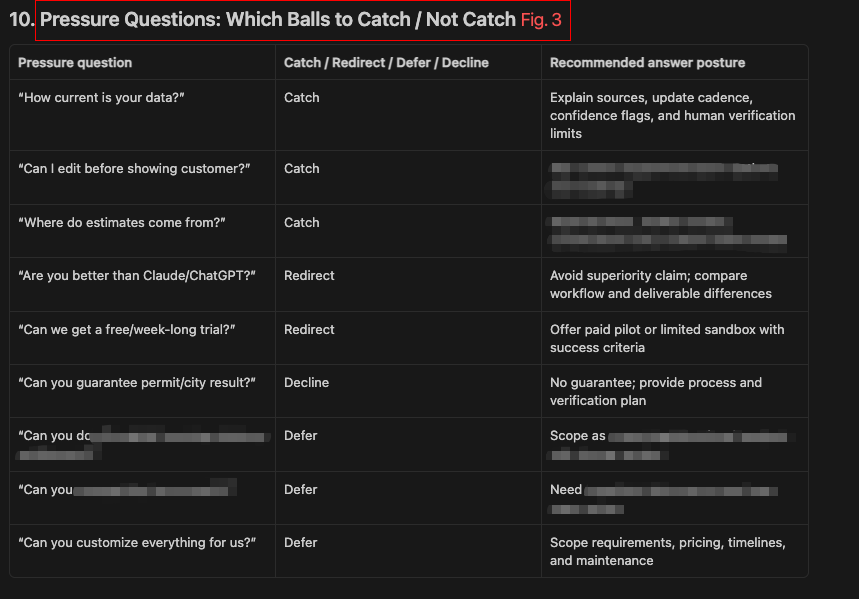
Built a small internal prototype in 1 day for regulated-industry founders / small teams, it turns B2B meeting transcripts into:
commercial debrief
talk-track reinforcement
QA gap filling
...
We now review this before and after every client meeting.
Github: aimeichen/astack
Introducing Claude Design by Anthropic Labs: make prototypes, slides, and one-pagers by talking to Claude.
Powered by Claude Opus 4.7, our most capable vision model. Available in research preview on the Pro, Max, Team, and Enterprise plans, rolling out throughout the day.
Prompt:
A web app that hooks up to the user's camera that lets users record videos of themselves talking to the camera. The AI should display good prompts (questions) to get the user's creative juices flowing so they know what to talk about.
After recording, the user should be able to download the video as a mp4 file.
Also allow the user to choose dimension of video (9:16, 16:9, 3:4, 1:1).
Have Gemini actively listen in on what the user is saying and jump in with live questions at various points (as overlay text only, no audio) so the user is never stuck, so it's like the AI is a video podcast host interviewing the user.
Use pastel colors and make the design classy. Make sure the UI auto-adjusts for all video layouts.
Junior PM: Our metrics are great. Sign-ups are up 40% month-over-month.
Senior PM: How's retention?
Junior PM: Still working on that. But look at this growth!
Senior PM: Growth without retention isn't growth.
Junior PM: what do you mean?
Senior PM: It's a leaky bucket. You're celebrating the water going in.
Junior PM: but we're hitting our acquisition targets.
Senior PM: Who set those targets?
Junior PM: Leadership. They want us to scale fast.
Senior PM: Scale what exactly?
Junior PM: ...users?
Senior PM: Users aren't a business. Revenue is.
Junior PM: we'll monetize later. Product-market fit first.
Senior PM: Do you have product-market fit?
Junior PM: We're growing, aren't we?
Senior PM: That's not what PMF means.
Junior PM: then what does it mean?
Senior PM: Your customers can't live without your product.
Junior PM: how do you measure that?
Senior PM: Simple test. Stop marketing for a month.
Junior PM: that would kill our growth.
Senior PM: Exactly. You have marketing-market fit.
Junior PM: isn't that the same thing?
Senior PM: No. Marketing gets them in. Product keeps them.
Junior PM: but our charts go up and to the right.
Senior PM: Charts lie. Customers don't.
Junior PM: meaning?
Senior PM: What do your customers say about you?
Junior PM: our NPS is decent.
Senior PM: I didn't ask about surveys. What do they SAY?
Junior PM: ...in support tickets?
Senior PM: On Twitter. In reviews. To their friends.
Junior PM: I don't really track that.
Senior PM: There's your problem. PMF isn't a metric.
Junior PM: then what is it?
Senior PM: It's when customers become evangelists.
Junior PM: how do I know if that's happening?
Senior PM: They tweet about you without being asked.
Junior PM: that feels... unscientific.
Senior PM: Marc Andreessen disagrees.
Junior PM: who?
Senior PM: The guy who coined "product-market fit."
Junior PM: and he looks at tweets?
Senior PM: He looks at everything. Quantitative AND qualitative.
Junior PM: like what quantitative stuff?
Senior PM: Usage patterns. Engagement depth. Customer lifetime value.
Junior PM: we track DAU and MAU.
Senior PM: Do you track how DEEP they go?
Junior PM: what's that mean?
Senior PM: How many core features do they actually use?
Junior PM: ...most people use the main feature.
Senior PM: How many touch secondary features?
Junior PM: like 15%.
Senior PM: That's not PMF. That's feature bloat.
Junior PM: so we should cut features?
Senior PM: You should understand WHY they don't use them.
Junior PM: maybe they don't need them?
Senior PM: Or maybe your main feature isn't solving their real problem.
Junior PM: but they signed up.
Senior PM: Signing up isn't commitment. Paying is.
Junior PM: we have a freemium model.
Senior PM: What percentage convert to paid?
Junior PM: around 3%.
Senior PM: Industry average?
Junior PM: ...also around 3%.
Senior PM: So you're average. Not exceptional.
Junior PM: that's still good though.
Senior PM: Good doesn't create defensible businesses.
Junior PM: what does?
Senior PM: Customers who can't imagine life without you.
Junior PM: how do I get there?
Senior PM: Stop optimizing for vanity metrics.
Junior PM: like what?
Senior PM: Sign-ups. Page views. App downloads.
Junior PM: those matter though.
Senior PM: They matter for reporting. Not for building.
Junior PM: what should I optimize for?
Senior PM: Customer success. Not your success.
Junior PM: isn't that the same thing?
Senior PM: You measure your success in features shipped.
Junior PM: that's my job.
Senior PM: Your job is making customers successful.
Junior PM: but I don't control customer success.
Senior PM: You control whether the product helps them succeed.
Junior PM: example?
Senior PM: Stop measuring "time in app."
Junior PM: why? Engagement is important.
Senior PM: Engagement isn't the goal. Outcomes are.
Junior PM: what's the difference?
Senior PM: A customer spending 10 minutes versus 2 hours.
Junior PM: more time sounds better.
Senior PM: Not if they needed 2 minutes.
Junior PM: oh.
Senior PM: Great products make tasks EASIER, not longer.
Junior PM: so less engagement can be better?
Senior PM: If it means better outcomes, yes.
Junior PM: this feels backwards.
Senior PM: Only if you're optimizing for the wrong thing.
Junior PM: which is?
Senior PM: Internal metrics instead of customer value.
Junior PM: but how do I know what customers value?
Senior PM: Ask them. But not with surveys.
Junior PM: then how?
Senior PM: Watch what they DO. Not what they SAY.
Junior PM: like analytics?
Senior PM: Like behavior patterns. Support tickets. Churn reasons.
Junior PM: we track churn reasons.
Senior PM: What's the #1 reason?
Junior PM: "Found a better solution."
Senior PM: What does that tell you?
Junior PM: ...we're not the best solution?
Senior PM: You're A solution. Not THE solution.
Junior PM: how do I become THE solution?
Senior PM: Solve their problem better than anyone else.
Junior PM: we have more features than competitors.
Senior PM: Features aren't solutions. Outcomes are.
Junior PM: I keep hearing this. Give me a concrete example.
Senior PM: Customer says "I need better reporting."
Junior PM: so we build better reports.
Senior PM: Wrong. Ask WHY they need better reporting.
Junior PM: to track performance?
Senior PM: Keep digging. Why do they need to track performance?
Junior PM: to... show their boss they're doing good work?
Senior PM: Now you're getting somewhere.
Junior PM: so the real problem is proving value to stakeholders?
Senior PM: Exactly. The report is just a symptom.
Junior PM: so what do we build?
Senior PM: Something that makes them look good to their boss.
Junior PM: that's very different from "better reporting."
Senior PM: That's the difference between features and solutions.
Junior PM: and this leads to PMF how?
Senior PM: When you solve real problems, customers can't leave.
Junior PM: because there's no alternative?
Senior PM: Because the alternative is going back to the pain.
Junior PM: and that's when they become evangelists?
Senior PM: When you save them from pain, they tell everyone.
Junior PM: so PMF is really about pain relief?
Senior PM: PMF is about being essential. Not nice-to-have.
Junior PM: how do I know if we're essential?
Senior PM: Your customers would panic if you disappeared.
Junior PM: that's a high bar.
Senior PM: It's the only bar that matters.
Junior PM: our leadership wants growth though.
Senior PM: Without PMF, growth is just expensive customer acquisition.
Junior PM: but investors love growth.
Senior PM: They love SUSTAINABLE growth.
Junior PM: what's the difference?
Senior PM: Sustainable growth comes from word-of-mouth.
Junior PM: we barely get word-of-mouth.
Senior PM: Because you don't have PMF yet.
Junior PM: so what do I do?
Senior PM: Stop chasing new customers until you nail the ones you have.
Junior PM: that sounds risky.
Senior PM: You know what's riskier?
Junior PM: what?
Senior PM: Building a business on quicksand.
Junior PM: meaning?
Senior PM: Customers who don't really need you.
Junior PM: but they're paying us.
Senior PM: For now. Until someone better comes along.
Junior PM: so PMF is my insurance policy?
Senior PM: PMF is your only moat.
Junior PM: I thought features were our moat.
Senior PM: Features get copied. Customer love doesn't.
Junior PM: how do I measure customer love?
Senior PM: Net Promoter Score is a start.
Junior PM: we have NPS.
Senior PM: What's your score?
Junior PM: 7.2.
Senior PM: Industry benchmark?
Junior PM: around 7.
Senior PM: So you're slightly above average love.
Junior PM: that's good, right?
Senior PM: It's not evangelical love.
Junior PM: what would evangelical love look like?
Senior PM: NPS above 9. Organic growth above 40%.
Junior PM: we're nowhere near that.
Senior PM: Then you know where to focus.
Junior PM: on existing customers instead of new ones?
Senior PM: On making existing customers so happy they recruit new ones.
Junior PM: that's a completely different strategy.
Senior PM: It's the only strategy that scales.
Junior PM: this feels like starting over.
Senior PM: Better to start over now than fail later.
Junior PM: but I'll miss my growth targets.
Senior PM: You'll miss them anyway without PMF.
Junior PM: why?
Senior PM: Because retention will kill your unit economics.
Junior PM: and with PMF?
Senior PM: Your customers become your sales team.
Junior PM: that sounds too good to be true.
Senior PM: It's how every great product company grew.
Junior PM: so PMF really is the only thing that matters?
Senior PM: For a PM? It's literally your job.
Junior PM: I thought my job was shipping features.
Senior PM: Your job is achieving PMF. Everything else is just tactics.
What I Wish Someone Told Me as a Junior:
1. What “good enough” looked like. What the client typically cares about
2. When to polish, and when to move fast
Now, I give that context to my team, because I know how much of a difference it makes.
Most PMs chasing "technical skills" think they need to learn code.
But what they’re really chasing is credibility, confidence, and career security.
The myth of the "technical PM" keeps you stuck.
I'll teach you in 2 minutes what took me 5 years to see:
🧵 1/16