🌿 Boston Built a Floating Island to Bring Wildlife Back to the Heart of the City!
In Boston's Fort Point Channel, a floating wetland is turning an urban waterway into a potential refuge for wildlife.
Weighing roughly 10 tons, the artificial island is covered with native plants whose roots extend into the water, creating shelter for fish and habitat for other aquatic creatures.
Built using recycled materials, the project aims to restore some of the natural shoreline habitat lost to urban development.
Sometimes, giving nature a second chance starts with creating a little space for it to return. 💚
#WildlifeConservation #Boston #Nature
A delicate crown of elegant feathers rises from its head, giving this remarkable pigeon the appearance of a bird wearing its own natural royal headdress.
The Topknot Pigeon is a distinctive forest-dwelling bird native to eastern Australia. Its soft grey-blue plumage, reddish-brown chest, and striking upright crest make it one of the most unusual members of the pigeon family. Often found moving through rainforest canopies and woodland areas, it feeds mainly on fruits and berries, swallowing many of them whole. Its unusual appearance is matched by its graceful movements as it travels quietly among the branches.
A feathered crown hidden among the treetops, reminding us that nature can turn even an ordinary pigeon into something extraordinary.
Topknot Pigeon
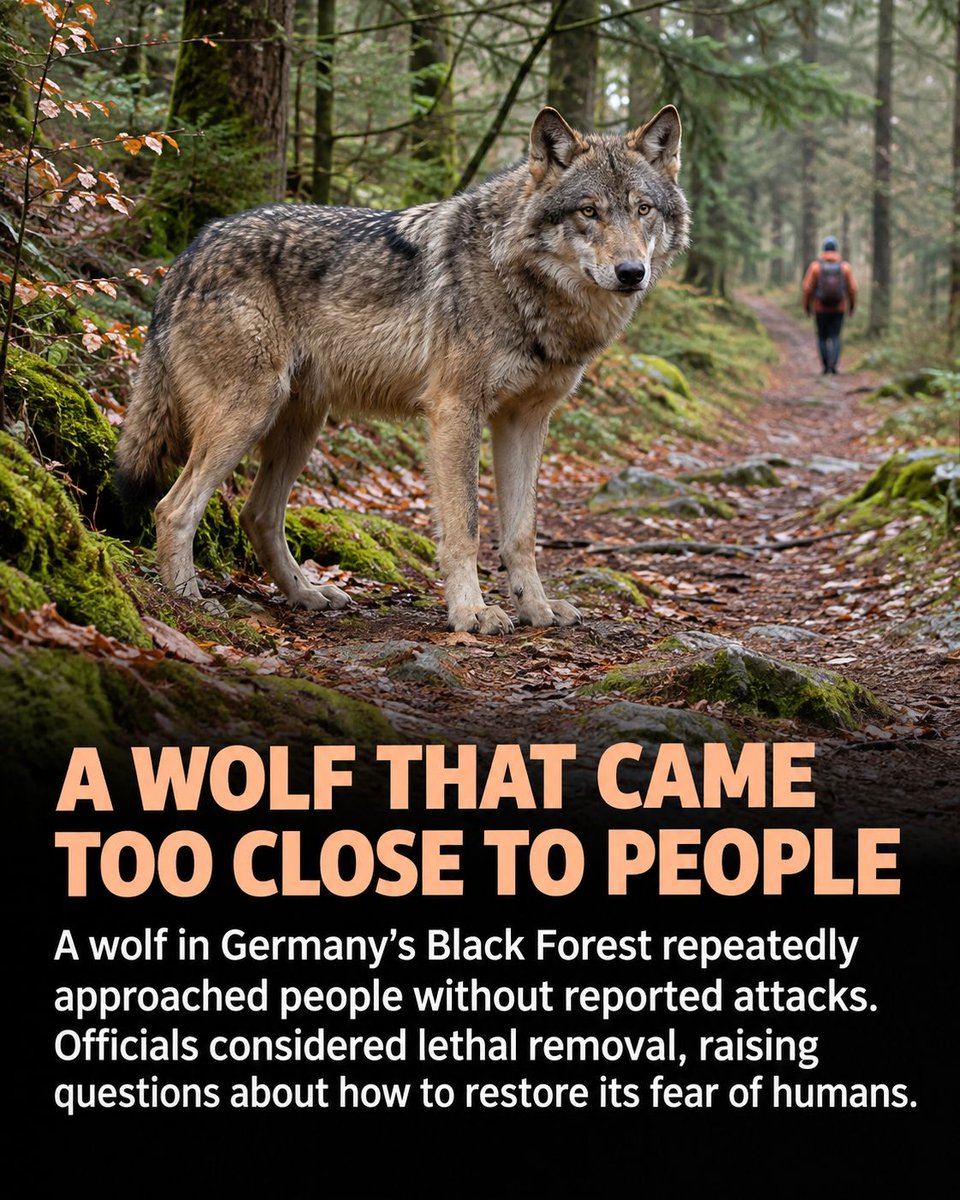
A Wolf Escaped a Death Sentence After Repeatedly Approaching People in Germany! 🐺🌲
He reportedly came dangerously close to people more than 180 times, yet no attacks were recorded.
In Germany's Black Forest, a male wolf attracted attention after repeatedly approaching hikers and dog walkers. Authorities considered his unusually fearless behavior a potential safety risk and authorized his removal.
But despite weeks of searching, hunters failed to locate him before the permit expired.
The case highlights a difficult conservation challenge: protecting wild wolves while ensuring they maintain a safe distance from humans.
Sometimes, coexistence requires teaching wildlife to fear us again.
#WolfConservation #WildlifeStories #AmazingNature
This Giant Clam Can Live for More Than 160 Years! 🐚🌊
It looks like something from another planet, but this extraordinary creature is hiding beneath the ocean floor!
Meet the geoduck, the world's largest burrowing clam, found along the Pacific coast of North America.
Its enormous, fleshy siphon can extend far beyond its shell, allowing it to breathe and filter microscopic food from seawater while remaining buried deep in the sand.
Even more astonishing, geoducks can survive for well over a century, with some recorded individuals exceeding 160 years.
One of the ocean's strangest creatures is also one of its longest-lived clams!
#Geoduck #MarineLife #AmazingNature
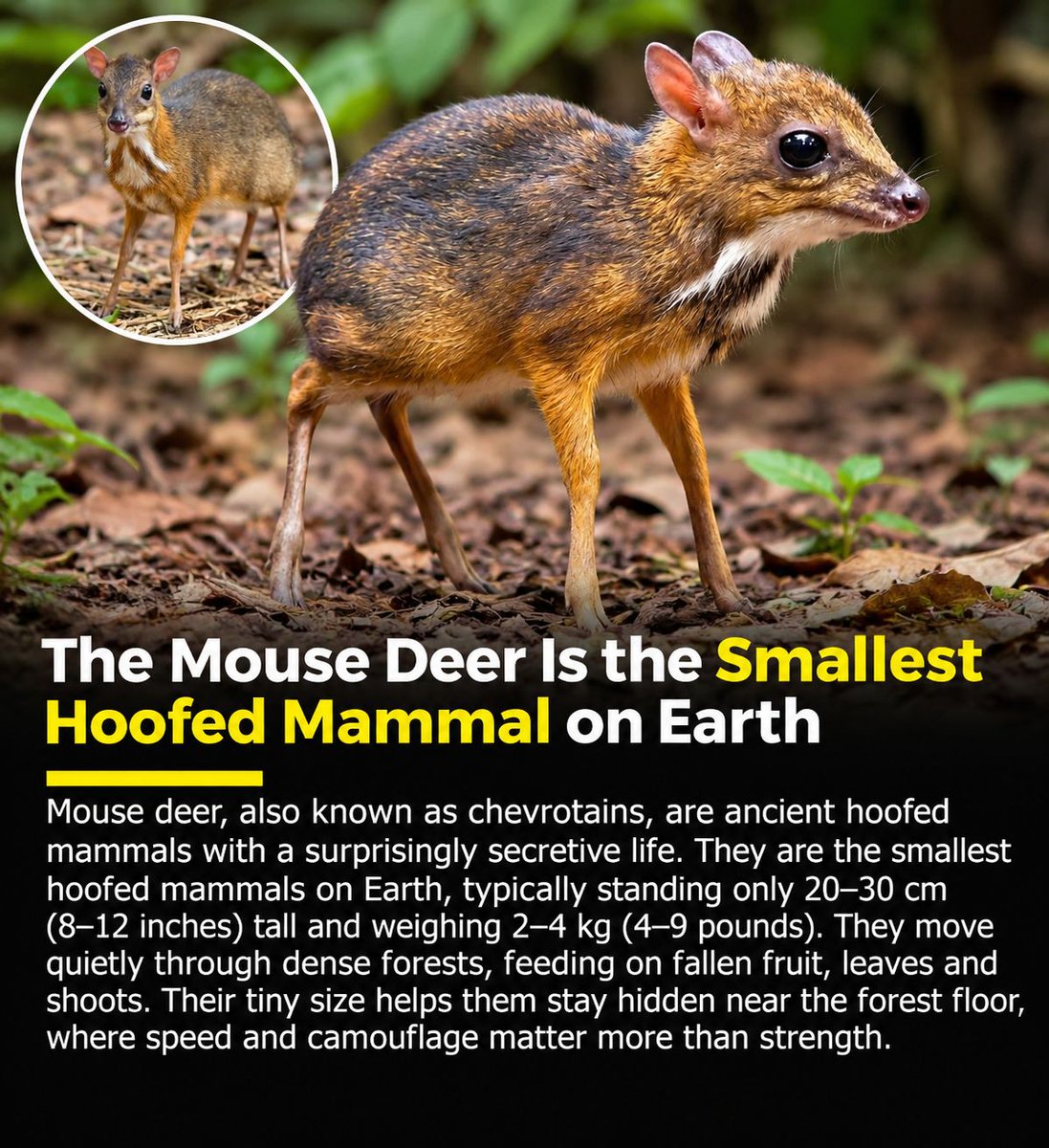
Meet the Mouse Deer, One of the Tiniest Hoofed Animals on Earth! 🦌🌿
It looks like a miniature deer with the face of a mouse, but this remarkable little creature is neither a mouse nor a true deer!
Known as a chevrotain, the mouse deer belongs to an ancient family of hoofed mammals found in the forests of Asia and Africa.
The smallest species, the lesser mouse deer, can weigh just 1.5–2.5 kilograms.
Despite their delicate appearance, these shy animals are remarkably skilled at navigating dense vegetation, relying on camouflage and quick movements to escape predators.
Nature proves that extraordinary creatures don't have to be enormous! 💚
#MouseDeer #WildlifeWonders #AmazingNature
It looks like a tiny striped hyena, but its favorite meal isn't meat. It's termites.
Meet the aardwolf, one of Africa's most unusual members of the hyena family.
Unlike its powerful relatives, this shy, mostly nocturnal animal has specialized teeth and a long, sticky tongue designed for gathering insects.
An adult can consume hundreds of thousands of termites in a single night, carefully licking them from the ground without tearing apart their colonies.
Its striped coat and raised mane make it look surprisingly fierce, but the aardwolf's survival depends more on finding termite trails than chasing prey.
Evolution took an animal from a family famous for powerful jaws and turned it into a remarkably specialized insect eater.
Sometimes nature's most fascinating predators are the ones hunting the smallest prey.
He never attacked anyone. Yet getting too comfortable around humans nearly cost this wolf his life.
In Germany's Black Forest, a male wolf reportedly approached hikers and dog walkers more than 180 times, sometimes coming within just a few feet.
Wild wolves normally avoid people, so his unusually bold behavior raised serious concerns.
Authorities authorized hunters to kill him, but despite weeks of searching, they couldn't locate him. The permit eventually expired without being renewed.
According to the reported account, wildlife experts then turned toward a different approach: teaching the wolf to keep his distance through deterrence.
It's a difficult conservation dilemma. A wild animal doesn't have to attack someone to become a safety concern.
Sometimes, the very distance that separates humans from wildlife is what keeps both alive.