An exciting milestone for AI in science: Our C2S-Scale 27B foundation model, built with @Yale and based on Gemma, generated a novel hypothesis about cancer cellular behavior, which scientists experimentally validated in living cells.
With more preclinical and clinical tests, this discovery may reveal a promising new pathway for developing therapies to fight cancer.
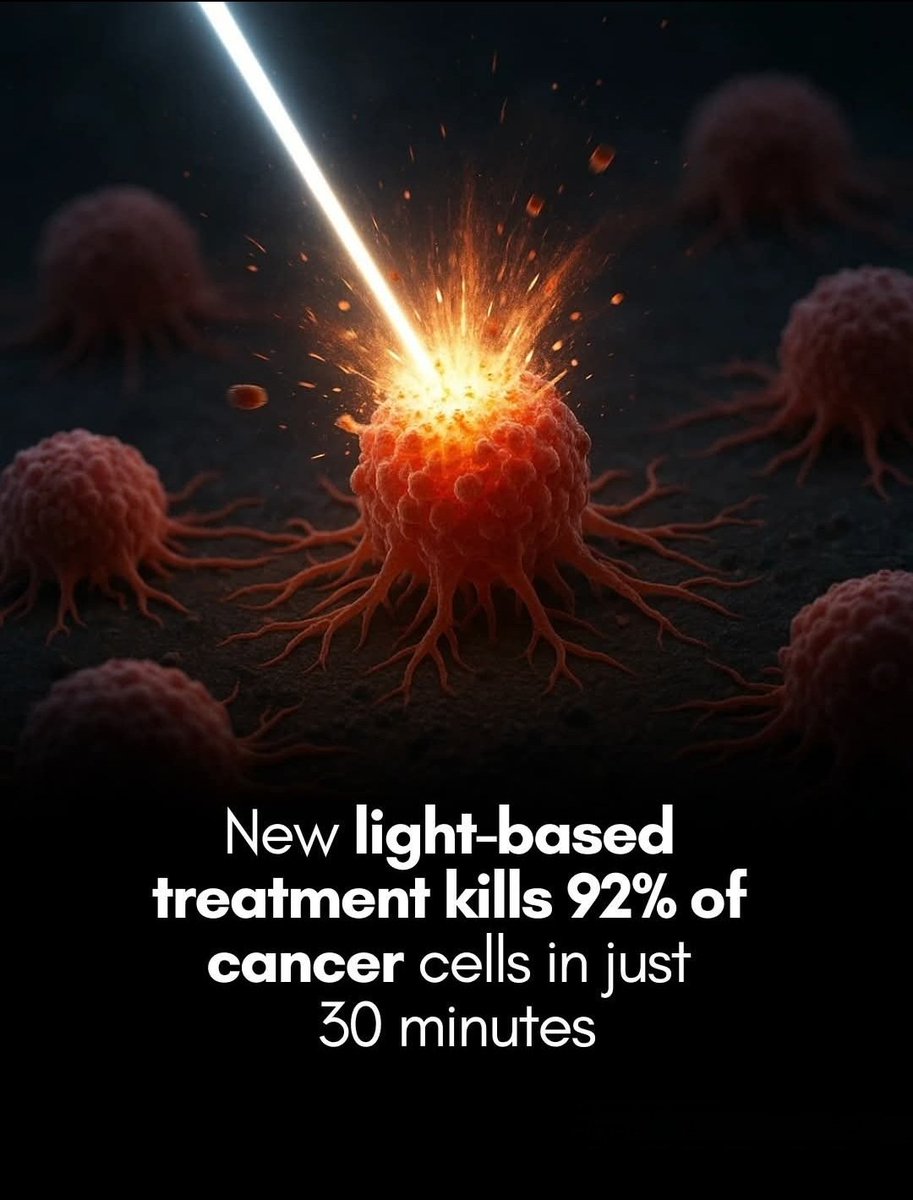
🚨 A new LED therapy killed 92% of skin cancer cells in 30 minutes!
And it might even work from home one day.
A team of researchers from the University of Texas at Austin and the University of Porto has developed a groundbreaking light-based cancer therapy that selectively kills cancer cells while sparing healthy tissue.
Using a combination of near-infrared LED light and specially engineered tin-based “SnOx nanoflakes,” the treatment destroyed 92% of skin cancer cells and 50% of colorectal cancer cells in just 30 minutes—with no damage to surrounding healthy skin cells. Unlike laser-based therapies, which require specialized facilities and risk harming healthy cells, this new method uses low-cost LEDs and avoids toxic side effects common with chemotherapy.
The therapy works through a process called photothermal therapy, where light triggers the nanoflakes to generate heat that precisely targets cancer cells. Researchers say the system is not only effective and safe but also scalable, with future versions potentially being developed as portable devices. "One day, patients could use this at home after surgery to destroy remaining cancer cells and reduce the risk of recurrence," said co-lead researcher Artur Pinto. With its accessibility, affordability, and minimal side effects, this innovation could mark a major leap forward in non-invasive cancer treatment.