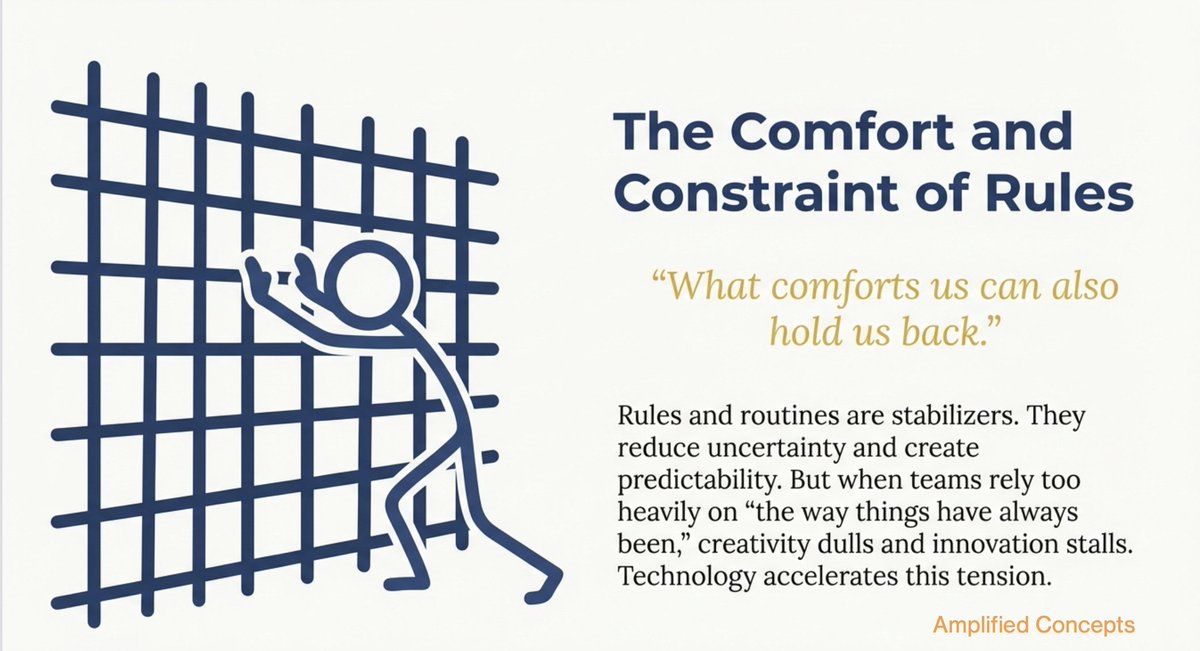
Rules bring comfort. They also set boundaries. When routines go unquestioned, creativity slows and innovation stalls. Growth begins when we ask whether the rules still fit the world we’re in.
#Leadership
The numbers may look better after cuts, but growth doesn’t come from doing less. It comes from what your team is still able to build. Efficiency isn’t the same as progress.
#AI#Leadership#Growth#FutureOfWork
https://t.co/0zk8dON6Kg
A tool can work perfectly on paper and still fail in the real world if people do not trust it. Before any technology earns adoption, it quietly passes four human tests. Does this feel respectful? Does it feel fair? Does it feel safe? Can I reverse it if something goes wrong?
What if resistance to change is really a lack of context? When leaders provide meaning and invite perspective, people engage. Change works better when it is shaped with people, not forced on them.
When employees’ ideas get ignored, they don’t stop being creative. They stop being creative for you. Some will leave to start their own initiatives. Others will shut down completely.
👉 Article: Leadership Litmus Test https://t.co/iqK6WwvNVk
𝑃ℎ𝑜𝑡𝑜: 𝑁𝑜 𝑅𝑒𝑣𝑖𝑠𝑖𝑜𝑛𝑠
When people stop bracing for impact, curiosity replaces fear. Ideas surface faster, collaboration opens up, and innovation becomes a natural outcome instead of a forced mandate.
AI is often framed as a problem-solver. The bigger opportunity is possibility creation. When intelligence becomes part of the system, new ways of working, deciding, and creating value start to appear.
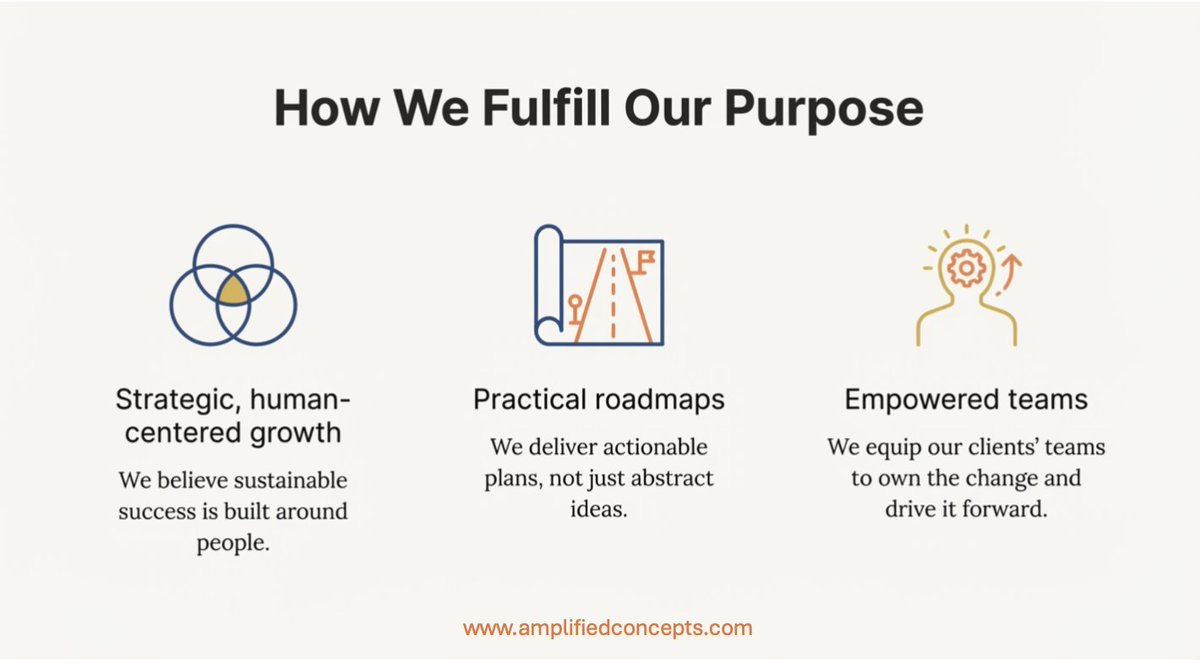
Our purpose lives in the space between strategy and execution. Where clarity replaces confusion and people are invited to contribute, not just comply. That is where change begins.
https://t.co/mEb10jXNmc
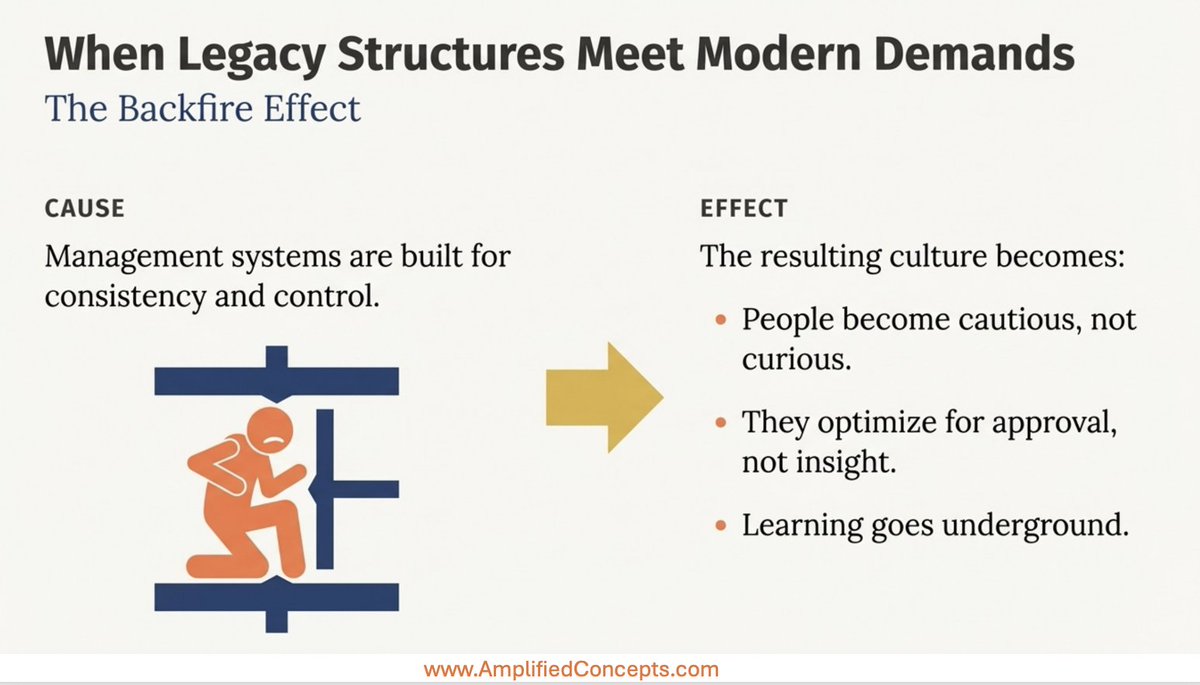
Legacy systems reward control and consistency. Modern work needs curiosity and learning. When the system does not evolve, people optimize for approval and learning goes underground.
The real work leaders are facing right now is change itself. How people work. How decisions get made. How uncertainty shows up faster and more publicly than it used to.
https://t.co/nSoILC8GEu
Resistance to new tech is rarely about the tool. It is about fear of judgment, replacement, and blame. Adoption improves when leaders address the human questions, not just the system rollout.
Many of us were trained to wait, comply, and avoid mistakes. That mindset made sense once. Today’s world rewards curiosity, experimentation, and learning as you go. Different rules, different skills.
Do your people feel like their work matters? Or are they just completing tasks while waiting for something better?
https://t.co/EGUl7voNTm
𝑃ℎ𝑜𝑡𝑜 𝑏𝑦 𝑘𝑟𝑎𝑘𝑒𝑛𝑖𝑚𝑎𝑔𝑒𝑠 𝑜𝑛 𝑈𝑛𝑠𝑝𝑙𝑎𝑠ℎ
The best learning doesn’t come from control—it comes from guidance. When people have room to explore, they don’t just gain knowledge. They develop judgment.
If your team feels anxious, that’s not a leadership failure. It’s a signal. Anxiety shows where change matters and where trust needs attention. The best leaders listen before they act.
Leading change is not about doing more faster. It is about starting in the right place.
Clarity creates momentum. Alignment turns ideas into progress. The smartest moves begin by knowing where you actually are.
https://t.co/mEb10jXNmc
Planning does not remove tension. It relocates it.
Address it early through clarity and conversation, or defer it into chaos, rework, and stress later. The work happens either way.
Innovation doesn’t thrive on fear. It thrives on psychological safety. When people feel safe to speak up, companies rise together.
👉 Read the article https://t.co/oCdyfXUiKt
The highest cost of change is rarely the tool.
It’s low adoption, rising turnover, and disengaged talent hiding below the surface.
What you don’t budget for often costs the most.
Psychological safety is not soft. It fuels creativity, loyalty, adaptability, and innovation. When people stop looking over their shoulder, they start looking forward.