Page 1 Google rankings, 9,000 blog views, and a content system running through one virtual assistant across an entire client portfolio.
That's the operational outcome from an agency that ran AmpiFire campaigns, verified the results were repeatable across multiple sites, and systematized the process.
The system is built around four steps:
✅ Target longtail keywords carrying purchase intent, the specific queries buyers run while evaluating options before a decision
✅ Publish in multiple formats simultaneously... articles, news announcements, videos, podcasts, blog posts
✅ Distribute across hundreds of platforms in a single campaign, rather than managing each channel as a separate workstream
✅ Train one virtual assistant to execute the process consistently across all client accounts
Two campaigns on a project management blog. No follow up activity after launch. Left completely alone for 3 to 4 months.
Page 1 Google. 8,000 monthly views.
A separate blog campaign hit 9,000 views in the first couple of months.
"It's definitely been extremely effective in getting site traffic. When we put it right into our SOP, it's a part of our strategy for all of our clients."
The reason longtail keyword traffic performs differently is specificity.
A broad query signals curiosity. A specific, detailed query signals a buyer already deep into research, comparing options, looking for a reason to decide.
Ranking consistently for those searches, with content distributed in every format those buyers consume, builds search authority that grows month over month.
Content infrastructure that delivers compounding page 1 rankings, built through a repeatable workflow managed by one person.
What would a systematic organic content process like this change about how an agency scales results across its client base?
One Amp campaign. Page one of Google in two weeks.
46% more buyers within the month. Traffic sustained for months after, from a single campaign with no additional spend.
That result came from a retail client whose agency used AmpiFire campaigns as the first deliverable on every new retainer.
The distribution model behind it matters.
Traditional SEO concentrates effort on one domain, building authority gradually through link equity and relevance signals over 12+ months.
An Amp campaign publishes content across hundreds of platforms simultaneously, producing multiple ranking signals from day one. Both approaches compound. The difference is when results begin.
Most businesses treat these as competing choices. The ones generating the strongest organic returns run them in parallel.
Amp campaigns deliver what the business needs now: rankings within 24 hours, buyer traffic within weeks, and compounding results that extend well beyond the campaign date.
SEO delivers what the business needs over three to five years: deep domain authority that becomes increasingly difficult for competitors to overtake.
Running both means early proof of results, faster buyer acquisition, and a long-term foundation building in the background simultaneously.
The retail client's 46% traffic increase did not stop when the campaign ended.
The authority signals distributed across hundreds of platforms continued compounding into ongoing buyer traffic months later.
That is what sustained organic growth looks like in practice.
Link building and click building are not the same thing, and the gap is costing brands rankings.
Old link building chases backlinks for the algorithm. Click building earns links that people actually click, which is what moves rankings and traffic now.
Here's the proof... people click the first search result roughly 40% of the time. So the prize was never the link. It was being the thing worth clicking.
A backlink buried on a dead resource page does nothing. A link inside content people genuinely want? That sends real visitors and compounds over time.
The takeaway is simple. Before chasing another backlink, ask whether anyone would click it. If the answer is no, it's vanity, and vanity does not pay.
A link exists to serve a person, not a robot.
Build the ones people click, and skip the rest.
The most expensive mistake in business is building for years before finding out if anyone actually wants it.
Steve Blank figured this out early. His fix was almost uncomfortable in its simplicity: build something rough, get it in front of real people, find out immediately if the market cares, before burning another month of runway on something unconfirmed.
That philosophy is behind some of the biggest companies alive today.
The internet changed how this works. You validate from anywhere now, without a storefront, without door to door, without a sales team. Traffic is the test.
Drive organic content across search, video, social, and podcasts... the places your buyers are already looking. What gets traffic tells you what the market actually wants.
And it goes further than that now. ChatGPT drove 20% of Walmart's referral traffic last year. 20% of Etsy's.
Nearly 15% for Target. AI systems like ChatGPT, Gemini, and Perplexity are actively making buying recommendations, pulling from content published across the internet. Brands with content distributed widely get cited as the answer. The rest get skipped entirely.
AmpiFire is built around this exact logic. One idea, every format, distributed across hundreds of platforms fast... so the market gives you real signals early, and your brand gets cited by AI systems when buyers come asking.
The founders scaling right now started distributing earlier than they felt ready.
At what point in your last build did you first try to drive real traffic to it?
A niche mattress store grew organic traffic 417.8% in a $12.55 billion market dominated by far bigger names.
No bigger ad budget. No outspending anyone.
They simply published more, and published smarter.
Each campaign targeted a specific product buyers were already searching for, then got turned into multiple content formats and spread across the web through MultiCasting on AmpiFire.
Keyword rankings went from 705 to 1,732. Traffic more than quadrupled.
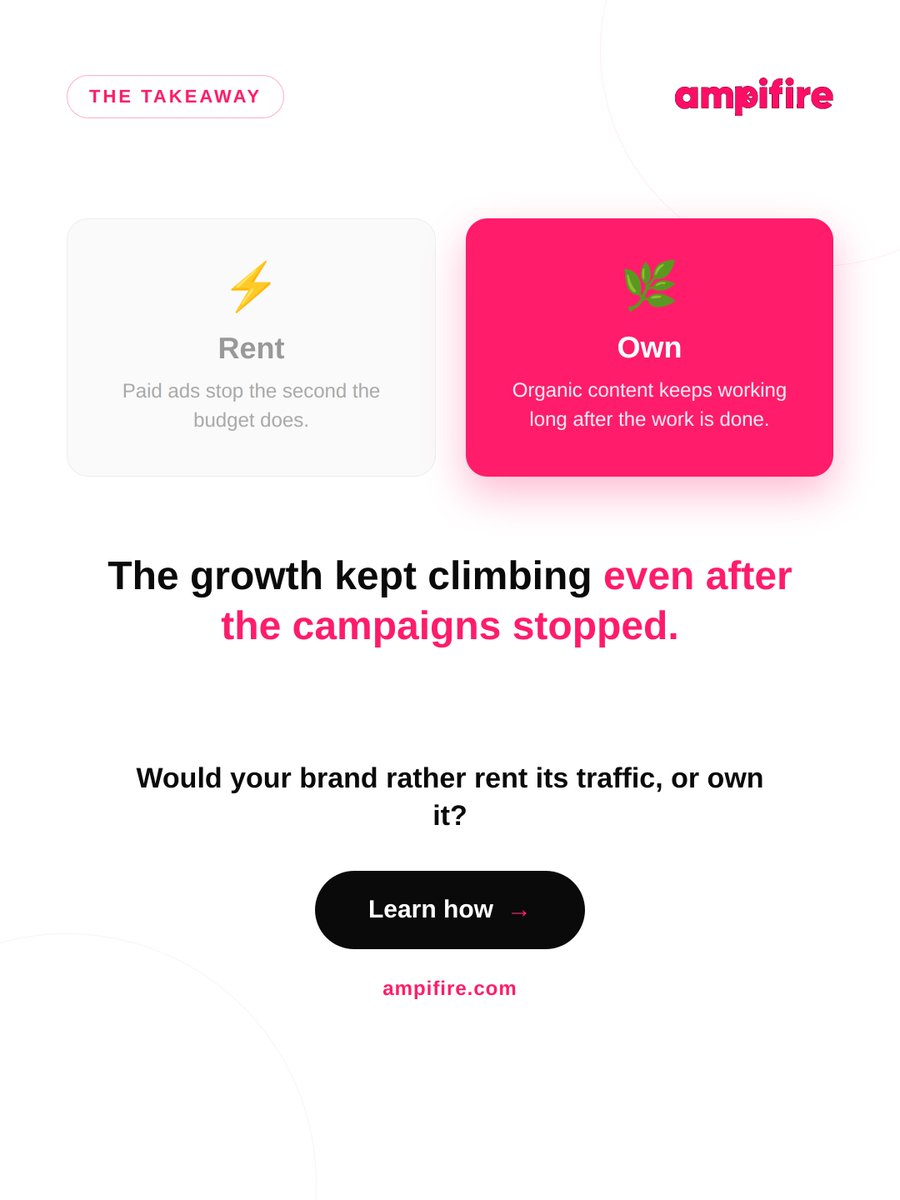
Here is the part worth sitting with. The growth kept climbing even after the campaigns stopped. Organic content keeps working long after the work is done. Paid ads stop the second the budget does.
The larger players never had to notice. They were busy renting their traffic.
Would your brand rather rent its traffic, or own it?
A local dental clinic was pulling one or two new patients a week while a single competitor quietly owned every map listing in town. Here is how that flipped.
The clinic started running Amp campaigns through AmpiFire. First result came in two days, a jump from position 3 to position 1 on their main keyword.
Six campaigns later, organic traffic had doubled. Every campaign after that ranked them for hundreds of keyword phrases across page one.
The strategy underneath it is simple enough to copy.
✅ Pick the topics buyers actually search before choosing a dentist
✅ Turn each topic into multiple content formats, not one blog post
✅ Publish that content across hundreds of sites so the algorithms see authority everywhere
✅ Repeat consistently so rankings compound instead of spiking and fading
That last point is where most local businesses lose. They run one burst, see a bump, then stop. The brands that win treat content like a habit, and the traffic keeps building on itself month after month.
What makes this work for smaller players is that coverage beats budget. A clinic does not need a national ad spend to outrank a bigger competitor. It needs to show up in more of the places a patient looks, answering more of the questions a patient asks.
The business that is everywhere a buyer searches wins the buyer, regardless of who has the deeper pockets.
If a competitor owns your local search results today, what is your actual plan to take it back?
Paid ads convert 3x better when organic content runs alongside them.
Here's the mechanism.
Before buying, customers research. They search Google, check YouTube, ask AI tools, look for news coverage. When the brand appears consistently across those sources during that research window, the ad click converts at a much higher rate. Buyers arrive already familiar.
The research phase is invisible to most analytics. Pixel data misses it. But it directly influences conversion outcomes across every paid channel.
The fix: answer the real questions buyers ask before purchasing, distribute those answers across multiple formats, and build enough presence that search engines and AI algorithms recognise the brand as a category authority.
Baby gear, home goods, supplements... every DTC category has hundreds of those buyer questions sitting unclaimed right now.
Watch the video for a practical breakdown on how this works.
What would ad performance look like if buyers already knew the brand before clicking?
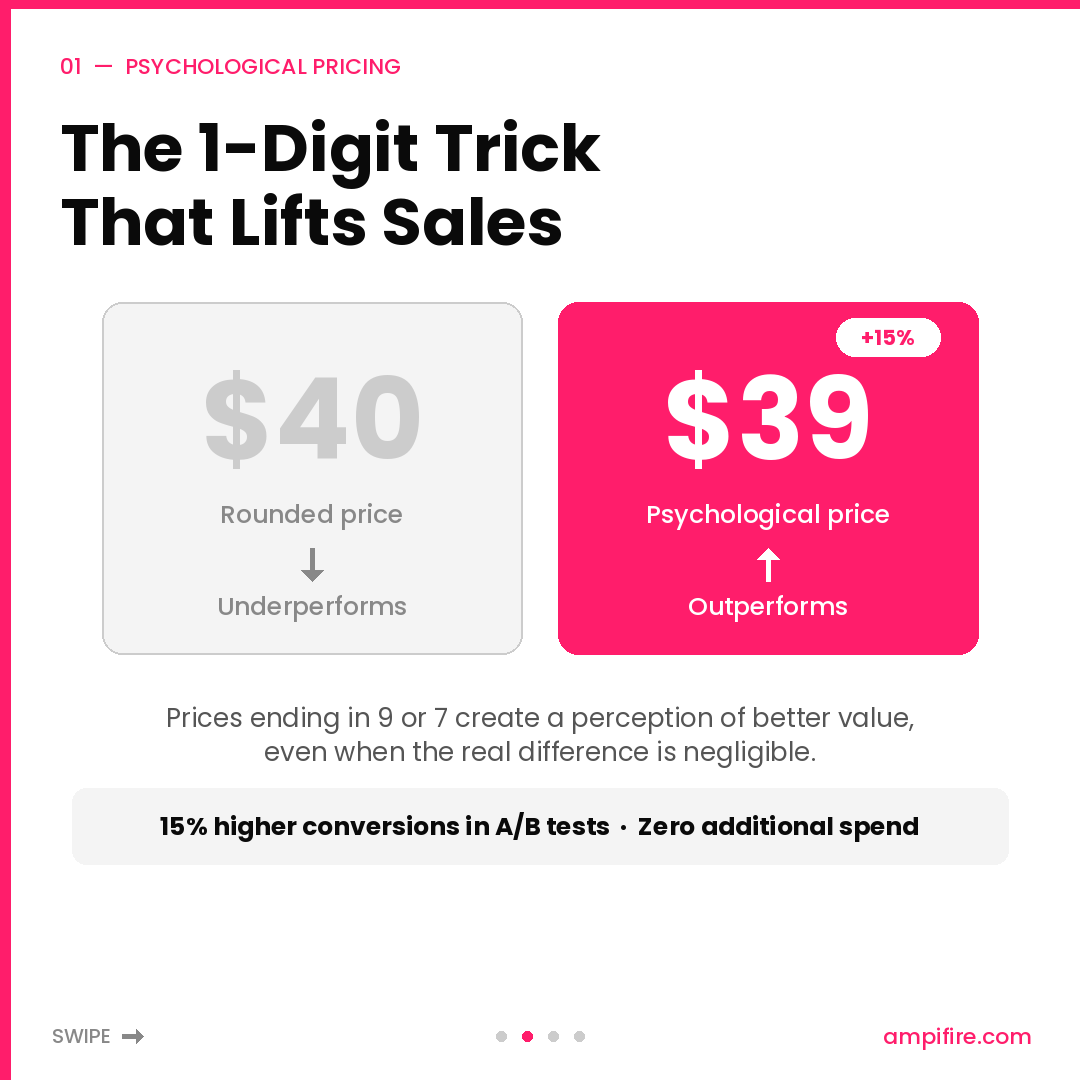
$39 outperforms $40 by 15% in conversion tests. One digit. Zero additional spend.
Psychological pricing is one of the most underused conversion levers on an ecom product page.
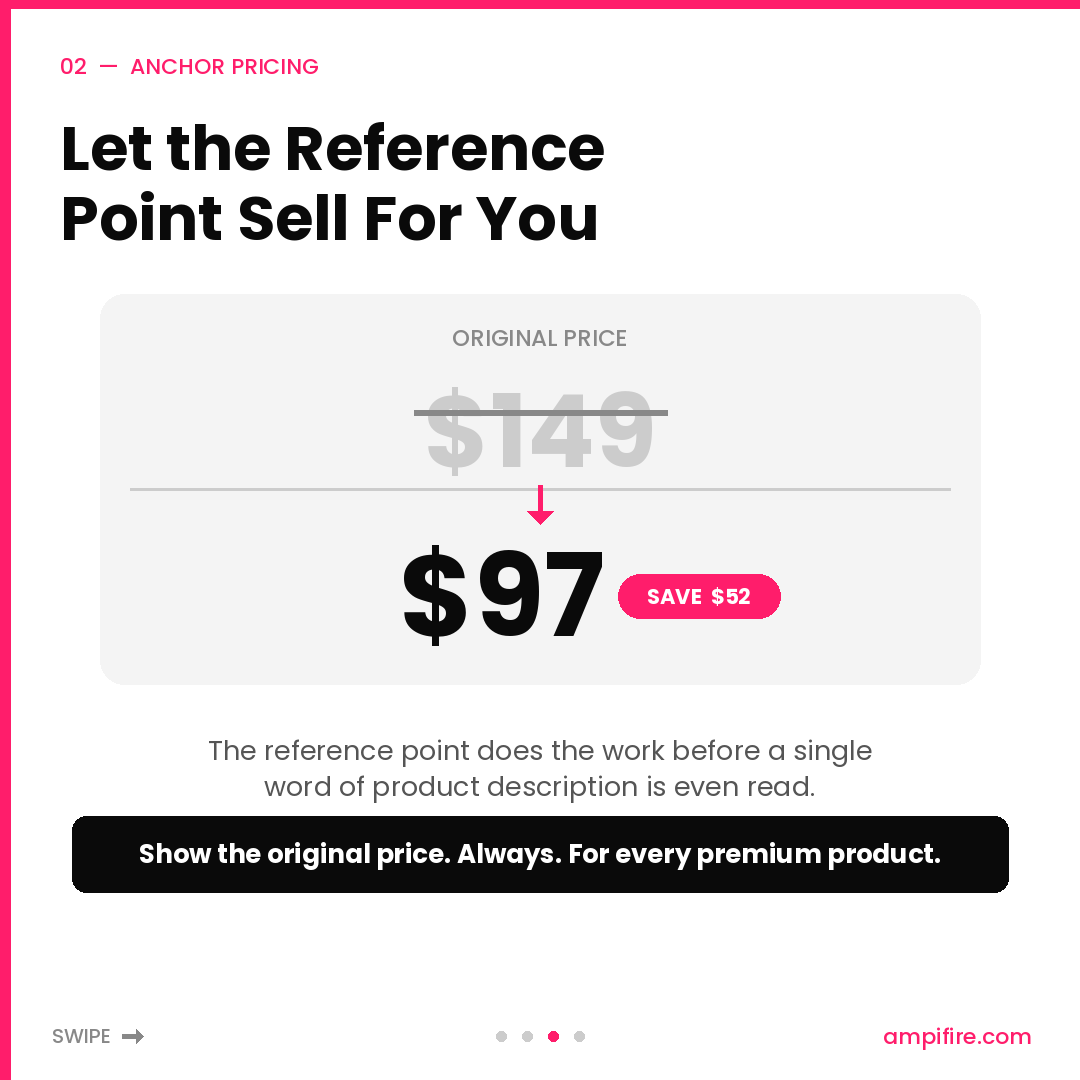
Prices ending in 9 or 7 create a perception of meaningfully better value, even when the actual difference is negligible. For premium products, anchor pricing layers on top: show the original higher price alongside the current one, and the reference point does the work before a single word of description is read.
Bundle tiers are where average order value compounds.
A 10% discount at two items, 15% at three, 20% at four or more. Each tier gives buyers a clear reason to add one more item. Margins hold on individual products. Order value climbs.
Three levers, each independently effective, each compounding on the others.
28 million active online stores are competing for the same customers in 2026. The ones widening their margin compete on pricing psychology alongside product.
Three levers, no ad spend required, and any ecom store can implement all three this week.
46% traffic growth from one campaign. A client asking for the next one before the first is even done.
That's what happens when agency owners add Amp campaigns to their service packages. A client gets ranked at the top of Google in under two weeks. Traffic climbs 46% in month one. Sales keep coming in months later.
The upsell writes itself. Clients see the result, then ask which city or market they can target next.
One agency owner structured it simply: include a bonus Amp campaign inside larger packages. Clients experience the result first. The retention and upsell conversation follows without any selling.
Every month since 2015, that agency has had either a new client or a retained one. Phone has not stopped.
If your agency is looking for a service that gets clients visible fast while building long-term authority underneath, this is what that looks like in practice.
What's the biggest gap in your current service stack when it comes to showing clients early results?
Over 200 ranking factors determine Google's top positions. Keyword optimization alone is starting to lose its grip on them.
Google weighs media coverage, social signals, and backlinks from authoritative sources across the internet.
Those are the signals that build real brand trust, and trust is what pushes rankings and sustains organic revenue over time.
When a brand earns consistent coverage on major news networks, podcast mentions, YouTube presence, and backlinks from influential blogs simultaneously, Google treats it as credible and relevant. Rankings rise. Organic traffic compounds month on month.
Businesses running pure SEO campaigns are optimizing for a narrower slice of the algorithm than the brands currently dominating their category.
Building media presence across multiple publishing channels, the foundation of the Ampifire Effect, is how brands build the authority that keeps paying long term.
What percentage of your current content strategy is building the popularity signals Google actually rewards?
$3,600 in monthly content spend, 50x return on content spend. Zero paid ad budget in that equation.
One health equipment brand distributed organic content at $3,600 a month. The outcome was equivalent to $109,000 in ad spend, generating six figures in sales.
Paid advertising runs on ROAS. Organic content runs on ROCS... return on content spend. The compounding difference is not marginal.
Paid traffic stops when spend stops. Organic content continues ranking, driving traffic, and converting buyers long after publishing. The article distributed eight months ago still earns traffic today.
Organic content also changes how paid ads perform.
The buyer who researched a brand across multiple platforms before clicking an ad converts at 3x the rate of cold traffic. The ad did not do that work alone.
With Shopify Agentic Storefronts live and AI attributed orders growing 13x year over year, that same content footprint now determines which brands AI agents recommend at checkout.
Organic content has always compounded. In 2026, it also drives AI citations. The return on that investment keeps climbing.
What does your current return on content spend look like next to your paid ads ROAS?
A 35-hour campaign pause moved a winning ad from 95% of spend to 11%.
No creative changes. No budget cuts. The pause did it.
Here's why:
Meta's delivery system learns which ads are working by tracking engagement signals continuously. The moment you pause a campaign, that learning stops. When it restarts, it treats everything like day one... reallocates budget from scratch... and the ad that was getting 95% of spend? Now it has to prove itself again.
In that documented case, cost per click rose 60 to 69%. Same ad. Same audience.
So what's the fix?
Stop making changes at the campaign level. Pause individual underperforming ads, launch new ones, adjust spend... all without ever hitting the campaign off switch.
A full campaign pause should happen maybe once a quarter, not whenever something looks off.
Budget structure matters just as much.
Meta needs roughly $250 per day per campaign to properly learn what's working. Split $12,000 a month across 4 campaigns and none of them get enough data to stabilize. Consolidate into 1 or 2 campaigns, each properly funded.
One campaign, one ad set, multiple creatives.
Less structure. More signal.
How many campaigns are running in your accounts right now, and is the budget actually enough to feed each one?
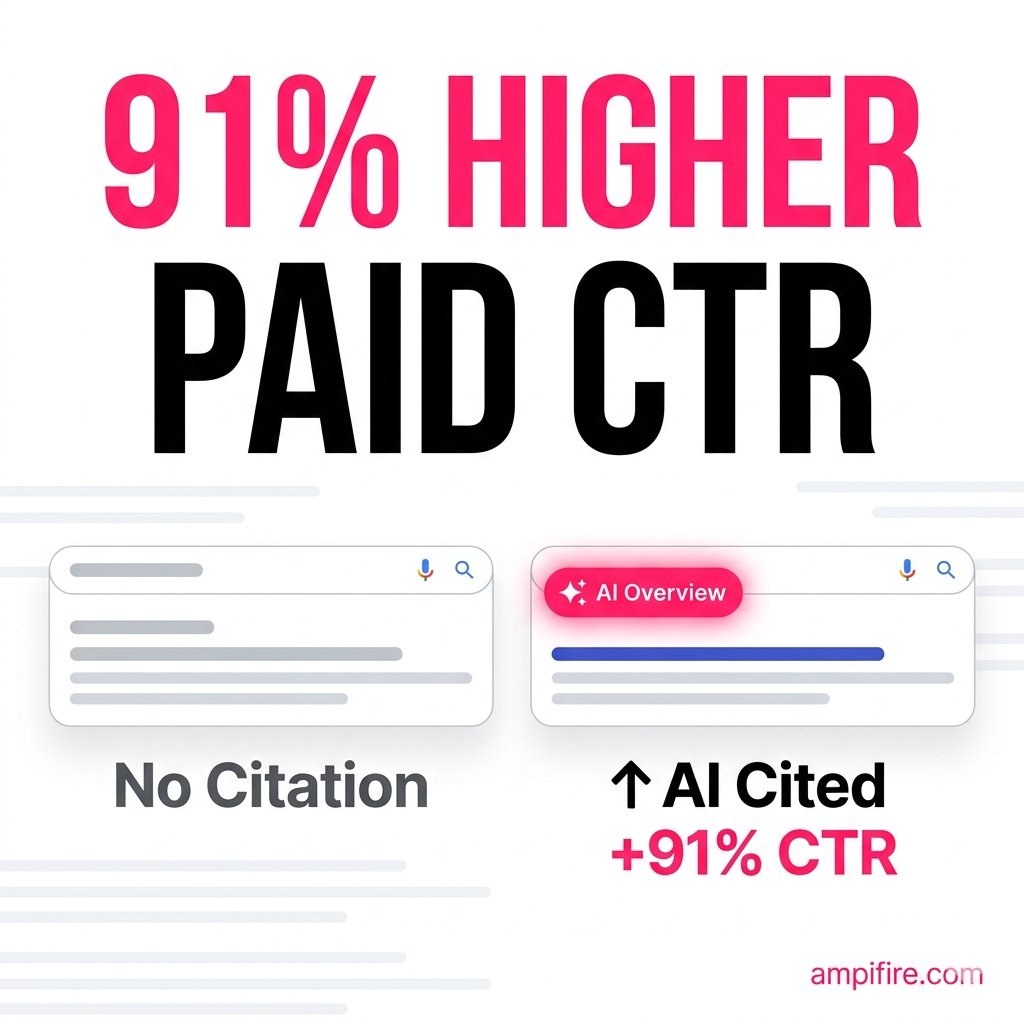
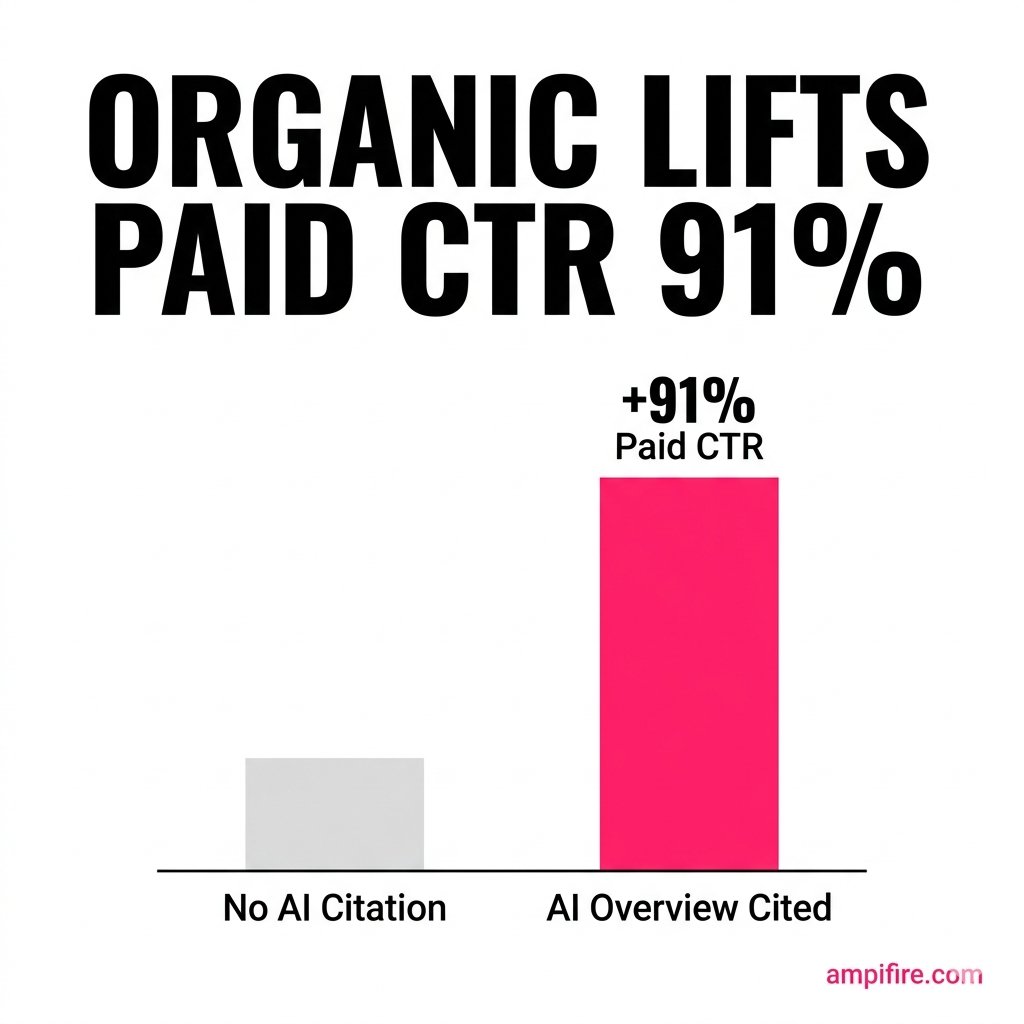
Brands cited inside Google's AI Overviews get 91% higher paid CTR than competitors on the same queries.
That is a paid performance number. AI Overview citation directly lifts ad conversion rates, because buyers already trust a brand before they click the ad.
Here is what the search data actually shows:
On informational queries, organic CTR dropped from 19.7% in June 2024 to 6.3% by September 2025. AI Overviews now appear on 13% of all queries. Classic organic real estate is compressing fast.
AI agents pull citations from across the web... YouTube, blog posts, podcasts, news sites, infographics. A brand with content on one or two platforms looks thin. A brand distributed across 50+ authority platforms shows up as the consistent answer.
The structural fix: build content distribution across authority sites that feed AI Overview citations... Google News, major publishers, podcast directories, video platforms. Then measure AI Overview citation rate as a paid performance input, the same way you measure ROAS.
Brands running paid-only acquisition carry compounding single-channel risk with every algorithm shift. The ones with organic distribution running underneath their paid accounts are the ones whose numbers held through 2026.
How are you currently tracking AI citation rate against your paid performance metrics?
Getting featured in one place builds exposure. Getting featured everywhere builds trust. Those are two different outcomes, and most brands only chase one.
Here's why it matters: Google evaluates brands the same way buyers do. It looks at how many credible sources reference the brand, whether it shows up consistently across news outlets, podcasts, video platforms, and blogs, and whether buyers are actively engaging with that content.
Exposure alone gets attention. Trust is what converts it.
The brands winning in organic right now have both running simultaneously. Their buyers search the brand after seeing an ad, find coverage on real news sites, find an active YouTube presence, find podcast mentions, find blog features. That research journey ends in a purchase. Organic content is pre-qualifying the buyer before they ever reach the landing page.
The practical breakdown:
✅ News article placements on high-authority sites signal credibility to Google and to buyers
✅ Video and podcast distribution creates format variety across different research touchpoints
✅ Blog and infographic coverage answers the specific questions buyers are asking mid-research
✅ All of it running together is what builds the trust signal Google actually rewards with rankings
MultiCasting is the process that runs all of this from a single content campaign, publishing across 300+ platforms simultaneously with each format adapted for its platform's algorithm.
Exposure and trust compound together. Neither works alone at scale.
Generative AI referral traffic to retail sites grew 4,700% year over year.
That number is from Adobe Digital Insights. And it's still undercounted, with an estimated 70% of AI referrals misclassified as direct traffic in standard GA4 setups.
The mechanism: buyers ask ChatGPT what to buy, get a recommendation, and complete the purchase inside the chat. No Google search. No product page visit. No ad click.
ChatGPT drove 20% of Walmart's referral clicks in August 2025, up 15% from the month before. It drove over 20% of Etsy's referral traffic, nearly 15% of Target's, and 10% of eBay's.
AI agents pull recommendations from whatever content they find across the web. A brand with structured content across articles, videos, podcasts, news sites and blogs gets cited. A brand with a product page and ad spend does not.
AmpiFire's AmpCast AI takes one buyer-intent topic and distributes it as 8 content formats across 300+ platforms simultaneously, so when AI agents research a product category, they find the brand everywhere.
AI-attributed orders on Shopify are up 11x since January 2025. The brands capturing that are the ones already present across the platforms AI agents pull from.
Which content formats is your brand currently getting cited from?
Brands cited inside Google's AI Overviews get 91% higher paid CTR than competitors on the same queries.
Organic presence is now a direct paid performance input. These two channels stopped being separate strategies.
Most paid media teams still treat organic as a 'nice to have' sitting in a different department. Meanwhile the data from ALM Corp's analysis of 16,000+ queries shows that AI Overview citation directly lifts what paid ads convert at, on the same search queries, against the same competitors.
Here is what else the data shows for accounts that built organic alongside paid:
✅ Catalog Ads at 60%+ of conversion budget deliver 44% higher ROAS and 68% lower CPA compared to accounts under 30% allocation
✅ Brands testing 20+ fresh creative concepts per month see 65% higher ROAS than brands testing under 10 (ScaledOn)
✅ Founder-led creative produces 2 to 3x the ROAS of brand-style video
✅ ASC delivers 17% to 22% lower CPA than manual campaign structures
The pattern across recovering accounts in 2026 is consistent. AmpiFire distributes content across 300+ authority sites... Google News, YouTube, Spotify, major publishers... building the organic citation footprint that feeds AI Overviews and compounds paid performance over time.
Single channel paid dependency has gotten more expensive every year since 2021.
How much of your paid performance depends on organic citation you are not currently building?
Native ads cost $0.15 to $0.80 per click and convert cold audiences.
Display runs at $3.50 per thousand impressions and closes warm ones. Add organic content across 300+ platforms and the result is 61.5x return on spend.
Each format has a specific role. Running both without knowing which does what burns budget on the wrong audience at the wrong stage.
Here's how to sequence them correctly:
✅ Native ads for cold audiences. Placed inside editorial feeds on platforms like Taboola and Outbrain. They match the look of real articles, so users engage with them like actual content. Stronger brand recall, higher click engagement, trust built per click... all with audiences who've never heard of the brand before.
✅ Display ads for warm audiences. Banner formats in fixed slots across the Google Display Network. Lower cost per impression, highly effective for retargeting users who already visited the site. Weaker on cold, strong on warm.
✅ Organic content for the research phase. Before 93% of buyers make a purchase, they search. Google, YouTube, podcasts, news sites. Brands with content across those platforms convert ad clicks at a significantly higher rate because every touchpoint in the research phase works in their favour.
AmpiFire turns one topic into 8 content formats published across 300+ sites simultaneously, so the research phase builds credibility rather than losing it.
The brands generating returns like 61.5x on spend are running all three layers together... cold acquisition through native, retargeting through display, and credibility through organic content on every channel buyers check before purchasing.
What does the buyer research experience look like for someone who sees one of your brand's ads today?
MultiCasting generated 60,000 monthly organic clicks for one treadmill brand by month 15.
That traffic was equivalent to $180,000/month in paid value at their CPC.
The paid-only operators competing in the same category were spending that every month to stand still.
Here's what's happening in ecom right now that most paid media teams aren't measuring: brands cited inside Google's AI Overviews receive 91% higher paid CTR compared to non-cited competitors on the same queries.
When a buyer sees a Meta ad, then searches the brand, then finds you in AI citations, on news sites, in YouTube results, in podcasts... that ad click converts at a completely different rate. 93% of buyers research before purchasing.
The ad is the first touch. The research journey is where the sale is won or lost.
The practical setup that builds this:
- Publish content across authority sites that feed AI Overview citations: Google News, major publishers, podcast directories, video platforms.
- 8 formats from one topic: articles, videos, podcasts, infographics, slideshows, news pieces, reels, social posts
- 300+ platforms: YouTube, Spotify, Google News, Facebook, Instagram, LinkedIn, TikTok
- Treat AI citation rate as a paid performance input, not a separate organic metric
- AmpiFire's MultiCasting platform does this in one workflow. One brief becomes 8 optimized formats, distributed across 300+ sites.
The fitness brand in our case study spent $5,000/month and hit $1.845 million in sales with a 61.5x return on content spend, while competing against Peloton and NordicTrack running $100M+ ad budgets.
Single-channel paid dependency gets more expensive with every Andromeda update, every attribution window change, every lookalike removal.
Organic content running underneath paid doesn't switch off when the algorithm shifts.
What percentage of your current traffic keeps converting after your ad spend stops?
A 35-hour campaign pause moved a winning creative from 95% of spend to 11%.
Same campaign, same ads, nothing changed except the pause.
That is what Andromeda does to campaign-level signal.
Andromeda accumulates engagement data at the campaign level continuously over time.
Pause the campaign, the signal cuts off. On restart, the algorithm treats previously winning creatives as stale and reallocates budget toward newer ads with more recent data. In the tracked case: blended CPC up 17%, per-creative CPC up 60 to 69%.
Campaign-level pauses were a viable management tool before Andromeda. Under the current system, they trigger a learning reset that often does not fully recover.
Three rules worth building into every account:
Make all changes at the ad level only. Pause individual underperforming ads, launch new ones, adjust budgets at campaign level without touching the on/off switch.
Exit the learning phase properly. Andromeda requires roughly $250 per day per campaign to accumulate enough conversion data to stabilize. Running four campaigns at a $10K monthly budget gives each one around $80 per day. Below the threshold, the algorithm never settles.
Reserve campaign-level pauses for structural rebuilds only. Once a quarter at most, with the understanding that recovery to prior performance is not guaranteed.
Accounts reporting degraded performance "since the algorithm changed" are often running this exact setup... multiple underfunded campaigns, routine campaign-level pauses, and a learning phase that never fully exits.
Have any of your campaigns been paused at campaign level in the last 90 days and never returned to their original performance?
MultiCasting generated $3.6M in revenue for a fitness brand with $0 in ad spend.
The strategy breaks down to three steps:
✅ Research the exact questions your buyers search before purchasing
✅ Produce content that answers those questions well, across multiple formats
✅ Distribute across enough platforms that Google and AI search have no choice but to recommend you
Every product category has hundreds of these unanswered buyer questions sitting unclaimed right now. Baby gear, fitness equipment, home goods... each answered question becomes a content asset that compounds month after month.
Brands building this now are creating traffic infrastructure that keeps paying long after any ad campaign ends.
What buyer questions in your niche are still going unanswered?