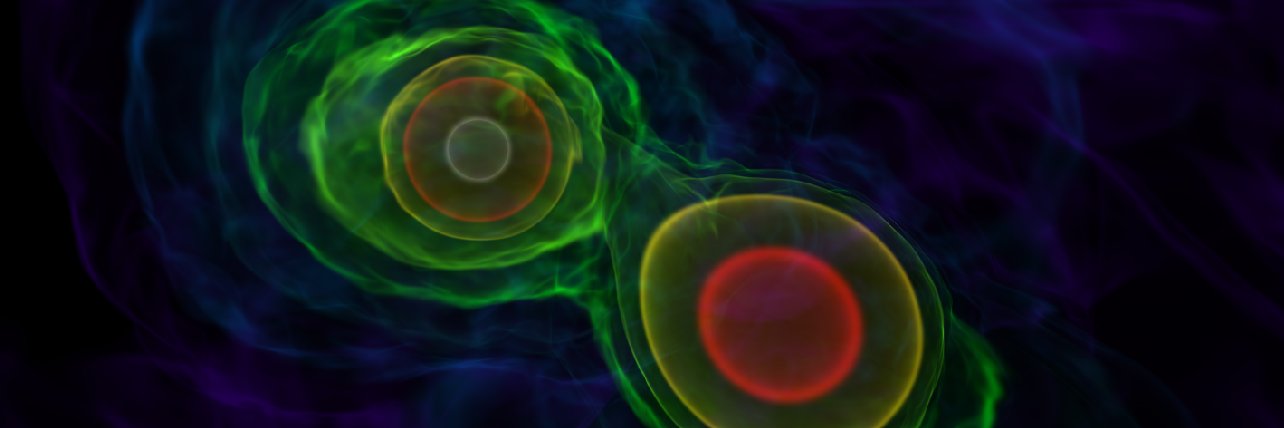
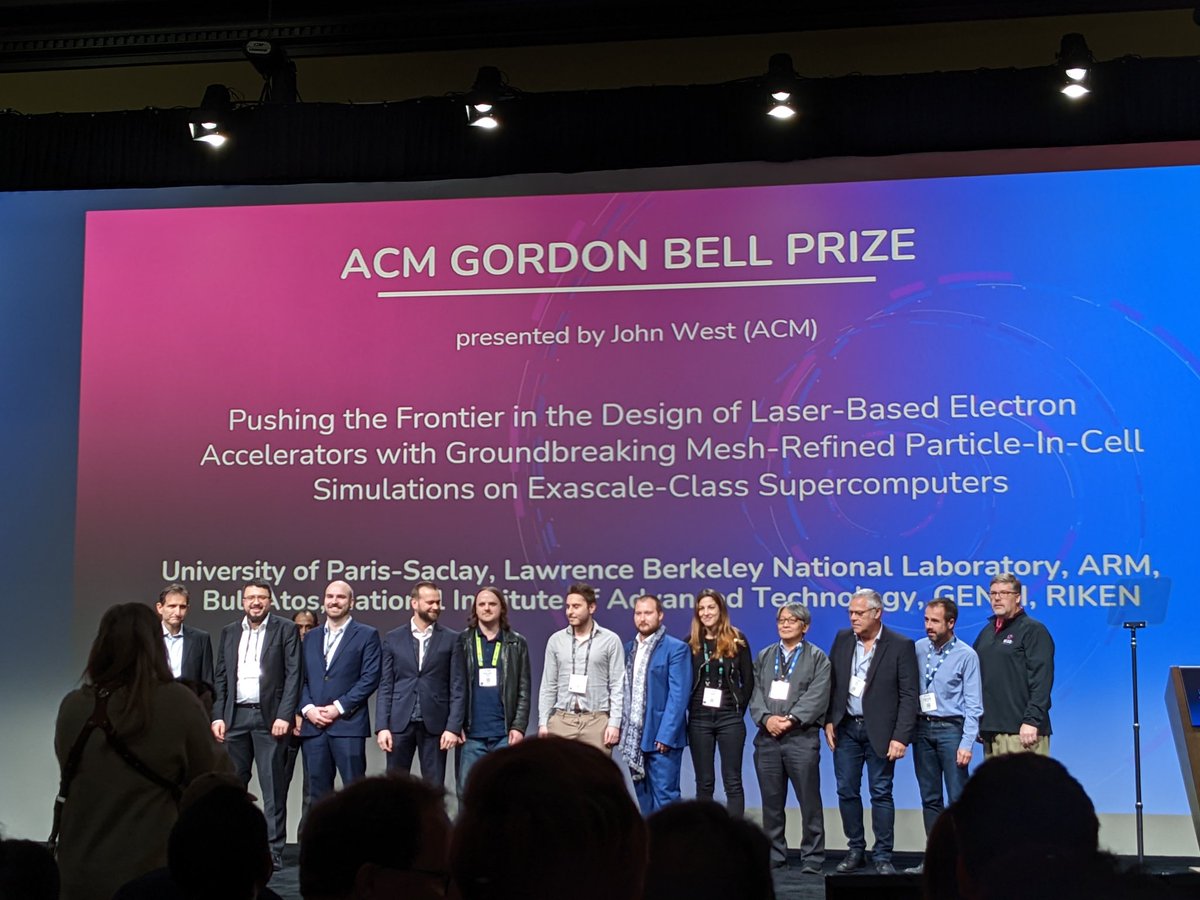
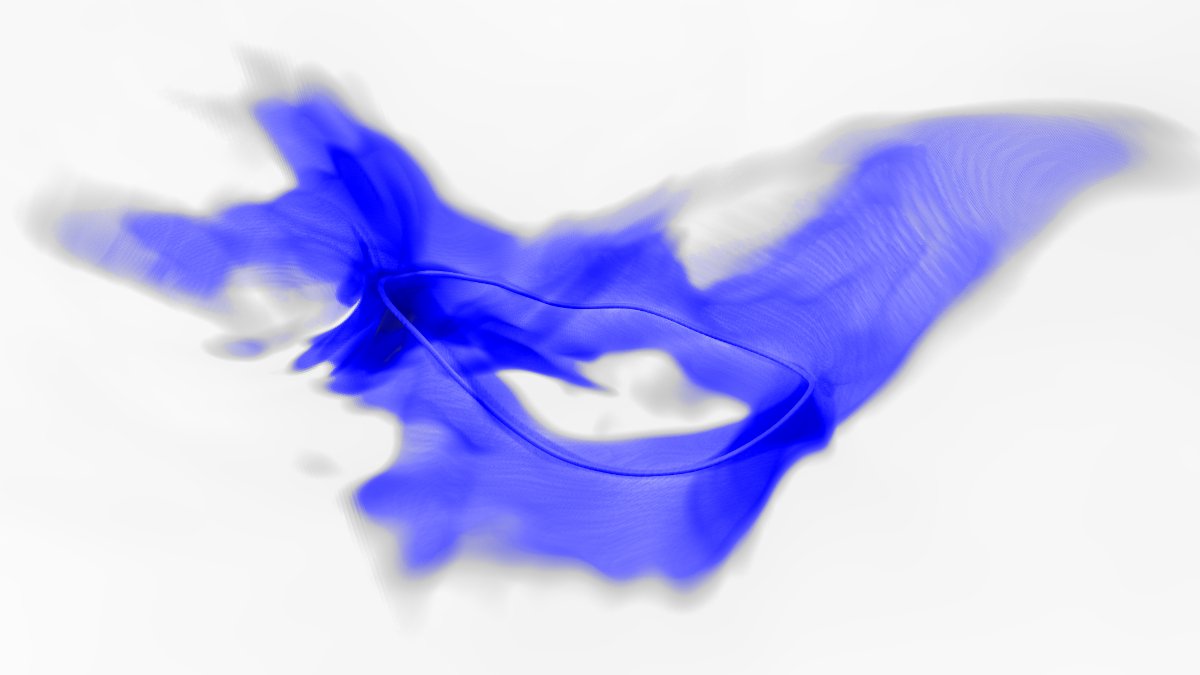
Led by @argonne's Salman Habib, @exascaleproject's ExaSky project has been working to prepare the HACC and Nyx cosmological simulation codes for @doescience's #exascale supercomputers to help advance our understanding of dark matter and dark energy.
https://t.co/0mmYrTiJsH
Hi @kernhendricks! Thanks for the shout-out for #Summit@OLCFGOV!
But... Summit has never been used to "model nuclear weapons blasts." Never will be. We do love thermonuclear explosions, but we like them on neutron stars and white dwarfs. e.g. @Michael_Zingale #OpenScience
The 22.07 version of our AMReX-Astro were just tagged. New for the Microphysics suite is 2 additional screening formulations for nuclear reactions, based on Chugunov 2007 and 2009. Also some fixes for ROCm 5.x.
Two AMReX Astro talks at the JINA Frontiers Meeting this week: Eric Johnson talking about X-ray bursts with Castro and Alex Smith Clark talking about our reaction network infrastructure with pynucastro + Castro/C++ generation.
Castro 22.05 has been released
https://t.co/1cq27iIr8B
A cool new feature is that we now dynamically adjust the tile size in hydro when offloading to GPUs to reduce the memory size of temporaries (helps prevent oversubscription of GPU memory)
just merged: we now use C++ templating and constexpr-if to generate our nuclear reaction networks at _compile time_, from a simple set of meta-data
https://t.co/tXCc1lTtug
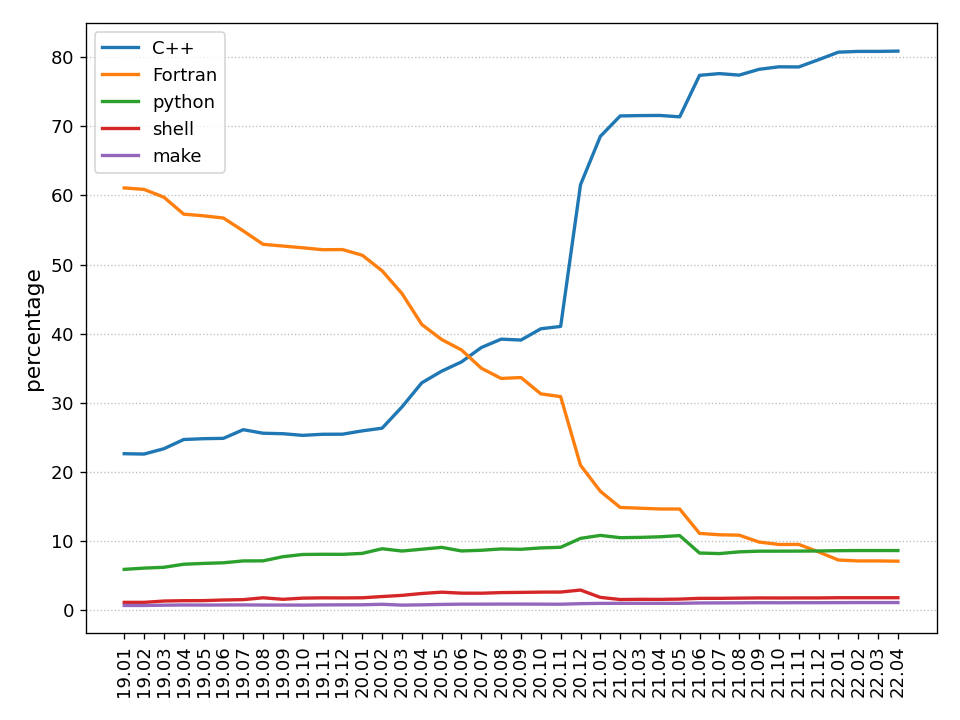
this is one of the nice things enabled by our conversion from Fortran to C++ (since Fortran at the moment, doesn't have the equivalent generic programming constructs).
Castro 22.02 has been released:
https://t.co/0lDNlUQafo
Castro now runs on AMD GPUs using ROCm (>= 4.5) + HIP (in addition to NVIDIA GPUs with CUDA).
We are continuing to optimize our performance on AMD GPUs.