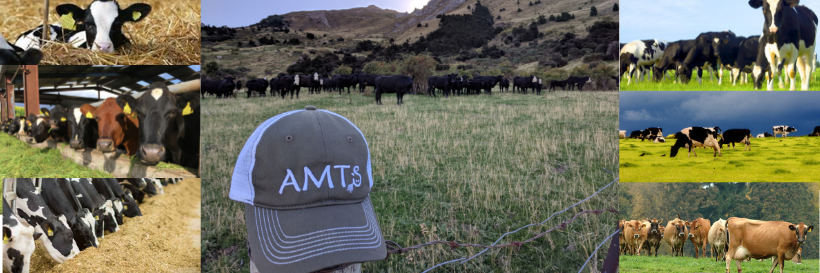
A non-ambulatory cow is a cow that is down and cannot get up. When a cow is down for an extended period of time, complications can arise. It's important to take steps for preventing, creating a plan for a non-ambulatory cow, and focus on daily care. #AMTS#cows#nonambulatory
Milking doesn't take very long, so what do cows do the rest of the day? Come see what a day in the life of a Canadian dairy cow is like!
https://t.co/IZFHFLq40t
We've talked about a cow's stomach having four chambers. This video focuses on one chamber: the rumen. The rumen is the most important chamber for absorbing nutrients, and has a symbiotic relationship with microorganisms that live inside of it.
https://t.co/E9h18xP9fU
What are the differences between conventional milk, organic milk, and grass-fed milk?
Nutritionally, the milk is the same. The label comes down to which on-farm practice is used. You can find more details here: https://t.co/sns9ly9UIk
The pasteurization process, that was created by Louis Pasteur, is important to kill harmful bacteria in milk.
Photo credit & more information at: https://t.co/e9S1OJXeTh
How much milk do cows produce in a day? In a week? In a month? In a year?
Cows produce 8 to 10 gallons of milk per day. That’s up to 70 gallons per week, 280 gallons per month, and over 3,000 gallons per year!
https://t.co/YNlbdBUM3n
Ashley & Steve Brown, dairy farmers in Ontario, put this video together to give a thorough explanation of what makes up the diet of a dairy cow.
https://t.co/0THEpudzG8
If you're in the area for the Four-State Dairy Nutrition & Management Conference Program, swing by the Radisson for an AMTS workshop. Big thanks to Chemlock for hosting this workshop!
For more details, reach out to Justin Pinter at [email protected]
Today is also World Milk Day!
Did you know 1 glass of milk contains calcium, protein, vitamins D, B2, & B12, potassium, phosphorous and iodine? Read more at: https://t.co/ATPoBr3Eoq
June officially became dairy month in 1939!
It actually started as a way to distribute extra milk during the warmer months.
Read more about Dairy Month here: https://t.co/IUl0k2Rhkp