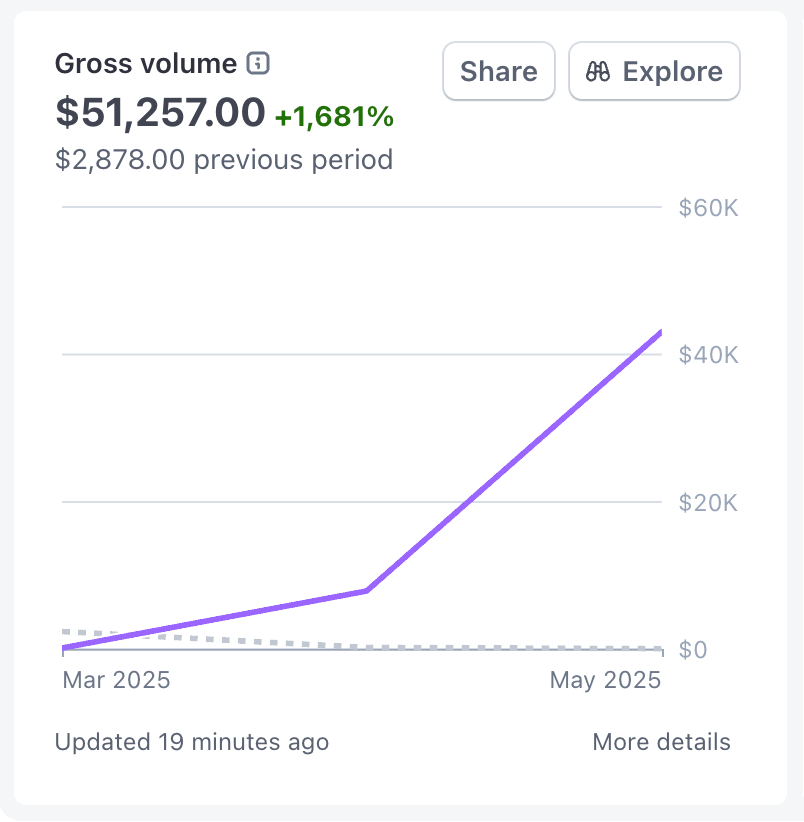
Gojiberry AI just hit $2M ARR.
A few months ago we were at €0.
This is the second SaaS I've built. The first one I sold at €500K ARR.
This time, we moved faster. Here's exactly how we did it, so you can do it too.
The core principle that changed everything:
We used our own tool to grow our own tool.
Gojiberry AI finds high-intent leads and engages with them automatically.
We run it on ourselves. It works insanely well.
Here's the full breakdown:
1) Outreach (the engine)
- LinkedIn: 5 accounts, 30 connection requests + 30 DMs per account per day.
Only targeting warm leads showing real intent.
Connection acceptance rates and reply rates are insane when you do this right.
- Cold email: 6,000 emails per day. 295,000 sent in 90 days. 900+ opportunities created.
41 domains, 123 inboxes, plain text only, no links, no images, 2-3 email sequences max.
Total infra cost: ~$600/month.
The offer is always the same: a valuable blueprint. No pitch. Just value first.
2) Inbound (the compound effect)
- LinkedIn: 6 posts per day across 6 accounts.
6 days/week = lead magnet content. 1 day/week = founder story.
Last 7 days: 788,187 impressions.
- Reddit: 14.8M+ views in 12 months. The trick: warm up the account, post 3x per week, tell real stories, offer blueprints, and never debate the haters.
- YouTube: Long-tail SEO content targeting competitor keywords. It's starting to rank.
- SEO: 50K visitors/month and growing fast.
3) Paid (we're just starting)
- 3 LinkedIn influencer posts/week (~$500 each).
- Facebook retargeting + acquisition
Scaling paid ads aggressively right now.
4) Demos
5–8 per day. ~70% close rate to free plan. Mostly sales teams.
What actually worked:
→ Using our own tool on ourselves (this alone is a cheat code)
→ High-intent outreach > cold outreach. Every single time.
→ Lead magnet posts on LinkedIn that generate thousands of comments.
One post added $5K MRR in under 24 hours. Cost: $0.
→ Replying to every single comment.
→ Speed. Every delay kills momentum. We removed friction from every step of the funnel.
→ AI helping us do 10x more than we ever could alone.
What's not working:
- We need to delegate. We're currently hiring a founding sales to help us scale to $10M ARR (feel free to reach out if you know someone 😇 )
The path from €0 to $2M ARR is not glamorous.
It's 18-hour days, boring repetitive work, testing things that fail, and doing it all again tomorrow.
But if you do the right things every day, good outreach, real value, fast follow-up, it compounds.
And one day you wake up and you're at $2M ARR.
The goal now: $10M ARR.
LFG. 🔥
PS : we're about to launch a 0 -> $1M ARR GTM course.
Want to receive it? RT + comment GTM below.
this is the stuff every 20 year old needs to hear. not bullshit career advice from people who never took risk to build something real.
game from a guy who got pushed out of his own company, cashed out billions, and started building again like nothing happened.
different breed.
Until you have PMF, there are only 4 things you should be doing:
> talking to customers
> improving the product
> creating content
> finding more customers to talk to
That's it.
A huge, huge part of a founder's job is to simply inject (1) energy / optimism (2) clarity (3) urgency into EVERYTHING they are involved in. Every email, every meeting, every walk & talk, every slack thread, every whatsapp chatter.
Founders should know the sobering reality for enterprise SaaS venture funding today. Here’s the math.
Say you’re a $1M ARR company raising a Series A with a classic 33222 growth expectation. That gets you to $72M in 5yrs and say $250M in 8yrs. By then you’re usually growing <<50% and the public markets might give you a 7x or $1.75B, if you can even go public. If you get $10M at $100M post-money for the A, that’s a 17.5x and maybe 10x after dilution. That would be ~33% IRR and $10M invested becomes $100M.
In the venture model, you have to outperform the SP500 which is 15% and a Google which is 25%. Here, with perfect execution, a lot of work, time and risk, you get 33% in a near optimal (95 percentile) case. And usually, you expect 7/10 things to not work out: execution risk, market size, competition. Plus, this math is for a Series A. You need investors to underwrite even more growth at the B / C / D. It’s really hard to see this sort of deal driving fund returns.
Now, of course, there’s tons of caveats. You could pay less than $100M post, try to grow faster, do pro rata to avoid dilution, stay private longer etc, but the point remains. There might be exceptional growth stories like Databricks, Snowflake and Applied Intuition, but most deals look like what I described.
In a previous time, SaaS multiples were higher in public (20x), entry valuations were lower ($30M) and the money you needed to hire talent was lower ($150k). You could get 100% IRR before. Now, it’s harder than ever to justify investing here, unless they are true outliers.
It has never been easier to fool VCs
> generate beautiful landing page with micro animations using ai
> product semi-fake ai agent/wrapper to record an insane mocked demo
> pay influencers $20k to become the top news on X for a day
> get 100 VCs in your DMs
> raise the round, go viral for this
> put a paywall so that the crowd is too curious to not pay
> you got 30 days until they cancel, wait til day 29, multiple the current mrr by 12 and claim you reached gazillion in arr in just 30 days
> get more VCs in your DMs and raise your next large round
> get acquired by one of the other portfolio companies or your VCs
> you’re fking legend, all doors are open to your for life
Be honest can you name a few startups that done this script ?
Lyra went from $20K to $700K ARR in 6 weeks inside YC.
Every other founder in our batch automated their outbound. I did the exact opposite.
This is every lever we pulled and the things I did that most founders would never consider:
Hot Take: Forget the typical marketing channels for your early stage startup.
They don't work.
You will find early traction in:
- Tiny, focused events
- Hyper-niche online groups
- Personal outreach (yes, DM your friends!)
That's where the real early magic happens.
As an early-stage VC, this deep integration of vertical knowledge (SOR) + AI is incredibly exciting.
If you're a founder building at this intersection, defining your path to owning the core system for your industry, I want to hear from you.
Let's build. DMs open.
Building Vertical AI is tough.
You're heads-down creating incredible tech, likely battling worries about big AI players.
But as a VC seeing patterns across the landscape, the biggest long-term opportunity is hiding in plain sight, within the existing industry software...
Ultimately, it's not AI vs. Software in vertical markets.
It's AI + Software.
Like streaming needed great content + great tech, the enduring vertical winners will likely master both the AI capabilities AND the core industry data/workflows (the SOR).