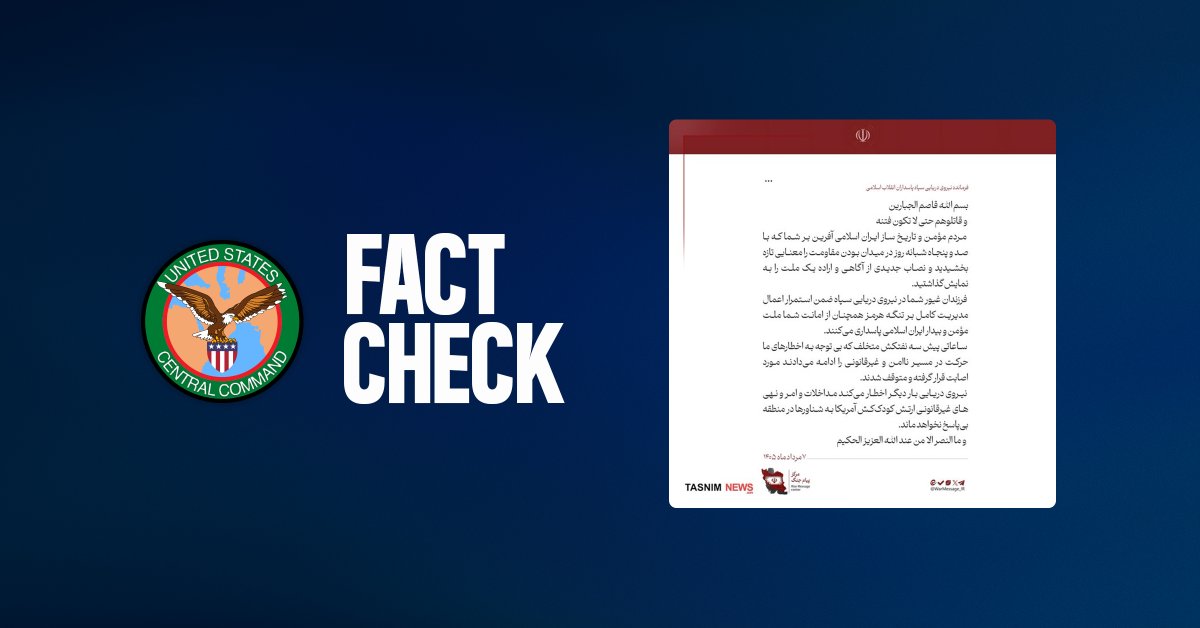
🚫 CLAIM: After recently threatening and attempting to attack commercial vessels and innocent mariners transiting the Strait of Hormuz, Iran’s Islamic Revolutionary Guard Corps (IRGC) continues to claim that international mariners should only use routes the IRGC prefers.
✅ FACT: The Strait of Hormuz is an international waterway. The IRGC has no authority to dictate routes for free and open traffic flow. Commercial vessels continue to use the strait with U.S. military support. Since early May, CENTCOM forces have helped approximately 1,000 vessels and 500 million barrels of crude oil pass through the narrow waterway.
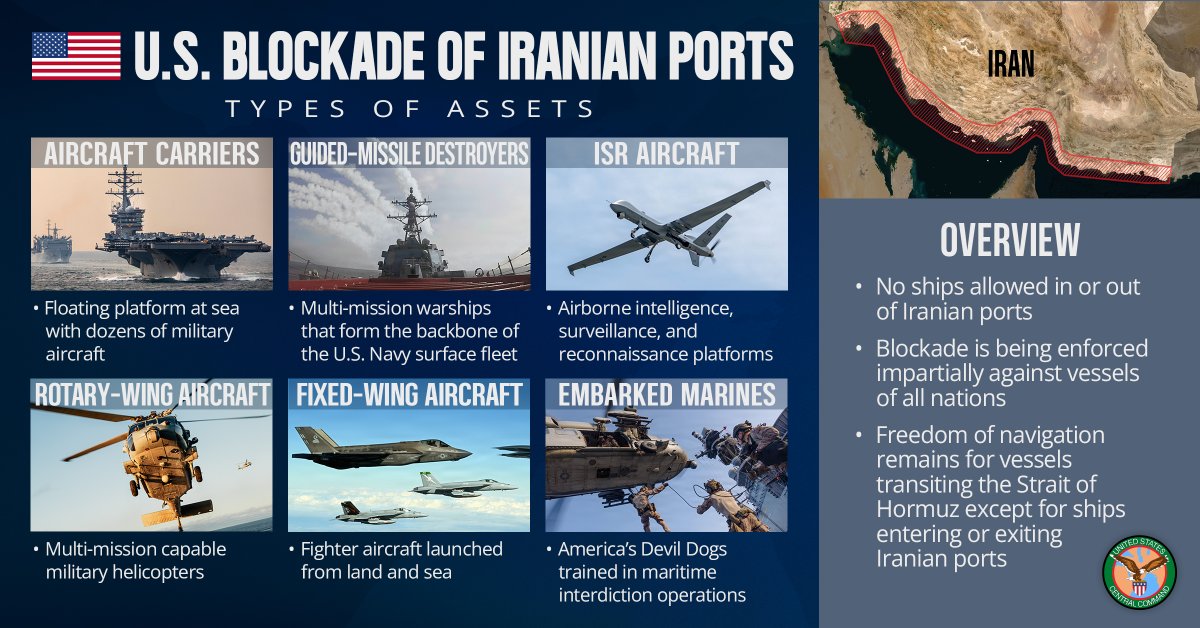
CENTCOM forces continue to strictly enforce the U.S. blockade against Iran. As of July 29 CENTCOM has redirected 20 commercial vessels, disabled 2, and boarded 2.
U.S. forces began launching strikes against Iran at 8 p.m. ET today. The strikes are a powerful response to yesterday's attempted Iranian attacks on U.S. forces based in the Middle East.
Over the past few hours, Iranian state media have continued to report false claims by the Islamic Revolutionary Guard Corps (IRGC) – three in particular.
🚫 FIRST CLAIM: The IRGC (again) claims free and open routes through the Strait of Hormuz are dangerous for commercial vessels.
✅ FACT: The immediate dangers posed to commercial vessels and their civilian crews are the IRGC’s verbal threats and attempted attacks.
🚫 SECOND CLAIM: The IRGC claims Three U.S. F-35 stealth fighters and three other aircraft were destroyed during a recent Iranian attack on an American air base.
✅ FACT: No U.S. aircraft were destroyed or damaged in recent attempted Iranian attacks. All missiles and drones were intercepted or failed to reach targeted areas.
🚫 THIRD CLAIM: Iranian state media is reporting that a commercial oil tanker, M/T Nora, has broken through the U.S. blockade.
✅ FACT: The commercial vessel has not broken through America’s steel wall blockade. More than 20 U.S. warships, hundreds of aircraft, and thousands of service members remain vigilant and continue to fully enforce the blockade.
A U.S. Navy P-8 Poseidon approaches a U.S. Air Force KC-135 Stratotanker for refueling while patrolling the Middle East. The P-8 is a specialized reconnaissance aircraft that is among the many assets monitoring regional waters during America's blockade against Iran. As of July 30, CENTCOM forces have redirected 24 commercial vessels, disabled 2, and boarded 2 to ensure full compliance.
🚫 CLAIM: Once again, the Iranian government claims it has closed the Strait of Hormuz. This is FALSE.
✅ FACT: The Strait of Hormuz remains open for commercial vessel transit. Iran does not control it. Thousands of ships have sailed through the international waterway over the past four months.
A U.S. Navy MH-60R Sea Hawk helicopter is prepared for flight aboard USS Michael Murphy (DDG 112) as the warship supports the U.S. blockade against Iran while sailing in regional waters. As of July 31, CENTCOM has redirected 30 commercial vessels, disabled 2, and boarded 2 to ensure full compliance. The U.S. military has also permitted nearly 30 ships to pass through the blockade for humanitarian aid.
A U.S. Army CH-47 Chinook helicopter prepares to land in the Middle East. The Chinook is a tandem-rotor aircraft designed to transport personnel, equipment, and supplies in a variety of environments.
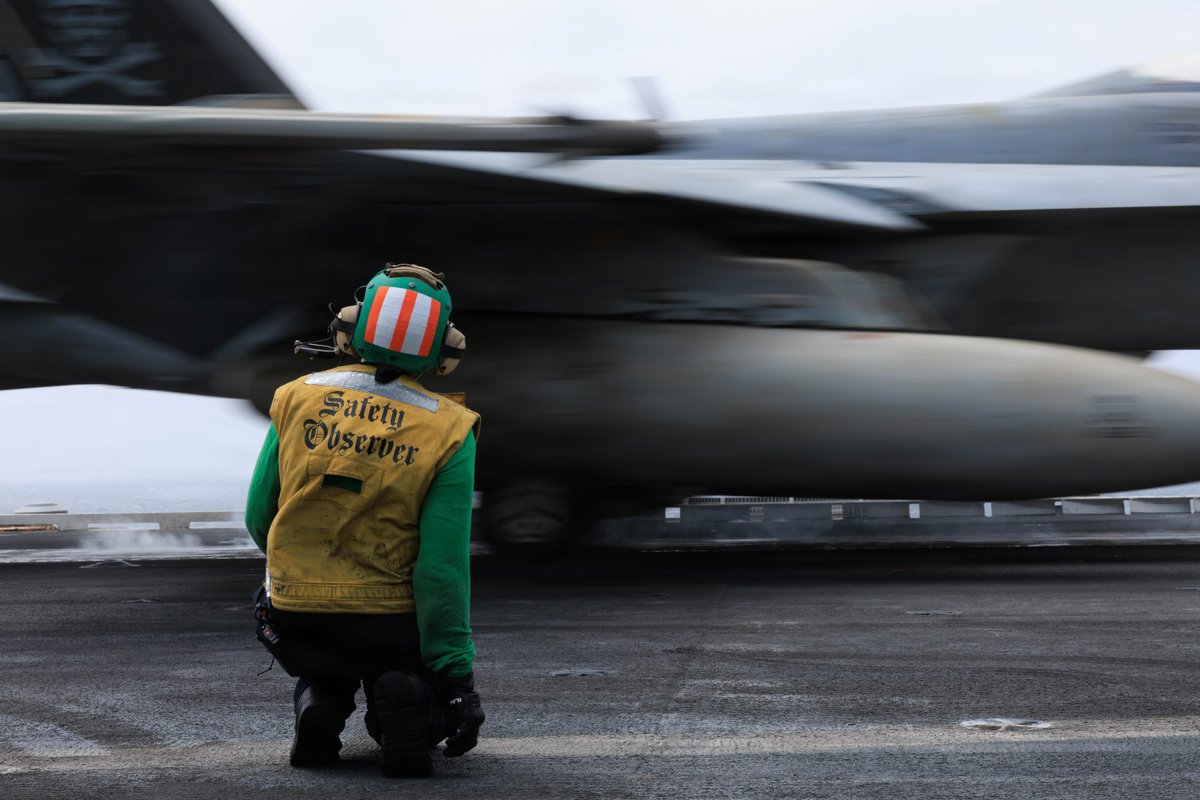
A U.S. Marine Corps F-35C stealth fighter jet launches from USS Abraham Lincoln (CVN 72) as the aircraft carrier transits the Arabian Sea and supports the U.S. blockade against Iran. As of Aug. 2, CENTCOM has redirected 35 commercial vessels, disabled 2, and boarded 2.
A U.S. Sailor stands watch in the combat information center aboard USS Boxer (LHD 4) as the amphibious assault ship sails in regional waters while supporting the U.S. blockade against Iran. As of Aug. 4, U.S. forces have redirected 45 commercial vessels, disabled 2 and boarded 2 to ensure compliance.
The southern route through the Strait of Hormuz remains free and open for all commercial vessels seeking to transit the international waterway. Over the past three months, U.S. forces have assisted more than 1,000 vessels in successfully transiting the strait despite unwarranted Iranian aggression, and these transits continue today.
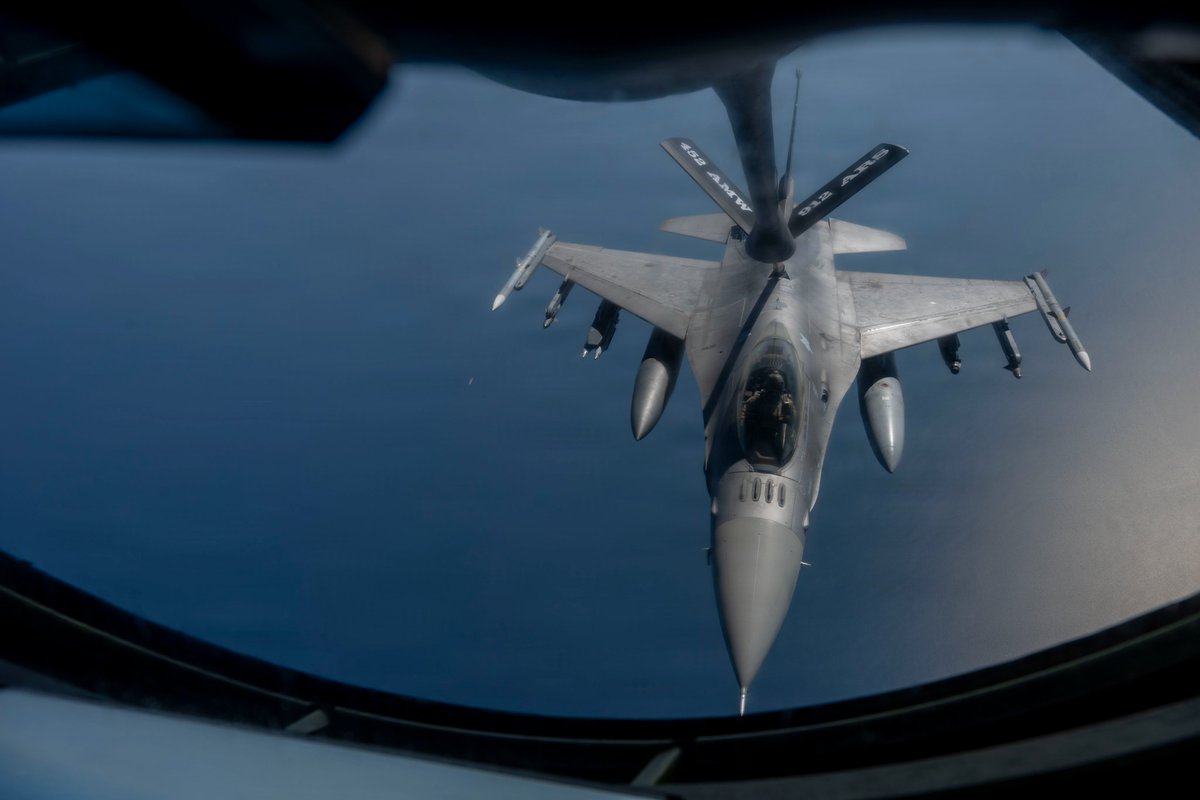
A U.S. Air Force F-16 fighter jet is refueled during a patrol over regional waters in the Middle East while the U.S. continues enforcement of the blockade against Iran. As of Aug. 5, CENTCOM forces have redirected 48 commercial vessels, disabled 2, and boarded 2.