@AlexSchwartsman@AlexSchwartsman adoro seus artigos, mas os prints sempre vem com baixa resolução. Talvez usar o snipping tool (ferramenta de captura) melhore esse problema. Abs!
Increasing density with taller buildings improves productivity, reduces commuting costs and redistributes income from landowners to renters and home-buyers.
These effects more than offset the costs of congestion, pollution and other disamenities, raising worker welfare 7%. 1/3
@SimplesInvestor Faz uns anos que ou��o essa de ciclo e desalavancagem. Veio ciclo bom e ruim e não fizeram o dever de casa. Pode até estar barato, mas não arrisco meu capital nessa.
@cyrano54@ArlanFF101 This has been a highly interesting debate. If I may ask, where did you gather the productivity data from the US? Tried collecting it in the USDA website, but I didn't find it very intuitive.
@helocruz Lembro do Couto por não querer deixar de acelerar logo antes do agro virar. É claro que não dava pra saber que seria tão drástica a mudança, mas não avalio seu legado como positivo. Me equivoco?
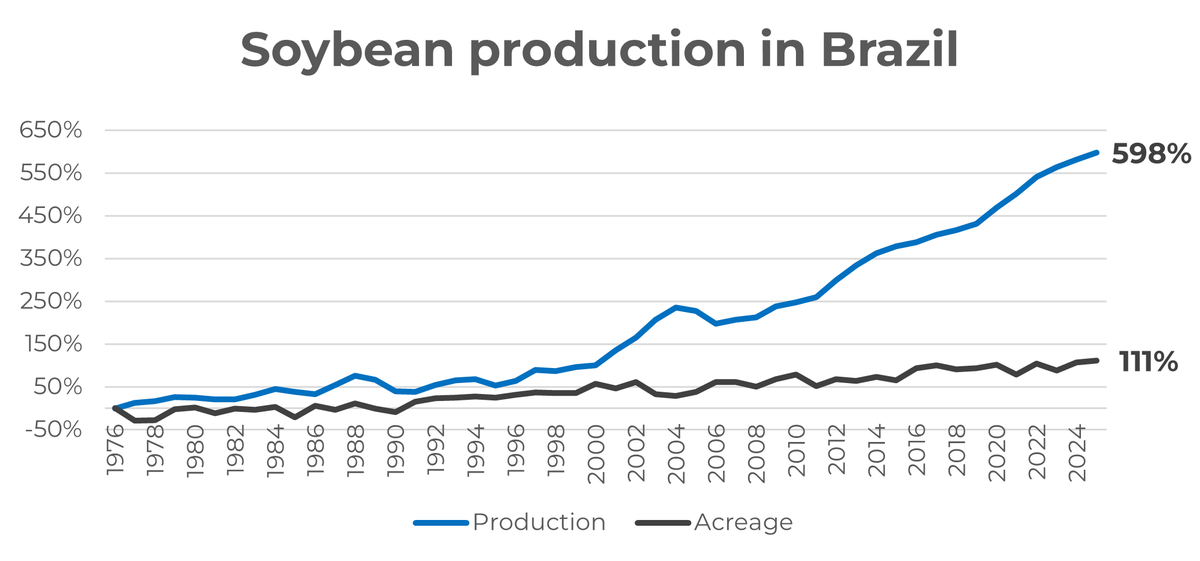
@cyrano54@ArlanFF101 Thank you! This chart shows that Brazil’s soybean yields were roughly 1.25 ton/ha vs. 1.7 in the US. By 2025, Brazil reached ~3.7 ton/ha, surpassing the US at ~3.6. Starting from a much lower base, Brazil achieved far greater productivity gains over the last five decades.
@cyrano54@ArlanFF101 Yeah, just checked it. Brazil's productivity has improved significantly more than the US, which had a much higher base to begin with.
@cyrano54@ArlanFF101 I'm not aware of the data of productivity growth in the US over the last decades, but I know the Americans produce more per hectare/acre. I do find it hard to believe that their productivity has evolved in the same pace since the basis was higher.
Source: CONAB