New focus paper! 📣 What economic risks does the #EU face up to 2035 and what can they do to remain competitive?
@elvirefabry and @SylvieMatelly, at @DelorsInstitute, provide concrete advise to strengthen EUs resilience.
Read the full paper here: https://t.co/QNTxlB5EaN
📊 [#Infographie] Quelles ambitions UE en matière de #compétitivité? 🇪🇺 1/5
Initiatives annoncées, échéances, positionnement des groupes politiques du Parlement, attentes du couple franco-allemand 🇫🇷🇩🇪
Infographie par @Phucvinh_ & @AndreasEisl 👇
https://t.co/ObqGGIauoB
NEW PUBLICATION:
In this Joint @DelorsInstitute – LUHNIP Policy Paper @donadica, @DZurstrassen and myself address the pressing issue of fragmentation within the EU Single Market resulting from the growing use of state aid by Member States.
https://t.co/SXmSTBcrMu
Ideally, this EU approach to state aid would include common funding mechanisms allowing the Union to co-finance IPCEIs alongside national governments. National contributions could then benefit from the exemption for the co-financing of EU-funded programs under the new SGP.
REWATCH📺: Yesterday, I had the pleasure to discuss French fiscal and debt policies with @su_jeanette (@CerfaIfri) and @friede_hofmann (ARD) and the students of the @Uni_Wuppertal. You can rewatch our exchange here (in German): https://t.co/Rzion5M5Zv
In a study written for the @IFRI_ (in collaboration with the @DelorsInstitute) last autumn I analysed the major differences in 🇫🇷 and 🇩🇪 public finances.
You can find a link to the paper and my thread summarising it here:
https://t.co/lu8nLc7Vlj
In this new study, written for the @IFRI_ in collaboration with the @DelorsInstitute, I analyse the major differences in French and German public finances and debt that have arisen over the course of the last 20 years. Thread in 🇬🇧, paper in 🇫🇷&🇩🇪.
https://t.co/b90aVVwftR
🧵1/17
If you couldn't make it, here you can find the replay of today's @DelorsInstitute#Euroquestions webinar where I presented my new EU industrial policy paper.
💻 [#Replay] Watch again today #Euroquestions "For a competitive European industrial policy" 💶 with @AndreasEisl
His publication calling for Common financing, governance and conditionalities in the EU Single Market 👉 https://t.co/gbBh3JGRXg
Replay👇
https://t.co/7vCFHCLFOD
🇪🇺❔ [#Webinar] Do not miss next week #Euroquestions "A competitive European industrial policy for the EU" 🏭💶
with @AndreasEisl
📅 Wed. 9 October, 14:30-15:00
Info & registration 👉 https://t.co/GUWAuwb48y
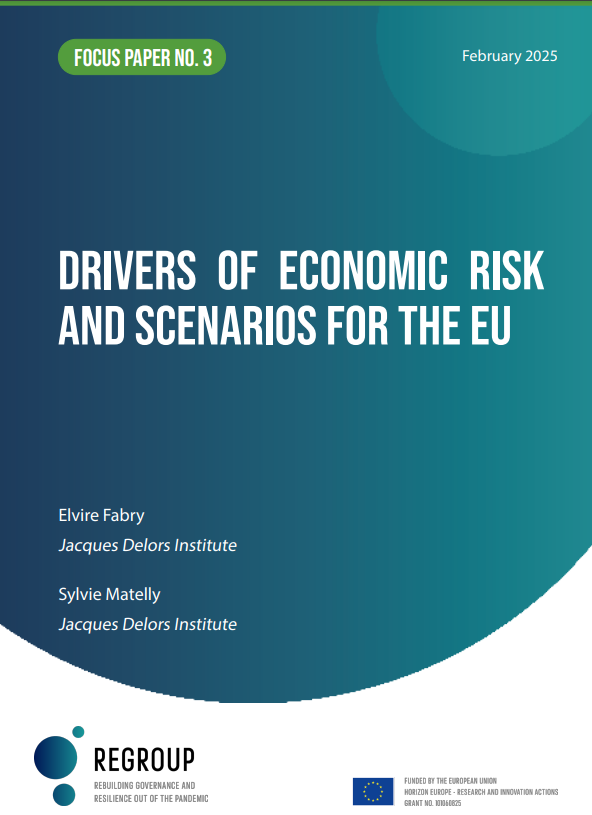
💶 [#SingleMarket] For a competitive European #industry_policy in the in the EU Single Market, we suggest;
▶️ Common financing
▶️ Common governance
▶️ Common conditionalities
All propositions by @AndreasEisl 👉 https://t.co/gbBh3JGk7I #EUindustry
Also make sure to sign up to tomorrow's #Euroquestions webinar (14h30-15h00), in which I will present the paper (as well as findings from an upcoming joint paper on state aid in the EU) and will happily engage with your questions and remarks: https://t.co/MYLxxIi1lC 7/7
Finally, the intelligent and consistent use of common conditionalities is key to ensure that subsidies lead to the achievement of shared public policy objectives while limiting corporate welfare and state-aid shopping across the EU. 5/7
Second, the existing state aid instruments need to be consolidated, become simpler and better integrated. Due to its comparatively European approach, the IPCEI model could serve as a blueprint for the future governance of the various EU industrial policy objectives. 4/7
First, the policy paper calls for the creation of an EU industrial policy fund whose financing should be based on two pillars: (1) an initial endowment preferably based on common debt and new own resources, and (2) arrangements to make the fund self-sustainable over time. 3/7
In order to work, this new EU industrial policy needs more common financing, common governance mechanisms and capacities, as well as common conditionalities. 2/7
New Publication:
In this @DelorsInstitute Policy Paper, I argue that only a more European industrial policy will be capable of addressing the various external economic challenges the EU is facing, while also safeguarding the functioning of the EU Single Market. 1/7






![DelorsInstitute's tweet photo. 💶 [#SingleMarket] For a competitive European #industry_policy in the in the EU Single Market, we suggest;
▶️ Common financing
▶️ Common governance
▶️ Common conditionalities
All propositions by @AndreasEisl 👉 https://t.co/gbBh3JGk7I #EUindustry https://t.co/sAI9C4knRn](https://pbs.twimg.com/media/GZWVSwLXoAAqDeE.jpg)