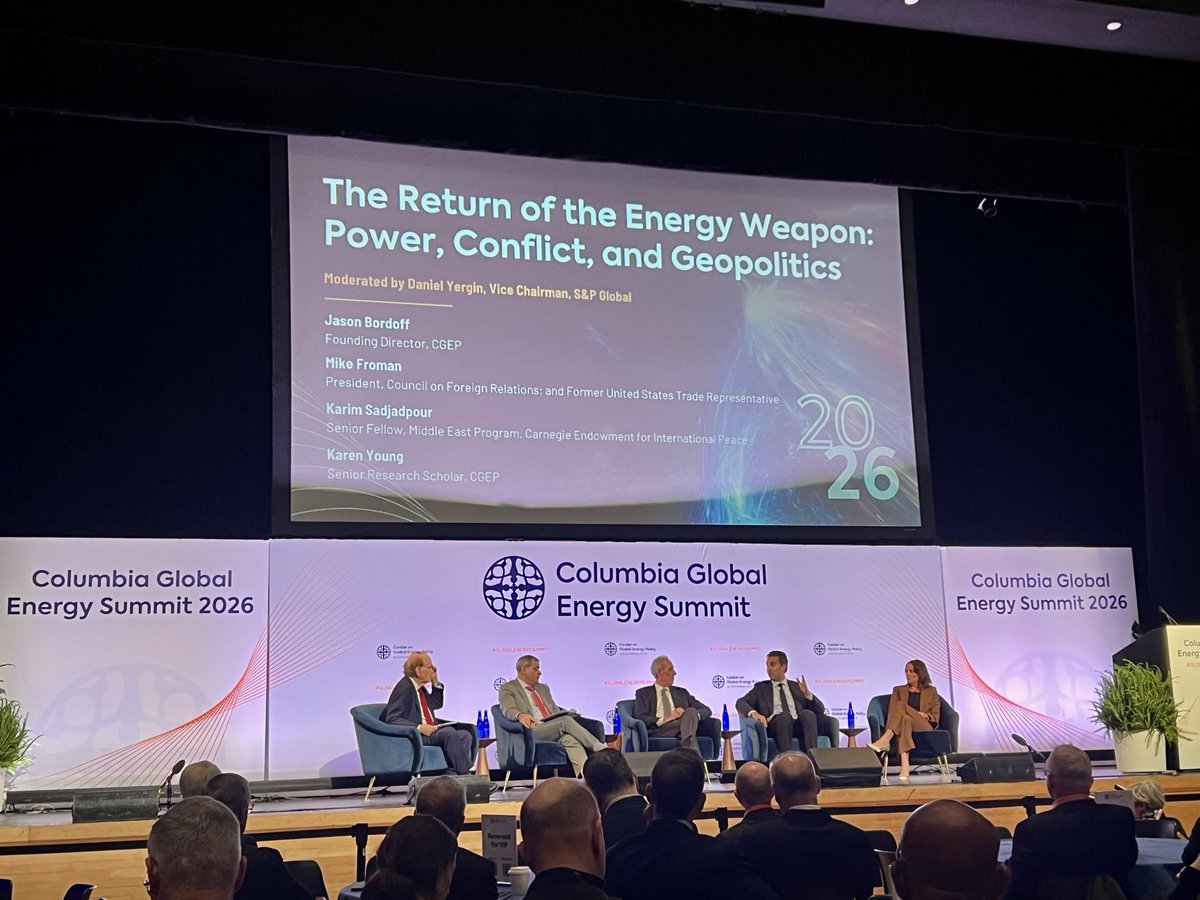
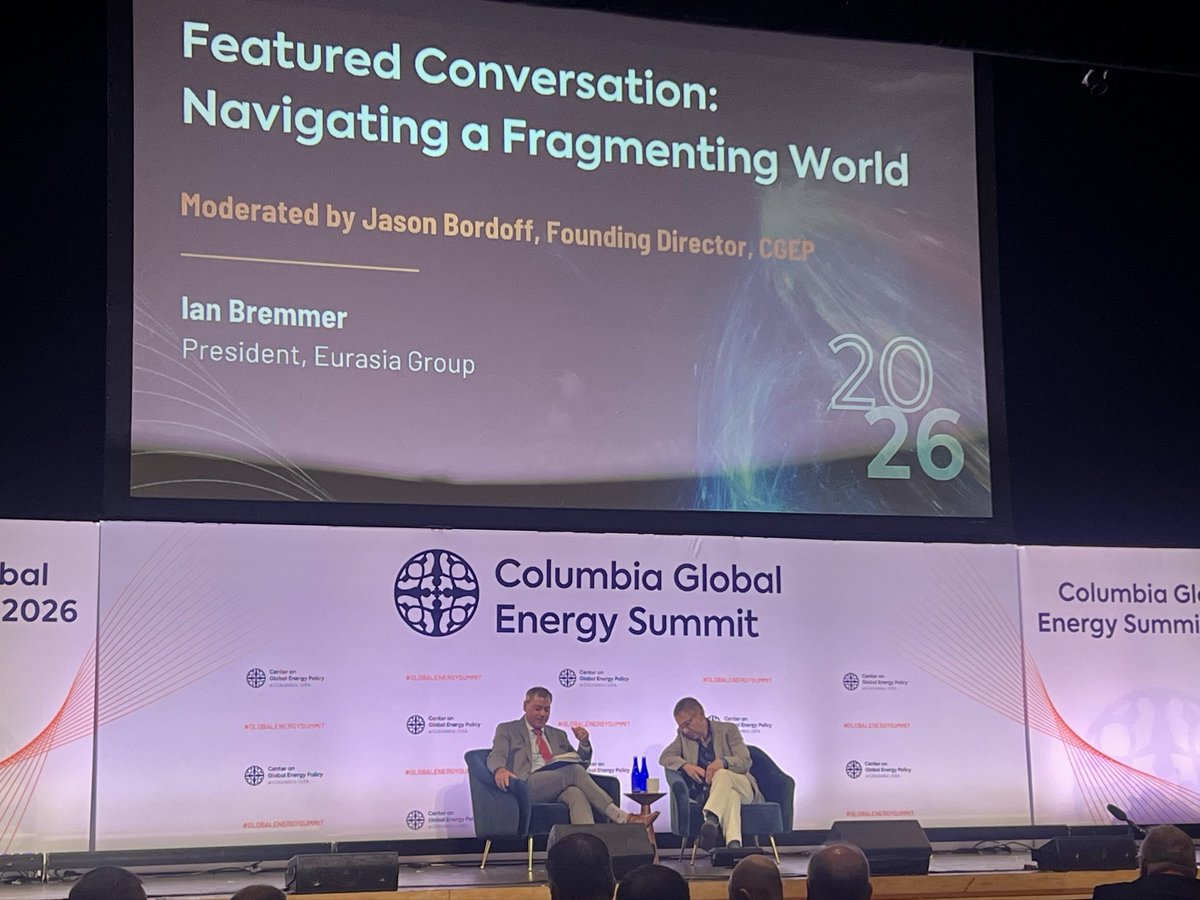
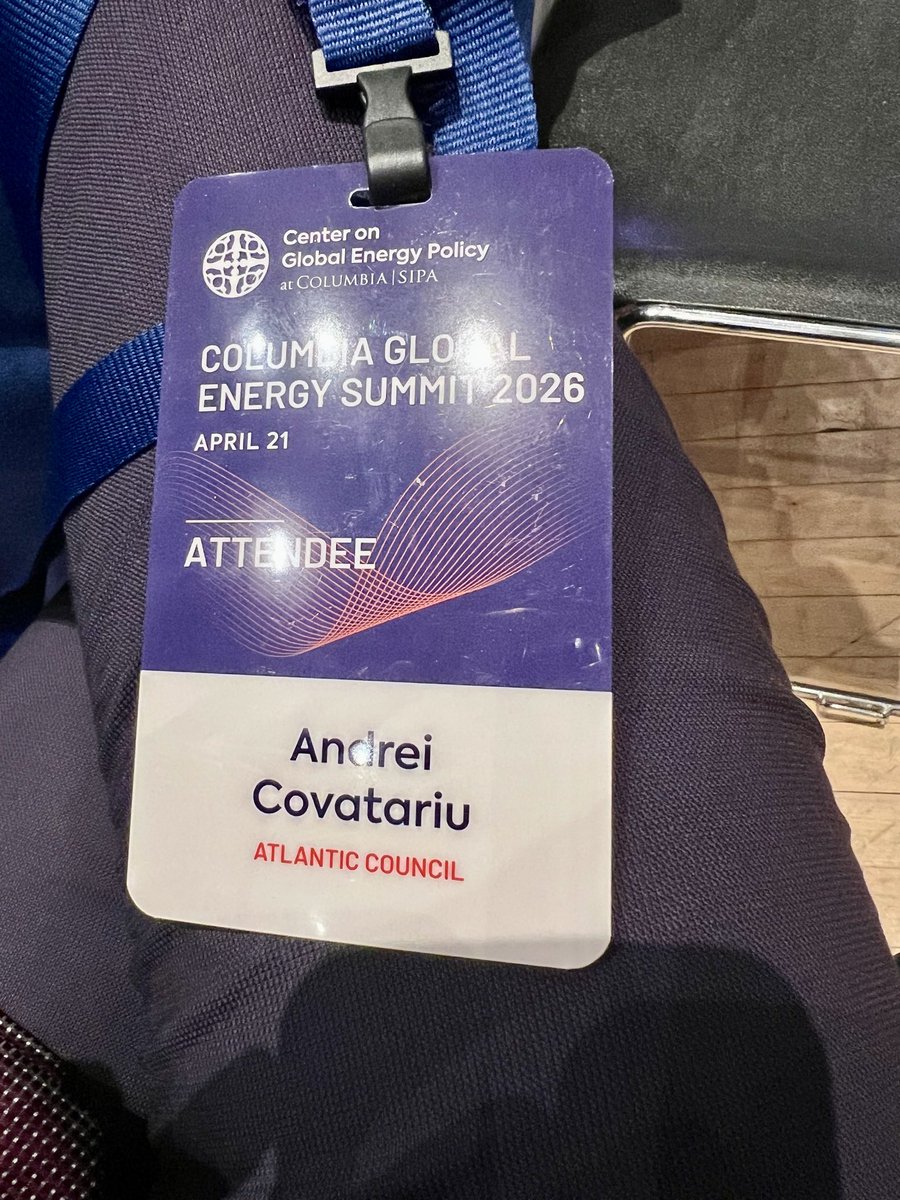
Very excited and grateful to be attending again @ColumbiaUEnergy fantastic #GlobalEnergySummit.
This year, the summit theme revolves around “Energy, Security, and Geopolitics in the New World Order”
Full and live broadcast is available here: https://t.co/aO2mun49MO
A great pleasure to join @BBCNews US Opening Bell programme - this morning, from New York - to discuss the latest developments in the oil markets. Thanks so much for having me, Julia Caesar!
@AtlanticCouncil@ACGlobalEnergy#oilmarkets
⛽ With the Iran crisis unresolved and key elections coming up, the United States, France, and Italy are faced with an energy policy dilemma.
The upcoming elections will see familiar policy responses collide with the fast-moving geopolitics and economic realities of 2026.
⤵️ Read @EPGBucharest's @AndreiCovatariu & GMF's Eamon Drumm's analysis here: https://t.co/gtIEB38Goq
With key G7 #elections coming up — in the United States, France, and Italy over the next 18 months — #energy crises are also political crises.
Eamon Drumm and I have examined that in this @gmfus piece.
https://t.co/lQbdC9gm3g
Was great to join @FRANCE24 last evening to discuss with Sharon Gaffney the current context of the global energy markets, given the recent deal between the US and Iran and the quasi-opening of the Strait of Hormuz. Thank you for the invitation, Florence Viala!
Second, more structurally, we are ultimately in the territory of demand destruction—households and industries simply reduce their consumption, which will eventually set a limit to the spike in prices.
If a peace deal leaves uncertainty, prices could stay elevated due to ongoing risks, including shipping and insurance costs, “which is why the conflict’s perceived durability matters as much as the deal itself,” Covatariu concluded.>>
Was great talking to Doloresz Katanich for @euronews (before the ceasefire agreement) about the energy market implications for the EU, even in a positive war-ending scenario. Thanks so much, Doloresz and Laila Humairah!
https://t.co/fVyfdGWyrU
<<There is “a large risk premium driven by uncertainty, but we are also noticing a large real disruption in flows and production—so you’re not looking at a purely psychologically driven market,” said Covatariu.
A ceasefire—under current conditions—would not immediately bring prices down, but we could enter a stable & predictable pathway, which would gradually lead to lower prices in the weeks and months to come. But, if the energy infrastructure is affected-> higher prices, for longer.
I joined Al Jazeera Channel - قناة الجزيرة last evening to discuss the ongoing energy disruptions in the Gulf and their effects on global energy markets. Thank you for the invitation, @rhijazi !
Full interview, in Arabic: https://t.co/z0GOfl8kSD
#energysecurity#oilmarkets
We talk about 2 major layers of current disruptions, which are uneven for now. Shipping is virtually closed, with very few exceptions, but the energy infrastructure in the region is not yet—at scale—affected, but the risks of that changing have increased significantly.
Europe’s declining energy patent intensity relative to China and the United States could signal a widening innovation gap with substantial energy security implications.
Read more analysis on European energy innovation by @AndreiCovatariu below:
https://t.co/im3IKldWJY
🇪🇺 In an era where patents increasingly reflect geopolitical positioning, reducing innovation funding would compound Europe’s competitive challenges, writes @ACGlobalEnergy’s @AndreiCovatariu.
Read more:
https://t.co/j6xheTizZ5
China has been “importing record volumes of Russian crude at steep discounts,” writes @ACGlobalEnergy’s @AndreiCovatariu.
“In a context where Gulf supply faces logistical risk, Moscow’s barrels become relatively more valuable.”
https://t.co/XtdVjl3iWG
Apropos of this week's @IEA Ministerial, a new Comment from the @payneinstitute:
"Diversification can no longer guarantee energy security"
https://t.co/Rs7rbFfyVp