Sprint-interval exercise lasts less than 5 minutes but triggers more profound metabolic changes than 90 minutes of moderate cycling. A new study reveals why intensity, not duration, reshapes how your organs communicate.
Researchers tracked nearly 3,000 proteins in blood before, immediately after, and 3 hours following two types of exercise in young, healthy males. Sprint-interval exercise consisted of six 30-second all-out cycling bursts with 4-minute rests between sets. Moderate-intensity exercise was 90 minutes of continuous cycling.
The difference was striking. Sprint intervals altered 714 proteins immediately after exercise, more than 98% of which increased. Moderate-intensity exercise changed only 7 proteins at the same timepoint. The number increased to 19 after 3 hours, but remained dramatically lower than the sprint response.
Think of your bloodstream as a communication highway. After intense exercise, it floods with signals that travel to different organs. The study identified proteins originating from muscle, fat tissue, liver, brain, immune cells, pancreas, and other organs.
Skeletal muscle proved particularly sensitive to intensity. The researchers isolated human muscle cells and electrically stimulated them to mimic different exercise types. Simulated sprint exercise released 212 proteins into surrounding fluid. Simulated moderate exercise released only 9.
But muscle wasn't working alone. Sprint exercise increased proteins from the pituitary gland that regulate stress responses, factors from the brain involved in blood vessel relaxation, and immune proteins that modulate inflammation. The pattern suggested coordinated signaling across multiple organ systems.
The study also examined exercise metabolites, small molecules involved in energy production and cellular signaling. Sprint exercise immediately increased lactate, pyruvate, malate, and the obesity-suppressing compound N-lactoyl-phenylalanine (Lac-Phe). Moderate exercise showed a delayed response, with fatty acids rising primarily at the 3-hour mark.
To understand where these signals end up, researchers exposed human fat cells to blood plasma collected after each exercise type. Plasma from sprint exercise triggered extensive changes to fat cell gene activity, affecting 1,128 genes. Plasma from moderate exercise changed only 25 genes.
The remodeled fat cells showed activation of pathways controlling hormone responses, nutrient sensing, and fat breakdown. Several immune signaling receptors increased, suggesting exercise plasma primes fat tissue to respond to inflammatory signals differently.
The findings held up in real tissue. When researchers biopsied abdominal fat before and 3 hours after a maximal treadmill test, 418 genes overlapped with those changed by sprint plasma in isolated cells. This confirms circulating factors from intense exercise genuinely alter fat tissue biology.
Not all changes disappeared with training. After 8 weeks of regular exercise, the same intensity-dependent patterns persisted when participants repeated the acute tests. Growth hormone, von Willebrand factor, and POMC still increased more after sprints than moderate sessions.
The clinical relevance became clear when researchers cross-referenced exercise-responsive proteins with a database tracking 53,026 people for disease outcomes. They identified 143 proteins increased by exercise that associated with lower disease risk.
Of the 33 proteins specifically protective against type 2 diabetes, metabolic disorders, and obesity, 32 were elevated by sprint-interval exercise. Only 3 were elevated by moderate-intensity exercise. Proteins like ADGRG2, FGFBP1, and MXRA8 consistently showed strong protection across multiple metabolic conditions.
This isn't an argument against moderate exercise. The sustained energy demands of longer duration activity clearly stimulate different adaptive pathways, particularly in the liver. Proteins like IGFBP1 and follistatin increased exclusively after moderate exercise, likely reflecting sustained shifts in insulin and glucagon signaling.
The study reveals exercise intensity as a distinct variable that determines which protective signals reach your tissues, which organs respond, and potentially which disease risks decrease. The time-efficient nature of high-intensity exercise appears to work through fundamentally different signaling mechanisms than longer moderate sessions.
Key findings:
• Sprint-interval exercise altered 714 blood proteins immediately post-exercise vs. 7 for moderate-intensity exercise
• 25% of all detectable proteins changed after sprint exercise, with >98% increasing rather than decreasing
• Muscle cells released 212 proteins after simulated sprint exercise vs. 9 after simulated moderate exercise
• Sprint exercise plasma changed 1,128 genes in human fat cells vs. 25 genes for moderate exercise plasma
• Of 33 proteins protective against diabetes and obesity, 32 increased after sprint exercise vs. 3 after moderate exercise
• Intensity-dependent responses persisted after 8 weeks of training, suggesting they reflect relative intensity rather than training status
• Exercise metabolites showed distinct temporal patterns: lactate and Lac-Phe peaked immediately after sprints, while fatty acids increased later
• Moderate exercise uniquely increased liver-derived proteins (IGFBP1, follistatin) at the 3-hour timepoint
The mechanistic picture is incomplete. The study couldn't definitively prove which organs secrete which proteins, relying instead on tissue-specific gene expression databases and cell culture models. Blood volume shifts during exercise also complicate interpretation, though the findings held after correcting for plasma concentration changes.
The research focused on young, healthy, predominantly male participants. Whether the same intensity-dependent patterns occur in women, older adults, or people with existing metabolic disease remains unknown. The protective associations came from observational data that can't prove causation.
Still, the study offers a framework for understanding why brief, intense exercise produces adaptations comparable to or exceeding longer moderate sessions. The answer appears to lie in differential organ crosstalk triggered by metabolic stress signals that moderate exercise simply doesn't generate.
No, Miriam, no confundas tiempo con clima. Que en el siglo XIX hubiese un día con 43, no invalida que haya una tendencia estadísticamente significativa de que la temperatura media anual ha ascendido 2.6 °C entre 1869 y 2025 en València.
Van a comprar hoteles para montar un negocio de funcionamiento digital sin personal contratado. Un modelo de negocio muy beneficioso para quienes vivimos aquí. La gallina de los huevos de oro lo llaman. Tremendos huevos tienen. Eso sí, de oro.
una tasa de paro del 19% y juvenil del 42%, un salario mínimo 700 euros menos que ahora, abandono escolar en maximos y plena trama gürtel y corrupcion del PP. Pero este jeta enchufado que no ha trabajado jamas dice que era maravillosa 😂
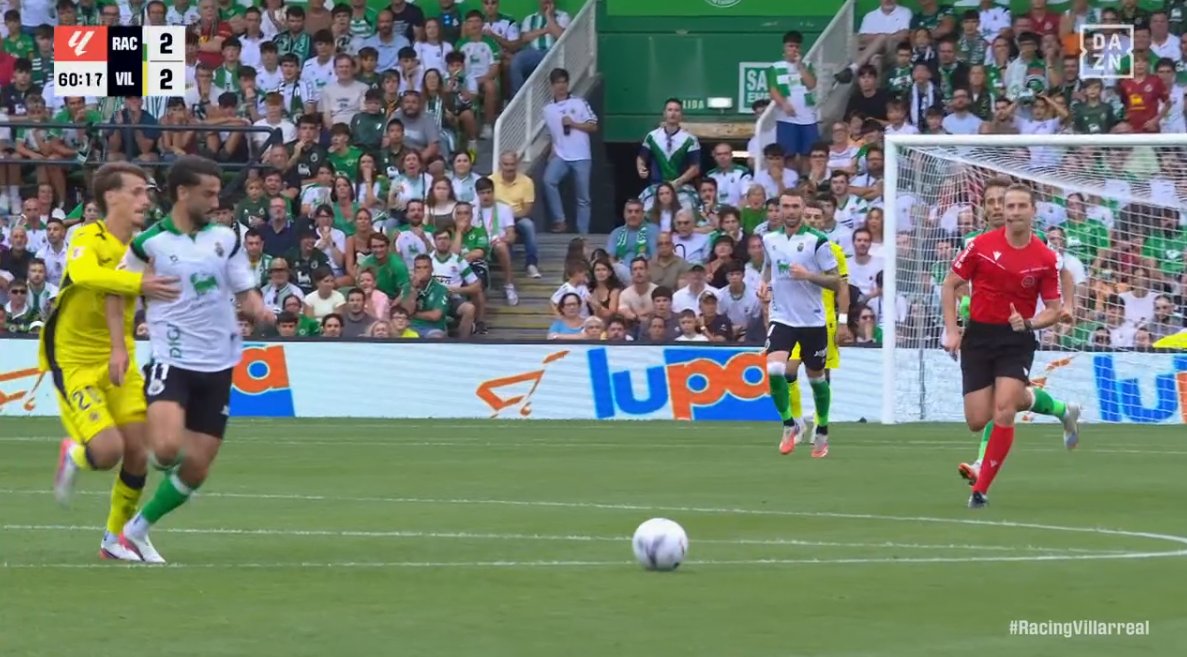
🖥️💥 El VAR se lavó las manos en el Racing de Santander - Villarreal.
👉🏻 Carlos Romero trastabilla a Andrés Martín cruzándose en su carrera en la zona DOGSO.
❌ 𝗘𝗦 𝗥𝗢𝗝𝗔 𝗗𝗜𝗥𝗘𝗖𝗧𝗔.
▪️ La zancadilla del defensor evita una clara ocasión manifiesta de gol.
A Catalunya hi ha 333 mesquites i 893 esglésies evangèliques. Des del 2020, hi ha 49 mesquites noves i 105 centres evangèlics nous, el doble.
Val més que ningú pregunti per les influències mundials de l'evangelisme amb l’extrema dreta, per si de cas.
Ni clase media ni clase media alta, clase obrera en un estado dirigido por el Partido Comunista, que trabaja para el bienestar de los trabajadores. El tontolaba este sigue sin enterarse de nada.
Eliminas la financiación pública a los partidos. Ahora solo los partidos con inversión privada pueden competir. ¿Y quién tiene más inversión privada? Quien tiene dinero. Al final, acabas favoreciendo todavía más que gobiernen las élites para las élites. No cabe un tonto más.
BRUTAL DATO:
En toda la década de los 2000, se registraron en la ciudad de #Valencia 21 noches tórridas, aquellas con temperatura mínima igual o superior a 25 °C.
Pues bien, solo este año, a 10 de agosto, ya llevamos 21 noches torridas.
El calor de siempre…