🔥 ARC mở Community Points Program(FREE AE làm đi nha)
Sau khi công bố tokenomics với 60% supply dành cho ecosystem, @arc hiện đã cho người dùng làm task nhận points - chưa có xác nhận chính thức points sẽ quy đổi ra gì nhưng FREE cứ làm nha
📌 Cách tham gia:
• Vào https://t.co/pvI9ZSBNIT
• Đăng ký email
• Hoàn thành profile → AE sẽ nhận được 100 points
✏️ Một số task:
- Daily login
- Đọc bài
- Xem video
- Đăng bài original (+100 points)
✔️ Nên cố đạt 500 points để lên Tier 1.
ℹ️ Chi tiết Event: https://t.co/hKWZdm4xoD
⚠️ Hiện chưa xác nhận rewards/airdrop, nhưng vì free nên khá đáng để thử
🚨 CANTON IS RUNNING ON A $377M INFLATIONARY LOSS
But here is what CT is omitting and overlooking...
Compare that to Ethereum ($2.36B net incentives paid) or Solana ($2.11B net incentives paid), both of which go entirely out the door to validators.
By looking at @DeFiLlama and screaming “incentives > fees burned = losses” is a fundamental misunderstanding of how @CantonNetwork actually works.
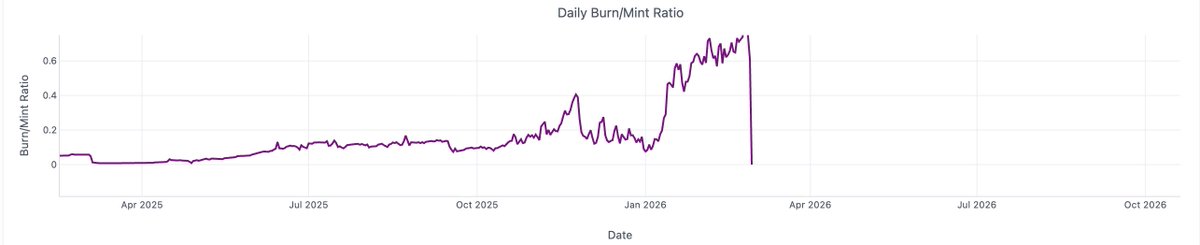
The entire point is the Burn-Mint Equilibrium (BME).
Fees burned = real institutional flows (RWAs, repo, tokenized assets, high-volume workflows).
Minted rewards = incentives to bootstrap and scale usage.
On top of that, the network rewards durable economic activity, not subsidized infrastructure handouts.
➜ Post-CIP-0105: 70% of Super Validator lifetime rewards (14% of all future emissions ≈ $162M annualized at current $0.15 $CC) are now locked, so you can pull that out of incentive discussions = no immediate dump/no liquid supply.
➜ CIP-0096 fully removed liveness rewards (previously ~70% of all Validator rewards ≈ $486M annualized at current $0.15 $CC) = everything is now usage-tied.
Even raw, Canton’s net inflation is just ~$377M annualized at the moment ($1.16B mints vs $783M burns) and is constantly changing. No company or foundation is “paying out of pocket.” The protocol simply expands the supply temporarily to attract real economic activity onto the network.
The @CantonNetwork system is designed to swing between inflationary (growth phase) and deflationary (maturity) phases based purely on network activity.
Price is the automatic regulator:
➜ If the market thinks the equilibrium is too slow, price falls → tokens become cheaper → more attractive for institutions to use/stake → usage rises → burns rise.
➜ If usage explodes, burns outpace mints → net deflation → price appreciation reinforces the flywheel.
Price is simply the market outcome of those supply/demand mechanics.
This isn’t a crypto company chasing hype cycles. These tokenomics are built for real utility at scale, and the beauty is that they still work when the network is valued in trillions.
In short, the current net inflation is not the end state.
That’s the whole game.
Do better.
Zth.
@akyra_0 You’re right at this moment, but almost the crypto projects out there is the same, they have tokenomics for Team, VC, Angle… these insider soon or after get their allocation, they dump on retail. The question is what make CC difference?
Why criticize it?
Who doesn't want VIP customers?
One stall winning big institutions benefits the whole market — more liquidity, legitimacy, and growth for everyone.
Canton is progress. Institutional adoption with privacy is a net positive.
#CC#CantonNetwork
Lately, many debates about @CantonNetwork . My 🧵👇
Crypto is like a big marketplace. Many L1s & L2s serve retail users well.
But VIP customers (banks & institutions) were left out. They need strong privacy and compliance — most public chains can't provide due to transparency.
Then Canton Network arrived, built for institutions.
It offers sub-transaction privacy and tokenized real-world assets.
On March 25, 2026, Visa became the first major payments company to join as Super Validator.
Canton serves a missing segment, not replacing retail chains.
NHỮNG VẾT NỨT ĐẦU TIÊN ĐANG XUẤT HIỆN TRONG PRIVATE CREDIT
Một trong những góc được xem là “ổn định” nhất của hệ thống tài chính đang bắt đầu xuất hiện dấu hiệu căng thẳng.
Apollo, một công ty lớn trong mảng cho vay ngoài ngân hàng (private credit), vừa phải hạn chế rút tiền tại quỹ trị giá 14,5 tỷ USD khi nhà đầu tư đ��ng loạt yêu cầu rút tới 11,2% tài sản, tương đương hơn 1,5 tỷ USD. Tuy nhiên, quỹ chỉ cho phép rút tối đa 5%, tức khoảng 730 triệu USD, khiến nhà đầu tư chỉ nhận được khoảng 45% số tiền họ muốn rút. Điều này không phải là trường hợp cá biệt. Blackstone, BlackRock, Blue Owl và Morgan Stanley cũng đang đối mặt với làn sóng rút tiền kỷ lục ở các quỹ tương tự, đặc biệt là những sản phẩm bán cho nhà đầu tư cá nhân.
Cơ chế phía sau rất đơn giản. Các quỹ private credit cho vay vào những tài sản kém thanh khoản, ví dụ như các khoản vay trực tiếp cho doanh nghiệp tư nhân, bất động sản thương mại, các thương vụ mua lại doanh nghiệp hoặc các khoản nợ không được giao dịch công khai trên thị trường. Những tài sản này không thể bán nhanh như cổ phiếu hay trái phiếu niêm yết. Khi thị trường thuận lợi, chúng tạo ra lợi suất cao. Nhưng khi nhiều người cùng lúc muốn rút tiền, quỹ không thể nhanh chóng thu hồi vốn, nên bu���c phải giới hạn rút tiền để tránh mất cân đối.
Vậy tại sao nhà đầu tư lại rút tiền lúc này?
Có vài lý do. Thứ nhất, lãi suất vẫn đang ở mức cao và có khả năng sẽ ở mức cao thời gian dài, khiến các tài sản an toàn như trái phiếu chính phủ trở nên hấp dẫn hơn so với các khoản đầu tư rủi ro. Thứ hai, lo ngại về chất lượng tín dụng đang tăng lên, khi nền kinh tế có dấu hiệu chậm lại và khả năng trả nợ của doanh nghiệp yếu đi. Thứ ba, nhiều nhà đầu tư cá nhân bắt đầu nhận ra rằng các quỹ này không thực sự thanh khoản như họ nghĩ, nên họ muốn rút tiền sớm trước khi tình hình xấu đi hơn.
Vậy đây có phải là khủng hoảng?
Chưa.
Đây là dấu hiệu căng thẳng ban đầu, chưa phải khủng hoảng toàn diện. Hệ thống vẫn vận hành, các quỹ vẫn trả được một phần tiền và chưa có làn sóng bán tháo bắt buộc. Nhưng tín hiệu này rất quan trọng. Khi nhiều tổ chức lớn cùng lúc bị rút vốn, điều đó cho thấy thanh khoản đang bị siết lại bên dưới bề mặt.
Trong khi chính sách đang siết stablecoin để giữ tiền trong ngân hàng, áp lực thật sự lại xuất hiện ở hệ thống cho vay ngoài ngân hàng, nơi nhà đầu tư đang rút tiền và các quỹ phải hạn chế thanh khoản.
Rủi ro không nằm ở crypto, mà ở các thị trường tín dụng lớn nhưng kém minh bạch.
Chưa phải khủng hoảng, nhưng là tín hiệu sớm.
BASEJUMP IS LIVE
build your multiplier with every jump.
the higher you go, the bigger the win
but one wrong leap and your run's over.
play now on @base → https://t.co/UvTHL5fc2Z
🔥Ae cày base nhớ hoàn thành Coinbase onchain verified nhé
Chỉ mới 50K ví hoàn thành verify thôi, điều kiện là ae cần KYC thành công acc coinbase rồi sign ví để verify!
➡️https://t.co/4bOmPMdrwp
Base vừa đổi các mục ở guild mình thấy toàn là tiêu chí để retroactive nên ae nhớ vào lấy hết roles ở guild base đi nha🥰
➡️https://t.co/ocu2sZtcCx
Hoàn thành xong xuôi rồi đợi đón base thôi ae😁





![Autosultan_team's tweet photo. [Update] @CantonNetwork
26 Potential Ecosystem Update for Farm, Running & Waitlist Part 2
Potensial Earning: $1k++
Full Guide is Available, A Thread 🧵](https://pbs.twimg.com/media/HFib4HlakAEWjeC.jpg)