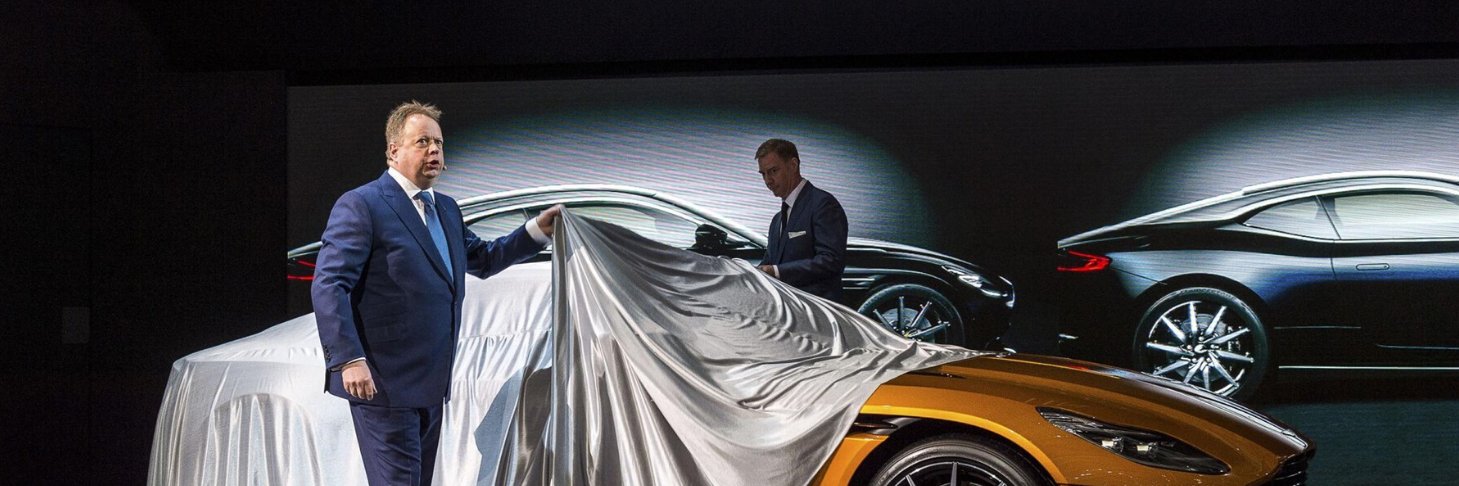
46 years in the auto business. Proud to launch iconic cars as CEO of Aston Martin & COO of Nissan (incl Valkyrie & LEAF). Now on a mission to help the planet🌍
My apprenticeship gave me some of the best days of my life & equipped me with the skills needed to lead businesses at the forefront of the auto industry. For employers & employees alike, apprenticeships add huge value. Find out more in this film with @TheTimes & @BizSupportGovUK.
@brenaissance19@New_AutoMotive Dealers have self registered cars for longer than I’ve been in the car business…. And that’s long time!
The recent kick up in EV sales is almost entirely on the back of the fuel price spike.
From @New_AutoMotive Battery electric cars accounted for 30% of new registrations in June, growing 37.7% or 17,643 units on
June 2025, and over double the figure for June 2024. June 2026 was the third strongest month for EV
registrations on record. Growth is being driven by two factors: first, consumer demand for EVs has
undergone a secular shift since conflict in the middle east drove pump to peaks from which they have
been slow to fall. Second, supportive policies such as the ZEV mandate are providing motorists with a
route to cheaper motoring, applying competitive pressure to carmakers to bring cheaper EVs to the
UK, with Britain's cheapest car now the all-electric Dacia Spring.
@ShaunRicha96463@New_AutoMotive BEV only. Yes it’s registered (because that’s how it’s measured) for all car and is a constant measurement over a long period of time. SMMT figures on Monday but they use the same source data
@ProudBrit19@New_AutoMotive The mandate is an annual market share of sales not the total car parc! The mandate is 33% for this year (June market share was 30%) and is adjusted taking account of PHEV, HEV and low co2 sales. The industry met the mandate last year and will meet it this year.
Reminder that @smmt June results are out on Monday. 5 months ytd show the rise of electrification in the U.K. with particularly high growth in PHEV and BEV - remember these matter because they all contribute to each manufacturers achievement of the headline 28% “EV” goal. We can already say with some certainty that that goal will be achieved in 2026.
Society needs its fair share of humanities students but the balance doesn’t look correct compared to our rivals. Engineering specifically (as share of graduates)
UK: ~5–7% of graduates in engineering
Germany: ~15–20%
Japan: ~18–22%
China: ~30%+ in engineering / manufacturing-related disciplines
Germany produces roughly 2–3× more engineers per capita
Japan roughly 3×
China produces vastly more both absolutely and proportionally
As for PPE, the circa 4000 grads we produce every year can’t all go into Politics. It’s also notable that STEM practitioners among the U.K. MPs are only about 6%
Again, we need Humanities but are we honestly getting the balance right to equip our country to generate growth and wealth?
Andrew. What I find staggering to understand in the comments and in your historical commentary, is the opposition to EV’s and the transition to net zero - this was the UKs opportunity- as an example, I bought LEAF and AESC to UK in 2011. China first set out its industrial strategy to dominate in NEV In 1992 - they told us they would leap-frog the west 25years ago. Yet the EU, UK and various commentators failed to invest in the emerging technology, failed to get behind the inevitable change and now bemoan the decline of our manufacturing industry. The car industry survives on its ability to manifest changes in line with changing customer requirements- we have failed to invest in batteries, in EV, in software stacks and autonomous technology. We failed to embrace an industrial strategy for our country and now we’re, unsurprisingly on the back foot.
@Automotive_News EV is just another powertrain. Car pricing is elastic and predictable. Customers will not pay a premium for EV, but EV’s are dominate where prices are at parity and operational costs are compelling.
Nissan line 2 has only capacity to produce LEAF and Juke EV. There’s no capacity and no confidence in the mandate / customer demand to tool line1. So it potentially goes to Chery. A manifestation of what happens when you hesitate as a company and as a country to the leadership in new technology!
If reports are correct that Starmer is preparing to dilute the ZEV Mandate to just 50% EV penetration by 2030, it feels like another sign of a government drifting from conviction to populism.
The UK was once renowned for policy consistency. Investors could make long-term decisions knowing governments would largely stick to the framework they had created. Today we seem to be seeing more U-turns than a London taxi.
Whether you support electrification or not is almost beside the point. The ZEV Mandate created certainty. It allowed global automotive companies to commit capital, technology and jobs to the UK. Recent investments by Nissan in new LEAF and Juke EV production at Sunderland, Chery’s UK ambitions, battery investments in Sunderland and Somerset, and billions of pounds of supply-chain commitments were all made against the backdrop of a clear regulatory trajectory.
When governments repeatedly change direction, investors start asking a simple question: “Why should we trust the UK?”
The damage goes far beyond vehicle manufacturing. Charging infrastructure providers, battery suppliers, energy companies, software developers and skills providers have all invested based on expectations created by government policy. Every retreat from those commitments casts future investment into doubt.
The bigger strategic issue is whether the UK will ultimately be included within the EU’s emerging “Made in Europe” industrial ecosystem. If Europe increasingly seeks to localise battery, vehicle and clean technology supply chains, the UK’s greatest risk is not that the transition happens too quickly, but that it happens elsewhere.
Industrial leadership requires consistency. Businesses can adapt to tough targets. What they struggle to adapt to is uncertainty.
Whatever your view on EVs, a country cannot build a world-class manufacturing sector if its industrial strategy changes every time the political weather does.
@Greek_Phil Oh my I remember it well - and the beating around the head with the physics text book and the cane for not reading The Hobbit well! Let’s say I have better memories of the 1976 weather than the Headmaster! 😂
Hottest June day ever recorded in U.K. today
Temperatures reached about 36.1°C in Hampshire (Gosport), breaking the previous UK June record of 35.6°C (set in 1957 and matched in 1976).
It not 1976 yet (duration) but 1976 was a classic dry continental heat — fierce daytime heat but often cooler nights. And yes I remember it well!
Hi Death. As you’ll know very well if a man’s average body temperature rises from 37.0°C to 38.0°C, he can still have cold hands.
This is a high-amplitude Rossby wave in the jet stream. Warm air is being pumped north into western Europe. To conserve momentum, a downstream trough often forms to the east. That trough pulls Arctic or polar continental air south into Russia.
Global warming is strongest in the Arctic (Arctic amplification = roughly 3–4× global average warming).
It’s easy to dismiss and turn into popularist politics, but actually it’s getting quite scary. Add super” El Niño and its persistence into winter 2026–27 at >90%, then we might see a very strong peak.
Hope I’m wrong, and I’m sure I won’t convince any sceptics no matter how compelling the maths.
Lawrence. While I don’t dispute the range anxiety issue let me make 2 points. 1) generally the range to zero display is way more accurate than a fuel gauge - OEMs faced way more complaints when trip computers added the range function. 2) every EV I’ve developed or owned has a range beyond 0, albeit some go into tortoise mode. I don’t particularly recommend stressing the battery but I can certainly say my LEAF, ID3 and ID7 have availed me at least an additional 10mins on occasions.
I don’t doubt the increasing heat issue or the need to hydrate players - but I guess the real reason isn’t player safety it’s advertising revenue - probably worth $250–330 million to broadcasters across the whole 2026 World Cup, with a meaningful portion indirectly benefiting FIFA via future media-rights pricing.
I’m sure I’m not the only person that believes the “hydration break” has no place in @FIFAWorldCup Football. I guess we all understand it’s an advertising break but it disrupts the flow of the game and hasn’t been necessary in the past 163years.