Dear Twitter followers, I have made the move to BlueSky! Find me there and let’s keep sharing and discussing research and clinical practice on mental health after stroke and TBI @andreakusec.bsky.social
Finally, objective and subjective cognition are not mirrors of each other - they did not correlate at any time point. Both objective and subjective cognition should be addressed in mood interventions post-stroke, but their impact may differ between early and chronic stroke! /4
🚨 New paper out in @TheClinicalNP! With @NeleDemeyere we find that objective cognition relates more strongly to early #poststrokedepression but subjective cognition more strongly relates to long-term depression and #poststrokeanxiety /1
https://t.co/kcmmU0vL7K
We also found that, while subjective cognition predicted changes in depression and anxiety post-stroke, depression/anxiety changes did not reciprocally explain changes in subjective cognition, suggesting that subjective cognition may have a causal influence on post-stroke mood /3
Really happy to see @chloecarrick_ 's great (pre-registered) study on cognitive associations of chronic post-stroke #fatigue - executive dysfunction uniquely relates to fatigue above other cognitive symptoms.
With @NeleDemeyere
Funder: @TheStrokeAssoc
https://t.co/dfmQc04Q6e
“How many of the millions of people in the UK affected by brain injury are leading impoverished lives with their potential unfulfilled, all for the want of adequate community-based specialist health and social care services” @Mark_HollowayHF & @dralysonnorman#PFD
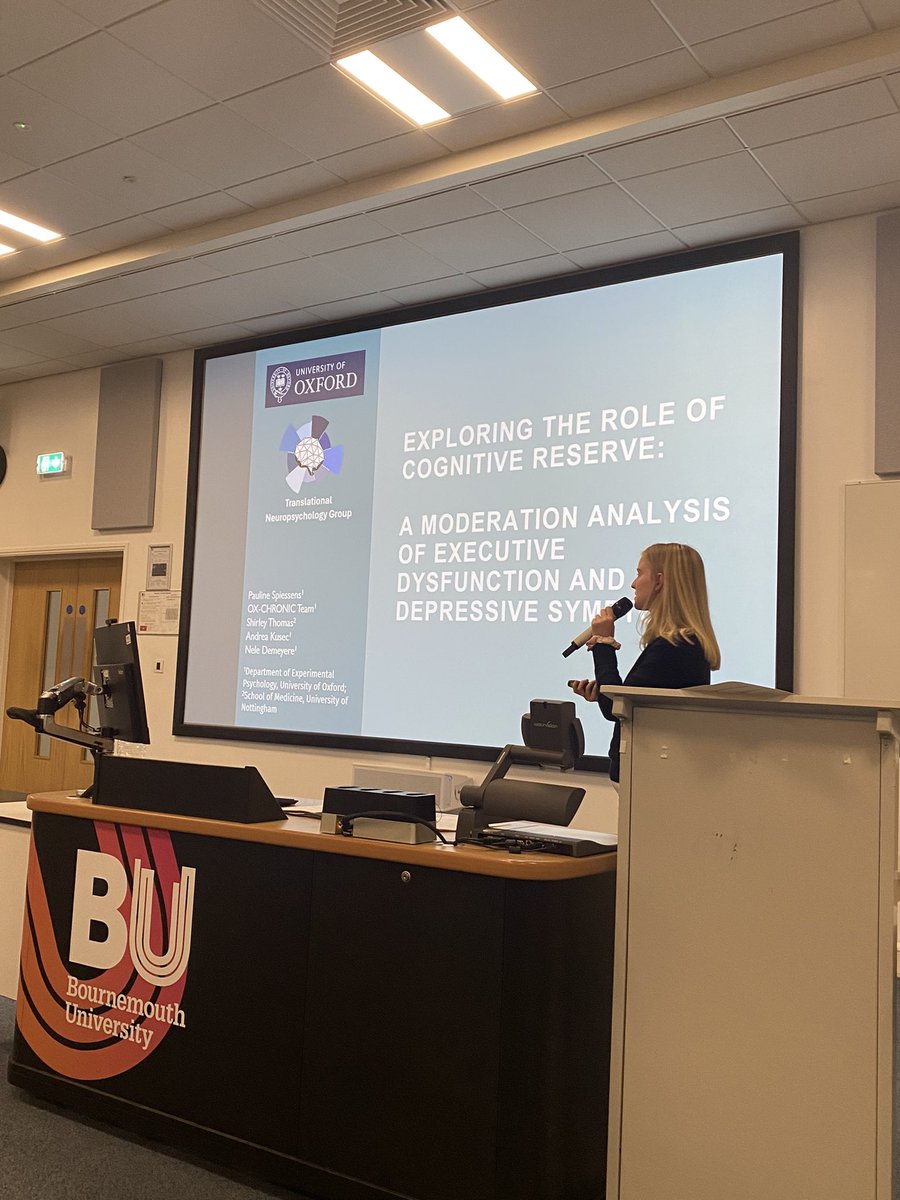
Really proud of my Master’s student Pauline Spiessens presenting her work on cognitive reserve mediating the role of executive functioning and depression after stroke #opsyris24
Excellent start of our @OPSYRIS1 conference with our invited symposium & a talk by @louiseclark15 on the chime model and how this can boost recovery in stroke #opsyris24
Are you travelling to Bournemouth University tomorrow for our annual meeting? We wish you safe travels! Please post photos & use our meetings hashtag #opsyris24 We cannot wait to see you all in person or online. Program and registration: https://t.co/rWd3pODwxD
Our program for @OPSYRIS1#opsyris24 looks great and nice all posters are available for download online 🙌 https://t.co/J0jJn8gFtL
Hyper excited for my team to present their work @UEANeuroLab and learn about what everyone is doing 🤩😎
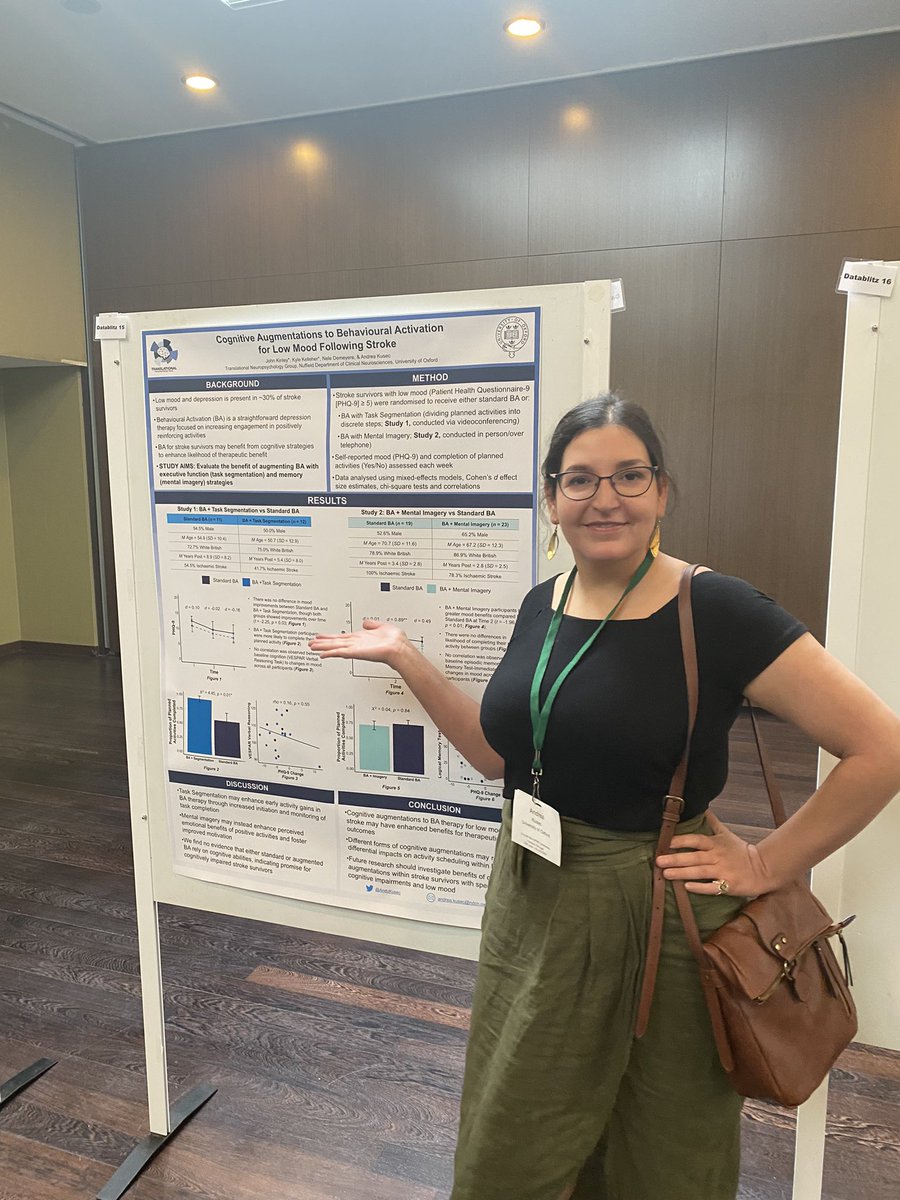
Was really happy to share the work on my great Master’s students John Kinley and Kyle Kelleher on cognitive augmentations to BA after stroke. Different augmentations have different mood and activity outcomes in BA! #NRSIG2024
Super proud of Ghizlane Slaoui presenting her work on understanding perspectives of long-term executive dysfunction in stroke survivors. Executive dysfunction is not only hidden from others, but can be hidden from stroke survivors too #NRSIG2024
The program for next Opsyris meeting 12th July is now live on our website: https://t.co/rWd3pOE4nb!
We are accepting late breaking abstracts >>> email abstract (250 words) to us.
To register please follow the links on our website!
Did you know that @OPSYRIS1 has 450+ members from varied disciplines (Psychology, Occupational therapy, Physiotherapy, Medicine etc) who are interested in sharing research news, jobs and events on psychological research intro stroke? Joining is easy: https://t.co/vu8QIQSlrH