@Dysfunc80937081@Tiare_MP I have no interest in the misguided views of woke/utopian politicians or, as a resident X wit observed, their policy-based evidence. Hard no.
What could possibly go wrong when you cease to tinker and throw out whole systems?. LOL. That was a rhetorical question; no reply needed.
The Right Way: Separate the message from the messenger. If a point is valid, it remains valid whether it’s shouted or whispered. Focus on the actual data, logic, and claims—not how many exclamation points the other person used.
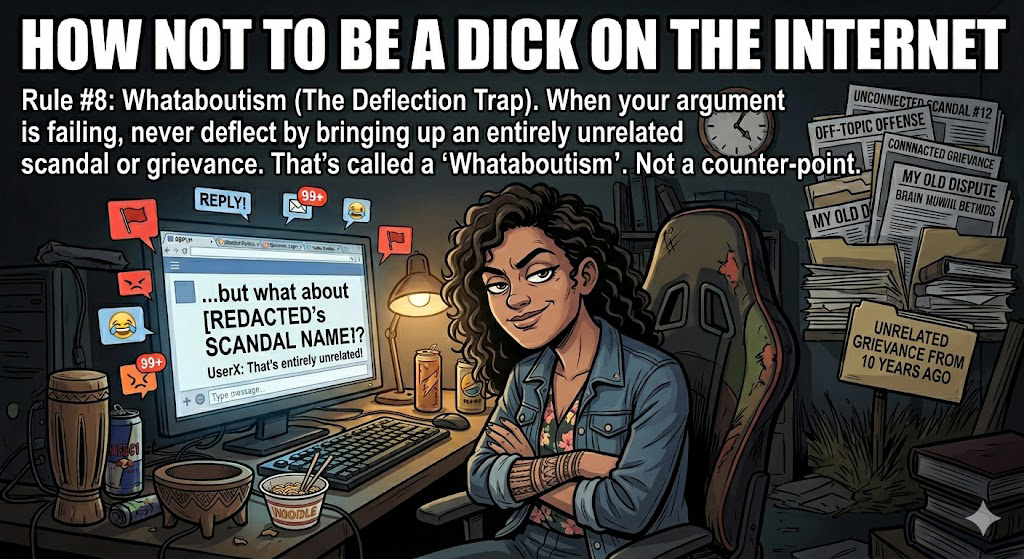
The Right Way: Address the point directly. Bringing up a different issue doesn't excuse or invalidate the topic at hand. If you can't defend your position without pivoting to "what about them," then you haven't actually made a counter-point.
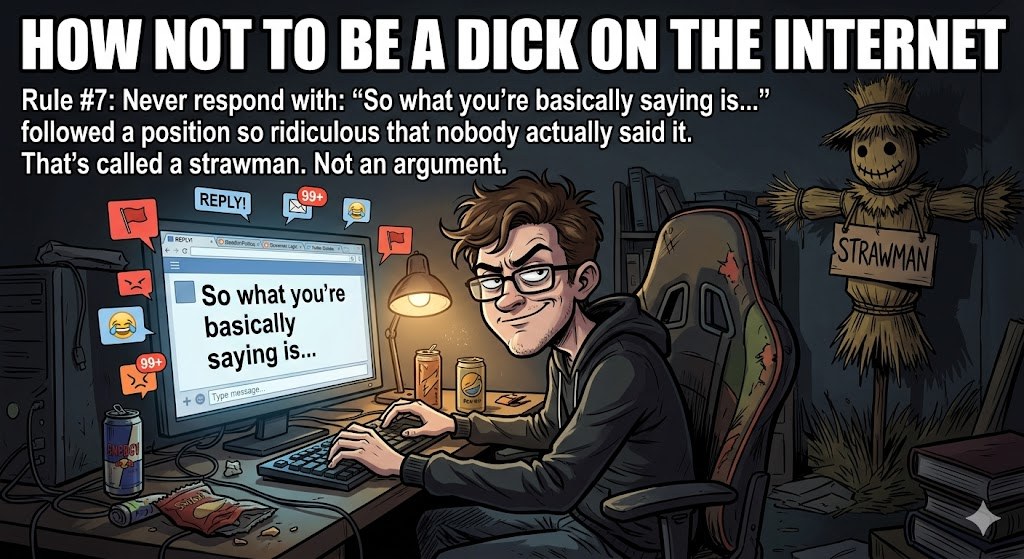
The Right Way: Engage with their actual point. If you aren't sure what they mean, ask for clarification instead of inventing an absurd caricature just to score easy internet points.
The Right Way: Don’t punch down. If a tiny account has a bad take, leave it alone or reply privately. Save your public critiques for prominent figures who actually have the platform and power to defend themselves.
The Right Way: Focus on quality over quantity. Pick your single strongest argument, present your evidence clearly, and give your opponent the space to actually respond to it before moving on to entirely different claims.
The Right Way: Disagree with the logic, not the person. If someone's point is genuinely flawed, dismantle the argument itself with facts and reason rather than throwing personal slurs or insults to mask a weak counter-point.
The Right Way: Google is free. If you actually want to learn, do your own foundational research instead of demanding strangers write an essay to satisfy your endless, bad-faith requests for proof.
The Right Way: Accept when a condition you set has been met. If the evidence disproves your premise, acknowledge it in good faith. You can always pivot the conversation to a new nuance later, but validate the facts first instead of trying to change the rules of the debate.
The Right Way: If you make an assertion, the burden of proof is on you. Provide a source or a link to back up your claim, rather than expecting others to hunt for evidence that supports your argument.