Akita
The Akita is a Japanese dog breed of large size. Originating from the mountains of northern Japan, the Akita has a short double coat. Standing in height 60.9 to 71.1 cm (24 to 28 in) and weighing 31.7 to 58.9 kg (70 to 130 lb). Lifespan: 10 to 12 years.
Predecessors of the modern Akita were used for hunting bear, wild boar, and deer in Japan as late as 1957. Today, the breed is used primarily as a companion dog, but is currently also known to be used as therapy dogs, and compete in all dog competitions.
National Pig Day
National Pig Day is an event held annually on the first day of March in the United States to celebrate the pig. National Pig Day includes events at zoos, schools, nursing homes, and sporting events around the United States.
The holiday is most often celebrated in the Midwest of the US. The holiday celebration in the USA was started in 1972 by sisters Ellen Stanley, a teacher at All Saints Episcopal School in Lubbock, Texas, and Mary Lynne Rave of Beaufort, North Carolina.
National Horse Protection Day
National Horse Protection Day is on March 1. It campaigns to put an end to the suffering of horses. Unfortunately, cruelty against animals is still a norm and horses have been subjected to neglect and abuse for decades.
National Horse Protection Day was first observed in 2005 and was introduced by Colleen Paige — an expert on pets, animal behavior, and a certified horse lover. Her efforts have propelled the cause for abolishing cruelty toward horses.
Adopt a Rescued Guinea Pig Month
Adopt a Rescued Guinea Pig Month is celebrated in March in the U.S. Adoption ensures you get a pig that has been checked and well-taken care of. They are related to a wild species called ‘cavy,’ which still roam around in the Andes.
A guinea pig is neither from Guinea nor related to pigs. The name is a mystery, but the critter itself is certainly cute. It is a domesticated rodent from South America, where they were bred as livestock for the household.
Dolphin Awareness Month
Dolphin Awareness Month is an annual campaign commemorated in March to spread awareness about the merciless killing of dolphins. Dolphins are described as the smartest marine animal, and they have a long history of being friendly with human beings.
However, it is the friendly and trusting nature of dolphins that has led to the demise of many and the mass endangerment of the species. Every year, thousands of dolphins are killed, either for their meat or their blubber, which are sold on black market.
Sand cat
Scientific name: Felis margarita
Also known as the sand dune cat, is a small wild cat living in sandy and stony deserts far from water sources. Its head-and-body length ranges from 39–52 cm (15–20 in) with a 23–31 cm (9.1–12.2 in) long tail.
The first sand cat known to science was discovered in the Algerian Sahara and described in 1858. and several locations in Morocco, Algeria, Niger, Chad and Egypt. In Central Asia, and the Arabian peninsula and the Middle East, and southwestern Pakistan.
Gulf short-fingered gecko
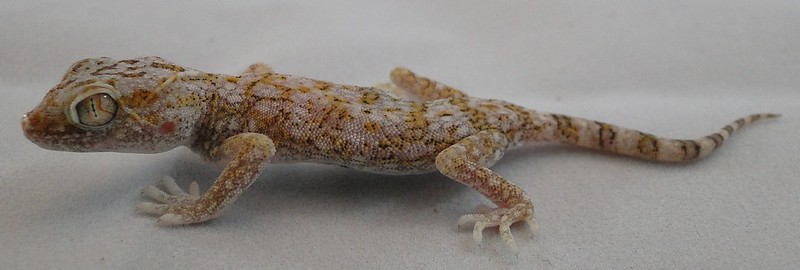
Scientific name: Pseudoceramodactylus khobarensis
The Gulf short-fingered gecko is found in the family Gekkonidae . It is found on the Arabian Peninsula.
Desert monitor
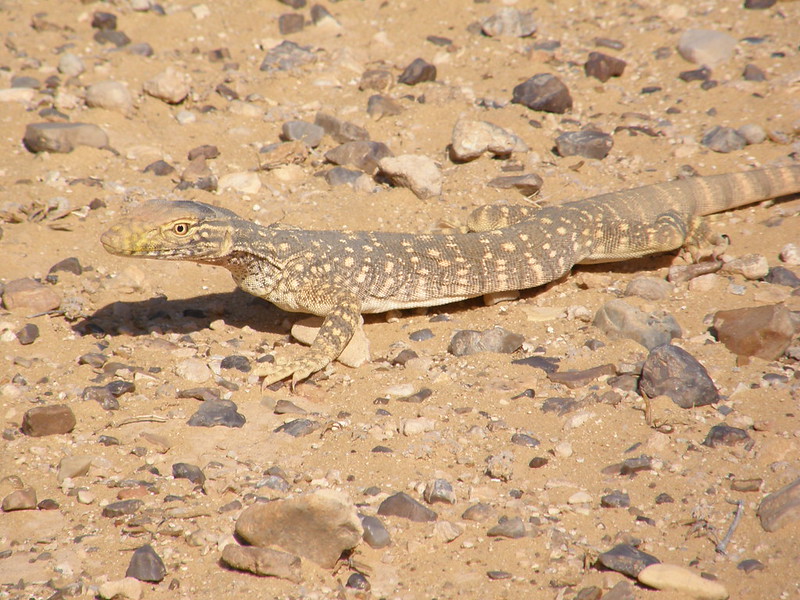
Scientific name: Varanus griseus
Desert monitor is a species of monitor lizards of the order Squamata found living throughout North Africa and Central and South Asia. The desert monitor is carnivorous, feeding on a wide range of vertebrates and invertebrates.
V. griseus goes into hibernation from about September to April. The monitor lizards require 3 to 4 full hibernation periods (years) to reach their full size (about 55 to 65 cm excluding their tails). The wild does not normally exceed around 8 years.
Egyptian mastigure
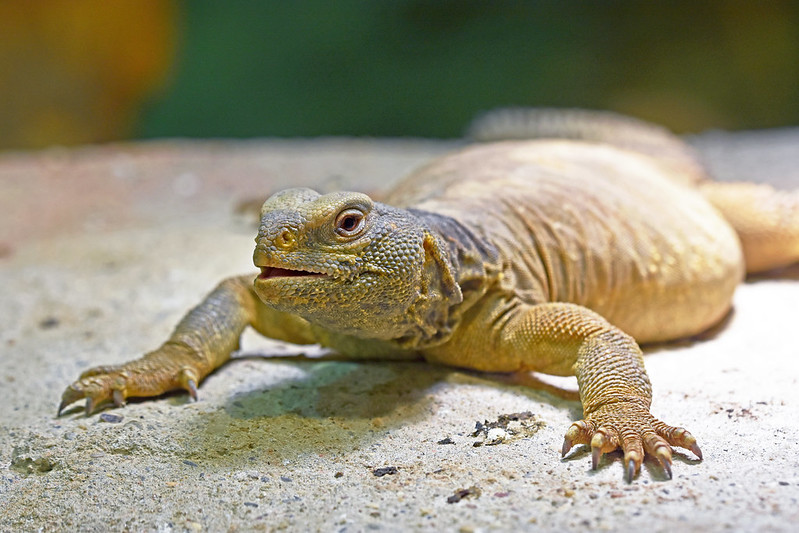
Scientific name: Uromastyx aegyptia
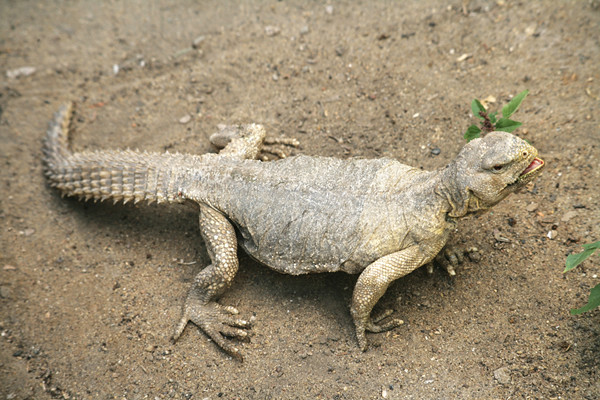
Egyptian mastigure, Egyptian spiny-tailed lizard is a species of lizard in the family Agamidae. The species is endemic to North Africa and the Middle East. Average lengths of 76 cm (30 in) for males.
The subspecific name, leptieni, is in honor of German herpetologist Rolf Leptien. It is locally known as dhab or ḍabb. Its strong skin made good leather for the bedouins, while its meat was often considered as an alternative source of protein.
Arabian sand gazelle
Scientific name: Gazella marica
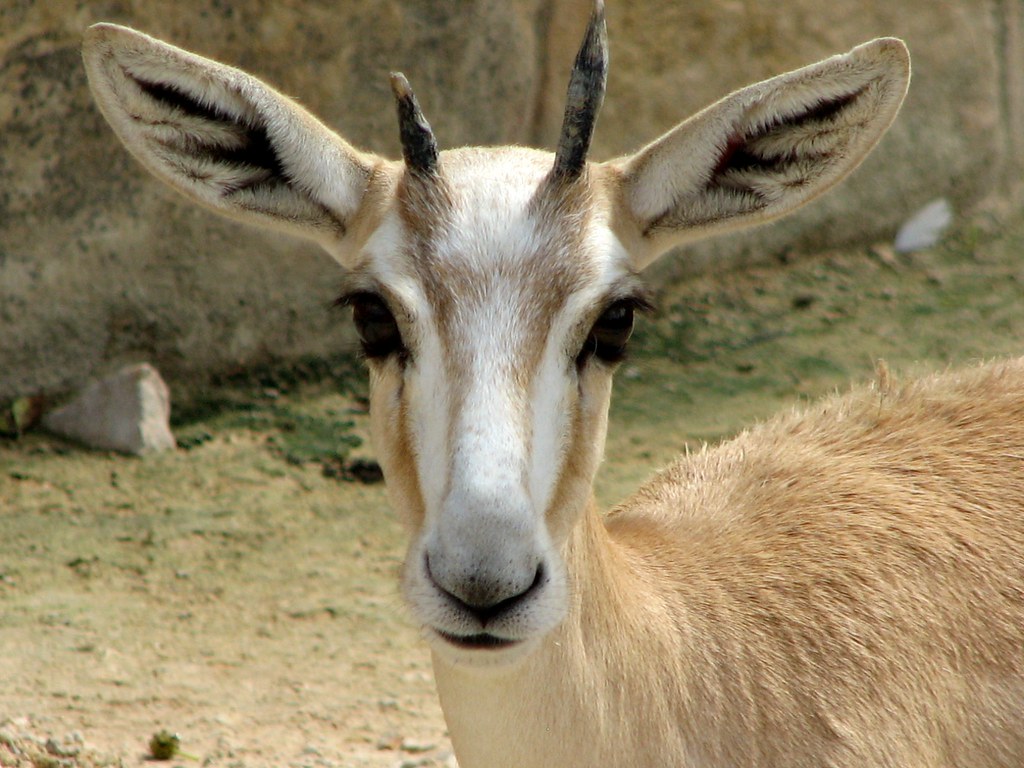
The Arabian sand gazelle or rheem is a species of gazelle native to the Middle East, specifically the Arabian and Syrian Deserts. The total population of wild sand gazelles is thought to be less than 3,000.
Today it survives in the wild in small, isolated populations in Saudi Arabia, the United Arab Emirates, Oman, and southeastern Turkey. Small numbers may also be present in Kuwait, Iraq, Jordan, and Syria.
Fennec fox
Scientific name: Vulpes zerda
Is a small crepuscular fox native to The Arabian Peninsula and the Sahara Desert and the Sinai Peninsula. Its most distinctive feature is its unusually large ears, which serve to dissipate heat. Fennec is the smallest canid species.
Is the smallest canid. Females range in head-to-body size from 34.5 to 39.5 cm (13.6 to 15.6 in) with a 23 to 25 cm (9.1 to 9.8 in) long tail and 9 to 9.5 cm (3.5 to 3.7 in) long ears, and weigh 1 to 1.9 kg (2.2 to 4.2 lb). Males are slightly larger.
Arabian red fox
Scientific name: Vulpes vulpes arabica
The Arabian red fox is a subspecies of the red fox native to the Arabian Peninsula, specifically the Hajar and Dhofar Mountains in Oman, as well as the UAE, Syria, Jordan, Saudi Arabia Yemen, Iraq and Palestine.
This fox is more adapted to desert life, with its ears being much larger, and its body being much smaller than that of red fox. Also has fur between its toes, to prevent burning of the feet. It is brownish pale red in color and weighs 2.7 kg (6.0 lb).
Euphrates jerboa
Scientific name: Allactaga euphratica
The Euphrates jerboa is a rodent of the family Dipodidae. They have been found in Pakistan, Afghanistan, Iran, Iraq, Jordan, Kuwait, Saudi Arabia, Syria, and also occurs very marginally in southeastern Turkey.
The Euphrates jerboa are small hopping rodents of desert regions and have large ears and a long tail. The tail assists and serves as support when the jerboa is standing upright. They have “long hind feet and short forelegs, and always walk upright”.
Wagner's gerbil
Scientific name: Dipodillus dasyurus
Wagner's gerbil is a gerbil that is native to Nile Delta, Palestine/Israel, Sinai, Syria, Iraq and Arabian Peninsula. It also referred to as the rough-tailed dipodil or Wadi Hof gerbil. They are nocturnally active.
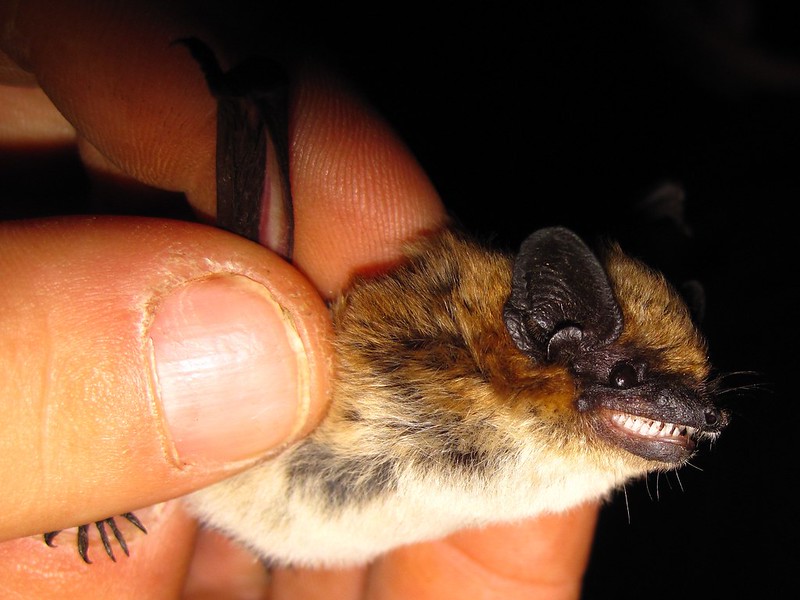
Kuhl's pipistrelle
Scientific name: Pipistrellus kuhlii
Kuhl's pipistrelle is a species of vesper bat that lives over large areas of North Africa, southern Europe and Western Asia. The population of Algeria, Egypt, Libya, Sudan was formerly known as Pipistrellus deserti.
Kuhl's pipistrelle was first named in 1817, under the name Vespertilio kuhlii, in a work by Heinrich Kuhl entitled ("The bats of Germany"). The specific epithet was chosen by Johann Natterer, who had collected the first specimens.
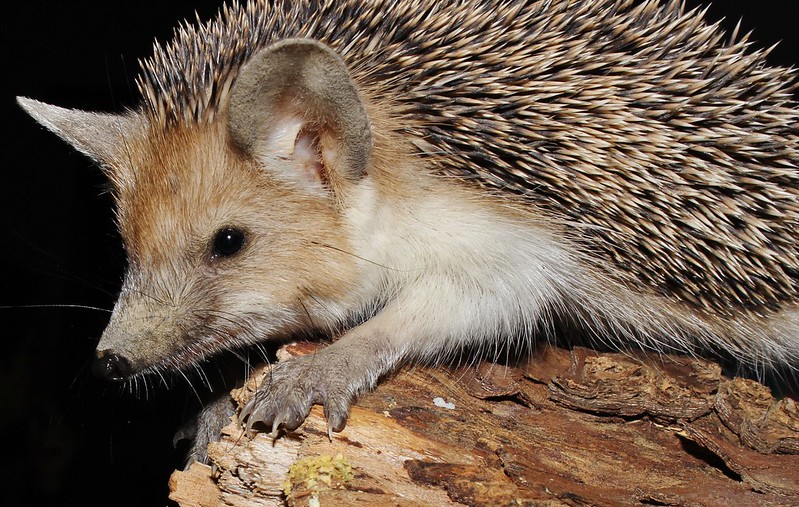
Long-eared hedgehog
Scientific name: Hemiechinus auritus
Long-eared hedgehog is a species of hedgehog native to Central Asian countries and some countries of the Middle East. The long-eared lives in burrows that it either makes or finds and is distinguished by its long ears.
The length of the head and body of the long-eared hedgehog is approximately 120 to 8 mm long, weighs between 250 to 400 grams.The ears of this hedgehog are 30 to 45 mm longer than the closest spine. In captivity they can live for over 7 years.
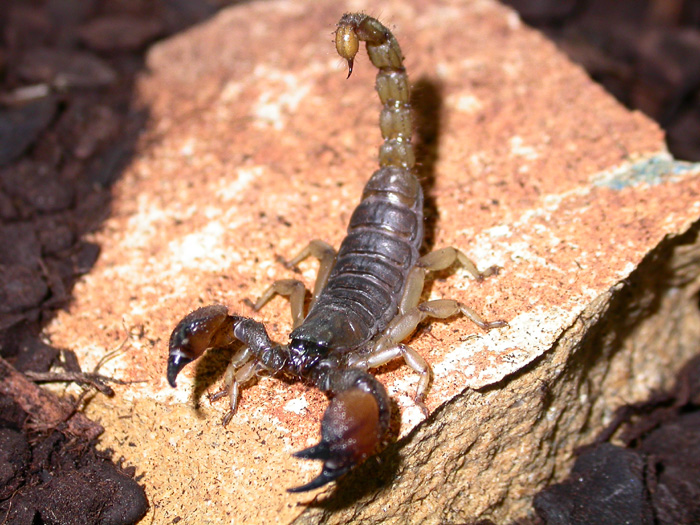
Large-clawed scorpion
Scientific name: Scorpio maurus
Large-clawed scorpion or Israeli gold scorpion and lesser known as Zerachia scorpion, is a species of North African and Middle Eastern scorpion from the family Scorpionidae. It is not a dangerous scorpion for humans.
This is a small/medium-sized scorpion 76 mm (3 in). Found in very deep burrows in deserts and occasionally sparse woodland. Its habit of creating very deep burrows (up to 1 metre deep). It is endemic to West Africa and the Middle East.
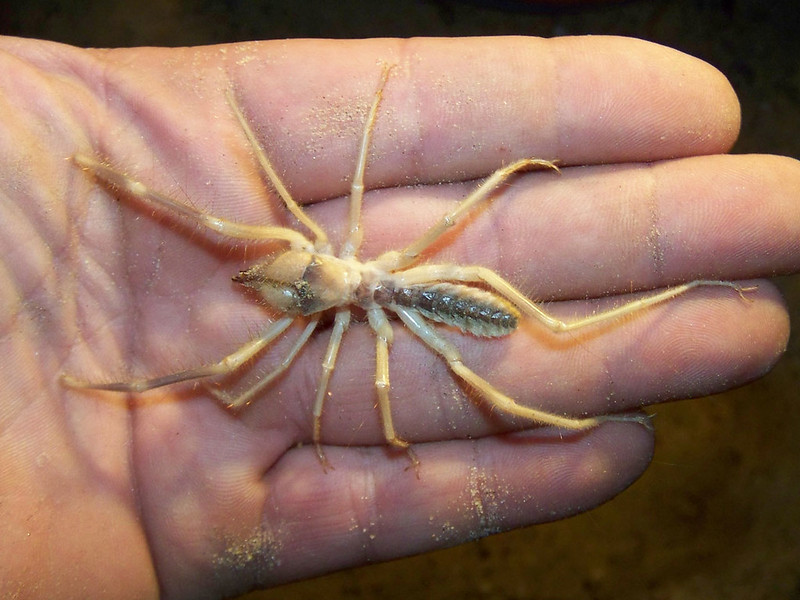
Camel spider
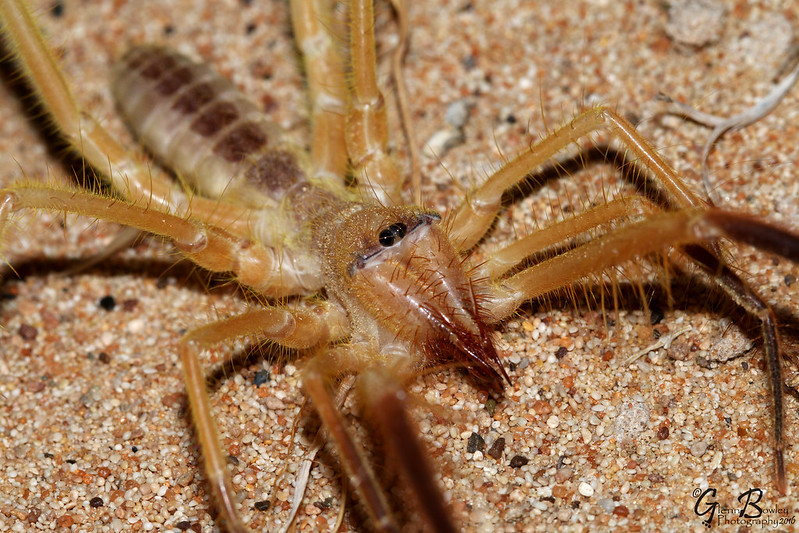
Scientific name: Galeodes arabs
The camel spider or Egyptian giant solpugid, is a species of solifuges or sun spiders native to North Africa and Western Asia. It is one of the larger species of camel spider and can reach a length of about 15 cm (5.9 in).
They have large, powerful jaws, reaching one-third of their body length. These fast running nocturnal predator arachnids can reach a speed of 10 miles per hour or around 16 km/h. They are not venomous, but their bite is painful.
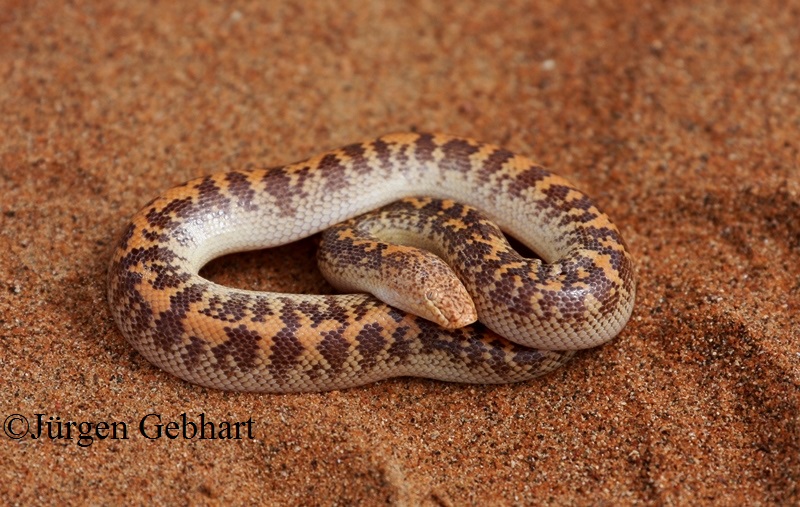
Arabian sand boa
Scientific name: Eryx jayakari
The Arabian sand boa or Jayakar's sand boa, is a species of snake in the family Boidae. It is native to the Arabian peninsula. Its geographic range includes Saudi Arabia, Oman, Yemen, Kuwait, and southern Iran.
Both the specific name, jayakari, and one of the common names, Jayakar's sand boa, are in honor of Atmaram S. G. Jayakar (1844–1911), an Indian surgeon and naturalist. It is a small snake growing to a total length of about 38 cm (15 in).
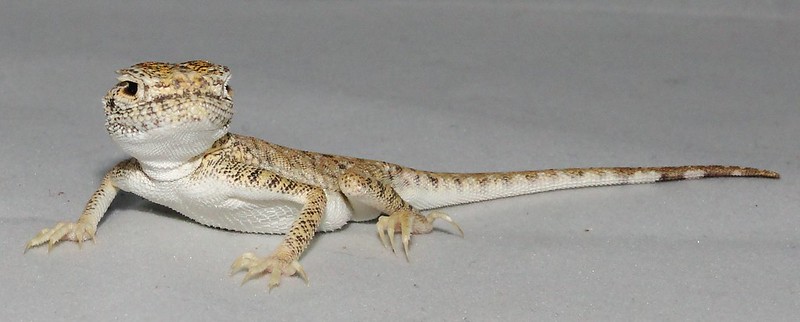
Arabian toadhead agama
Scientific name: Phrynocephalus arabicus
The Arabian toadhead agama, is a species of agamid lizard found in Saudi Arabia, Kuwait, Qatar, United Arab Emirates, Oman, Iran, and Jordan.