Recovering RPH from 💊 addiction. Combining expertise with my journey to destigmatize and cultivate a more compassionate, informed world.🌱NOT medical advice
George Carlin on cannabis and writing:
“You do find with that sort of judicious use, I find there's some value in it. But most of the things we use don't let you leave them alone. They don’t. Pot does. Thank goodness for that.”
Pharmaceutical drugs are designed to addict the user. Big pharma wants more monthly subscribers
They might help with a symptom of a disease, but will likely cause another…
FINALLY. Cannabis is schedule 3, never belonged in schedule 1 to begin with.
Now we discuss what else is wrong with the controlled substance act
Xanax shouldn’t be a schedule 4 drug.
Does this controlled substance act show actual harms of drugs?
Medical cannabis is progressing steadily across the United States in 2026!
Medical cannabis is now available in 42 States, while the Federal government still maintains cannabis has no medical value.
South Dakota just reported a massive 62% year-over-year increase in approved medical cannabis cards. This is driven by greater awareness, more qualifying conditions, easier access (like South Dakota’s new digital cards), and growing physician acceptance.
Other strong growth examples: • Utah surpassed 100,000 registered cards in 2025 • Louisiana reached approximately 53,000 patients by early 2025 • New Jersey continues adding thousands of new patients.
New programs are also launching and expanding: • Alabama finally opened its first medical dispensaries in 2026 after years of delays • Nebraska is moving toward first harvests possibly this fall • Texas is expanding its Compassionate Use Program with additional licenses.
Ballot initiatives and legislative efforts continue in holdout states like Idaho (active signature drive for 2026 ballot), South Carolina, and Kansas.
Marijuana Is Safer Than McDonald's French Fries, Cory Booker Says: "I am the leader in the Senate for descheduling marijuana, but we should schedule McDonald's french fries. I don't know what they put on them. I think it is an illegal substance."
https://t.co/nPwCHFB2LC
Young Joe Rogan: "You need to do something with your life and make it more interesting... You only have one f*cking life. You're gonna waste your life working for somebody?"
THC targets cannabinoid receptors on cancer cells!
THC can slow or stop tumors by:
Triggering cancer cells to self-destruct (apoptosis)
Making cancer cells "eat themselves" in a controlled way (autophagy)
Stopping cancer from spreading to other parts of the body (metastasis)
Blocking the growth of new blood vessels that feed tumors (angiogenesis)
Link in the comments 👇
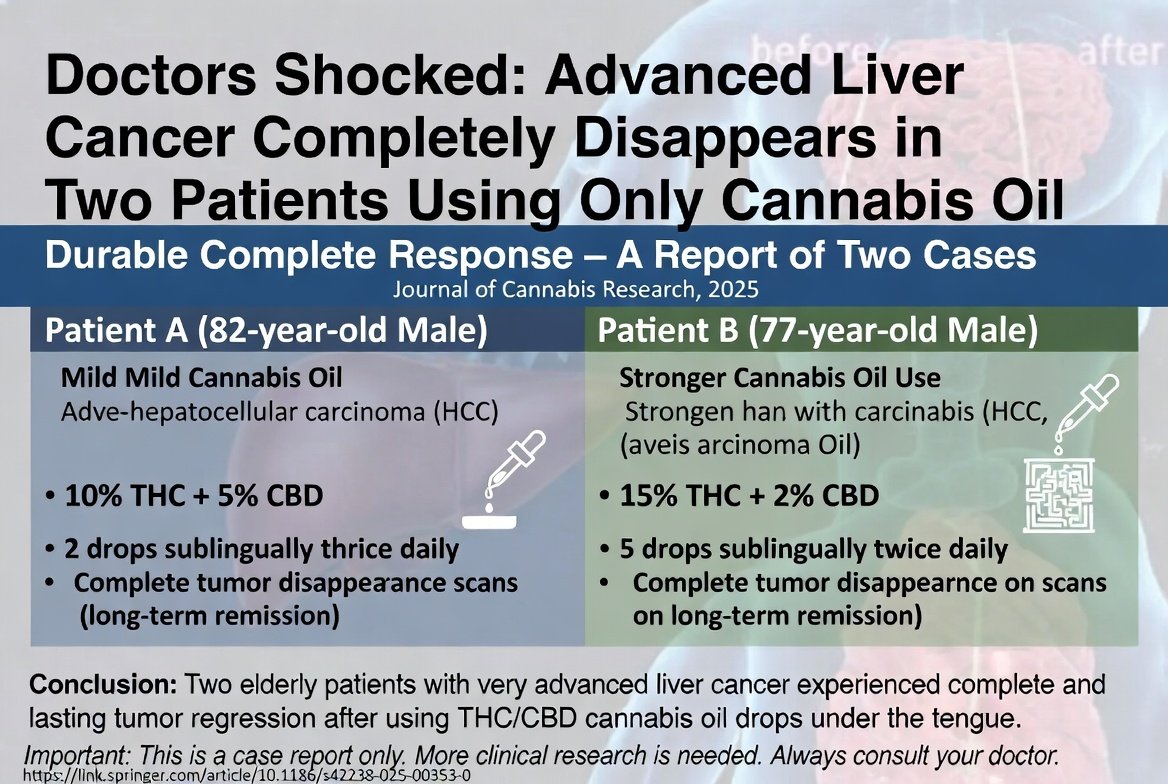
Doctors stunned: Advanced liver cancer (worst prognosis) completely vanishes in two patients using only THC/CBD oil drops!
Two elderly patients (one 82 years old, one 77 years old) had very advanced liver cancer with a lot of tumors.
Doctors had basically run out of treatment options for them. Both started using cannabis oil under the tongue just to feel better and control symptoms:
Patient A: a mild oil (10% THC + 5% CBD), 2 drops, 3 times a day
Patient B: a stronger oil (15% THC + 2% CBD), 5 drops, 2 times a day
Surprisingly, scans later showed that all of their tumors completely disappeared and stayed gone for a long time (complete and lasting remission).
Link in the comments 👇
THE U.S. GOVERNMENT PATENTED CANNABINOIDS FOR BRAIN PROTECTION. WHY IS NO ONE TALKING ABOUT IT?
In 2003, the U.S. government was awarded Patent 6,630,507: "Cannabinoids as Antioxidants and Neuroprotectants." It specifically mentions CBD, THC, and other cannabinoids as having the potential to:
✅ Reduce oxidative stress
✅ Protect brain cells
✅ Support recovery from stroke, trauma, and neurodegenerative diseases.
What is oxidative stress?
Your cells naturally produce free radicals — unstable molecules — when making energy.
Stress, poor diet, smoking, pollution, alcohol, UV exposure, and infections increase free radicals.
• When your body can't neutralize them fast enough, oxidative stress occurs.
Over time, oxidative stress damages
DNA, proteins, and cell membranes, contributing to:
• Faster aging
• Chronic inflammation
• Low immunity
• Brain & nerve decline.
Cannabinoids act as powerful antioxidants, and help neutralize free radicals, calm inflammation, and protect your cells — sometimes even more effectively than classic antioxidants like vitamins C & E. Why the patent?
Researchers realized cannabinoids could protect your cells and brain. That's why the government and pharma positioned early to secure rights for medicinal use.
That’s why I grow my own
https://t.co/7mQ1enUP8e
#cannabinoidscience #oxidativestress #neuroprotection #brainhealth #cellularhealth #antioxidants #endocannabinoidsystem
#plantmedicine #healthyaging
Let's treat THC like alcohol. Regulate it. Test it. Let Veterans use it rather than opioids. Let businesses that are currently prospering continue to prosper. We don't need a nanny state. We need adults to be treated like adults. Vote for sensible regulation - vote for Vikki. #GoodWin4Texas
The earliest recorded law in America regarding cannabis MANDATED every farmer to grow the plant!
And farmers were jailed who didn’t comply..
Should we revert back to this policy today?
So how does cannabis come into play with all this:
Let’s dig in:
Cannabis, particularly its key compounds like delta-9-tetrahydrocannabinol (THC) and cannabidiol (CBD), has been studied for its potential to alleviate neuropathic pain.
**While it's not a guaranteed cure and results vary, research suggests it can provide moderate relief for some people through several biological mechanisms and delivery methods.
Mechanisms of Action
Cannabis interacts with the body's
endocannabinoid system, which plays a role in regulating pain, inflammation, and nerve signaling.
THC primarily binds to CB1 receptors in the brain and nervous system, reducing the release of pain-transmitting neurotransmitters and modulating pain perception at both peripheral and central levels.
CBD, on the other hand, has anti-inflammatory properties and influences non-cannabinoid targets like voltage-gated ion channels and TRPV1 receptors, which can desensitize hypersensitive nerves and inhibit calcium influx that amplifies pain signals.
**Other minor cannabinoids (e.g., CBG, THCV) may also block pain pathways by affecting immune cells, reducing cytokine release, and altering brain connectivity in areas like the anterior cingulate cortex and dorsolateral prefrontal cortex, which are involved in emotional and cognitive aspects of pain.
**In animal models, tull-spectrum cannabis extracts have shown sustained antinociceptive effects without the tolerance buildup seen in opioids like morphine.
Evidence from Studies
Clinical trials and reviews indicate that cannabis can reduce neuropathic pain intensity, though the evidence is often of low to moderate quality due to small sample sizes and short study durations.
For instance:
A systematic review of 14 studies found that 79% reported significant decreases in pain scores with cannabinoid treatments, suggesting they may be effective for peripheral neuropathy from nerve injury or trauma. https://t.co/S6nFbVZ6KE
THC/CBD combinations (e.g., oromucosal sprays like Sativex) have shown modest improvements, with patients about 1.4 to 1.7 times more likely to achieve 30-50% pain reduction compared to placebo, along with better sleep and quality of life. https://t.co/4AiPLUtwAB https://t.co/86RbeMtUJd
**One retrospective study of 99 patients with chronic neuropathic pain reported pain scores dropping from a median of 7.5 to 4.0 within six weeks of using THC-dominant inhaled cannabis, with effects lasting up to six months and improvements in sleep disturbance.
https://t.co/q8pS9FyUcE
**Smoked or inhaled cannabis has demonstrated quick relief in HIV-related neuropathy, reducing pain by 18-34% in short-term trials, outperforming placebo. https://t.co/4AiPLUtwAB https://t.co/bDe709vibI
***let’s remember that Gabapentin can take weeks to show improved affects.
**Topical CBD applications have reduced sharp, intense pain sensations in some cases, per neuropathic pain scales.
Now cannabis doesn’t necessarily eliminate the need for other medications but can drastically reduce the amount needed or in some cases eliminate in all. And unlike most medications cannabis doesn’t have implications with other medications making it a great additional to pain management or nerve pain.