Went through a few AI interview loops recently. The questions were way more about "does this actually work in prod, and how do you know?"
- Evals came up in literally every round. Offline evals on a golden set, online signals (thumbs down, retries, escalations), LLM-as-judge and how you calibrate it against human labels, regression checks when you swap a model or change a prompt.
- For RAG they split it up: is retrieval finding the right chunks, is the answer actually grounded in them, and does it answer the question at all. For agents: did it pick the right tools, in a sane order, and did it finish the task.
- Then the harness around the model. Input guardrails (prompt injection, PII), output checks (schema validation, grounding), tool permissions, timeouts, retries, fallback models, tracing. One interviewer basically asked "your agent is looping forever, walk me through it."
- System design felt very different from a couple of years ago. No single right answer, it's a conversation about trade-offs: RAG vs fine-tune vs just more context, big model vs small model + routing, caching, cost vs latency, where a human stays in the loop.
- Coding was practical, not research-y. Chunk some docs and do basic retrieval, call an API and parse structured output, handle failures cleanly. Fine-tuning was mostly "when would you, and when wouldn't you" plus how you'd get good training data.
- If I had to prep again: know the concepts, but have 2-3 real stories ready. Something you built, how you measured it, what broke, what you changed. That's where every conversation ended up.
Most new investors only know one playbook: rates near zero, every dip gets bought, and stocks are the only game in town.
That playbook ran on cheap money. Cheap money is gone.
What higher rates change:
- Stocks have competition. When a risk-free bond pays 5%, equities have to earn their keep.
- Growth stocks feel it most. The further out the profits, the more a higher discount rate shrinks their value today. That describes much of the AI trade.
- Debt gets repriced. Companies that locked in cheap loans in 2020-21 now refinance at much higher rates. Margins take the hit.
- Mortgages near 7.5% freeze housing. People stop moving, buying and renovating.
Asset allocation (division of total investments across Debt, Fixed Income and Equity etc) is boring, right up until it's the only thing that matters.
McKinsey US is hiring for AI Data professionals and Software developers for the position of intern, senior engineers in their QuatumBlack AI team.
Feel free to apply through the official website, and let me know if you have any questions.
@arpit_bhayani@arpit_bhayani
Any tips on how to bring clarity?
- asking questions
- writing your thoughts down
But I am sure you have many other ways, can you share some?
@iuditg Agree, but I think the "jack of all trades" part is really about transferable skills. Breaking a messy problem into steps, knowing what good output looks like, spotting when something's off. That's what separates using an agent from actually deploying one well.
@GergelyOrosz@Pragmatic_Eng Playing devils advocate: The keyboard analogy breaks on one thing: a keyboard never makes a decision. A cofounder contributes judgment, and that is the part being outsourced. It is a tool, sure. But it is a tool that argues with you!
@shriyanevatia Crosstown was always surface transit's job. The 34th St streetcar ran until 1936, then the M34 bus took over. A subway there today would have to tunnel under five existing trunk lines, so it would be insanely deep and expensive. 🫣
@simonw@AGENTSMD The quiet story here is convergence: every agent tool inventing its own instruction-file format was getting silly. One standard context file the whole ecosystem reads is how this should've worked from day one.
@tibo_maker The interesting question is pricing: Google's basically admitting training data has a marginal cost now. If this scales, every publisher becomes a data supplier negotiating rates. The 20-year free-indexing deal is dead: this is the replacement contract being written in real time.
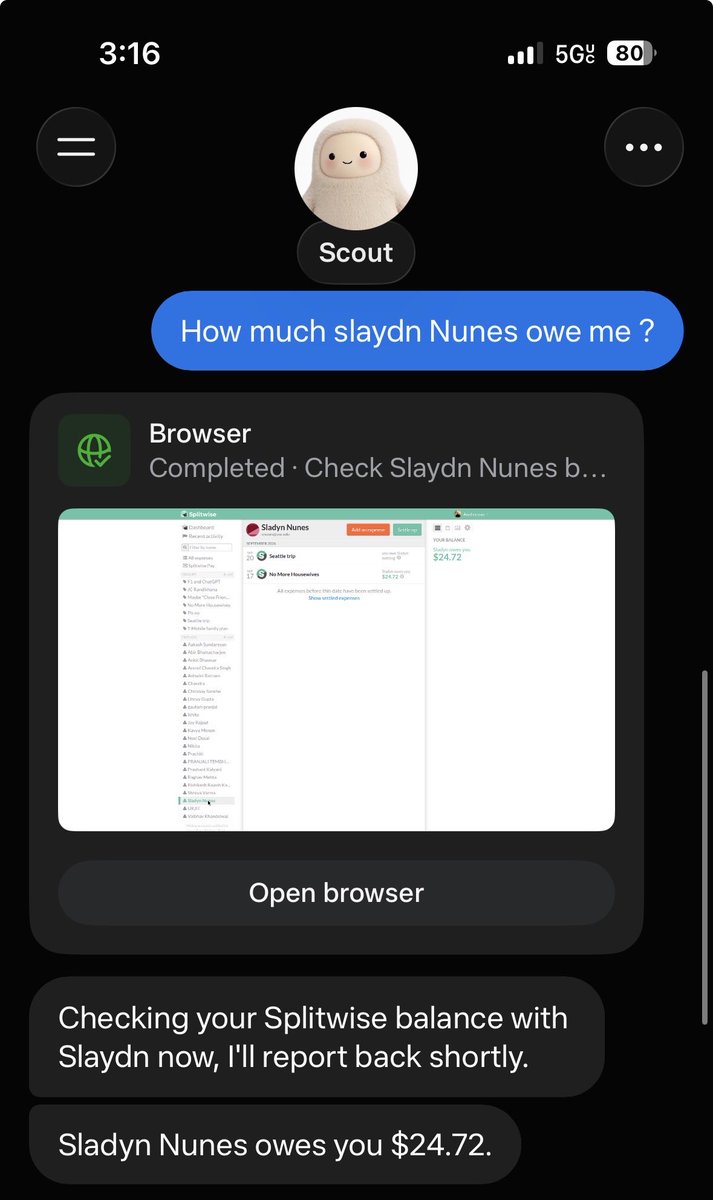
Connected my Amazon account to Muse, to cancel the subscription of the protein powder. Just saved 23 dollars of monthly recurring cost.
Realized I have some other subscription which I never use.
Kino Film: no clue this existed, also had forgotten to cancel the grocery subscription that I used once. Just instructed Muse to cancel all and also convert my prime account to student.
Easyyyy !