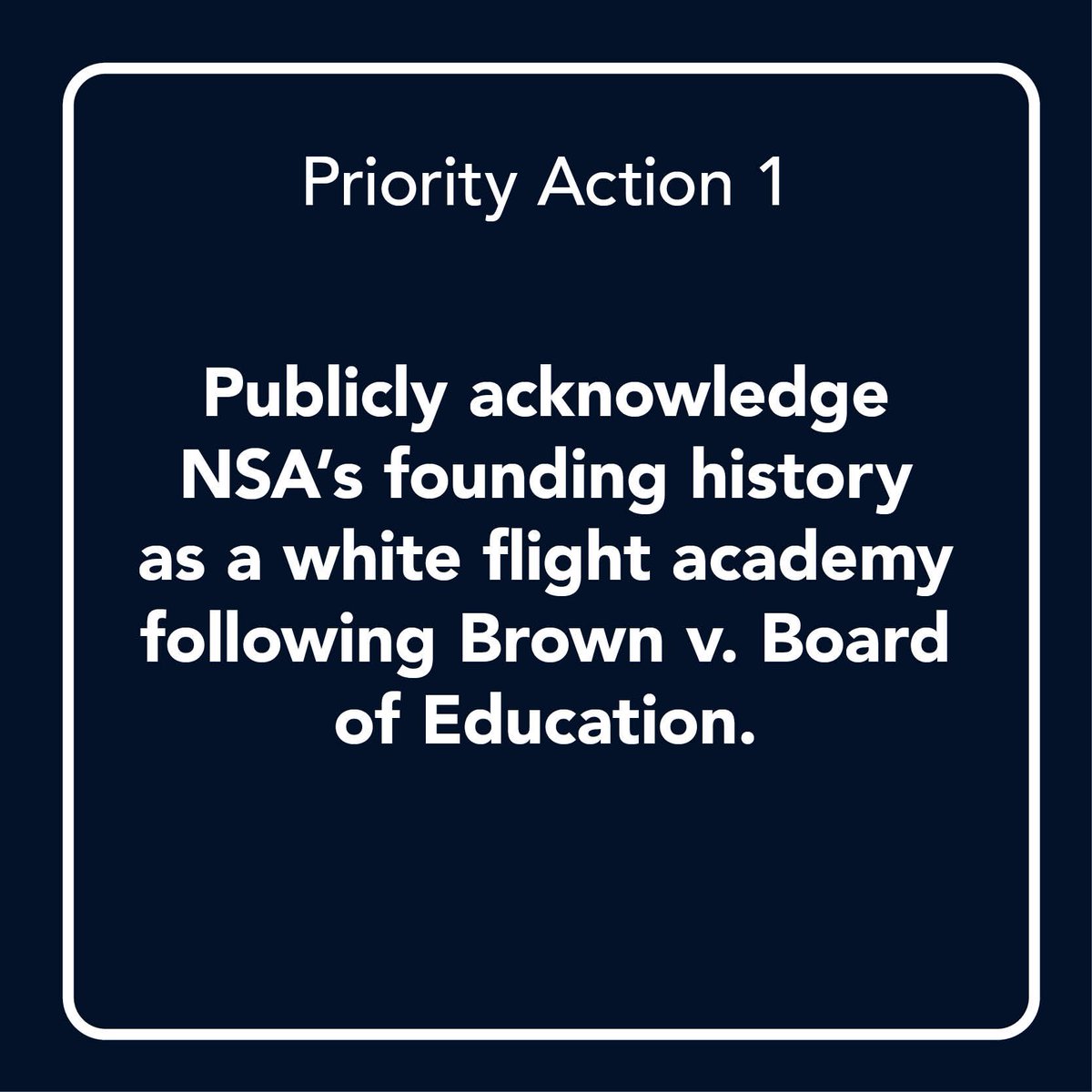
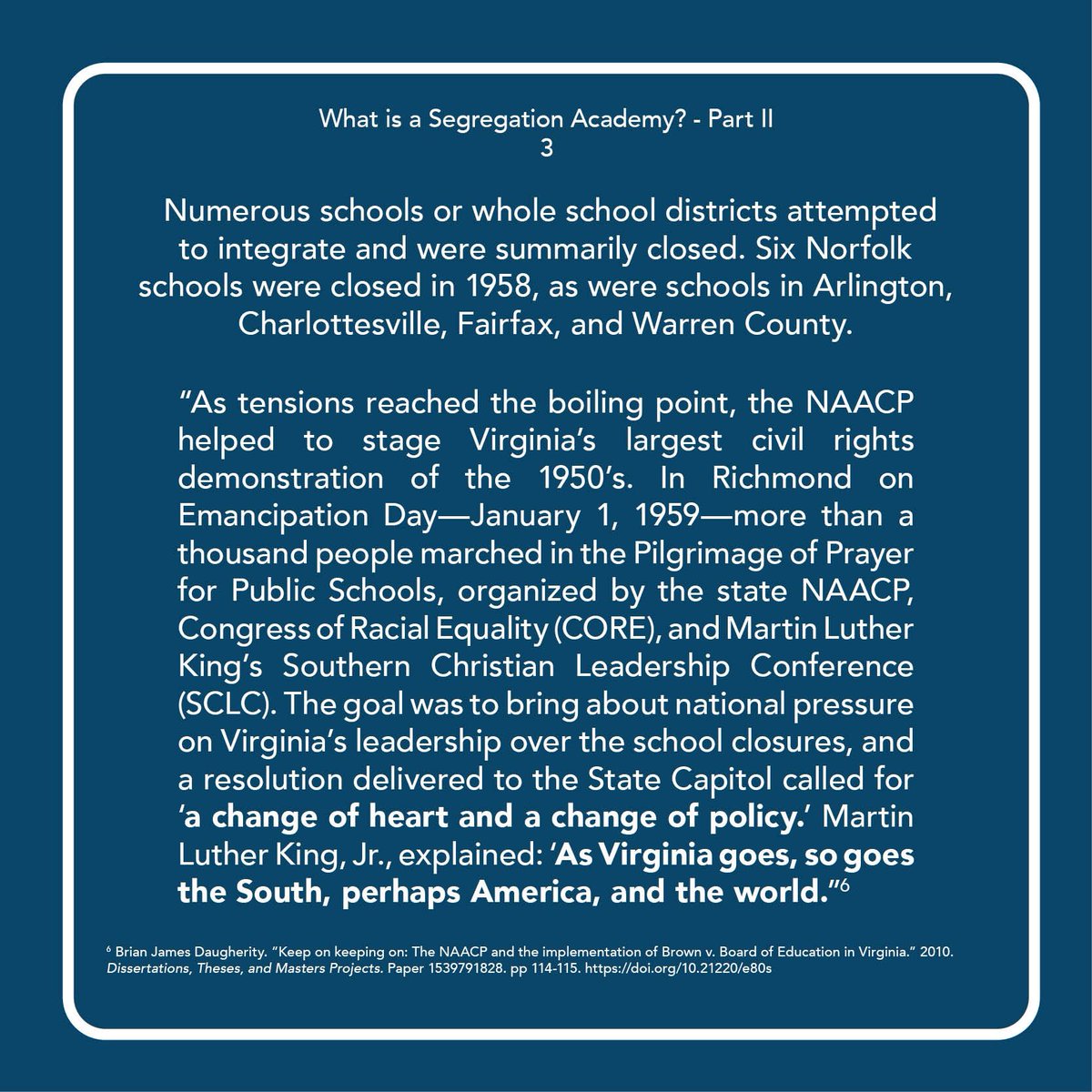
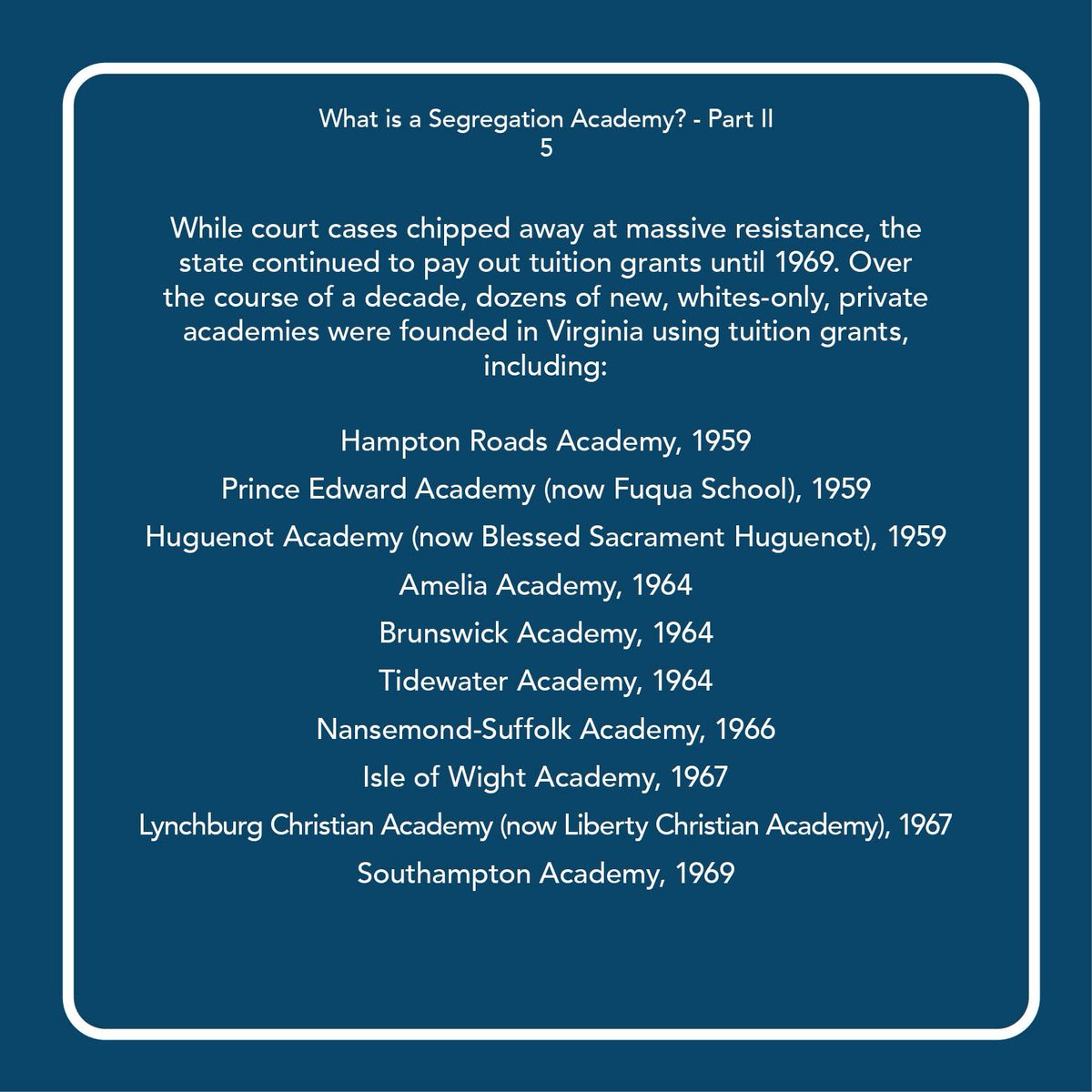
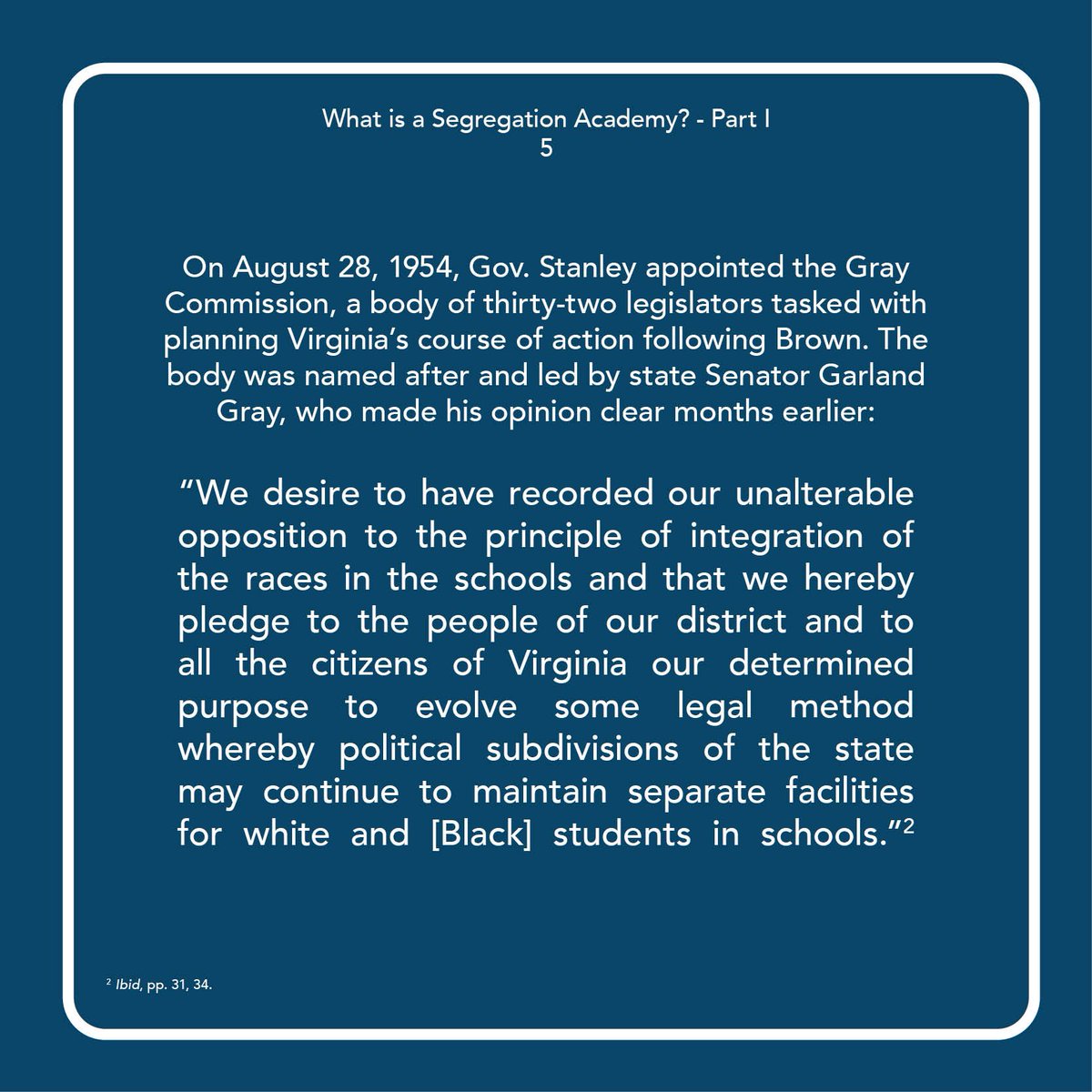
But, we maintain that no real change can happen at the NSA until the school itself openly acknowledges this history. Public acknowledgement is essential and foundational. 3/3
@NSACADEMY is making strides toward building a new culture of anti-racism - including the recent adoption of an anti-racism policy in student and parent handbooks. We applaud the administration for taking what seem to be genuine steps toward becoming an anti-racist institution 2/
Without this historical reckoning, there can be no progress.
.
Stay tuned for part II next week.
.
Don’t tell us racism no longer exists.
#BlackatNSA#SaintsStrong 3/3
We were not taught this history in school.
.
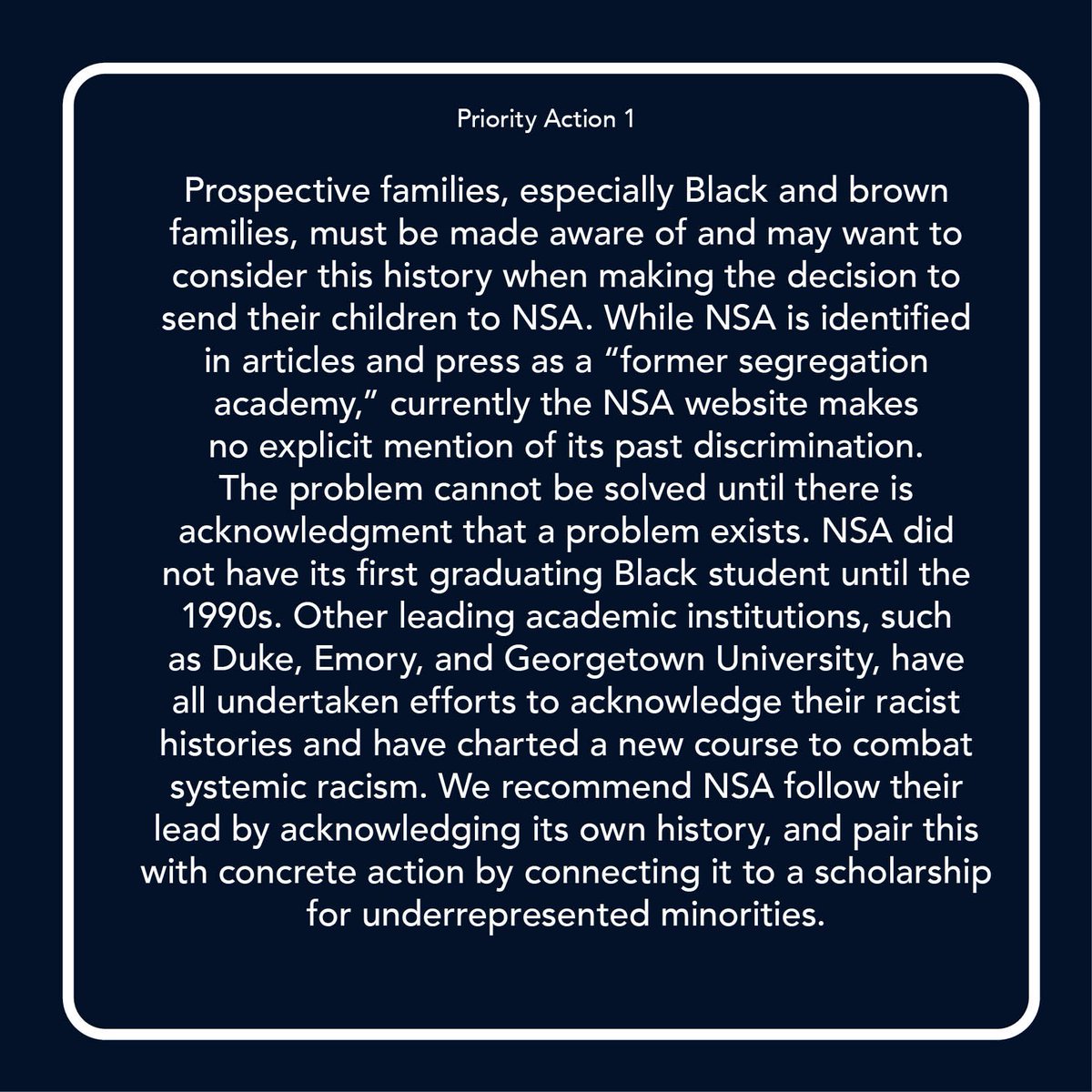
The fact that NSA still struggles with racism is by design: it was never intended to be a home for diversity. Quite the opposite. The school’s foundation was part of a state-wide, systematic effort... 1/
to keep white children out of integrated schools. No real change can happen at the NSA until the school itself openly acknowledges this history and makes a direct, sustained, and open effort towards ameliorating that history’s long-lasting effects on the community as a whole...2/
“that are conveniently left out or are uncomfortable to discuss,” my best friend texted me. Her daughter had also visited a plantation... She had come home talking about cotton fields and tiny houses and native crops — with no mention of slaves who worked the land.” 7/7
Another fun plantation field trip!
If you grew up in the South, you likely went on a field trip to a plantation. But do you remember what you learned? Plantations hold a lot of historic significance in Suffolk - we aren’t saying that students shouldn’t visit them... 1/
“I cannot help but see the strange fruit hanging from them.
I had to prepare my daughter. She could not wear her special class T-shirt and load the school bus thinking she would visit a botanical garden. “As a black parent, I feel like we are often interjecting the facts...
6/
To learn more, check out Morgan Jenkins recent book, Wandering in Strange Lands, about reclaiming her family roots in the South. https://t.co/y5PvwJR5pR
Most Black Americans have a complex family history because of slavery. The Washington Post wrote about the limitations of genealogical research for Black families:
”After the transatlantic slave trade ended in 1808, more than a million enslaved people in the United States...”1/