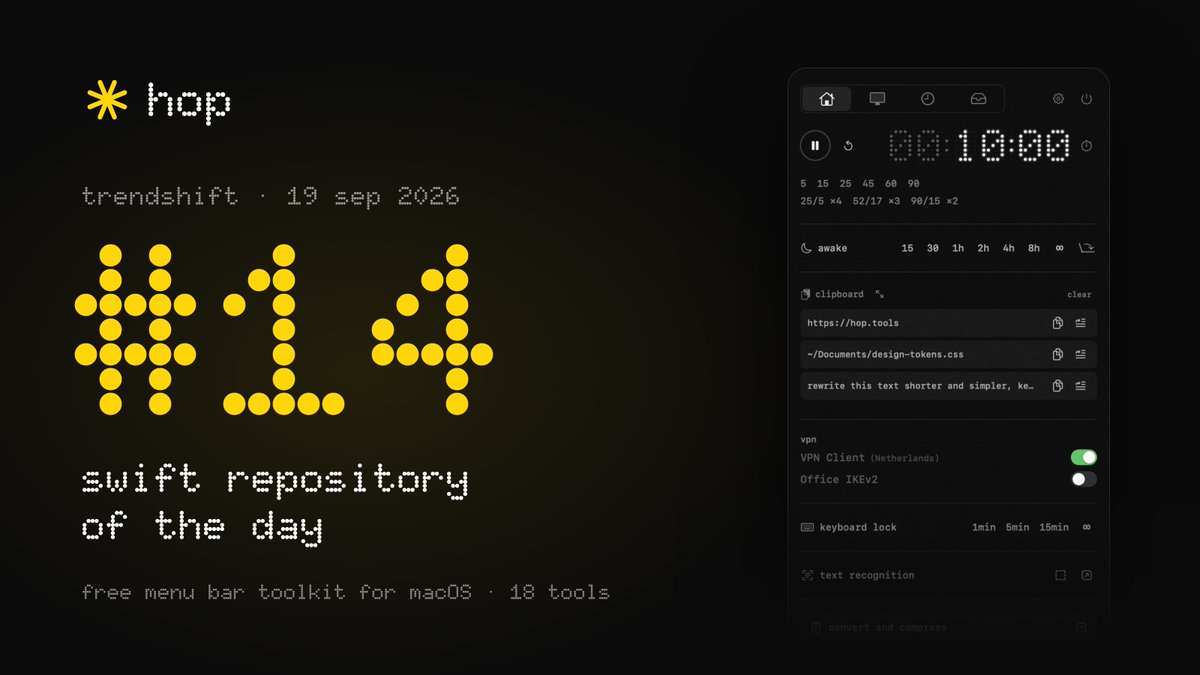
Hop started as a menu bar app with three modules. Today it has 18 tools in one panel and gets about 20 new downloads a day. Last week it was the #14 Swift repository of the day on Trendshift, and every update pushes it a little higher.
https://t.co/VeYCKJGWFJ
Hop is free with no pro tier, and 20 updates since July have arrived inside the app at no cost. The code is open under MIT, so you can check what every module does, report a bug or add the tool you're missing.
https://t.co/YXtwQYsHh7 https://t.co/n0f05o4MLe
Does it annoy you too that every small job on a Mac needs its own app? One keeps the screen awake, one snaps windows, one remembers what you copied, one shows CPU load, and each adds another icon to the menu bar.
I got tired of it and built Hop, one free app for all of that.
Everything in Hop runs on your Mac. It has no server of its own, no accounts, no analytics and no crash reports.
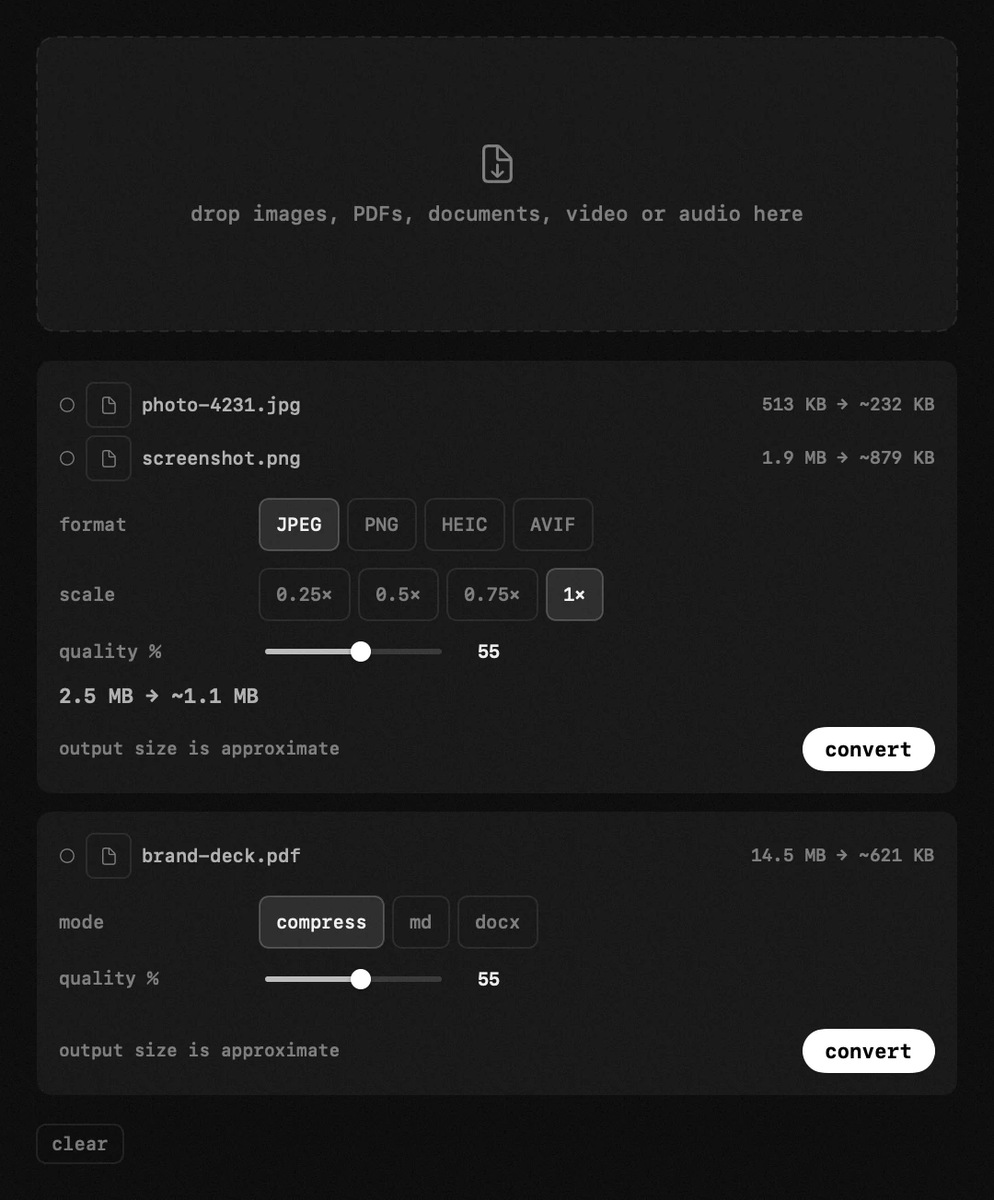
The converter shrinks a video or turns a web page into a PDF on your machine, and the uninstaller moves files to the Trash so a mistake can be undone.
We're building Hearthe.
Every lab result, every visit, every symptom: stored and read by a medical AI. Recommendations built on your data, not population averages.
Personalized medicine that belongs to you.
Waitlist open. Link in first comment 👇
#PersonalizedMedicine
As AI capabilities grow, implementation skills (especially IT product development) are increasingly becoming secondary.
Decision-making and direction skills, as well as a sense of taste, are becoming more important. Understanding what needs to be done and how to do it are key.
Always test a high number of hypotheses, even when building a product from scraps. A bad idea won’t work in any form, but a good one will take off—even with rough execution and a buggy site
A great way to build valuable connections: “Hi, I’m [your name]. I’m curious about what you do. Let’s meet—lunch is on me, and you can share how you do it” 🤝