En el islam, los perros están etiquetados como haram y "inmundos". Así es como se les enseña a los niños en Pakistán a tratarlos. Pero si te atreves a hablar, eres “islamófobo”…
Η πρόθεση του Δήμου Νίκαιας να μετονομάσει την οδό Μάρκου Μπότσαρη σε Γιώργου #Μαζωνάκη μπορεί να αποτυπώσει όσο τίποτα άλλο την κατάντια της νεοελληνικής κοινωνίας.
Άντε και την Βασιλίσσης Σοφίας να την πείτε Κατερίνας Λιόλιου.
#χωρα_ηλιθιων#Μαζωνάκης
Boer remains calm and shoots 3 carjackers in South Africa, all whilst covering his daughter from the gang.
1 suspect dead and the others run and leave him to die.
Whites in South Africa are constant targets in the "rainbow nation".
The only refugees Europe should accept.
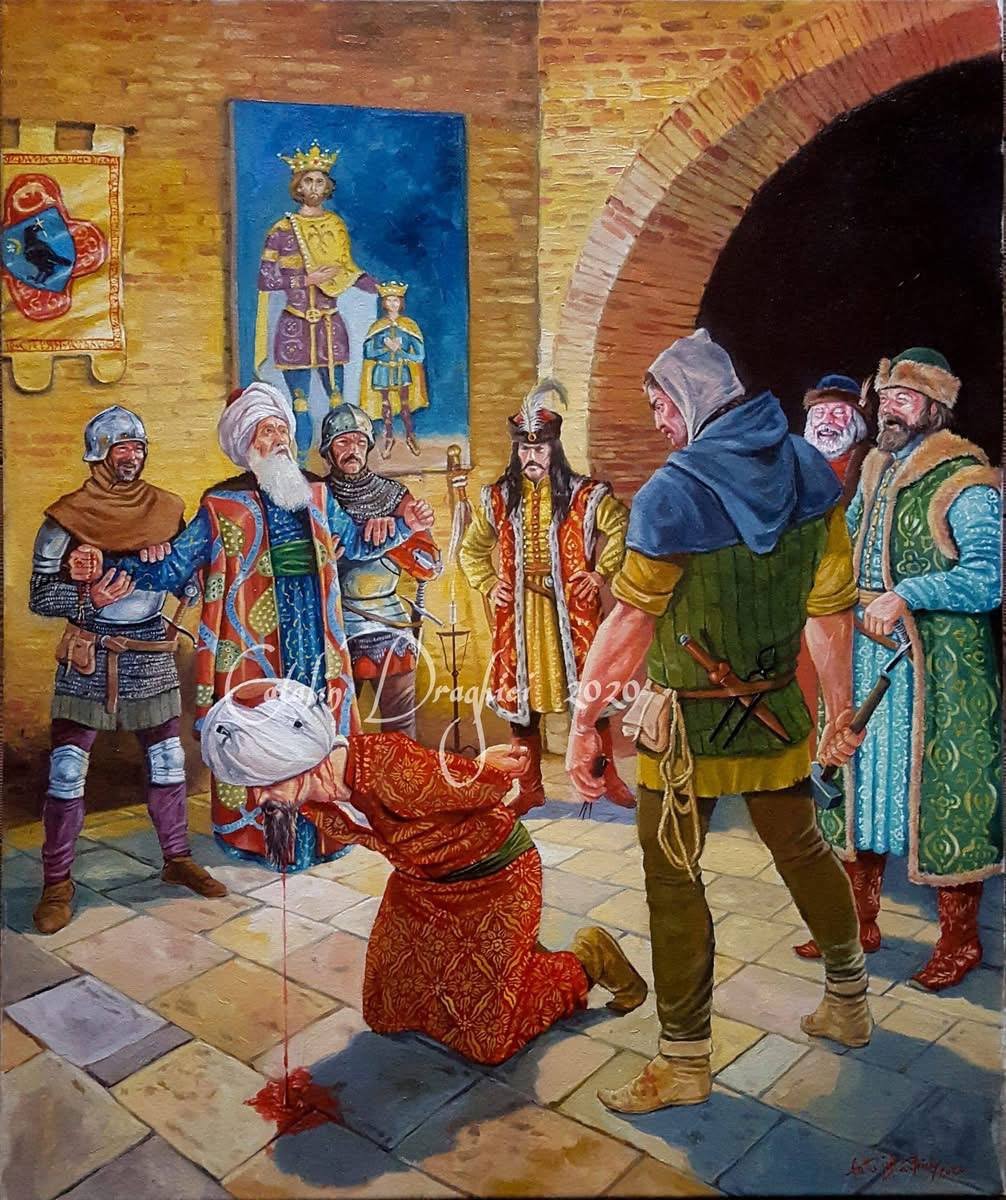
Des émissaires ottomans refusèrent d’ôter leur turban devant Vlad III, au nom de leur foi musulmane.
« Impressionné » par leur ferveur, Vlad ordonna que leurs turbans soient cloués sur leur tête, afin qu’ils n’aient plus jamais à les ôter.
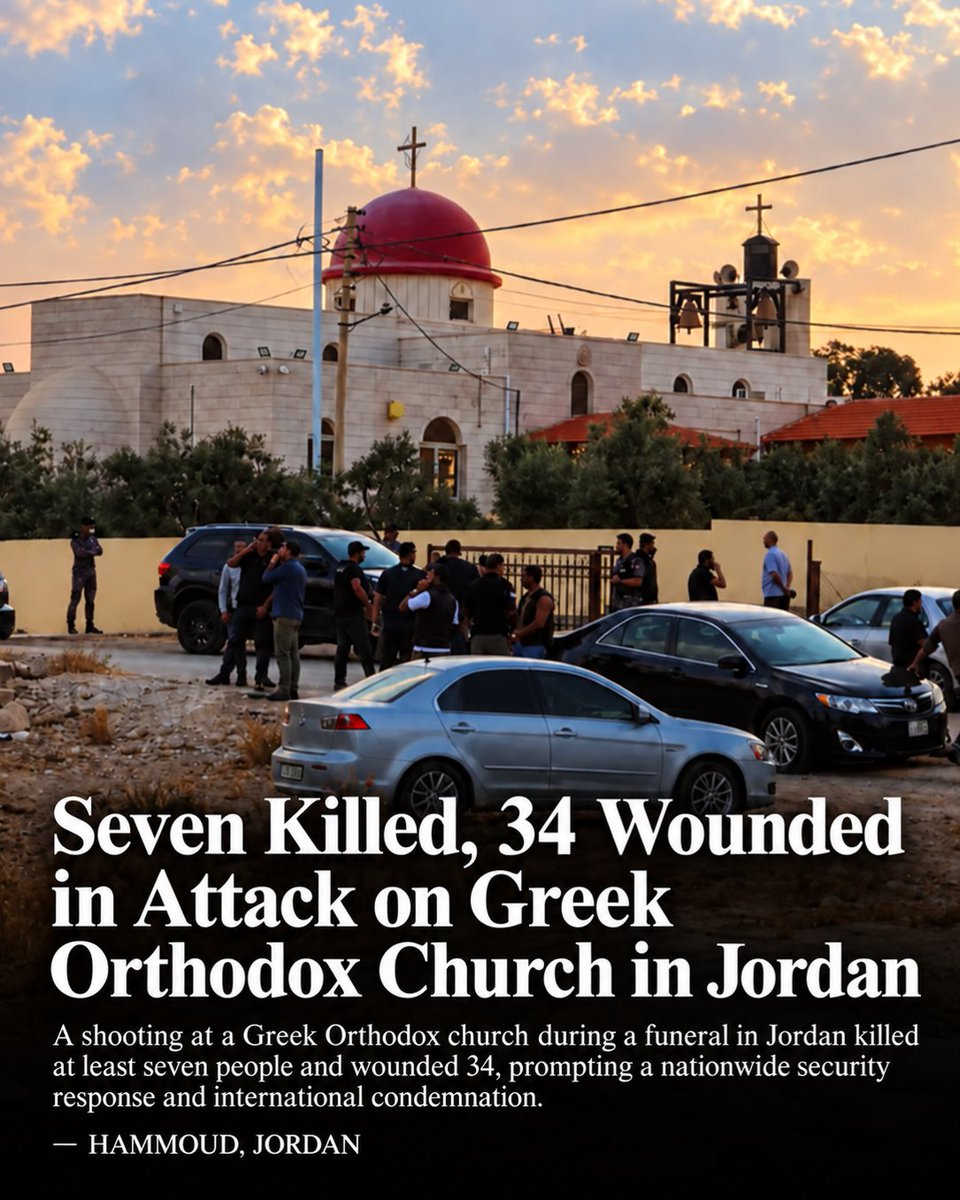
🚨 ÚLTIMA HORA: MASACRE DE CRISTIANOS EN JORDANIA.
Al menos 7 fieles cristianos fueron asesinados en un brutal atentado islamista contra una iglesia en Jordania. Hay al menos 10 heridos.
Los cristianos siguen pagando con su sangre el precio de la violencia islamista. ⚠️
The Ancient Greeks established Kingdoms beyond the conquests of Alexander the Great, while representations of the Olympian Gods and Greek mythology have been discovered in what is now China.
Following Alexander the Great's conquests, the Greco-Bactrian and Indo-Greek kings continued expanding across Central Asia and deep into the Indian subcontinent. In Geography 11.11.1, Strabo preserves the testimony of Apollodorus of Artemita, who claims that the Greeks of Bactria subdued more peoples than Alexander himself, particularly under Demetrius and Menander.
He then records: "And indeed they extended their empire even as far as the Seres and the Phryni."
The Seres were associated in Classical geography with the distant silk-producing regions of Asia, traditionally connected with China. In the following passage, Geography 11.11.2, Strabo identifies the Greek cities of Bactra, Darapsa and Eucratidia, and records Greek possession of Sogdiana between the Oxus and Iaxartes rivers.
Chinese historical sources also preserve evidence of this Hellenistic world. In the Shiji (Records of the Grand Historian, 123), Sima Qian records the account of Zhang Qian, an imperial emissary of the Han dynasty, concerning Dayuan in the Ferghana Valley, a region of earlier Greek settlement where Alexander the Great had founded Alexandria Eschate, and Daxia in Bactria, the former heartland of the Greco-Bactrian kingdom. He describes Dayuan as possessing more than seventy cities, fortified settlements and grape wine production, with customs resembling those of neighbouring Daxia, which had come under Yuezhi rule following the collapse of Greek political power during the second century BC.
The Greco-Bactrian and Indo-Greek kingdoms were unmistakably Hellenic in their institutions and culture. At Ai Khanoum in Bactria, archaeologists uncovered a Greek theatre, gymnasium, dedications to Hermes and Heracles, and philosophical maxims from Apollo's sanctuary at Delphi. In India, the Indo-Greeks ruled territories across the Punjab and around Taxila, where Hellenistic architecture and artistic traditions flourished. Ancient accounts describe their military campaigns extending deep into northern India, through Mathura and Saketa towards Pataliputra, modern Patna in Bihar, far along the Ganges. Strabo also records Greek possession of Patalene in the lower Indus and Saraostus in Saurashtra, corresponding to parts of modern Pakistan and Gujarat in western India.
Hellenic discoveries extend still farther east into the Tarim Basin of modern Xinjiang, China. At the ancient cemetery of Sampul, near Khotan, archaeologists uncovered a remarkable textile depicting a nearly life sized spear bearing warrior alongside a centaur blowing a war trumpet, a recognisable figure of Greek mythology. Archaeological research suggests the fabric originated as an ornamental wall hanging produced under Greek influence in a Bactrian palace during the third or second century BC, before travelling eastwards, being fashioned into trousers and eventually buried at Sampul.
Further east, at Niya in modern China, archaeologist Aurel Stein discovered seal impressions depicting the Greek Gods Athena, Hermes and Zeus, alongside figures identified with Eros and Heracles.
These divine images were impressed upon administrative documents, demonstrating that Hellenistic imagery continued to be used in the ancient Silk Road kingdoms centuries after the height of Greek political power.
Strabo preserves the extraordinary eastern conquests attributed to the Hellenic kings, Sima Qian records Chinese testimony concerning the societies of Central Asia, and the archaeological discoveries reveal how Greek mythology and artistic traditions reached territories belonging to modern China.
Παλιοτομάρα.Εμάς μας είχατε να κυκλοφορούμε με χάρτιά επί εποχής covid. Τους βάζετε σε καράβια, πούλμαν και τους κάνετε περιφορά σε όλη την Ελλάδα χωρίς ελέγχους. Εγκληματίες του ελληνικού λαού.
@AlexiosKomnin0s Επίσης μιλάς για την συνέχεια μας ως αφήγημα, ως θεωρία. Δηλαδή δεν ισχύει; Προφανώς και ισχύει και εάν δεν μας το αναγνώριζαν θα ήταν απλά ζηλοφθονία βάρβαροι όπως οι γείτονες μας. Τους τιμάει που αναγνώρισαν την αλήθεια. Μέχρι εκεί. Δεν τους χρωστάμε κάποια χάρη
@AlexiosKomnin0s Επίσης βλέπαμε και βλέπουμε μια χαρά τους εαυτούς μας ως συνεχιστές των αρχαίων και των Ρωμιών. Ίσα ίσα ο Ευρωπαίος δεν θέλει να έχεις αυτοκρατορικές βλέψεις
@AlexiosKomnin0s Εντελώς λάθος τοποθέτηση. Τους αρχαίους τους ξέραμε μια χαρά όσο οι δυτ��κοευρωπαίοι καιφαμε μάγισσες στον μεσαίωνα και εμείς ήμασταν αυτοκρατορία. Άλλωστε πρώτοι έμειναν τους αρχαίους οι Ιταλοί μέσω του Γεωργίου Πλήθωνος.