@jahirsheikh8 The denominator against which you compare the generated code. The truth against which you can compare an intelligence's work. The truth to identify false positives. These false positives are the ones that break production.
AI is helping ship code faster right, but it isn’t always useful. It always has false positives. The larger and critical is the context it owns, the more problems you face downstream and you’ll go bonkers. If you don’t own what it’s shipping, you don’t know what’ll break. So, in that aspect all the fields are safe, and unsafe in both ways.
I finally understand the fundamentals of building real AI agents.
This new paper “Fundamentals of Building Autonomous LLM Agents” breaks it down so clearly it feels like a blueprint for digital minds.
Turns out, true autonomy isn’t about bigger models.
It’s about giving an LLM the 4 pillars of cognition:
• Perception: Seeing and understanding its environment.
• Reasoning: Planning, reflecting, and adapting.
• Memory: Remembering wins, failures, and context over time.
• Action: Executing real tasks through APIs, tools, and GUIs.
Once you connect these systems, an agent stops being reactive it starts thinking.
Comment "Paper" and I'll DM you the link.
RIP fine-tuning ☠️
This new Stanford paper just killed it.
It’s called 'Agentic Context Engineering (ACE)' and it proves you can make models smarter without touching a single weight.
Instead of retraining, ACE evolves the context itself.
The model writes, reflects, and edits its own prompt over and over until it becomes a self-improving system.
Think of it like the model keeping a growing notebook of what works.
Each failure becomes a strategy. Each success becomes a rule.
The results are absurd:
+10.6% better than GPT-4–powered agents on AppWorld.
+8.6% on finance reasoning.
86.9% lower cost and latency.
No labels. Just feedback.
Everyone’s been obsessed with “short, clean” prompts.
ACE flips that. It builds long, detailed evolving playbooks that never forget. And it works because LLMs don’t want simplicity, they want *context density.
If this scales, the next generation of AI won’t be “fine-tuned.”
It’ll be self-tuned.
We’re entering the era of living prompts.
Going through the axis bank UPI APIs to understand the backend of the customer registration flow for UPI onboarding. Do we have anyone who worked on these flows already?
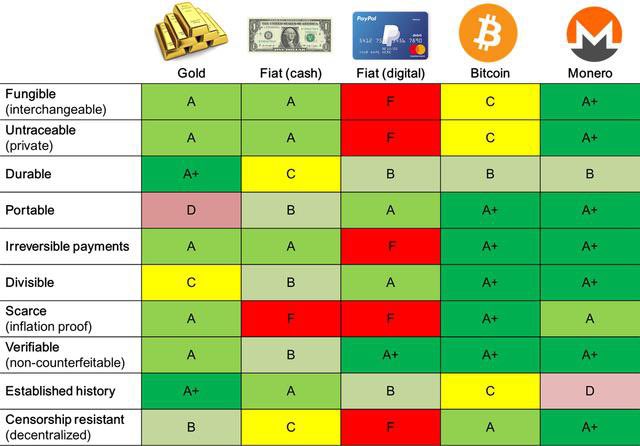
#Monero is the best and most powerful money the world has ever had!
TRILLION+ dollar asset in the making
Im so happy I and many of you understood this before it becomes reality
moving to Vizag for a couple of days and will be hanging out at Beanboard Panorama to collaborate and build micro-use cases. Let's Connect
#dotnetEveryday
There's already an open-source version of Devin, the so-called "AI software engineer".
Sharing the repository in case you want to browse the code for learning purposes.
https://t.co/ejT1etV9RQ