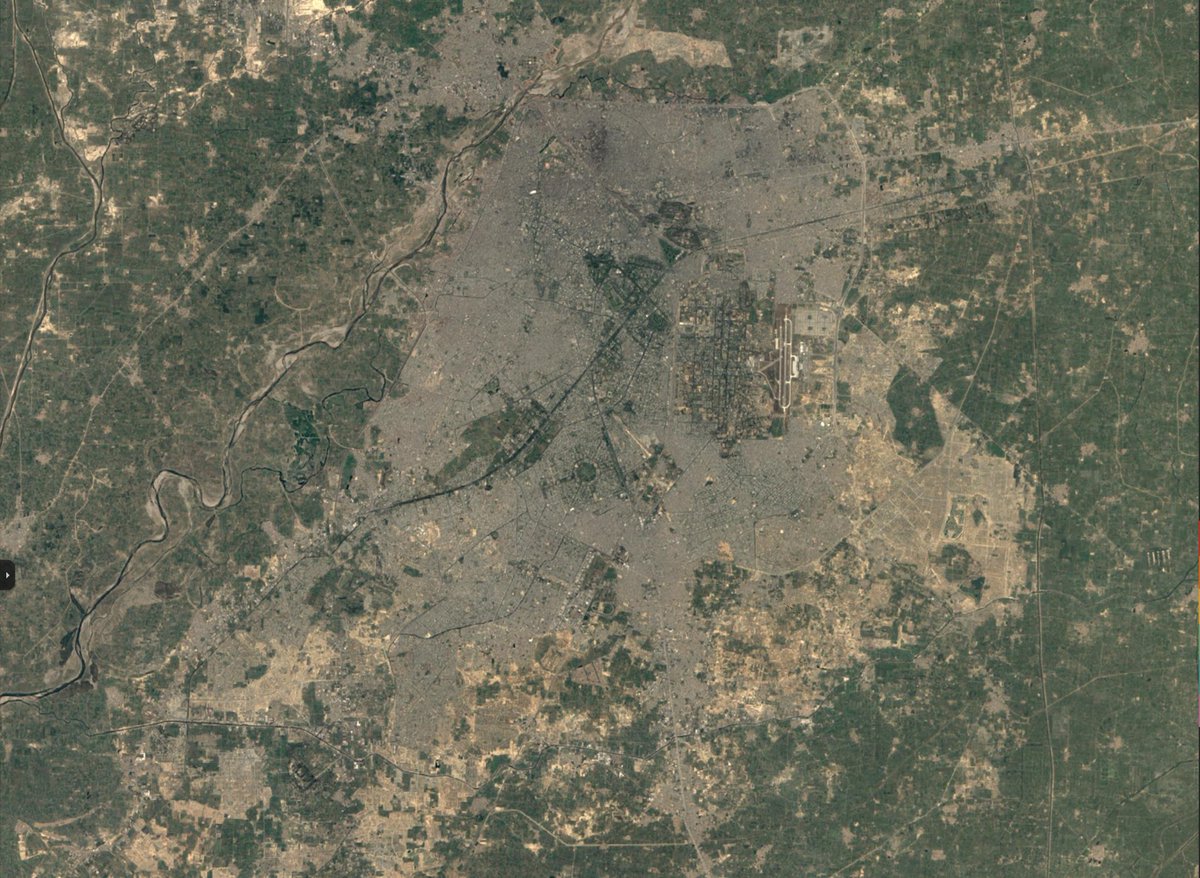
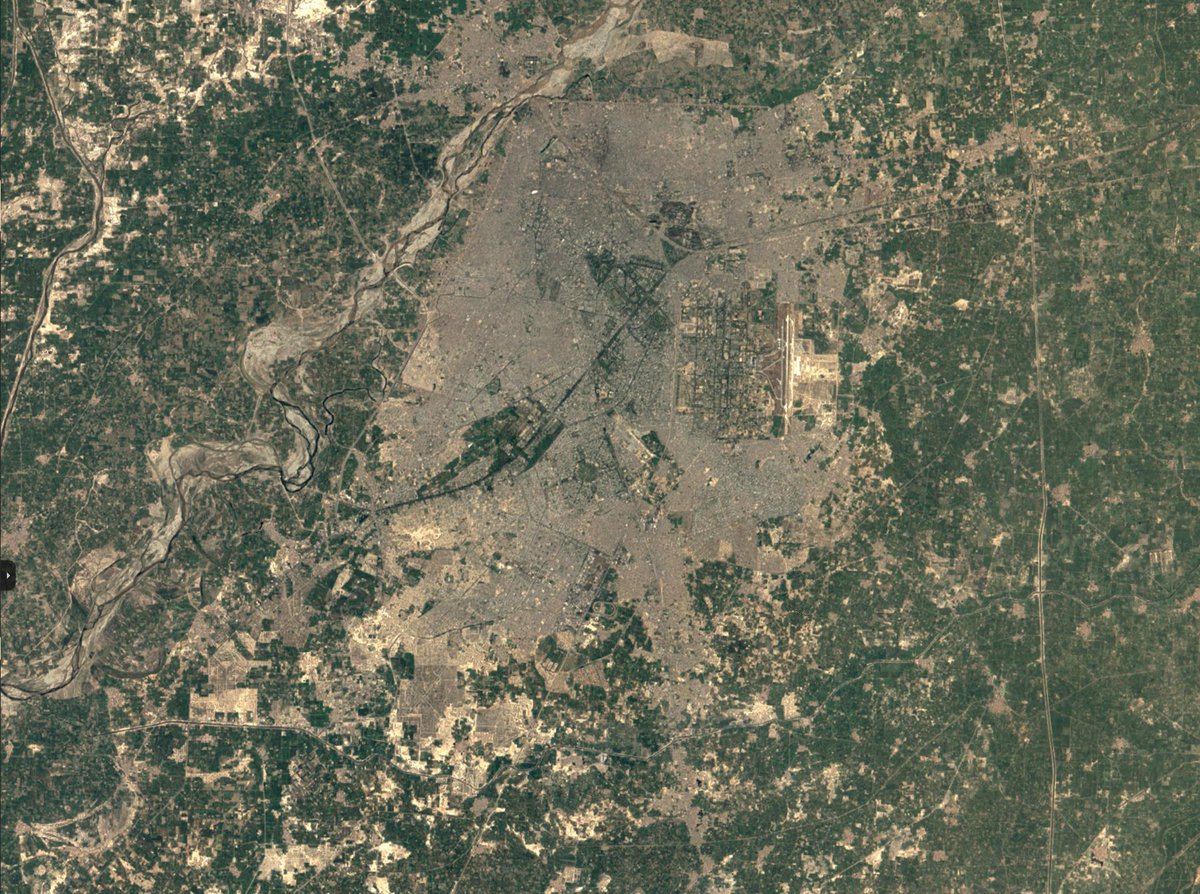
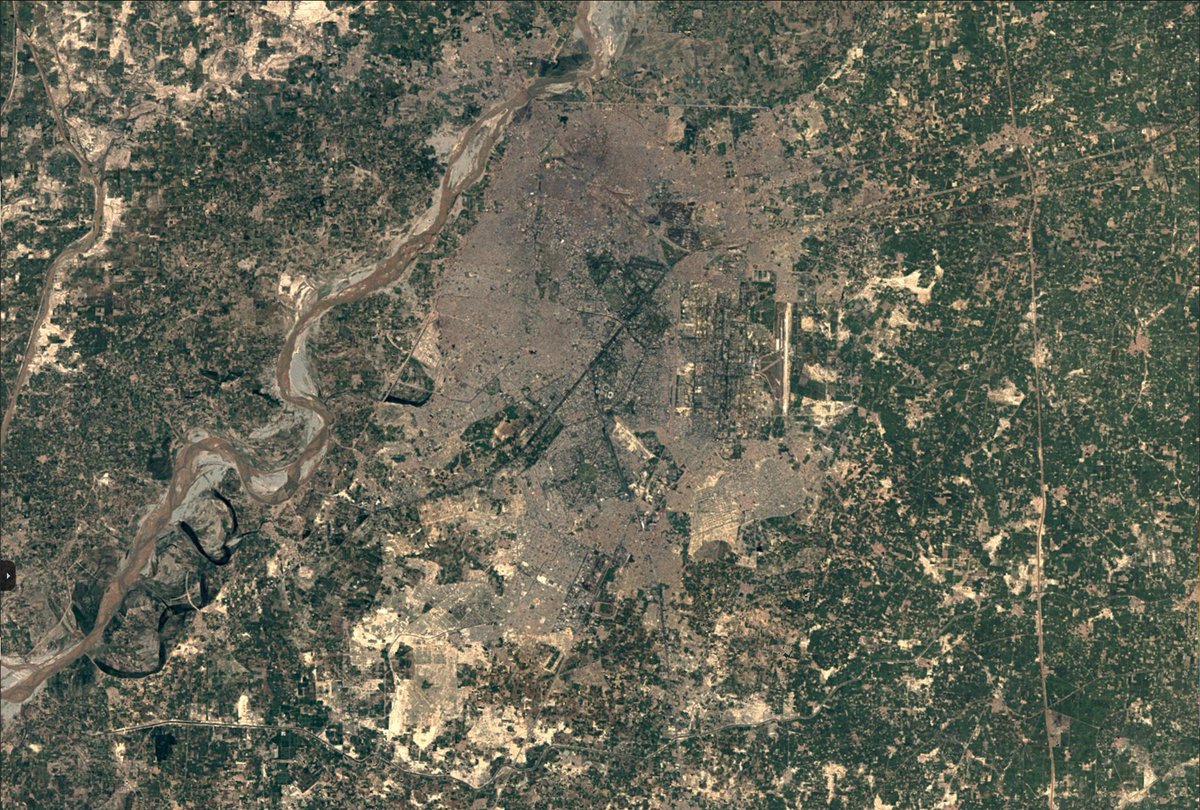
This is an absolutely major story and almost no Western media covered it: India's water minister CR Patil said on Tuesday that "it is certain, not a single drop of water will go (to Pakistan) in the coming years."
Patil said that India is "actively working on it" after "directives" from Prime Minister Narendra Modi.
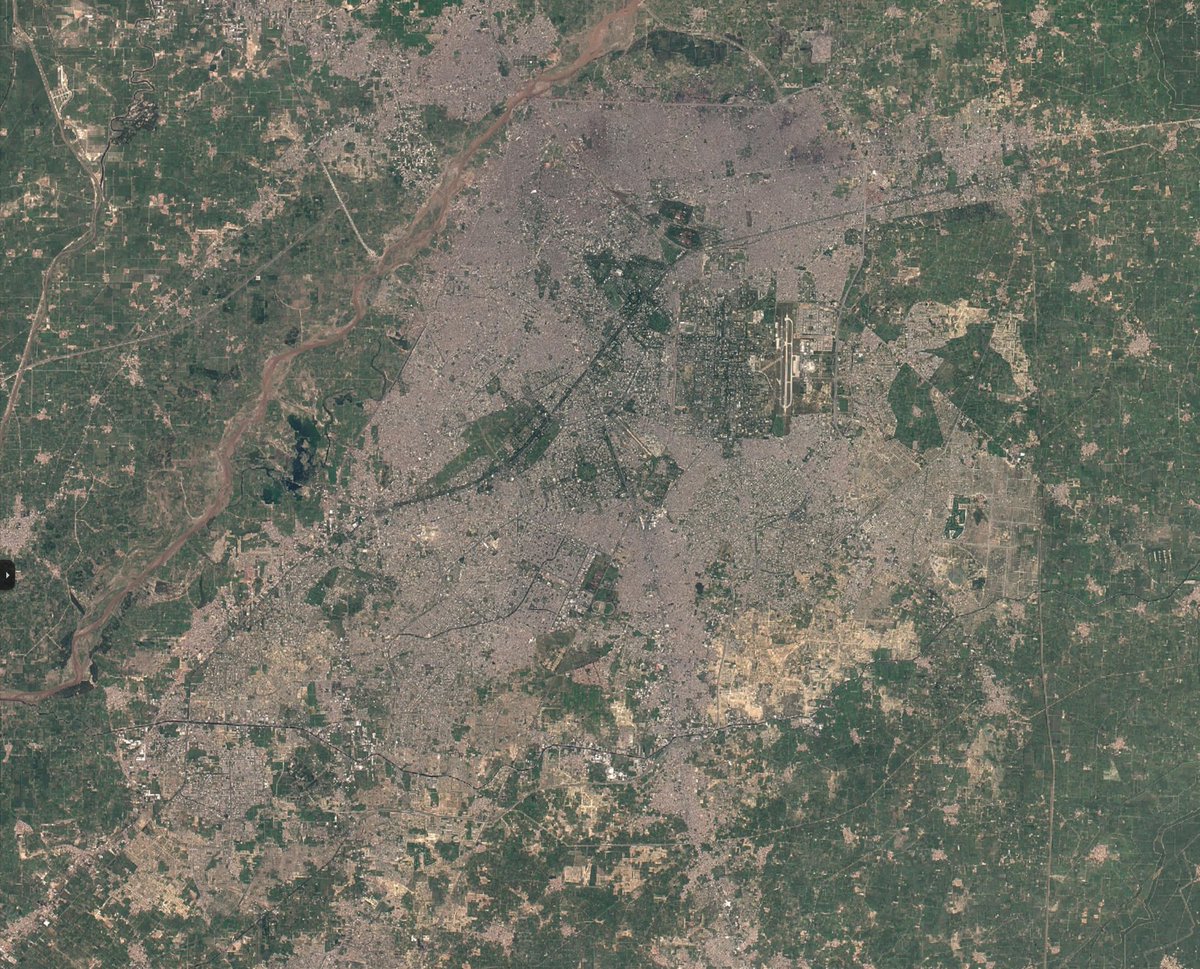
As a reminder, Pakistan's dependence on water from India is close to total: the country is essentially built around the Indus river system, all of whose rivers flow through India before entering Pakistan.
The Indus system irrigates 80% of Pakistan's farmland, generates a third of its electricity, supplies its major cities with drinking water, and sustains the livelihoods of some 240 million people.
So, essentially, no water from India = annihilation of Pakistan as a state.
Pretty damn consequential, all the more given we're talking about 2 nuclear powers here. And all the more because, understandably, Pakistan's formal position is that water diversion would constitute "an act of war" (https://t.co/WLoDpGzc2W).
Unfortunately, Patil's statement isn't just talk: India already set up the legal framework to make this possible. Last year, they unilaterally suspended the 1960 Indus Waters Treaty, despite the treaty containing no withdrawal clause.
It used to be the one piece of India-Pakistan relations that worked, and had survived multiple wars and over six decades of hostility. Now India is saying officially that it will "never be restored" (https://t.co/2SnUNevFbX).
The one mitigating factor here is physics: you don't just "turn off" a major Himalayan river system. Diverting rivers of this magnitude means building massive storage and canal infrastructure in Himalayan terrain: projects measured in years.
But India IS ACTUALLY BUILDING that infrastructure: for instance it just approved in May the building of the so-called "Chenab–Beas Link Tunnel," an 8.7km ₹2,352 crore (~$280M) tunnel designed to divert water from the Chenab basin into India's Beas river system. The Chenab is one of the main tributaries of the Indus - and one of the three "western rivers" (Indus, Jhelum, Chenab) allocated to Pakistan under the 1960 Indus Water Treaty.
Which means that, unfortunately, Patil's "not a single drop of water in the coming years" looks like a roadmap: the infrastructure to strangle Pakistan's water supply is being approved and tendered in plain sight.
This is also a story about selective media coverage and double standards: I'm willing to bet that 99% of people in the West have never heard of any of this.
Now make this thought experiment: imagine China announced it was building infrastructure to cut off every drop of water flowing to India and its ministers proclaimed on television that "not a single drop" would cross the border. It would be wall-to-wall coverage, sanctions packages, and a thousand op-eds about Beijing "weaponizing water."
Heck we don't need to imagine because the simple fact of China merely building a hydropower dam on the Yarlung Tsangpo (the upstream Brahmaputra) generated exactly the wall-to-wall alarm I'm describing, even though China threatened nothing and even though Indian officials said the threat is a "myth" given the fact that the river gathers most of its volume inside India from monsoon rains (https://t.co/GBgBybBPoE). Malign intent was still presumed from the act of construction, because it's China.
In India's case, the intent couldn't possibly be clearer: it's proclaimed by ministers on the record, and backed by India's actions. But because they're a courted Western partner, what they're doing - arguably the most extreme form of economic warfare imaginable, directed at a nuclear state - largely gets silence.
Src for screenshot: https://t.co/qav4muNkij
In what lexicon is ethnically cleansing one quarter of a neighbouring state "taking a much tougher stance". Shameful complicity in war crimes by @SkyNews@adamparsons
The treatment being meted out to former PM Imran Khan is inhumane and unethical. He is being denied his basic right to see his medical team. Imposing such suffering on the most popular politician in the country is an act of humiliation directed at 250 million Pakistanis.
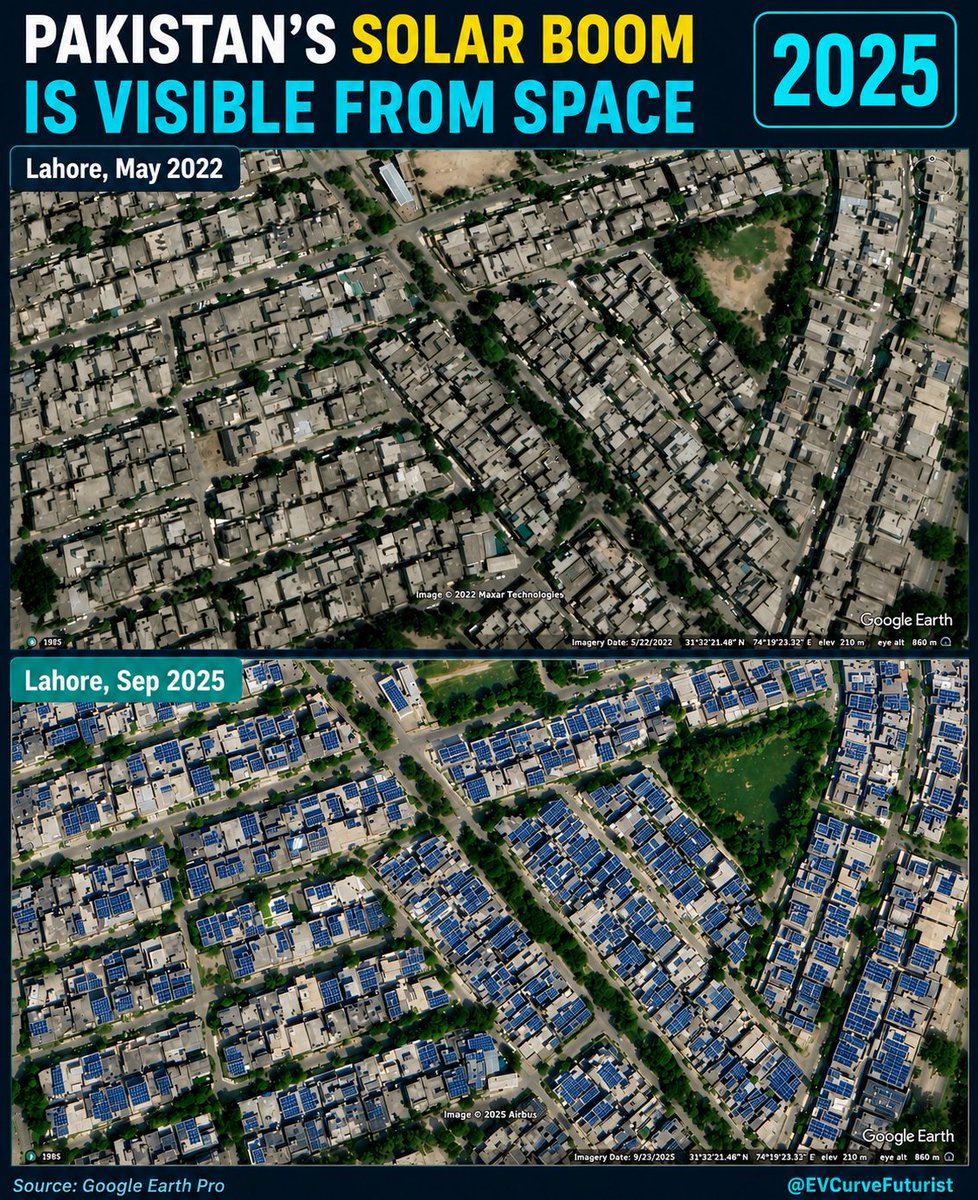
Pakistan may be accidentally building one of the world’s first decentralised #solar economies. The craziest part? Real scale barely shows in official stats. Imported 51.5 GW solar panels by late 2025—nearly = entire grid. Yet registered net-metered rooftop solar just 5.3–6.8 GW.
What makes this story so extraordinary is the speed.
In only a few years, Pakistan appears to have gone from a relatively minor solar market to potentially sourcing around a quarter of its electricity from solar once distributed generation is included.
👉 ~16.6–17 GW solar imports in 2024
👉 ~18 GW solar imports in 2025
👉 ~51.5 GW cumulative imports by late 2025
👉 Rooftop solar: ~1.3 GW → 4.1 GW in 2024
👉 ~5.3–6.8 GW registered rooftop solar in 2025
👉 24+ GW estimated behind-the-meter/off-grid
👉 Solar potentially ~25% of actual electricity use
The massive gap between imported panels and officially registered systems strongly suggests tens of gigawatts are now operating quietly on homes, farms, factories and businesses across the country.
This increasingly looks less like a normal energy transition and more like large-scale consumer-led grid defection.
And economics is driving nearly all of it.
Electricity tariffs surged. Diesel prices climbed. Blackouts remained common. Meanwhile ultra-cheap Chinese solar panels and falling battery prices made self-generation economically irresistible.
So millions effectively made the same calculation:
Generate your own power, or remain trapped inside an expensive and unstable system.
Once solar becomes cheaper than the grid itself, adoption can move faster than governments, utilities and even official statistics can keep up with.
This isn’t gradual transition by any stretch. It may ultimately become a blueprint for how energy-poor nations break free from legacy old-world energy systems dominated by fossil fuels and increasingly expensive centralised power.
It’s decentralisation at escape velocity.
This is #Bettrification.
If it surprises you that U.S. military leadership would describe war with Iran as part of “God’s plan,” then you are overlooking a religious current that has shaped American political culture for more than a century.
This framework — often called Christian Zionism, and in its prophetic form premillennial dispensationalism — was systematized in the 19th century by John Nelson Darby and popularized in the United States through the Scofield Reference Bible. It teaches that history unfolds in divinely ordered stages.
In its prophetic outline, the sequence is direct: the Jewish people return to their ancestral land; Jerusalem comes under Jewish control; hostile nations surrounding Israel play a role in a climactic regional conflict associated with Armageddon; Christ returns; a literal thousand-year reign follows; and during that period many Jews ultimately recognize Jesus as Messiah.
Against that framework, the founding of Israel in 1948 and the capture of Jerusalem in 1967 were widely interpreted in evangelical circles as prophetic milestones — confirmation that the timeline had begun. The belief that modern war could fulfill biblical prophecy moved from pulpits into politics. In 1980, Ronald Reagan said, “We may be the generation that sees Armageddon,” openly wondering whether contemporary events aligned with biblical prophecy.
The doctrine speaks in biblical categories — “nations” aligned against Israel. In popular prophecy preaching, especially after the Six-Day War, the 1979 Iranian Revolution, and post-9/11 conflicts, those nations are frequently mapped onto contemporary Muslim-majority states.
Iran occupies a central place in this interpretive ecosystem. In Ezekiel 38–39, “Persia” appears among the nations aligned against Israel in an apocalyptic confrontation. Because Persia is the historical name for modern Iran, many prophecy teachers identify the two directly. In Daniel 10, the “Prince of Persia” is described as a spiritual power opposing God’s messenger — understood in some traditions as a demonic force influencing that region. Those interpretations shape how certain believers understand modern Iranian-Israeli tensions.
The very real repression and human rights abuses of the Iranian regime reinforce this lens. Tehran’s brutality at home and hostility toward Israel make it easy, within certain evangelical frameworks, to cast the conflict not only in strategic terms but in moral — even cosmic — ones. Moral outrage and prophetic expectation converge.
That same framework shapes perception of Israel’s conduct. In a theology where Israel is central to an enduring covenant and prophetic fulfillment, criticism of Israeli military actions does not always carry the same weight as condemnation of its adversaries. The lens through which events are interpreted is not neutral.
This worldview is not marginal. It has been disseminated for generations through prophecy literature, megachurch networks, Christian media, and organized political advocacy. White evangelical Protestants remain the most consistently pro-Israel religious constituency in American polling and form a core pillar of the modern GOP and MAGA coalition.
Policymakers do not need to seek prophecy to benefit from it. Republican leadership understands that for a significant segment of its base, confrontation with Iran resonates not only strategically, but theologically. In that environment, hardline rhetoric carries political reward.
When war is seen as prophecy fulfilled rather than policy debated, resistance to escalation weakens — and scrutiny becomes asymmetrical.
Incredible scenes in Islamabad where the entire parliament has been placed under siege. The fear of one jailed leader is making illegitimate rulers go mad. Fighting back against this martial law regime is an honour and a duty.
A happy bear is a healthy bear. Rano at Islamabad Wildlife Management Board Bear Rehabilitation Centre. Currently kept in quarantine before shifting to bigger enclosure. She will finally be taken to her natural habitat in Gilgit Baltistan.
This is a win for all Animal rights activists and journalists who have covered the suffering of Rano and raised their voice over the years. We are grateful to the Sindh High Court for their empathy, judicial wisdom and oversight which brought Rano's suffering at the Karachi Zoo to an end. Rano's case is not an isolated one.
Many animals have perished and continue to suffer at Karachi Zoo due to its inadequate facilities, apathetic and ill trained staff. Karachi Zoo was originally a botanical garden and that is the purpose it should serve as opposed to being a living hell for animals. For KMC the zoo is only a cash cow and they justify its existence as a cheap source of entertainment for Karachite. We need to educate our children about animals not reduce them and their misery and suffering as a source of entertainment.
"Palestinians have been presented the grimmest of choices: die from starvation or risk being killed while trying to access the meagre food that is being made available through Israel’s militarized humanitarian assistance mechanism."
United Nations chief Antonio Guterres said Israel has only authorized for Gaza what ‘amounts to a teaspoon of aid when a flood of assistance is required’ https://t.co/W2EqlGjydY
It’s hard to overstate how extraordinary this is. Aid organization trucks are all lined up and ready to enter and Israel has not allowed them into Gaza for ~75 days. There is no way to describe this as anything other than the active, intentional, planned starvation of a people.
NEW 🧵: Is human intelligence starting to decline?
Recent results from major international tests show that the average person’s capacity to process information, use reasoning and solve novel problems has been falling since around the mid 2010s.
What should we make of this?
For inspiration, Eqbal Ahmad’s 1999 obituary by Edward Said:
https://t.co/l7jjpegd1r
His politics, esp on Palestinian rights, kept him untenured at various US universities for 18 yrs post his PhD
This is important. Of course, speaking up for Palestine is not the right career move. Of course it will cost me opportunities, jobs, progression. Of course, it isn’t a “wise” decision. But I won’t be shy when my kids ask me 20 yrs on where I was & what I did. Do it for the kids.
Very common to hear about an unqualified “rise of the West” or “the costs of economic growth” story in academic circles. It’s not either/or, it is and/both
Now open for applications: @StimsonCenter South Asia Program's 2025 Visiting Fellowship!
We're seeking two Pakistani and two Indian rising analysts for a year-long fellowship, including two months with us in DC. Apply by Oct 7!
Details+application info: https://t.co/AeMIFoFB1V