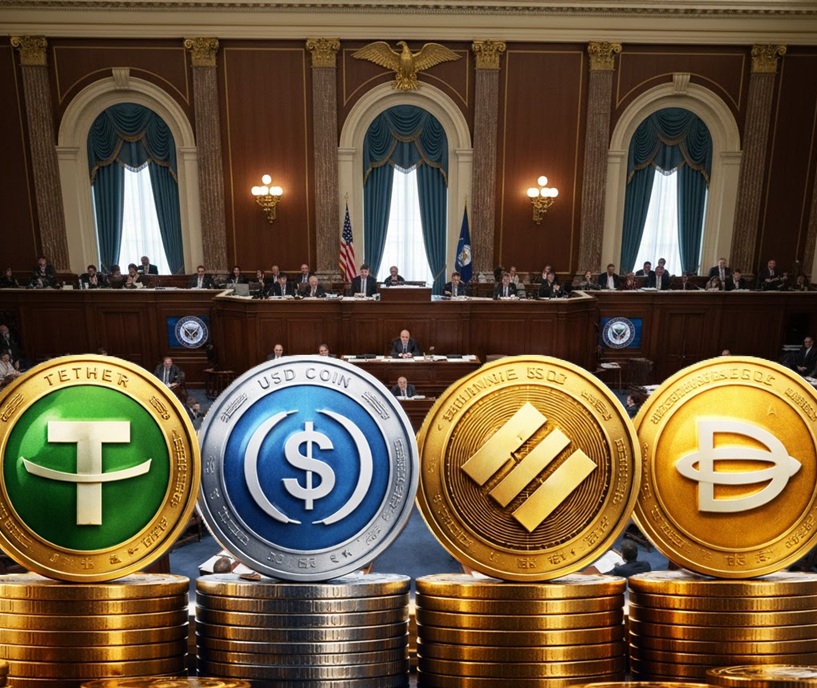
Senate Democrats held a productive meeting this week, diving deep into market structure bills with a spotlight on yield-bearing stablecoins.
Chair Tim Scott emphasized strong bipartisan support and proposed safeguards, such as banning crypto firms from advertising as banks, to protect consumers and prevent capital flight from community banks.
Meanwhile, the House is pushing a bill to seamlessly integrate stablecoins and blockchain into traditional banking, paving the way for mainstream adoption.
With White House backing and momentum building, a deal could land by late February amid midterm pressures.
Head to Blockzeit for the full scoop⏬
https://t.co/MEdM7dvPyF
The Senate Committee on Agriculture, Nutrition, and Forestry has pushed out its discussion draft for the Crypto Market Structure legislation.
The draft expressly protects the rights to self-custody and peer-to-peer trading of assets, but does not allow such transactions with US financial institutions.
Software developers and infrastructure providers will not be treated as money transmitters or financial institutions; however, the bill’s position on defi interfaces remains a puzzle.
Head to Blockzeit for the full story👇
https://t.co/uZJ6PncUA0
Winklevoss Capital has led the launch of Cypherpunk, a company dedicated to privacy and self-sovereignty.
The investment firm owned by the Winklevoss Twins invested over $50M in Zcash, an encrypted version of Bitcoin, and a privacy hedge to its transparency.
The company projects Bitcoin to appreciate to $1 million per unit within the next decade and expects Zcash to also grow significantly.
Check out the full story👇
https://t.co/64chfMBgwr
Crypto advocate and US veteran John Deaton is gearing up for another Senate run in Massachusetts, this time aiming to challenge Junior Senator Edward Markey in the 2026 midterms.
After a strong showing against Elizabeth Warren in 2024, where he secured 40% of the vote, Deaton is leveraging his popularity as a pro-crypto champion who fought for $XRP holders in the SEC vs. Ripple case.
His focus: tackling reckless Washington spending to make life more affordable for working families, restoring accountability, and boosting quality of life through smarter policies.
The crypto community believes that a Deaton victory could be a major win for sensible crypto regulation, too.
Check out the full story👇
https://t.co/YXLwnw0d2o
Leading Democratic lawmakers are voicing serious concerns about the crypto industry's apparent partisan leanings under the Trump administration, alleging a "pay-to-play" dynamic fueled by massive donations.
For instance, Coinbase contributed over $46 million to Trump allies during the 2024 election cycle and joined other firms like Ripple in sending $18 million for his inauguration—moves that critics link to the SEC's withdrawal of its lawsuit against Coinbase and even the pardon of crypto entrepreneur Changpeng Zhao.
Senator Chris Murphy from Connecticut has been outspoken, describing it as "Trump's corruption factory" and warning fellow Democrats against ignoring these unprecedented investments, which he sees as buying favors and undermining trust.
Coinbase's Chief Policy Officer Faryar Shirzad counters that their support via the non-partisan Fairshake PAC has benefited Democrats too, and the SEC case was dropped on its merits, not politics.
Check out the full story👇
https://t.co/wWlPqlUioD
Circle has made a bold move by reversing its policy, now allowing legal firearm purchases using $USDC stablecoin.
This shift aligns with America's regulatory landscape and champions constitutional rights for law-abiding citizens.
Senator Cynthia Lummis praised the change, noting it prevents financial systems from being weaponized against gun owners after her discussions with the company.
While this restores some trust in crypto's promise of freedom, it comes after criticism from groups like the NSSF and ATR over past restrictions that echoed CBDC-like censorship.
As the GENIUS ACT opens doors for more stablecoin innovation, USDC faces growing competition from privacy-focused rivals.
Head to Blockzeit for the full story and deeper insights👇
https://t.co/I84xH2jgUB
Criminal Defense Attorney Michael Blotch is raising serious concerns about the injustices in Sam Bankman-Fried's trial, highlighting how the FTX founder was subjected to unprecedented pre-trial scrutiny.
Blotch points out that SBF was forced into a rare criminal deposition, allowing the prosecution to grill him extensively before the trial even began, while the judge later blocked key defense evidence from reaching the jury.
This, combined with the government's unchecked narrative that customer funds were "stolen" without allowing SBF to counter it, paints a picture of a rushed process as charges were filed just 33 days after FTX's collapse.
Check out the full story👇
https://t.co/ftpZPT8ILC
Imprisoned FTX founder Sam Bankman-Fried insisted that his crypto empire was never truly insolvent—contrary to the narrative pushed by regulators and prosecutors.
In an interview, he revealed that FTX held a staggering $15 billion in assets against just $8.4 billion in liabilities at the time of its 2022 bankruptcy filing, more than enough to cover all obligations.
SBF blames the collapse on crippling regulatory uncertainty that forced his team to waste precious time on compliance hoops instead of bolstering risk management. He also points to misguided legal advice that led to hasty asset liquidations and billions in unnecessary fees, enriching lawyers while shortchanging potential recovery.
Remarkably, he notes that all creditors have since been made whole, with no real losses to customers—yet he's serving 25 years for fraud-related charges. If handled differently, SBF claims, FTX could have soared to a $125 billion valuation.
Meanwhile, conservative journalist Laura Loomer is sounding the alarm on lobbying efforts within GOP circles to secure a presidential pardon for him, urging folks not to buy into the "victim" storyline peddled by big crypto donors.
Check out the full story👇
https://t.co/UsvMhJNjVp
Renowned crypto entrepreneur and former Binance CEO Changpeng “CZ” Zhao has recounted a chain of big shifts that have happened in the US crypto economy within just a year of his release.
CZ highlighted the election of a pro-crypto US government and the record-breaking prices of BTC, BNB, and ETH among the industry’s most laudable events.
He also pointed out the collapse of the regulation-by-enforcement regime in the SEC as a win for the US crypto landscape.
Check out the full story👇
https://t.co/nuwVCbzH78
🚨US banks push for lawmakers to double down on stablecoin yield restrictions captured in the GENIUS Act, in the Market Structure Legislation.
Banking groups fear that intermediaries like crypto exchanges could bypass the yield restrictions if the Market Structure bill fails to codify more stringent controls.
Banks cite deposit flight risks, which could undermine credit provision and increase interest rates for local businesses and households.
Check out the full story👇
https://t.co/TkwOOuEhXq
China is gearing up to launch a yuan-backed stablecoin in Hong Kong, aiming to challenge the US dollar's dominance in the global financial arena.🇨🇳
With major players like Ant Group and https://t.co/07i5vfVRPV pushing for approval, China's e-commerce giants are ready to take on dollar-backed stablecoins head-on! 🛒💸
But it’s not all smooth sailing—concerns over capital outflow, money laundering, and currency speculation could slow things down.🛑
The Hong Kong Monetary Authority is playing it safe, ensuring strict reserve requirements and prioritizing B2B use. State-owned firms like CITIC Group and Bank of China are in talks for licenses, but only one may get the green light initially. 🏦
Will China's yuan-backed stablecoin reshape the global financial landscape?
Check out the full report👇
https://t.co/gclABdqItV