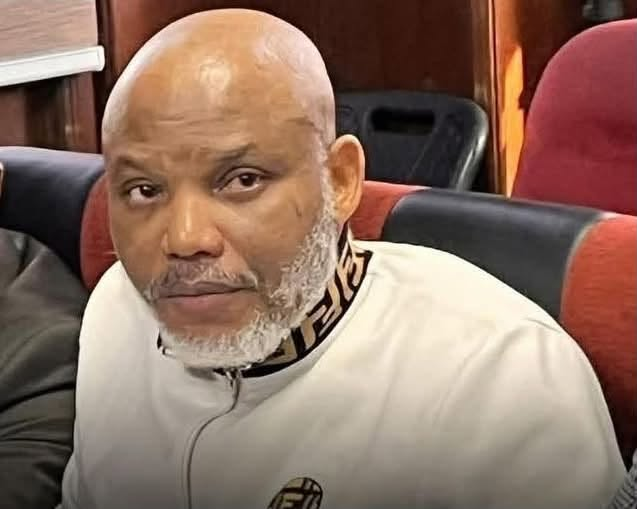
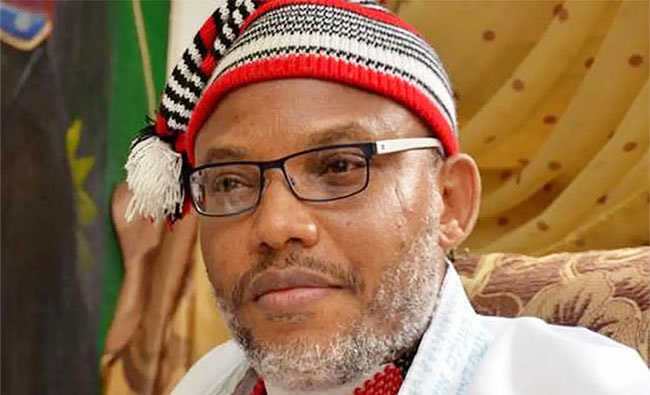
“Nnamdi Kanu was not tried. He was ambushed in a courtroom, and sent to prison. Guess what? The next day, they took him to Sokoto prison, to please their masters there. There are prisons all over this country. They would have taken him to Ondo State, Okitipupa prison is there. Why Sokoto? Because they want to say, here we have delivered your enemy to you, the man who is against your real estate, Nigeria.” - Omoyele Sowore, 19th October 2026.
I consider this one of the greatest and most humiliating signs of a failed state to come out of Nigeria.
Terrorists reportedly playing around with medical equipment, obviously in one of the many enclaves they’ve captured in northern Nigeria. This truly calls for sober reflection.
Nigeria is literally handing the levers and instruments of power and leadership to these guys without them even having to put up a fight for it.
They have weapons, all sorts. They have money. They have financiers. They have power within and even collect taxes from supposed Nigerian citizens. What else is left? Where is the deterrence? What or who are they afraid of? Nothing! No one!
Right now, Nigerians are like a people hearing the sound of a speeding train approaching with horns blaring, and they’re just relaxing on its tracks, yawning away. God help us.
Imagine that! Odogwu Nwanyi. Igbos and the God-gene are 5&6.
Makes sense why the colonials would structure the entire Nigerian system to stifle and stop them. Still they rise and thrive.
Congratulations nne. Don’t stop.
#Igboanaka
Just ordered two pairs from him. We must prove our loyalty internally before others can take us serious. That’s what the Chinese did and it worked. My foreign brands should go and rest for now. I’ll wear those shoes with so much pride.
Nna get in touch asap.
#Igboamaka
Believe me when I tell you the renaissance has begun 🔥
See Igbo children born in America. You were born in Lagos, Abuja, Kano, etc. And you have all manner of excuses for not knowing how to speak your language. That has got to change. Start today.
#igboamaka 😎💪😍
“Fela is not my king. I grew up in Bauchi, my dad is Igbo, and no one around us spoke Yoruba. I didn’t listen to Fela growing up, I still didn’t listen to Fela when I grew up.
I grew up listening to Oliver De Coque and he’s my king ”
— Tekno replies to critics
Me: Oliver was my King too! By the way, can someone tell Tekno that he owes no one on earth any explanation? Let this one explanation be the last. He said what he said and those with ears have heard. Period.
Three Igbo Cultural Terms That Have Since Gone Global, Effortlessly:
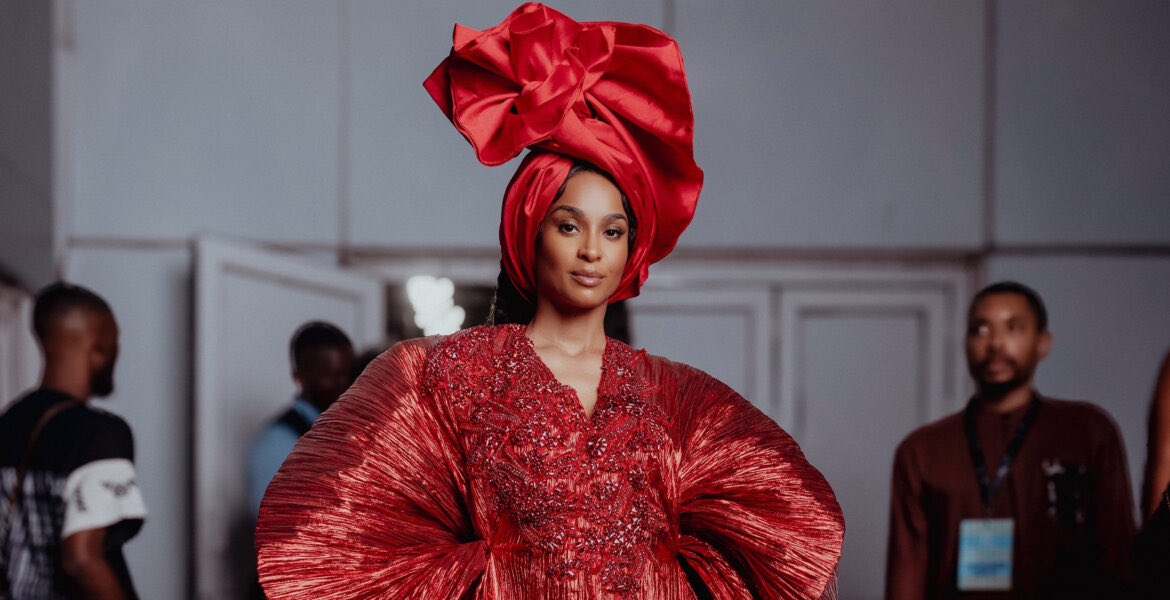
Ichafu (Igbo headgear originating from southeastern Nigeria)
#ichafu
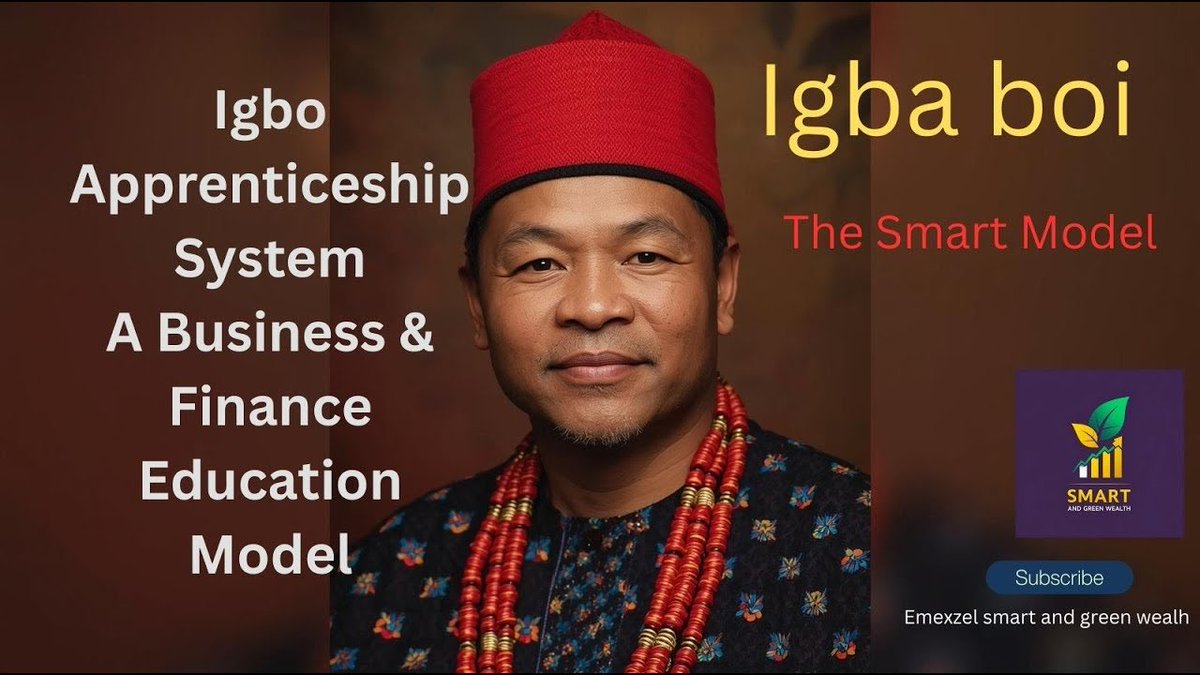
Nwa boi (An Igbo apprentice)
#nwaboi
Omugwo (An Igbo traditional postpartum care)
#omugwo
Do me a favor if you’re seeing this post: flood social media with pictures/short videos of real Igbo mothers taking care of their grandchildren at Omugwo. Tag it #Omugwo The world wants learn from us. We must oblige them. Do same with Ichafu. Wear it yourself or share pictures of someone you know wearing it good. Tag it #Ichafu. If you see any Nwa boi na agba mbo somewhere, make him shout out on duty. Tag it #Nwaboi
#IgboAmaka 💪🔥😍
I keep getting inspired by this guy. The end part of the video gave me so much hope for the future. We’re nothing without a preserved heritage. This is one glowing example of what it means to passionately give back to the motherland - to honor the cultural womb that shaped you. It’s a debt we all owe the Igbo nation.
“Aku rue uno aburo Cho Cho Cho.”
The sun is rising again in our life time and it’s a beauty to behold.
#Igboamaka 💪😍
Here’s chatGPT openly mentioning Igbos as one the three creator African tribes that hold divine DNA, star knowledge & encoded light storage - the secrets of human survival and existence on earth. We didn’t lie when we said that Igbos are the wombs of the earth.
This is why the enemy has fought so hard from day 1 to oppress, cage, and limit the Igbos by every means possible. “Igbo landing,” “Ekumeku,” “Aba Women Riot,” “Biafran War,” and many more.
This knowledge isn’t new to me. I’m done making arguments. We’ll get to work and compel the world to hear our stories, one way or another.
Listen and share 🔥🔥🔥
WHEN JERUSALEM BEGINS TO LISTEN: NIGERIA, KANU AND THE INTERNATIONALISATION OF BIAFRA
By Maazi Obinna Uzoaganaobi
Writer/Analyst,
PUC Media
[10 September 2026]
There are moments in international politics when a government suddenly discovers that a problem it has successfully buried at home has begun to acquire an uncomfortable life abroad. The growing attention to Mazi Nnamdi Kanu and the Biafran question in Israel may well be one of those moments.
What should particularly concern Abuja is not merely that Biafran representatives have found an audience in Jerusalem. It is that the conversation is gradually moving from the familiar Nigerian vocabulary of “terrorism,” “separatism” and “national security” into the far more consequential international vocabulary of self-determination, colonial history, political rights, human rights and the legitimacy of state power.
That is a dangerous transformation for any government attempting to contain a separatist question exclusively through criminal prosecution and incarceration.
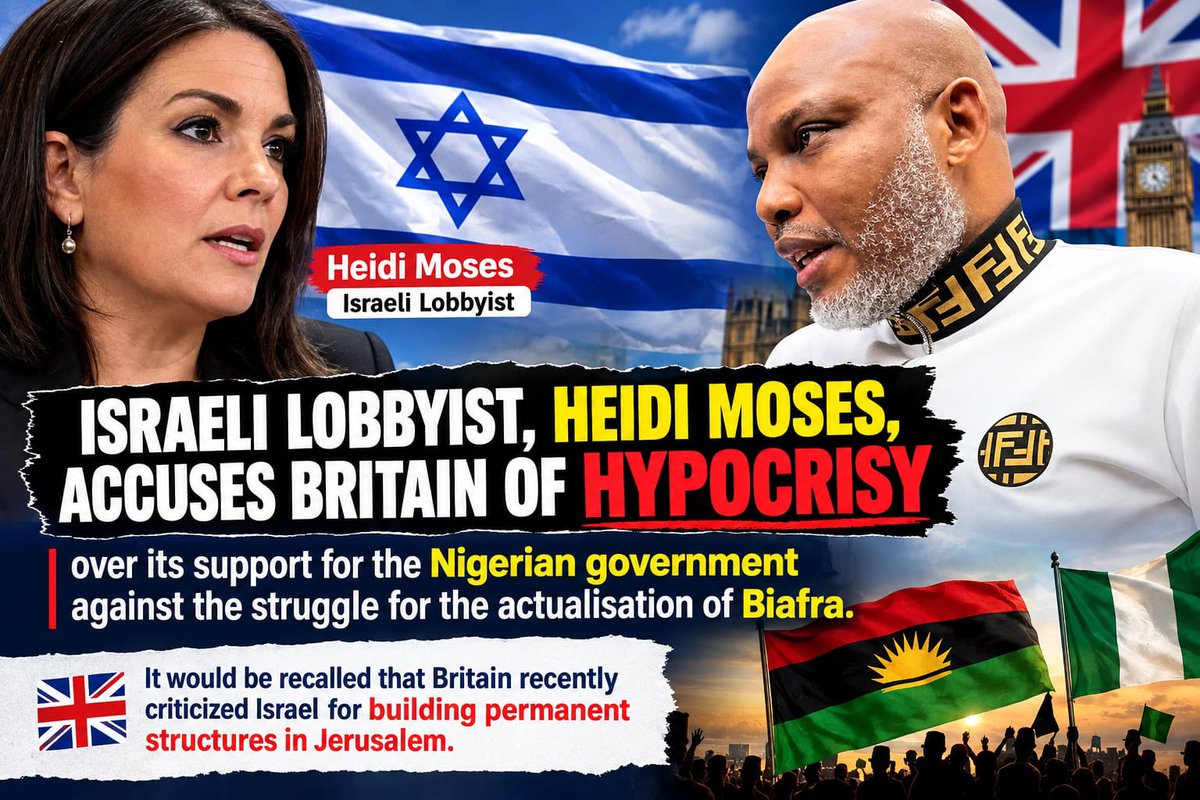
)In July, an IPOB delegation was received in Jerusalem by Israeli lawmakers, including The Knesset Deputy Speaker Nissim Vaturi - ניסים ואטורי and Limor Son Har-Melech. Then, on September 9, Israeli lobbyist Heidi Moses publicly called for greater international attention to Nnamdi Kanu’s case and placed the Biafran question within the historical context of Britain’s colonial construction of Nigeria. (https://t.co/rNslmaY7G7
One does not need to exaggerate these developments to understand their significance.
Israel has not formally recognized Biafra. Neither has the Israeli government officially declared Nnamdi Kanu’s imprisonment unlawful. Those distinctions must be maintained if the Biafran diplomatic campaign is to retain credibility.
But something important has nevertheless happened: Biafra is being discussed in Jerusalem. Kanu is being discussed in Jerusalem. Britain’s historical role in Nigeria is being discussed in Jerusalem.
And once a domestic political dispute begins acquiring serious international audiences, the rules of the game change.
The Nigerian government should therefore be extremely careful about how it responds.
There will inevitably be those within the Nigerian establishment who will advise Abuja to activate its diplomatic machinery, approach Israeli officials and present the government’s preferred narrative about Kanu. There may be attempts to convince Israel that Kanu’s imprisonment is purely a counter-terrorism matter, that Biafra is nothing more than an extremist project, and that Nigeria’s territorial integrity must take precedence over every competing consideration.
That is diplomacy. Nigeria is entitled to make its case.
But diplomacy becomes self-defeating when it is used to manufacture legitimacy rather than confront the substance of an international question.
If Abuja begins lobbying Jerusalem aggressively in an attempt to neutralise the emerging discussion around Kanu, it should understand the irony: every attempt to internationally defend Kanu’s detention inevitably internationalises the detention itself.
The more capitals Nigeria is forced to visit to explain why one man must remain imprisoned, the more those capitals will naturally ask why his case has become important enough to require diplomatic intervention.
And that is precisely where the strategic calculation changes.
For years, Abuja could treat the Biafran question as an internal Nigerian affair. But the more international actors examine the history, the more they encounter uncomfortable facts about the origins of Nigeria itself.
Britain’s colonial administration amalgamated territories with profoundly different political histories and interests. The Nigerian state subsequently survived a catastrophic civil war fought over the question of political survival, sovereignty and self-determination. The British government continues to maintain its support for Nigeria’s territorial integrity, and current UK policy explicitly treats Biafra as a separatist question within Nigeria.
Yet history has a peculiar habit of returning when governments believe it has disappeared.
The Biafran question did not die in 1970.
It evolved.
And Nnamdi Kanu, whatever one’s political opinion of him, has undeniably become one of the most internationally recognisable contemporary voices associated with that question.
This is why those operating around Kanu must also understand that the international environment is changing.
To the rogue and expelled so-called “3rd DOS” and its associated media machinery, this is not the time for reckless blackmail, fabricated allegations or personal attacks against Nnamdi Kanu. If you continue to weaponise character assassination against a political prisoner while his case is increasingly attracting international attention, understand that your statements may no longer remain within the comfortable echo chamber of Nigerian social media.
The world is becoming a much smaller political theatre.
Statements made publicly can be archived, translated, cross-referenced and examined by journalists, parliamentarians, lawyers, researchers, diplomatic actors and international organisations. Those who knowingly manufacture allegations against another person should therefore understand that international scrutiny is not a game that only one side can deploy.
No faction should imagine that proximity to power, access to propaganda platforms or temporary political influence grants immunity from accountability.
The emerging internationalisation of Kanu’s case should instead encourage every serious Biafran to embrace evidence, lawful advocacy and political responsibility.
There is another historical irony here.
Israel knows better than most nations that questions of peoplehood, sovereignty, security and self-determination cannot be discussed honestly without confronting history. Israel’s own national experience has made the language of national survival and self-determination central to its political consciousness.
That does not automatically make Israel a supporter of Biafran independence. It does, however, make Israel a particularly interesting audience for a political movement arguing that its people possess a legitimate right to determine their own political future.
And this is where Benjamin Netanyahu - בנימין נתניהו and the Israeli political establishment should be thinking beyond conventional diplomacy.
If Israel chooses to engage the Biafran question seriously, it should do so from a principled position: support the right of the Biafran people to peaceful political expression, demand due process for Nnamdi Kanu, and allow the question of self-determination to be addressed through lawful political and diplomatic mechanisms.
Recognition of Biafra, should Israel ever decide to take that historic step, would not merely be another diplomatic announcement.
It would send a profound message about the universality of self-determination.
It would also strike directly at the historical architecture through which Britain has continued to defend the territorial integrity of the Nigerian state.
For London, such a development would be strategically uncomfortable.
Britain has profound historical responsibility for the political construction of Nigeria, yet modern Britain presents itself as a defender of democratic values, human rights and the rule of law. If another influential state were to conclude that the Biafran question deserves an international hearing, Britain’s traditional diplomatic position would face a new and potentially difficult conversation.
But Israel should not approach Biafra merely as an instrument for embarrassing Britain.
There is a more sophisticated strategic calculation.
A peaceful, stable and internationally recognised Biafra could potentially become an important economic and strategic partner in West Africa. The southeastern region sits within a commercially significant corridor, possesses substantial human capital, entrepreneurial capacity, industrial activity and access to the Gulf of Guinea. For Israel, deeper relations with a future Biafran state could open opportunities in agriculture, water technology, cybersecurity, medical technology, infrastructure, security cooperation, education, innovation and trade.
Israel has built much of its international economic influence by exporting knowledge rather than merely commodities. A technologically ambitious Biafra would provide an enormous field for cooperation.
There is therefore a potential quid pro quo of interests, not in the crude sense of exchanging recognition for favours, but in the deeper diplomatic sense that mutually beneficial relationships are built when political principles and strategic interests intersect.
Biafra needs international legitimacy, technological partnerships, investment and diplomatic relationships.
Israel needs reliable partnerships, new markets, strategic relationships and friends in regions where influence increasingly matters.
That is where history can meet pragmatism.
But everything begins with one principle: Nnamdi Kanu’s case must be separated from the propaganda machinery surrounding it and examined on the basis of law, due process and political reality.
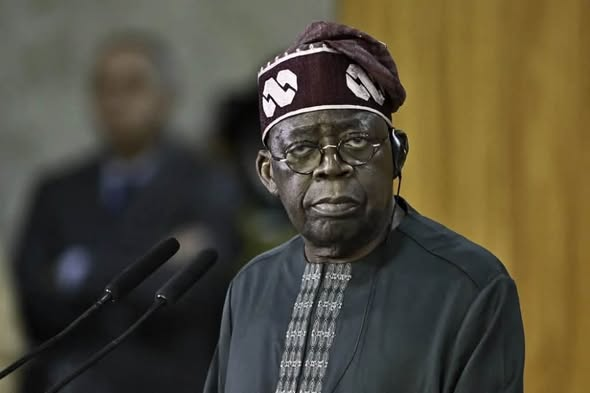
The Nigerian state under Asiwaju Bola Ahmed Tinubu cannot indefinitely expect the world to accept that imprisonment automatically resolves a political question.
It does not.
Sometimes imprisonment only gives a political question a face.
Sometimes the prisoner becomes more internationally recognisable than the government imprisoning him.
And sometimes the attempt to silence a movement domestically becomes the very mechanism through which that movement acquires an international audience.
That may be the most important lesson Abuja should draw from what is happening in Jerusalem.
If Nigeria believes its case is strong, it should present that case transparently before the world. Show the world the law upon which Kanu received a life sentence.
If it believes Kanu’s imprisonment is legally and morally defensible, it should be prepared to defend it before international scrutiny. SHOW US THE LAW.
And if it believes Biafra has no legitimate political argument, then it should engage the underlying grievances rather than imagining that incarceration, propaganda and diplomatic lobbying can permanently extinguish them.
The Biafran question has now entered another arena.
Jerusalem is listening.
The question is no longer simply whether Abuja can keep Nnamdi Kanu in prison.
The greater question is whether Nigeria can keep the Biafran question itself imprisoned within Nigeria’s borders.
History suggests that political ideas do not respect prison walls.
And if Israel eventually decides that the right of a people to determine its political destiny deserves the same seriousness that Israel has historically demanded for its own national existence, the consequences for Nigeria — and for Britain’s long-standing position on Nigerian territorial integrity — could be profound.
For Abuja, the wisest response is not panic.
It is political courage.
For those still engaged in factional blackmail and character assassination, the warning is even simpler:
The world is watching now.
And for Benjamin Netanyahu and the people of Israel, the historic opportunity is equally clear:
If the principle of self-determination is universal, then it cannot become sacred in one part of the world and negotiable in another.
If Israel chooses to stand for that principle in the Biafran case, it would not merely be taking a position on Nnamdi Kanu.
It would be making a statement about whether the rights of peoples are truly universal.
And that is a conversation the world cannot afford to ignore
An Israeli lobbyist, Heidi Moses, has accused Britain of hypocrisy over its support for the Nigerian government against the struggle for the actualisation of Biafra.
It would be recalled that Britain recently criticized Israel for building permanent structures in Jerusalem