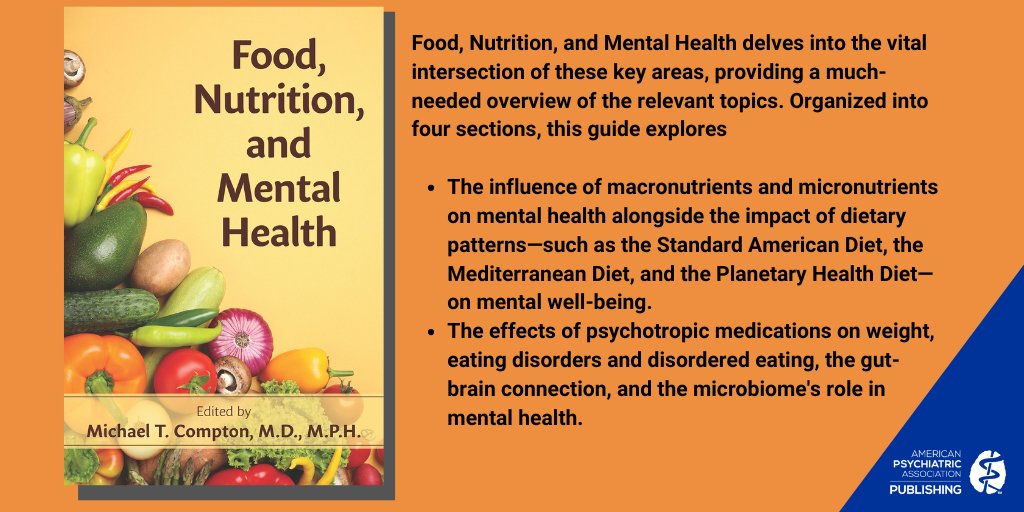
Countless studies have established a clear link between what we eat and our physical health. Increasing evidence shows that nutrition also plays a crucial role in mental health outcomes. https://t.co/fkwjKBggzD
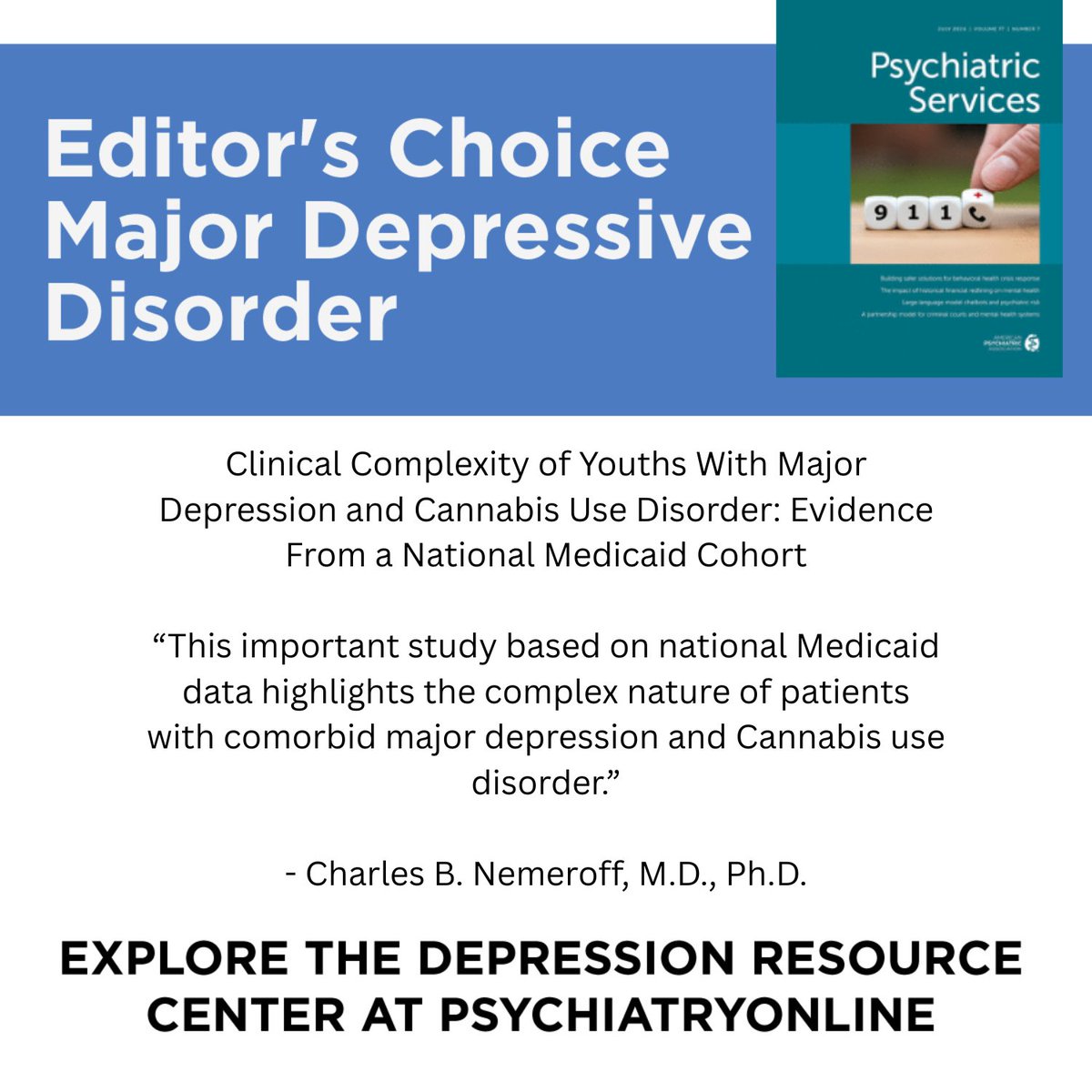
Check out our resource center for Major Depressive Disorder (MDD), featuring highlighted articles with commentary from the editor of the American Journal of Psychiatry, Dr. Charles B. Nemeroff, M.D., Ph.D. https://t.co/SVilQOTXSt
Check out our resource center for Major Depressive Disorder (MDD), featuring highlighted articles with commentary from the editor of the American Journal of Psychiatry, Dr. Charles B. Nemeroff, M.D., Ph.D. https://t.co/SVilQOTXSt
Check out our resource center for Major Depressive Disorder (MDD), featuring highlighted articles with commentary from the editor of the American Journal of Psychiatry, Dr. Charles B. Nemeroff, M.D., Ph.D. https://t.co/SVilQOTXSt
In medicine, it can be tempting to draw a clear line between patient and health practitioner, between the individual requiring care and treatment and the one offering it. But what happens when the clinician is the one facing a mental health challenge?
https://t.co/dNQmCgnSra
An estimated 6%–10% of the U.S. population meets the criteria for insomnia disorder—a figure that is even higher among individuals experiencing psychiatric conditions. https://t.co/DfnL6eT4lg
Although gaming can foster community and personal enrichment, it also carries the risk of internet gaming disorder (IGD), a behavioral addiction marked by impaired control over gaming, prioritization of gaming over other activities, and continued play despite negative consequences. https://t.co/vk01wUTWQn
Countless studies have established a clear link between what we eat and our physical health. Increasing evidence shows that nutrition also plays a crucial role in mental health outcomes. https://t.co/fkwjKBggzD
In recent years, the psychiatric community has unified around characterization of functional neurological disorder (FND), including its nomenclature, diagnostic requirements, and treatment. FND's complex assessment and therapeutic challenges rarely fit within a single specialty. https://t.co/B9TXcNYRRv
When approaching the use of psychedelics in treatment, it is important to separate science from sensationalism. Expert-vetted and rigorously researched, Psychedelics: Transforming Psychiatry delivers an authoritative review of the current knowledge and evidence for the use of psychedelics in practice. https://t.co/r3Pi8EWxI4
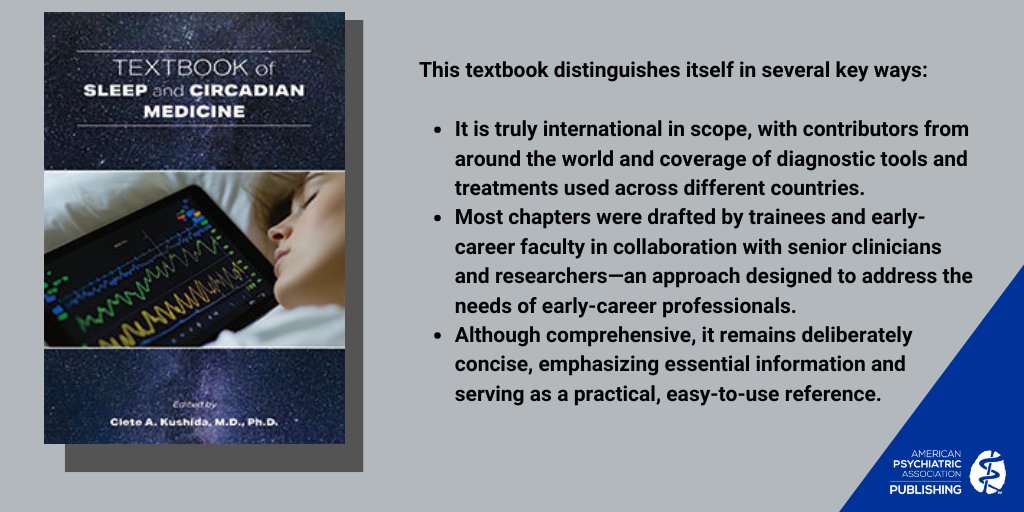
The National Heart, Lung, and Blood Institute of the National Institutes of Health (NIH) estimates that 50–70 million Americans have sleep disorders, and nearly 1 in 3 people do not regularly get the recommended amount of uninterrupted sleep.
https://t.co/9CYV3YY6Wo
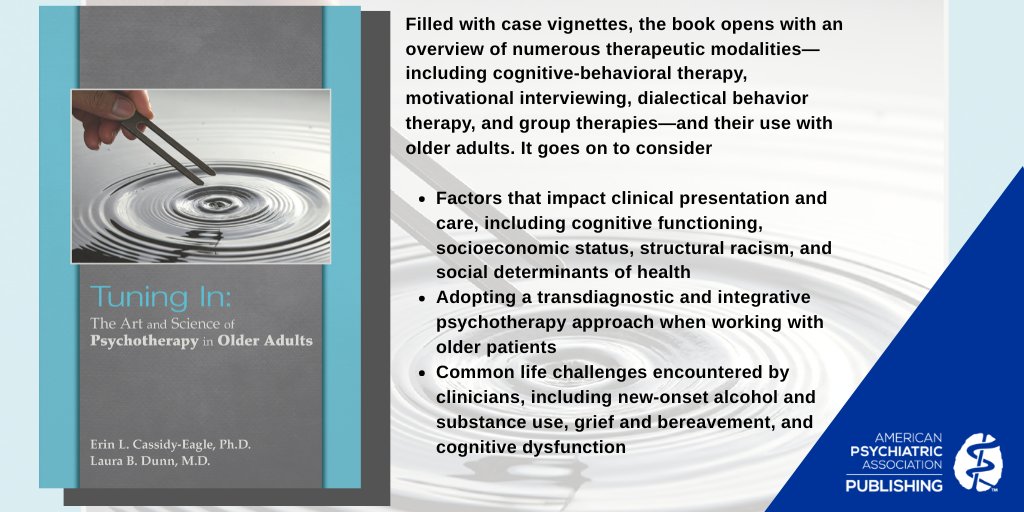
This @APA_Publishing guide, which addresses common real-world scenarios that present themselves for treatment in older adults is out now and available to buy in Europe from your local bookshop or @uk_publishers!
These questions are consistent in form and process with the questions used in high-stakes examinations. They cover important clinical areas of psychiatric practice and closely follow the American Board of Psychiatry and Neurology (ABPN) outline of topics for the recertification examination in psychiatry. https://t.co/aGCaSNCPRE
Without discounting the value of evidence-based treatments for specific pathologies, this book emphasizes the importance of advanced clinical interviewing skills for truly understanding patients' backgrounds, concerns, and goals for treatment. https://t.co/GKdbTRlG3Y
The American Psychiatric Association Practice Guideline for the Prevention and Treatment of Delirium reviews current evidence-based nonpharmacological and pharmacological interventions to prevent or treat delirium in adults. https://t.co/1dsniWwmD4
Covering the diagnosis and treatment of neurodevelopmental, anxiety, mood, trauma-related, obsessive-compulsive disorders, and others, this concise guide remains rich in practical guidance. Designed as a primer for medical and mental health students and trainees, it also serves as a focused, up-to-date resource for practicing clinicians. https://t.co/1CvqqOifmB
Written by and for educators, Manual of Undergraduate Psychiatric Education provides comprehensive, practical guidance to develop effective teaching skills in psychiatric education. https://t.co/Y2g54OKBju
Community can take many forms.
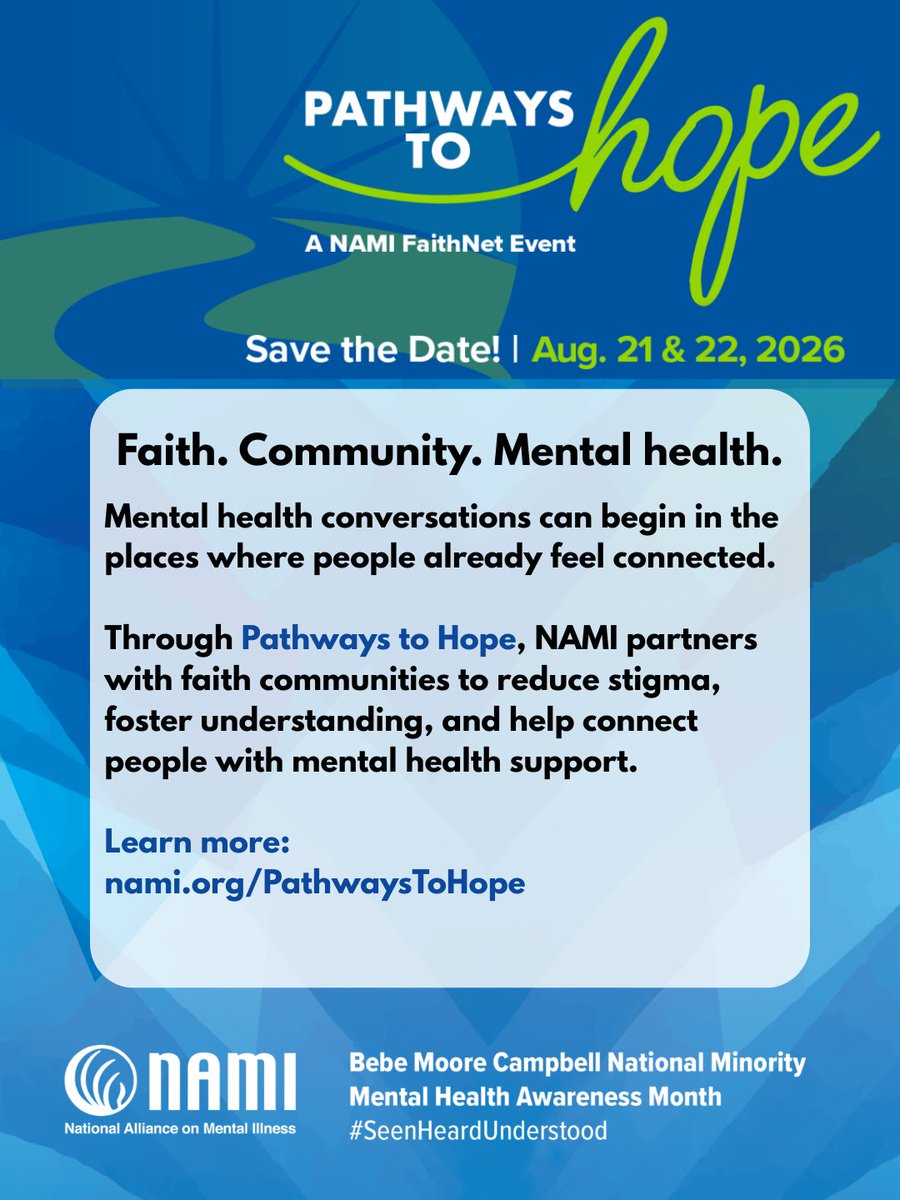
Through Pathways to Hope, NAMI partners with faith communities to encourage open conversations about mental health, reduce stigma, and connect people with support.
Because everyone deserves to feel seen, heard, and understood.
Learn more at https://t.co/7U7VLISow8.
#SeenHeardUnderstood #BebeMooreCampbell #MentalHealth