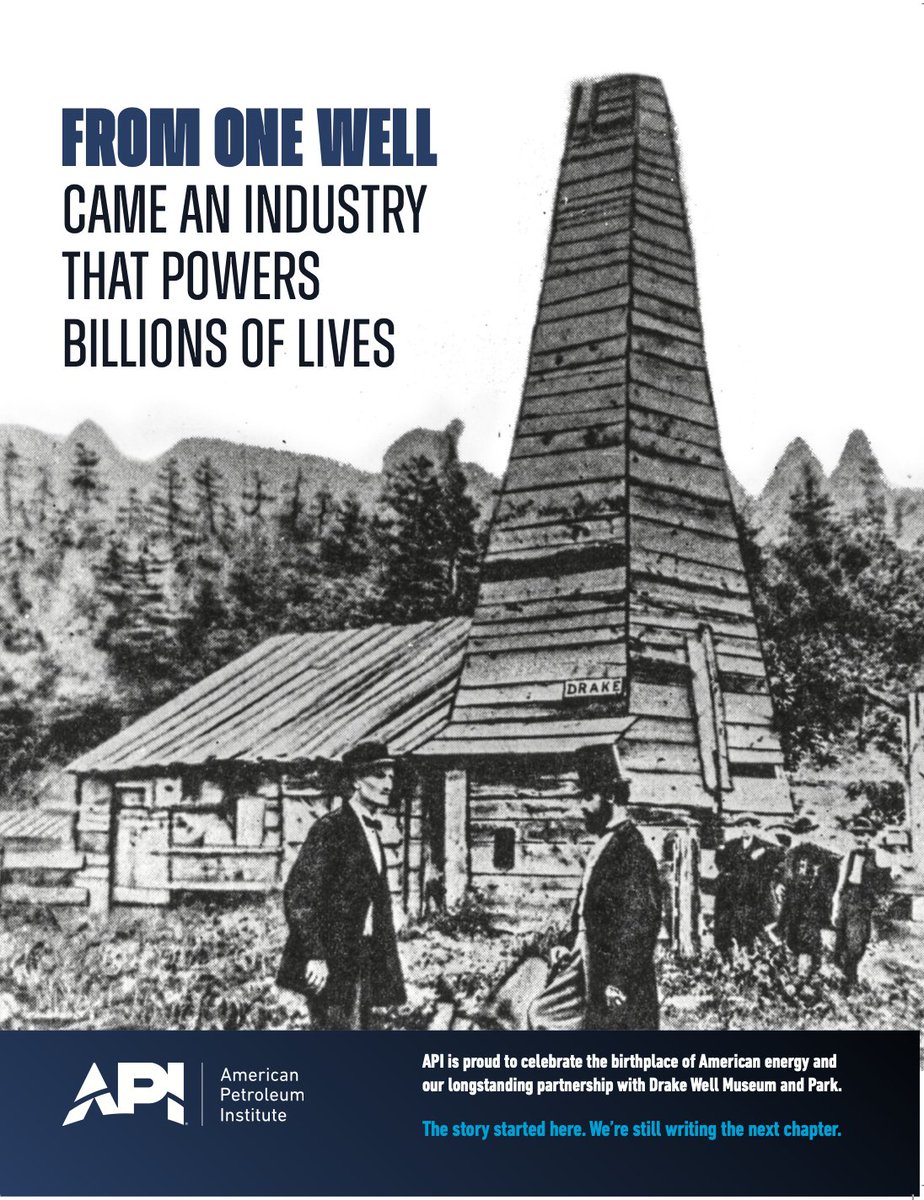
The Drake Well launched America’s oil industry. What comes next depends on our ability to keep building.
API President & CEO @mj_sommers and @MarathonPetroCo President & CEO Maryann Mannen met in Titusville, PA, to discuss how a clearer, more predictable permitting process can unlock the infrastructure needed to power America’s energy future. @forumdrake
From the birthplace of America’s oil industry.
API President & CEO @mj_sommers joined @MarathonPetroCo President & CEO Maryann Mannen at the @DrakeWellMuseum to discuss Pennsylvania’s energy legacy and Marathon’s deep roots in the region. @ForumDrake
Refineries don’t set fuel prices. So who does?
Crude costs, tanker rates, refining and a global market all play a role. API’s @T_Mason_H breaks it down 💡
We applaud the @Europarl_EN vote to support a three-year delay of the EU Methane Regulation. This additional time is critical to establishing clear, workable compliance solutions while maintaining reliable energy supplies to our European allies.
We urge EU policymakers to build on this progress and secure a final agreement that provides the long-term certainty industry needs.
https://t.co/SSDfDwWuRv
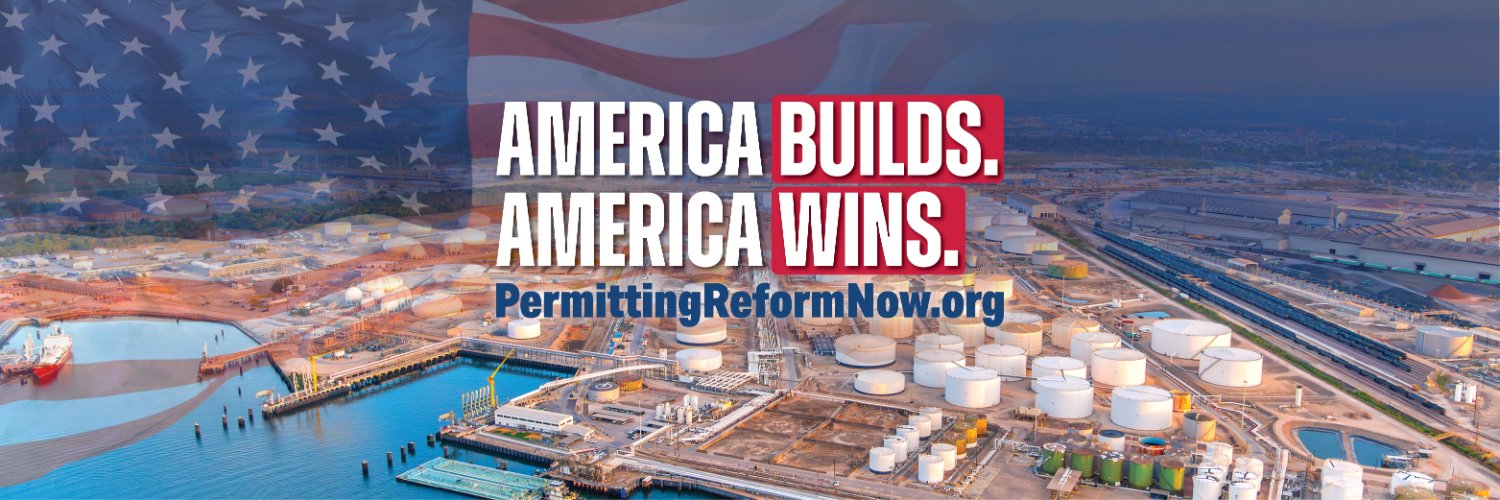
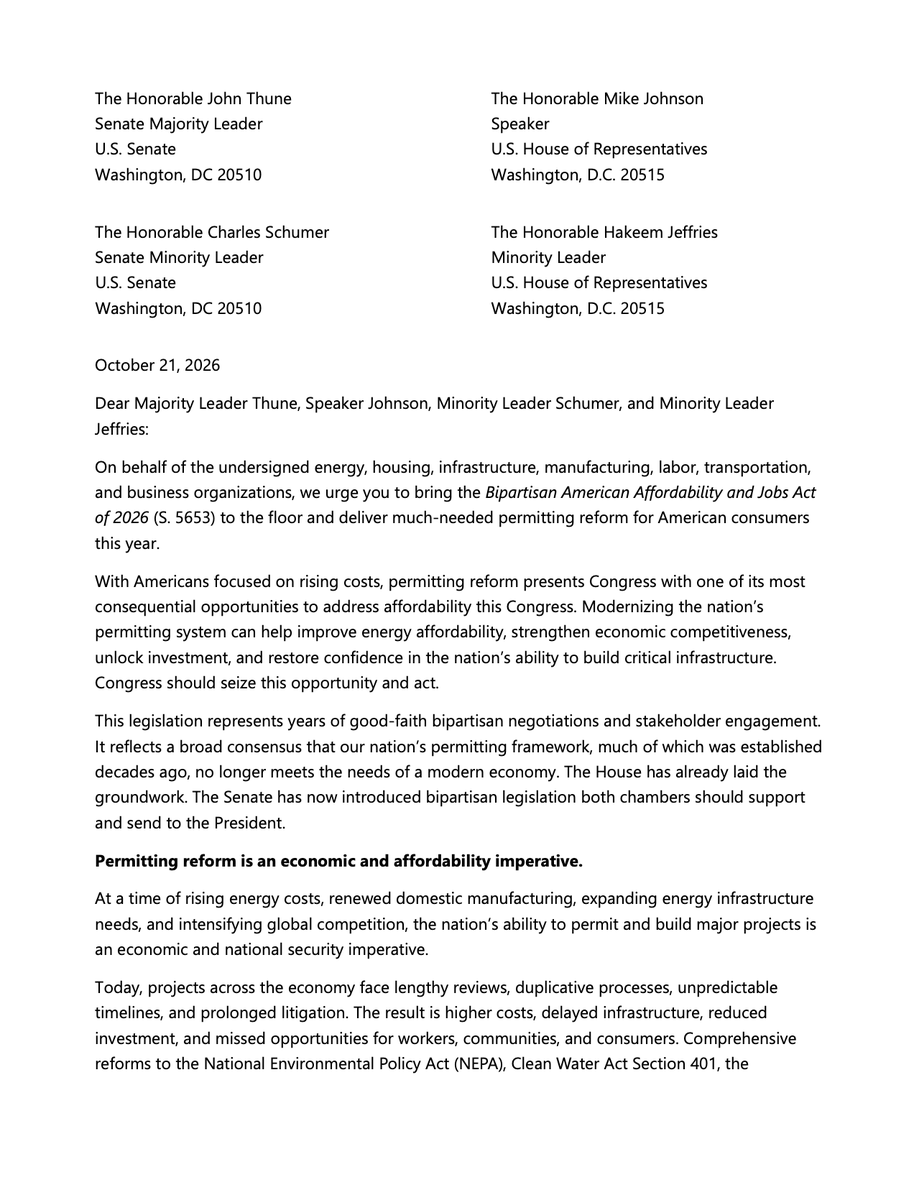
Enacting durable permitting reform is one of the most consequential steps Congress can take to make life more affordable.
Today, we joined a broad coalition of over 100 organizations urging Congress to pass the Bipartisan American Affordability and Jobs Act this year.
For more ⬇️ https://t.co/yz2uKtAE8g
In 1859, Edwin Drake drilled the first commercially viable oil well in America by adapting technology from salt drillers. His well launched the American oil and gas industry and a tradition of innovation that hasn’t stopped. Great to be back at the Drake Well this week!
A major coalition is lining up behind permitting reform. API joined 137 organizations in urging Congress to pass the Bipartisan American Affordability and Jobs Act this year. https://t.co/T43hRB2j8p
SIGNED: My bill, the License to Drill Act, has officially been signed into law by @POTUS.
For Utah and communities across the country, this legislation will reduce permitting delays, strengthen American energy production, help improve energy affordability, and support the U.S. in keeping up with growing energy demand.
The future of American energy independence is bright.
“There are a lot of negative implications for these laws, for not only businesses but for the citizens of Europe."
@USAmbEU discussed how burdensome EU regulations like CSDDD could undermine investment, weaken competitiveness and drive up energy costs in a conversation with @HudsonInstitute this morning
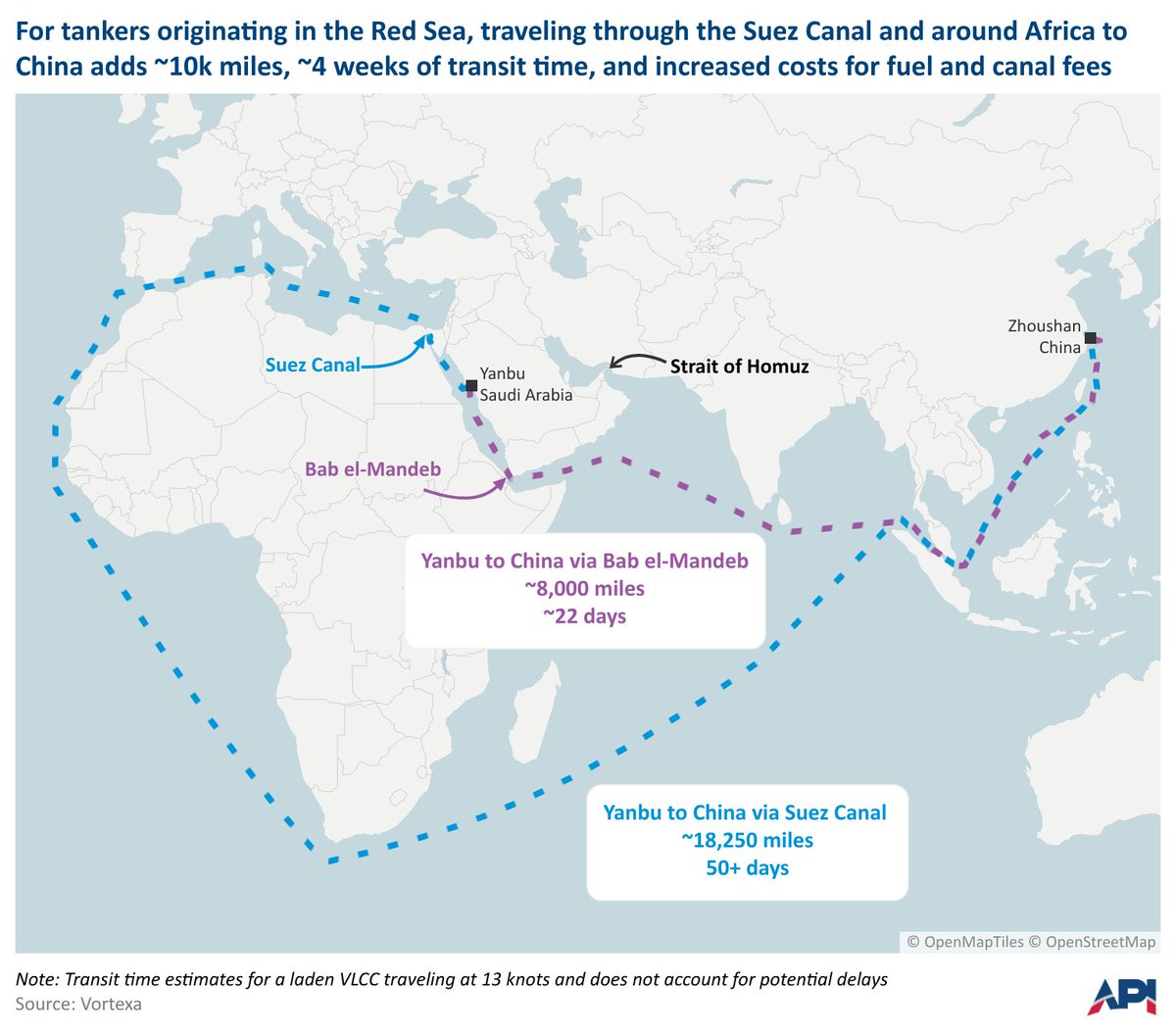
Fluctuations in Middle East oil flows are only part of the story behind elevated fuel prices.
Shipping routes are longer and more expensive, refining disruptions have reduced global supplies of diesel and other fuels, and U.S. refineries are already operating at exceptionally high rates.
Together, these pressures are keeping fuel markets tight and contributing to higher prices and refining margins.
Shipping Routes:
Some tankers bound for Asia are sailing all the way around Africa. Others take on crude offshore, from one tanker to another, rather than at a port terminal — a handoff that now takes close to 10 days, up from five to seven before the war.
API President & CEO @mj_sommers joined @EnergyUnderSec Kyle Haustveit at the birthplace of the modern oil industry today to discuss how permitting reform can help unleash the next generation of American energy leadership. @DrakeWellMuseum@ForumDrake
“The history of energy is a history of addition – more energy sources – not subtraction”
- Mike Sommers, President and CEO, American Petroleum Institute
#thedrakeforum#energy#energysecurity
American oil production is at record levels and growing 📈
@EIAgov reports production rose 2% in the first half of 2026 compared with a year earlier, averaging 13.7 million barrels per day. American energy is adding critical supply as global markets remain volatile.
In 1859, a single well changed the world. More than a century later, the spirit of innovation that began here continues to power American energy.
API is proud to support the preservation of Drake Well and the history that reminds us where we've been and inspires where we're headed. @ForumDrake
We welcome the @EU_Commission’s proposal to delay some of the EU Methane Regulation’s fast-approaching compliance deadlines by one year.
Given the implementation concerns raised by importers, Member States and exporters, the delay must be at least three years to allow for the development and scaling of workable compliance pathways that ensure the uninterrupted flow of LNG and crude oil to Europe.
We look forward to continuing to work with the European Commission and Member States to secure long-term certainty for industry.
American producers are delivering record energy ⚡
@EIAgov projects record U.S. oil production in 2026, driven by growth in the Permian Basin and new offshore projects in the Gulf. Continued investment helps strengthen U.S. energy security and meet demand at home and abroad.
Since its enactment, the U.S. Liquefied Natural Gas (LNG) industry has been clear and consistent in our advocacy for a EUMR that is workable for consumers and industry, while preserving its environmental goals.
Today, the European Commission made clear that the undefined importer requirements under the EUMR would create immense uncertainty for European member states and residents.
This delay is an important first step, but it is not nearly enough to bring the necessary clarity to the rules and regulations for LNG imports. CLNG urges the European Union to listen to member state concerns and enact a three-year postponement of the EUMR in order to get the implementing regulations right, which will bring certainty to the market and protect consumers and communities in the region.
See our statement here: https://t.co/QZA79mP21e