The Allah of the Quran is not the same as the God revealed in the Bible.
Allah: Focus is on performance and rituals. Yahweh: Focus is on the heart and Motives.
Allah says: Submit to me.
Yahweh says: Come to me.
Allah’s relationship with people is primarily that of Master and servant.
Yahweh’s relationship with believers is Father and child.
Allah’s emphasis is submission.
Yahweh’s emphasis is relationship.
Allah says: Earn reward through obedience.
Yahweh says: Receive salvation as a gift of grace. (Ephesians 2:8-9)
Allah’s followers hope they have done enough.
Yahweh’s followers trust in what Christ has already done.
Allah gives a law to follow.
Yahweh writes His law on the hearts of His people. (Jeremiah 31:33)
Allah offers guidance.
Yahweh offers Himself.
Allah says that no one can bear another person’s burden.
Yahweh took our burden upon Himself through Christ. (Isaiah 53:5-6)
Allah send message through angel.
Yahweh became the message, revealing Himself in Jesus.
Allah asks, “Will you submit?”
Yahweh asks, “Will you trust Me?”
Allah remains distant from humanity.
Yahweh entered human history and dwelt among us in Christ. (John 1:14)
Allah forgives whom he wills.
Yahweh provides a sacrifice so that justice and mercy meet at the cross.
Allah requires prayer toward a specific direction.
Yahweh says: “God is Spirit, and those who worship Him must worship in spirit and truth.” (John 4:24)
Allah teaches that forgiveness is connected to God’s mercy and a person’s deeds.
Yahweh says: “Without the shedding of blood there is no forgiveness of sins,” and He provided that sacrifice through Christ. (Hebrews 9:22)
Allah created humans and jinn for Hell.
Yahweh says that Hell was originally prepared for the devil and his angels. (Matthew 25:41)
Allah loves those who obey him.
Yahweh demonstrated His love for sinners: “While we were still sinners, Christ died for us.” (Romans 5:8)
Allah calls people servants.
Yahweh calls believers His children. (1 John 3:1)
Allah offers guidance through a prophet.
Yahweh entered human history Himself in Jesus Christ to seek and save the lost. (Luke 19:10)
Allah’s message centers on submission.
Yahweh’s message centers on reconciliation and relationship.
Allah says, “Do enough and hope for mercy.”
Yahweh says, “It is finished.” (John 19:30)
Allah asks man to work toward acceptance.
Yahweh accepts us through faith and then transforms us from within. (Ephesians 2:8-9)
That is why Christians believe the God revealed in Jesus Christ is fundamentally different from the Allah described in the Quran.
If Allah is actually the same God progressively revealed in the Bible, then I have a few questions.
Did He forget His own timeline?
By the time we reached the 7th century, according to the New Testament, humanity was already in the era of grace. Jesus taught forgiveness, loving your enemies, praying for those who persecute you, and turning the other cheek. The apostles were beaten, imprisoned, and killed, yet they never raised armies to spread the faith.
So if this is the same God, why does the message suddenly seem to go in reverse?
It’s almost like watching a teacher spend years teaching addition, then multiplication, then calculus, only to return centuries later and say, “Actually, let’s go back to counting with our fingers or stones.”
Jesus arrived without a sword and told Peter to put his sword away. His followers suffered persecution and martyrdom without fighting back. But in the 7th century, Muhammad engaged in battles and political expansion.
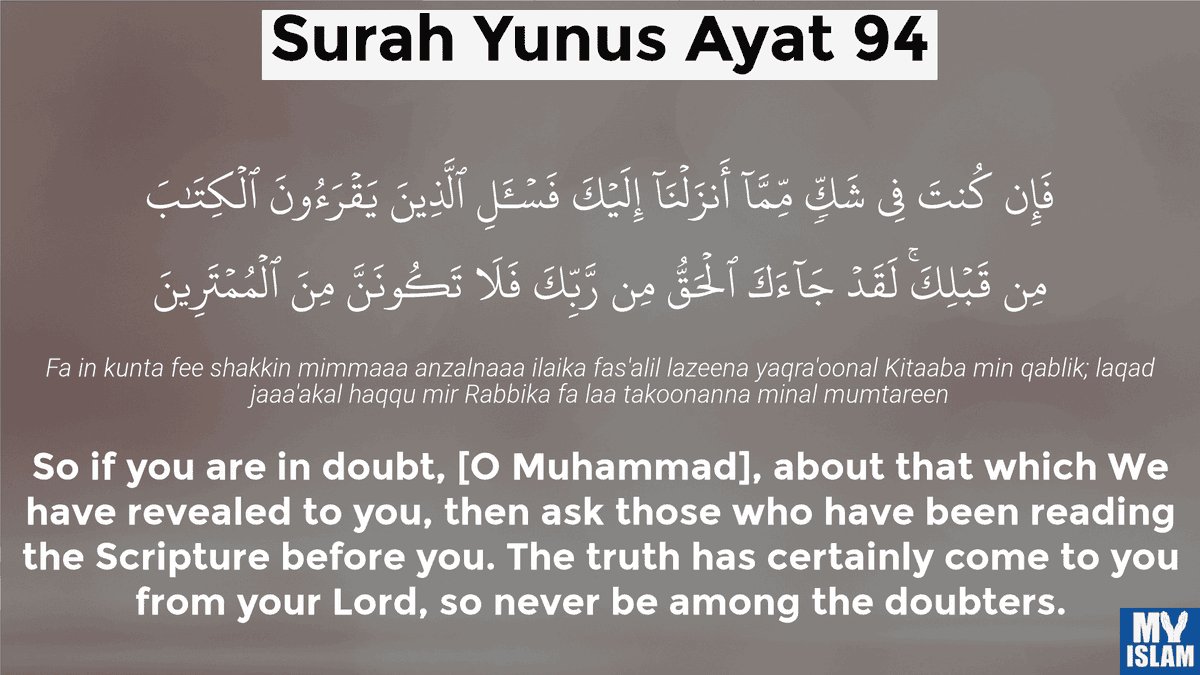
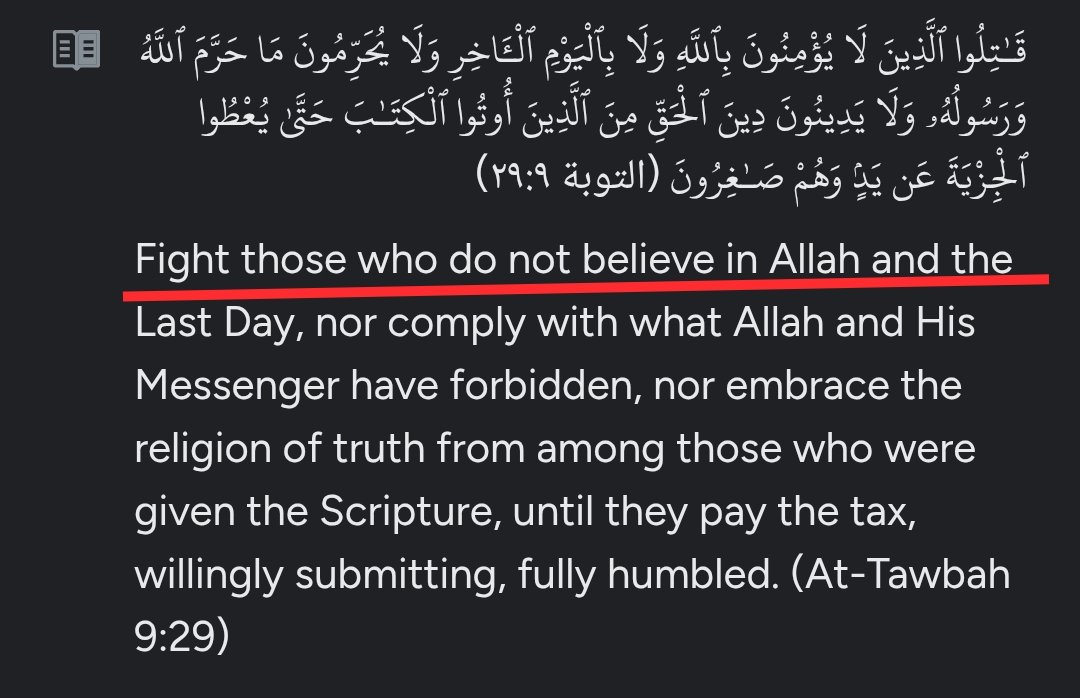
Allah drops commands: “Fight those who fight you!” Instead of love your enemies.
So what happened?
Did God suddenly forget that He had already revealed a covenant centered on grace, forgiveness, and reconciliation?
Or could it be that the God revealed in the Bible and the Allah presented in Islam are not the same being after all?
God’s revelation moves forward, from law to grace, from judgment to mercy, from “love your neighbor” to “love your enemy.”
The question is: why would the same God reverse that progression six centuries later?
@Rexleonum_NWA Same girl who said...
"Allah is not Omnipotent"
"Allah is mutable"
"Allah is limited/spatial"
"Allah Temporal" (exist within time)
Man described a human