That’s a sad way to look at morality. Are you seriously arguing that nothing is objectively right or wrong? By that logic, taking care of orphaned children could be considered morally wrong simply because someone subjectively believes it is.
The fact that people disagree about morality doesn’t prove that objective morality doesn’t exist. People can disagree about what is true without truth itself becoming subjective.
You’re confusing people’s moral judgments with whether there is an objective moral standard by which those judgments can be evaluated. If morality is entirely subjective, on what objective basis can you say that cruelty is wrong or compassion is good? Simply pointing out that laws and cultural values change doesn’t answer that question.
If morality is not objective, then you need to explain what ultimately makes something actually wrong, rather than merely something you or society disapprove of. If moral rules are ultimately determined by human preferences, social consensus, or cultural norms, then those standards can change when the consensus changes.
And that creates an uncomfortable consequence: if a society unanimously decided that something you consider absolutely disgusting was morally acceptable, what objective standard would you appeal to to say that society was actually wrong?
You can say, “I personally find it horrific,” but that's a statement about your preference. You can't automatically turn your preference into an objective moral fact without providing some objective grounding for it.
That's the real question: Are some things objectively wrong even if every human being approves of them? If so, what makes them objectively wrong?
This is the flaw of those who reject objective morality.
There are no errors in God’s Word. There can absolutely be errors in translations, transcription, and human interpretation, but those are not the same thing as errors in Scripture itself.
The fact that someone believes the Bible contains mistakes does not establish that it does. If you’re going to make that claim, identify the specific passage, explain the alleged contradiction or error, and provide the evidence supporting your conclusion.
Simply pointing to something you don’t understand, a difficult passage, or a disagreement between translations does not automatically establish an error in the original text.
So let’s be specific: What exactly is the alleged mistake, and how have you established that it’s actually an error rather than a translation issue, a misunderstanding of the context, or a difference in interpretation?
You’re confusing people’s understanding of morality with the actual nature of morality itself. The fact that different cultures hold different moral beliefs does not prove that morality is subjective. It proves that people disagree about moral questions. Disagreement does not establish that there is no objective truth.
People have disagreed about scientific facts throughout history, but their disagreements did not make reality subjective. So why assume that moral disagreements prove morality itself is subjective?
Likewise, the fact that moral beliefs change over time does not establish that morality itself changes. Human beings can change their understanding of what is right and wrong without the underlying moral standard changing. A society can once consider something acceptable and later recognize that it was wrong all along.
From a Christian perspective, God is the grounding of objective morality. Humanity’s failure to recognize God’s moral law does not mean that the law does not exist, just as someone’s ignorance of a truth does not make that truth cease to be true.
So let me ask you a direct question: If an entire society unanimously agreed that torturing innocent children for entertainment was morally acceptable, would that make it objectively right?
If your answer is no, then you are acknowledging that what a society believes and what is actually morally right are not necessarily the same thing. And that is precisely the distinction you keep overlooking.
Now explain what makes something objectively wrong if morality is entirely subjective. Saying that cultures disagree or that moral beliefs evolve describes what people believe. It does not establish what ultimately makes an action right or wrong.
Atheists are an interesting group because so much of their criticism seems disproportionately focused on Christianity. You don’t see nearly the same level of public criticism directed at Islam, Buddhism, Hinduism, and other religions in many of these discussions. Why is that?
Could it be because Christianity has historically held significant cultural and political influence in Western societies, making it a more convenient target? Or is there a double standard when it comes to criticizing religious beliefs?
If the goal is genuinely to challenge religion through reason and skepticism, then that scrutiny should apply consistently across the board, not just to the religion that is most familiar, influential, or socially acceptable to criticize.
Personally, I believe there is another factor at play. Christianity doesn’t merely make claims about the existence of God. It establishes a moral framework that holds human beings accountable for their actions, regardless of whether they agree with that standard. If Christianity is true, then morality is not simply a matter of personal preference, and none of us gets to make ourselves the ultimate authority over right and wrong.
I believe some people find that prospect uncomfortable because it challenges the idea that they can determine morality entirely on their own terms without answering to a higher authority. They may reject Christianity because they don’t want its moral claims to apply to their lives.
And here’s the question worth asking: Are you rejecting Christianity because you’ve demonstrated that its central claims are false, or because you disagree with what it would require of you if it were true?
Those are two very different positions, and intellectual honesty requires us to distinguish between them.
@johnnymac2220 I believe your reading comprehension skills are not good enough to continue this conversation lol. However, I pray you have a great weekend and that you do more research on the topic. God bless you. 🤗🙏
Because the New Covenant was part of God’s plan from the beginning, not a last-minute rewrite. 😂 Jeremiah 31:31 explicitly prophesied that God would establish a New Covenant long before Jesus came. Jesus established it through His blood (Luke 22:20), and Hebrews 8:13 explains the transition from the old covenant to the new.
You’re confusing a change in covenant with a change in God’s character. God can establish a new covenant without changing who He is or contradicting His own nature. A fulfilled promise isn’t a failed plan.
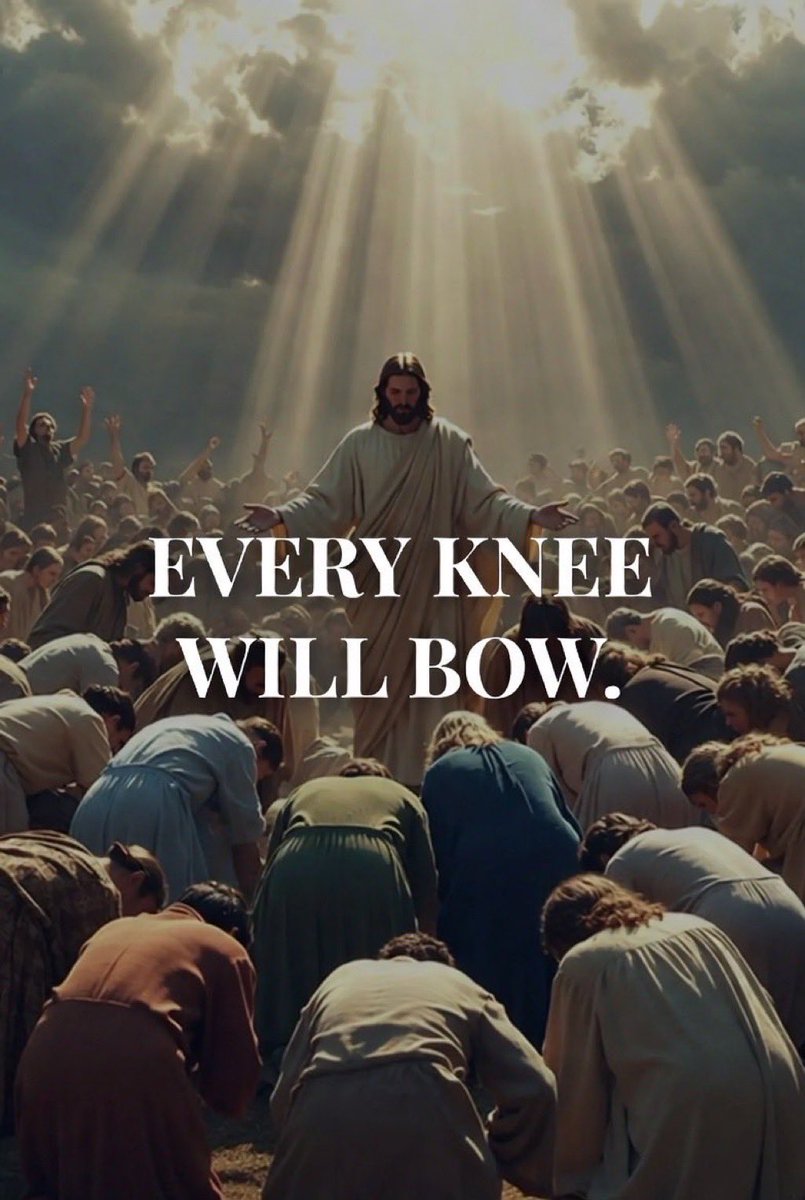
Philippians 2:10-11 (ESV):
so that at the name of Jesus every knee should bow, in heaven and on earth and under the earth, and every tongue confess that Jesus Christ is Lord, to the glory of God the Father.
Divides people? Sure, Christianity distinguishes between believers and nonbelievers. Controls people? Sure, it calls people to restrain their sinful desires, reject evil, and live righteously. But where exactly does Christianity delude people? 😂
Calling people to repent of sin, love their neighbors, forgive their enemies, and pursue righteousness is not inherently delusion. Disagreeing with a religion does not prove its claims are false. If you believe Christianity deludes people, then demonstrate which specific biblical teaching is false and provide an argument for why it’s false. A vague meme is not an argument.
I literally just explained that Christians have misused Scripture to defend slavery, while distinguishing their actions from what Scripture teaches. Did you even read my response? 😂 You’re bringing up a separate historical issue instead of addressing the argument in front of you.
As for Galileo, the Catholic Church’s treatment of him was wrong, and I’m not going to defend it. But historical wrongdoing by church authorities doesn’t automatically disprove Christianity.
And if you want to play the game of listing atrocities committed by fallible human beings throughout history and blaming every one of them on their entire ideology, you’re not going to like where that leads. We can examine the historical crimes committed by people acting in the name of Christianity, atheism, Islam, communism, and countless other belief systems. But listing atrocities isn’t a substitute for examining whether the underlying beliefs are true. Judge the arguments on their merits, not merely by the worst actions of people associated with them.
Nowhere in Scripture are Christians commanded to venerate Mary or pray to her. Mary was blessed among women because God chose her to bear Jesus, but being blessed does not make her an object of religious veneration. Jesus directs us to pray to the Father (Matthew 6:9), and 1 Timothy 2:5 identifies Jesus Christ as the one mediator between God and man. Unless you can show me where the Bible commands Christians to venerate Mary, my answer is no.
Ask the enemies of Jews and Christians throughout history what happened when they tried to eradicate them. Empires rise and fall, regimes collapse, and generations pass, yet Christianity and Judaism endure. You can challenge their beliefs, but you cannot erase their historical impact simply by declaring war against them.
Historical examples:
Roman Emperor Nero: Failed
Roman Emperor Decius: Failed
Roman Emperor Diocletian: Failed
Sasanian Persian Empire under Shapur II: Failed
Japanese Tokugawa shogunate: Failed
The Soviet Union: Failed
Nazi Germany: Failed
Early Arab-Muslim conquests: Failed to eliminate Christianity
Antiochus IV Epiphanes: Failed to eliminate Jewish religious identity
The Roman Empire’s destruction of the Second Temple in 70 AD: Failed to eliminate Judaism
The Spanish Crown’s expulsion of Jews in 1492: Failed to eliminate Judaism
The Almohad Caliphate’s religious persecutions and forced conversions: Failed to eliminate Judaism and Christianity
Ottoman campaigns against Christian powers in Europe: Failed to eliminate Christianity
Barbary corsairs’ raids and enslavement of Christian captives: Failed to eliminate Christianity
ISIS’s persecution and attempted destruction of Christian communities in Iraq and Syria: Failed to eliminate Christianity
The lesson of history: Governments can persecute believers, destroy sacred sites, force conversions, and attempt to suppress religious communities. Yet neither Judaism nor Christianity has been erased. Their survival across centuries is a matter of historical record.
Christ Is King and will never be silenced.
Listing alternative moral frameworks isn’t an argument against my position. 😂 I never claimed people need God to recognize moral behavior. The question is what ultimately grounds objective moral truths, not how many ethical systems humans have developed. You listed frameworks, but you haven’t demonstrated that any of them can establish objective moral obligations rather than presuppose them. Describing how people make moral judgments isn’t the same as explaining what makes those judgments objectively true.
Christianity does not teach that enslaving people through kidnapping, human trafficking, and racial exploitation is morally acceptable. Exodus 21:16 condemns kidnapping and selling people, and 1 Timothy 1:10 condemns enslavers. Yes, some Christians historically defended slavery, but the actions of people claiming to follow Christ do not automatically represent His teachings. You need to distinguish what Scripture teaches from how people have misused it to justify their own interests.
That’s precisely the distinction I’m making. My argument isn’t that something becomes morally wrong because I personally disapprove of it. I’m asking what makes an action objectively right or wrong regardless of anyone’s personal opinion or society’s approval.
If society approves of something objectively immoral, societal approval doesn’t magically make it moral. From the Christian worldview, morality is grounded in God’s unchanging nature, not in the shifting opinions of human beings.
The question isn’t whether I would disagree with society. The question is what objective standard makes society wrong when its moral judgments are mistaken.