APPLICATE is a Horizon2020 project developing enhanced predictive capacity for weather and climate in the Arctic and Northern Hemisphere mid-latitudes.
How can we optimize #SeaIce Observations in the #Arctic?🛰️From a study by @UCLouvain_be within #APPLICATE, our #UserEngagement team has developed the 1st APPLICATE #Policy Brief, to link key research themes w/ #society, policy & needs for future action 📰 https://t.co/mm2llTkPx2
From deadly floods in 🇧🇪 & 🇩🇪, to devastating fires in 🇬🇷, extreme weather events made the headlines throughout last summer.
How can we improve our ability to forecast and prepare for such phenomena?
🔎 By looking at the #Arctic, says @applicate_eu:
➡️ https://t.co/YQdGvkp8yS
How can we improve our ability to forecast and prepare for extreme weather events? By turning our attention to the #Arctic.
Read @CORDIS_EU article on APPLICATE work to shed light on the link between Arctic and midlatitude weather and #climate: https://t.co/T3l0XxaIIw
Response of Northern Hemisphere Weather and Climate to Arctic Sea Ice Decline: Resolution Independence in Polar Amplification Model Intercomparison Project (PAMIP) Simulations. @applicate_eu @polarprediction https://t.co/e5dL5SnVk6
New publication from Morten, Rafael and Andrew supported by #alertnessarctic@applicate_eu on advancing Arctic weather prediction: "The largest impact was found by applying EPS". @Meteorologisk
📢Wondering what "being trapped into the Arctic ice onboard a Russian ship" could look like?
Thea Schneider photographed her experience as a scientist during @MOSAiCArctic & combined her beautiful work into a book: #experiencethequiet 📸
Support/orders:
https://t.co/5Eq5xREPRS
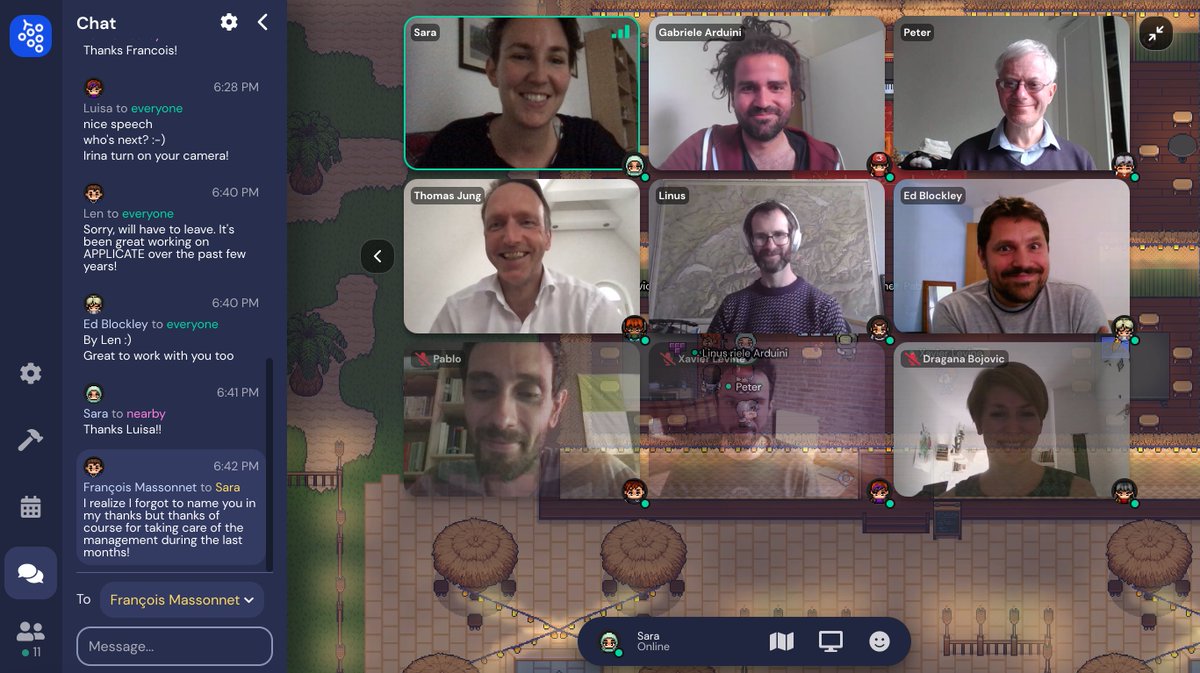
One last cheers to our amazing #APPLICATE people! This officially concludes our journey, it's been a fun four years, full of successes and great advancements for #Arctic science! Stay tuned for future updates on publications and follow ups ❄️
Proud to have contributed to the @EO_OPEN_SCIENCE#EO4POLAR event & report with @FMassonnet. Read our summary & recomendations on how to enhance the uptake of satellite observations at high-latitudes (Sect 3.14), drawing on lessons learned from @applicate_eu & @polarprediction
Here is an update on our use of super site data to understand forecast errors @ECMWF. Such data are helping us improve forecasts in polar regions and beyond @INTERACT66@polarprediction@applicate_eu
Last January, @MarylouAthanase et al. disentangled changes in Atlantic Water pathways north of Svalbard.
As a symptom of the ongoing #Atlantification of the Eurasian Arctic,
they find:
⏩ an intensification of the flow
🔀 the development of new pathways
https://t.co/Ce5zIDnCKA
Proud of this study in which we assessed the impact of #Arctic observations on regional forecasts, through their assimilation in both the regional #NWP system #AromeArctic & in the global @ECMWF system used for later boundary conditions
@applicate_eu#Alertness@Meteorologisk
A great example of how numerical prediction systems and their output can be used to inform observation system design & one of the key results of @applicate_eu work package on Arctic Observing System Design
@FlorenceRabier will also showcase some of the advances we made in understanding & advancing predictions & climate reanalyses in #Arctic regions @ECMWF by working in close colaboration with colleagues in our Member States in @applicate_eu & @WMO@polarprediction project!
To coproduce or HOW to coproduce climate knowledge and services. See the three realms that @BSC_CNS KTT and colleagues suggest drawing on our experience from @PRIMAVERA_H2020@applicate_eu@EUCP_H2020 and many other initiatives https://t.co/XGgXaRYJMy