Storey County’s taxable retail sales tell a clear economic development story.
The first major inflection point came with the Tahoe Reno Industrial Center, followed by major investments from Tesla, Switch and Google. By 2024 through 2026, taxable retail sales accelerated sharply, rising well above the county’s historical baseline.
The annual view reinforces that momentum. 2024 was already a record-setting year, 2025 moved even higher and 2026 is starting from an elevated position based on the first few months of activity.
Follow along for more insights.
Being hated by one fanbase is one thing. Being hated by 11 states? That’s brand recognition.
The Vegas Golden Knights top RotoWire’s list of the NHL’s most-hated teams by state, proving once again that in sports, relevance and rivalry tend to go hand in hand.
Today is Election Day in Nevada.
Primary elections may not get the same attention as November, but they help decide who makes it to the general election ballot. In Nevada, major party primaries are closed, which means only registered Democrats and Republicans can vote in their party’s contests. Nonpartisan voters can still weigh in on many local and judicial races.
When only a fraction of eligible voters participate, the stakes are high: fewer voters are making big decisions.
AI-driven data center construction spending has now surpassed traditional office space. What it means for Nevada and beyond in the latest Economic Briefing from @AppliedAnalysis: https://t.co/djGd2HsDkC
#nsbank#EconomicBriefing#AI
More than $30 billion in Southern Nevada development projects – now in one searchable platform.
The upgraded Vegas Development Map gives you live pipeline data across the region, including non-tourism, tourism and transportation projects. Search by sector. Filter by location. Explore opportunities across Henderson, the City of Las Vegas, North Las Vegas, unincorporated Clark County, Boulder City, Mesquite and Laughlin.
No digging through reports. No chasing down leads. No cold calls just to understand what’s happening where. Just clear, categorized development intelligence built for investors, site selectors, brokers, developers and business decision-makers.
Find where your next opportunity fits. Start searching the Southern Nevada development pipeline today at https://t.co/w1wnmBcPCu.
🔊 Sound on for full story: Nevada is showing up in a big way.
Applied Analysis reviewed employment trends across 387 metropolitan areas nationwide. While many major markets are still losing jobs year over year, Nevada’s two largest metros are moving in the opposite direction.
Reno added 6,500 jobs year over year, ranking No. 14 among U.S. metros analyzed.
Las Vegas added 22,400 jobs, ranking No. 2 in the nation for year-over-year employment growth.
Together, Reno and Las Vegas are helping put Nevada near the front of the national job-growth story.
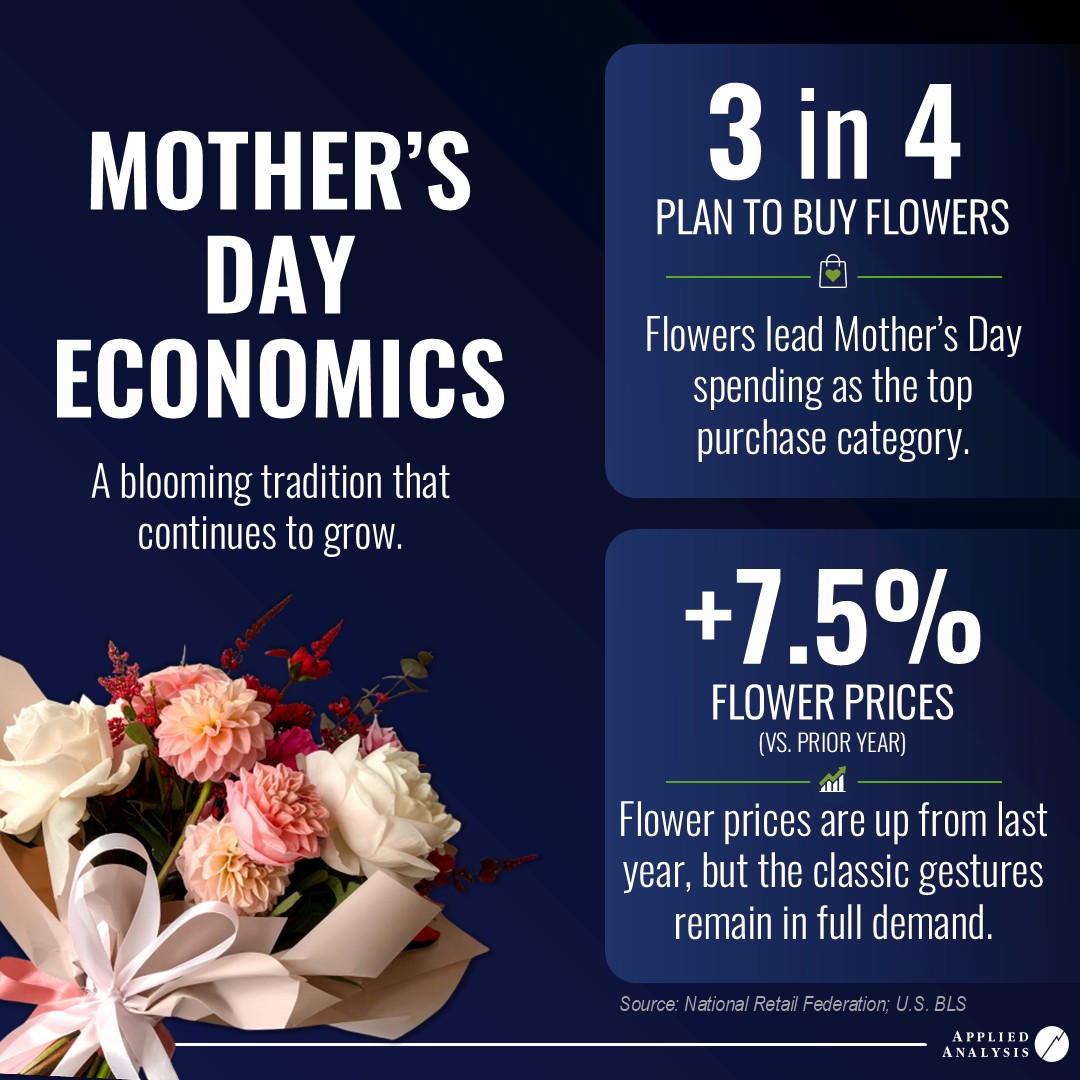
Mother’s Day spending is expected to reach a record $38 billion in 2026, surpassing both last year’s total and the previous high set in 2023. Flowers continue to stand out as the holiday���s most popular gift category, with 75% of shoppers planning to purchase them for a loved one.
Even with flower prices up 7.5% from last year, the classic Mother’s Day gestures remain in full bloom.
Global energy disruptions are being felt close to home. From higher fuel costs to inflation and tourism pressures, the impacts are rippling across Nevada’s economy. Read the latest Economic Briefing from @AppliedAnalysis: https://t.co/djGd2HsDkC
#nsbank#EconomicBriefing
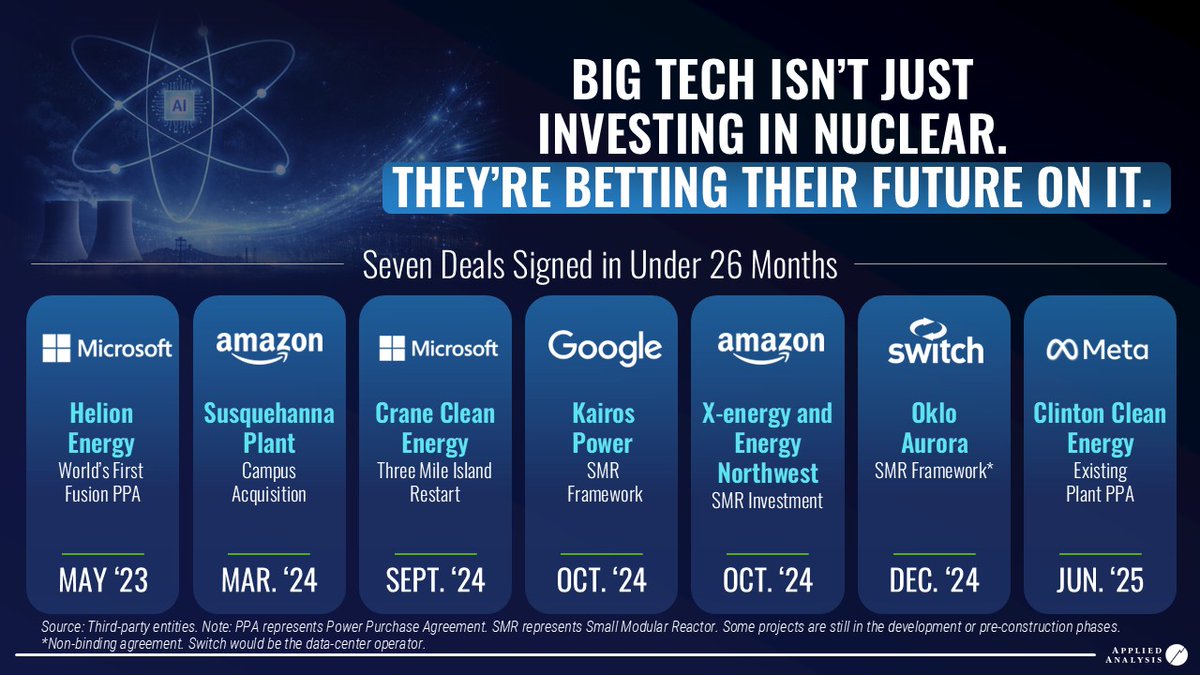
Seven deals in just over two years signals more than momentum, it signals constraint.
Across these transactions:
• Existing nuclear assets are being revalued and extended
• Capital is shifting from procurement to direct investment
• Emerging technologies (SMRs, fusion) are moving into commercialization pathways
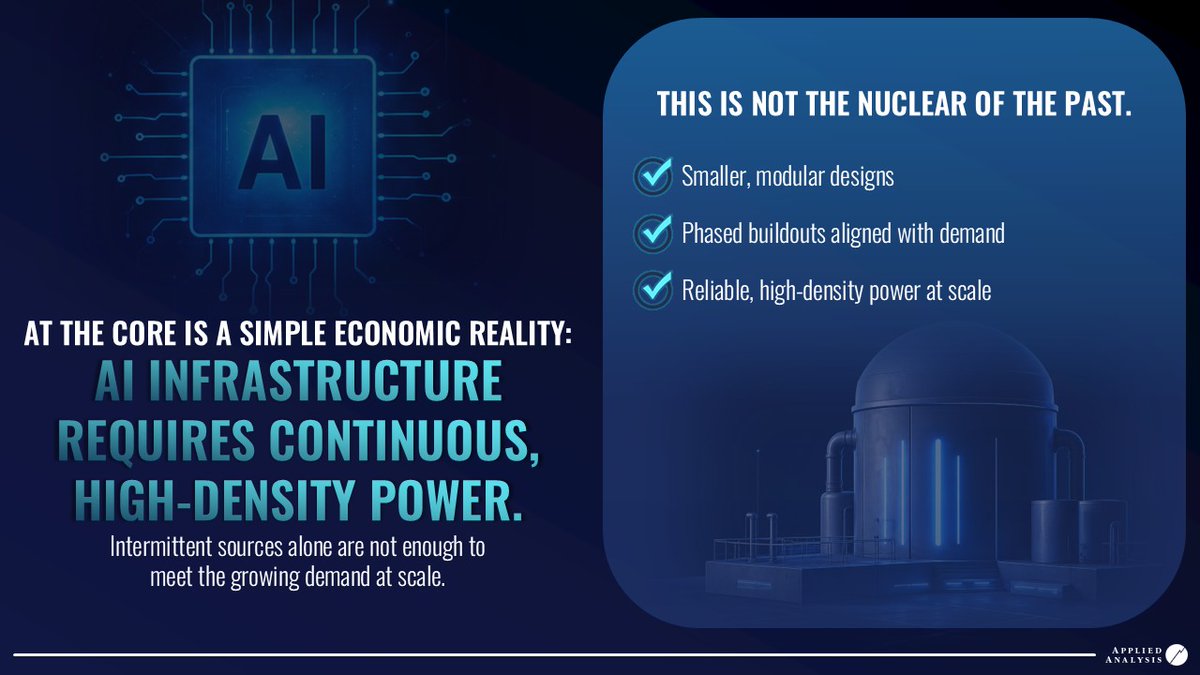
This is not the energy system of the past. It is becoming more modular, more direct and more closely aligned with how demand is actually growing.
At the core is a simple economic reality: AI infrastructure requires continuous, high-density power. Intermittent sources alone are not enough to meet that demand at scale.
Energy is no longer a background input. It is becoming a primary limiter of growth.
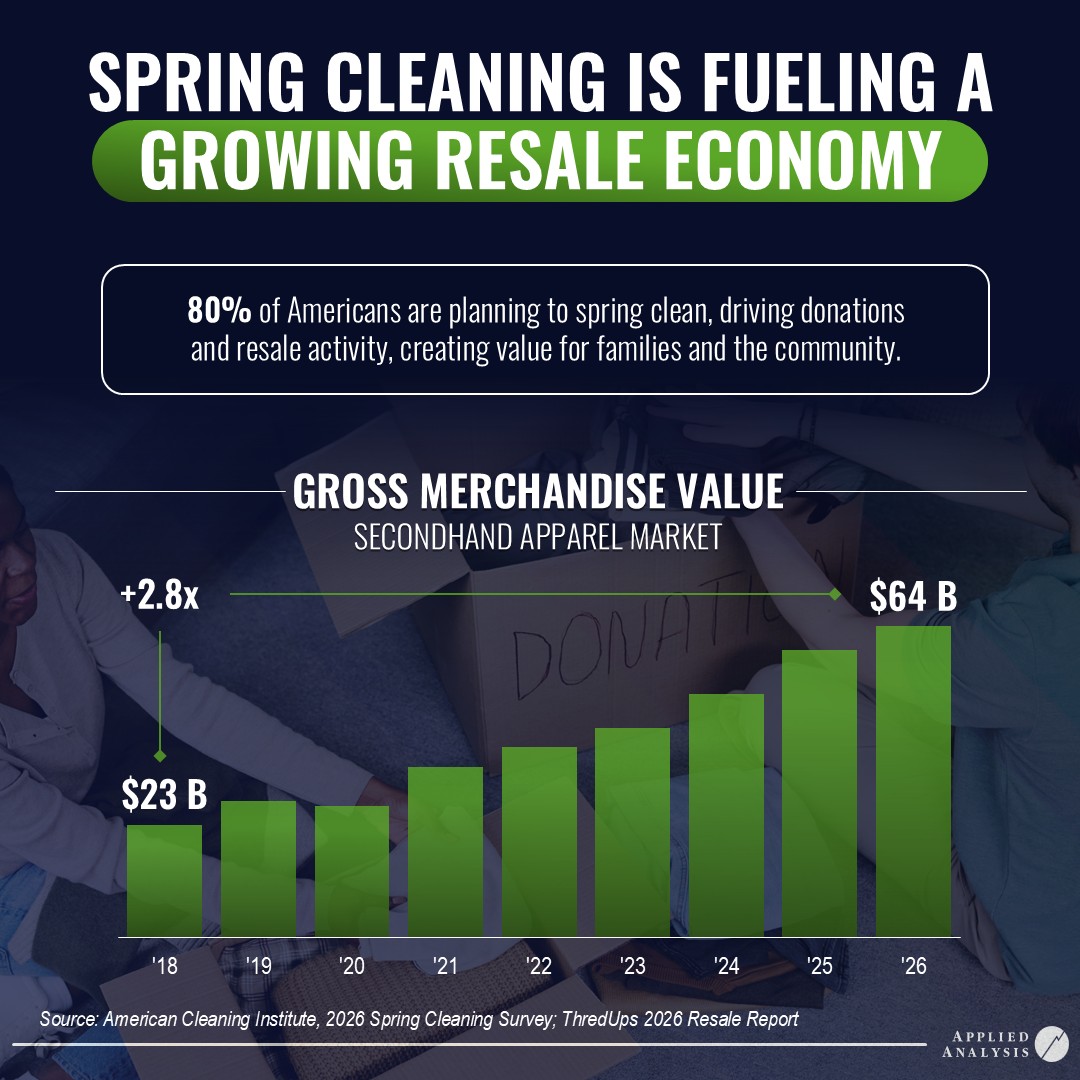
That box of clothes by your door? It's worth more than you think.
This spring, 8 out of 10 Americans are cleaning house, and the ripple effects are real. Donations become affordable outfits for families stretching every dollar. Resale shops become small businesses. The secondhand market has grown to $64 billion, but the value at the neighborhood level is even bigger.
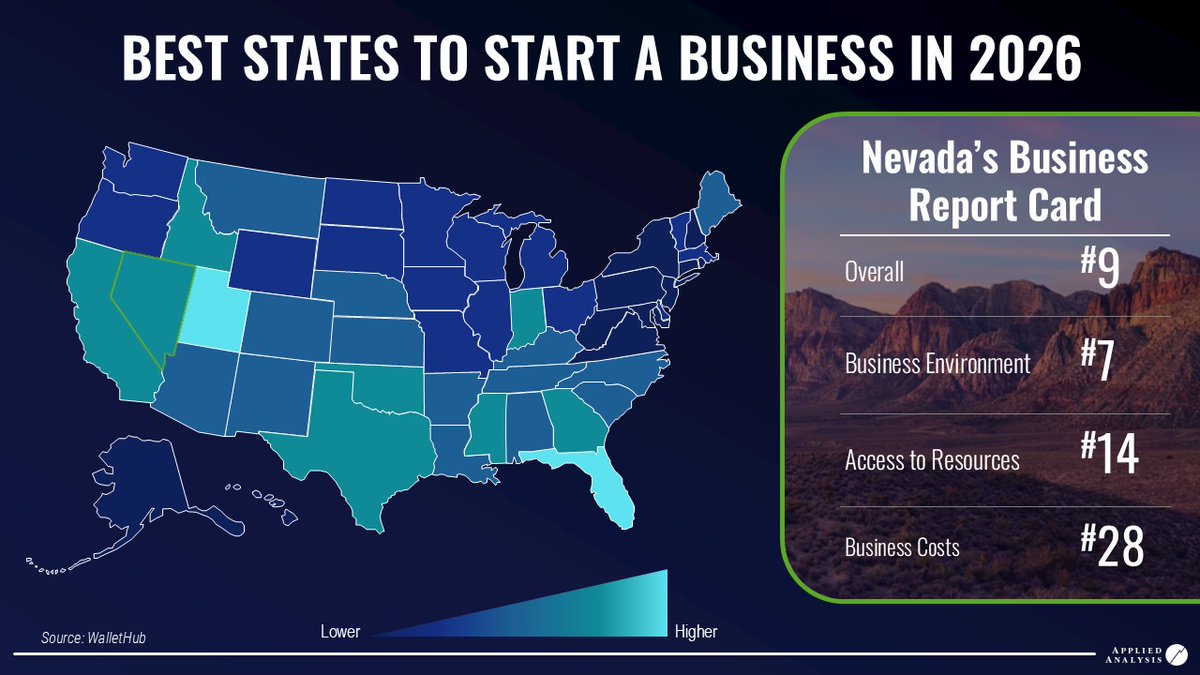
Nevada continues to stand out as a Top 10 state to start a business in 2026, supported by a strong business environment and competitive position nationally.
At the same time, access to resources and business costs remain key factors shaping the broader landscape.
The opportunity is clear. The next step is building on that momentum.
Growth is slowing nationally, but Clark County’s story is different.
Across large U.S. counties, domestic migration has turned negative (-6.3 per 1,000 residents), and international migration has declined sharply (13.4 in 2024 to 6.3 per 1,000 in 2025). Many major metros are now relying on international inflows to offset domestic losses.
Clark County, Nevada is not.
The region continues to see positive domestic migration (+3.5 per 1,000 in 2025), alongside international migration of +3.7 per 1,000 for the latest year.
That distinction matters. It signals that Southern Nevada is still attracting residents from across the U.S., supporting workforce growth, housing demand and long-term economic momentum, even in a slower growth cycle.
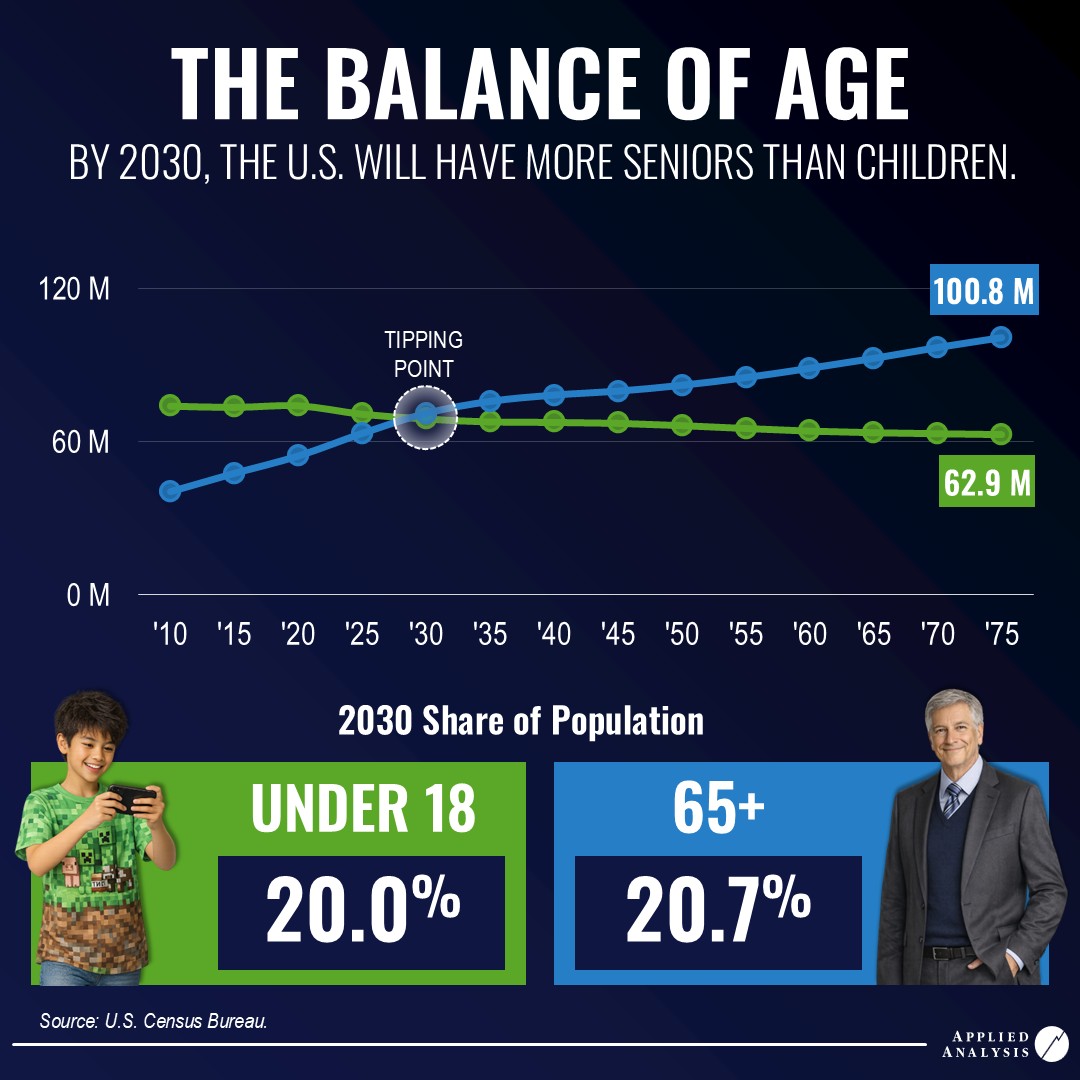
For the first time in U.S. history, seniors are on track to outnumber children.
By 2030, those 65 and older will account for 20.7% of the population, compared to 20.0% under age 18. What looks like a subtle shift in share reflects a much larger structural change underway.
This isn’t just a demographic milestone. It has real implications for workforce availability, healthcare demand, housing and how communities plan for the future.
Nevada Is Already “2060 America”
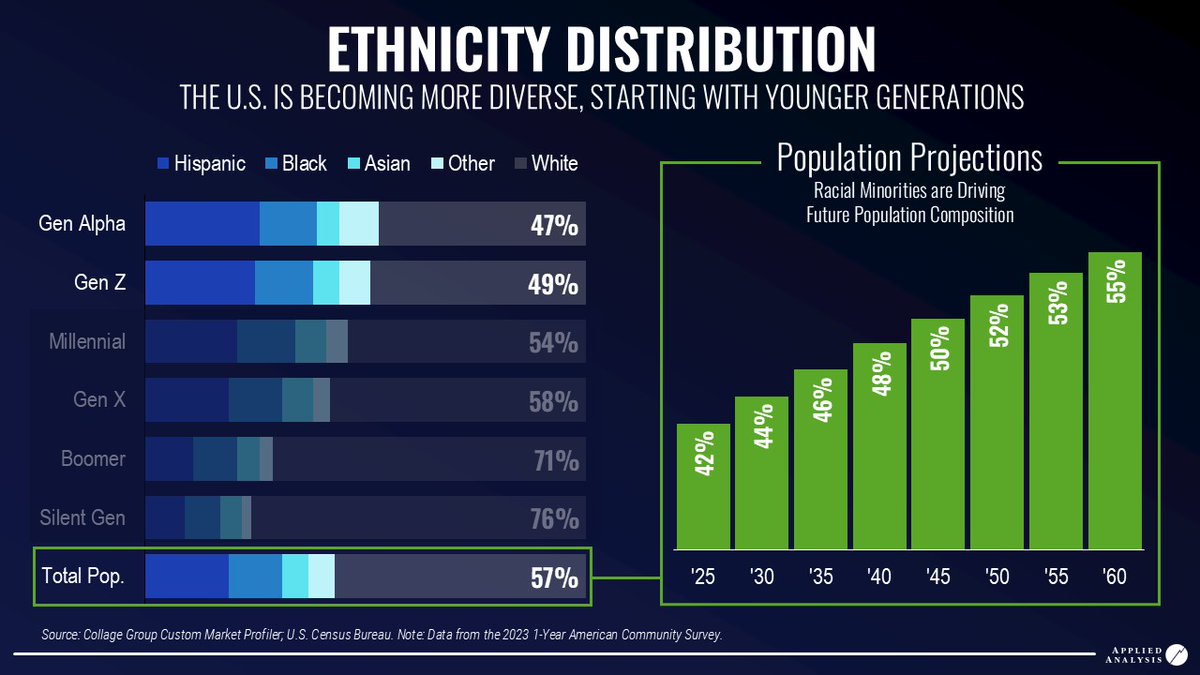
The U.S. often frames “majority-minority” as a future issue. But by cohort, it’s already here… Gen Z is 51 percent multicultural (non-White), and Gen Alpha is just 47 percent White. Nationally, Census projections show the non-Hispanic White population at 44.9 percent by 2060 (i.e., 55.1 percent combined racial and ethnic minorities). Nevada is already operating on that timeline… non-Hispanic White alone account for 44.2 percent of the population.
The policy takeaway isn’t symbolism, it’s capacity. Systems across education, workforce pipelines, and small-business support should assume a multicultural “mainstream” and measure results accordingly (e.g., English proficiency, credentials, and upward mobility).
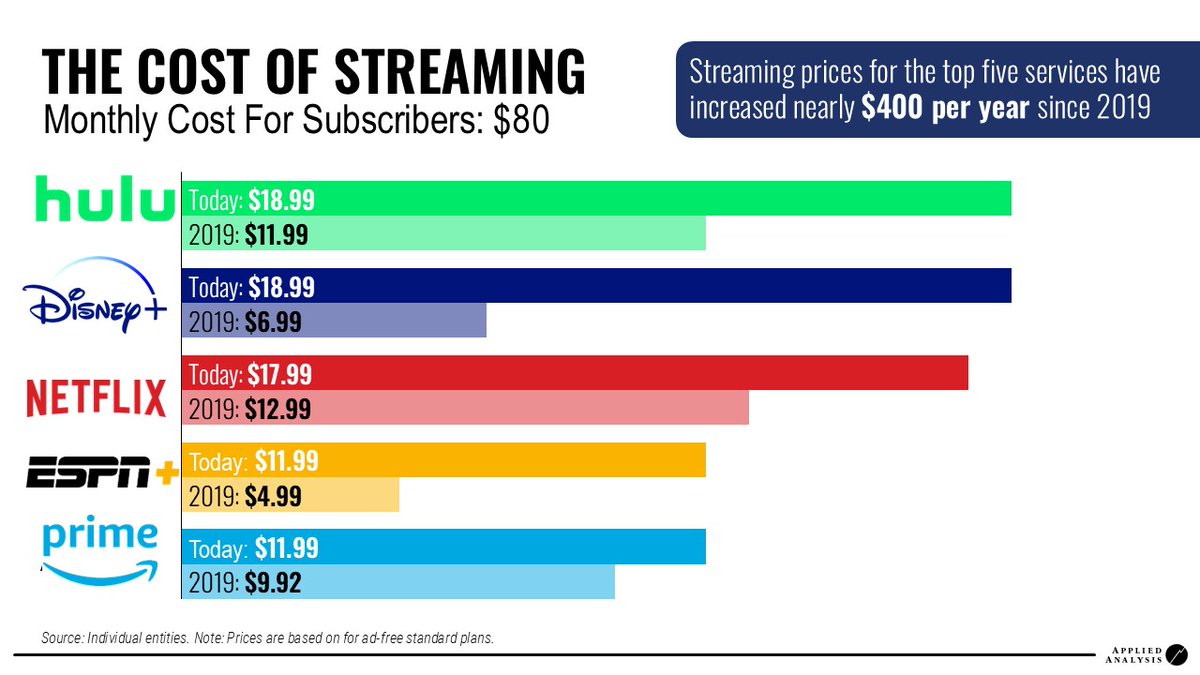
As households navigate higher living costs, even small recurring subscriptions can influence monthly budgets.
The combined cost of five major streaming services now totals about $80 per month, nearly $400 more per year than in 2019.
While each service may appear inexpensive on its own, the cumulative effect of multiple subscription services can meaningfully add to monthly household expenses, particularly as many consumers increasingly rely on credit to manage day-to-day spending.
Nevada’s “American Dream” Fault Line
Nevada’s political chatter often assumes immigrant communities want more stability. The data point says, not so fast. In the MCAAD-Gallup American Dream Study, foreign-born households, even those under $50,000, define the American Dream as opportunity (66 percent) far more than stability (34 percent).
U.S.-born households under $50,000 flip it… stability (60 percent) beats opportunity (40 percent). Layer on today’s darker national mood (only 59 percent rate their five-year future “high,” and 48 percent are “thriving”), and Nevada’s challenge is obvious… keep the ladder visible for newcomers while making affordability less punishing for people who just want the floor to stop moving.
Oil production is more concentrated than many realize.
The United States alone produces about 22% of the world’s oil, making it the largest producer globally. This is roughly double the production share of Saudi Arabia or Russia, which each account for about 11%. In fact, the top ten producing countries supply nearly three-fourths of global oil.
In such a concentrated market, even small shifts in production, supply routes or geopolitical events can ripple quickly through energy markets and oil prices worldwide.