Looking for the right home for your research?
Arctic Science publishes high-quality work in natural and applied sciences related to the Polar Regions. Explore the scope and see if it’s the right fit for your next manuscript.
Publish with us ▶️ https://t.co/nfwdUegKMx
Interested in scholarly publishing? #ArcticScience is looking for Early Career Researcher Editors!
Develop your editorial skills, learn about peer review, and contribute to a journal focused on Northern polar research ▶️ https://t.co/UVx4WOvT49
#EarlyCareerResearchers
One week to go!
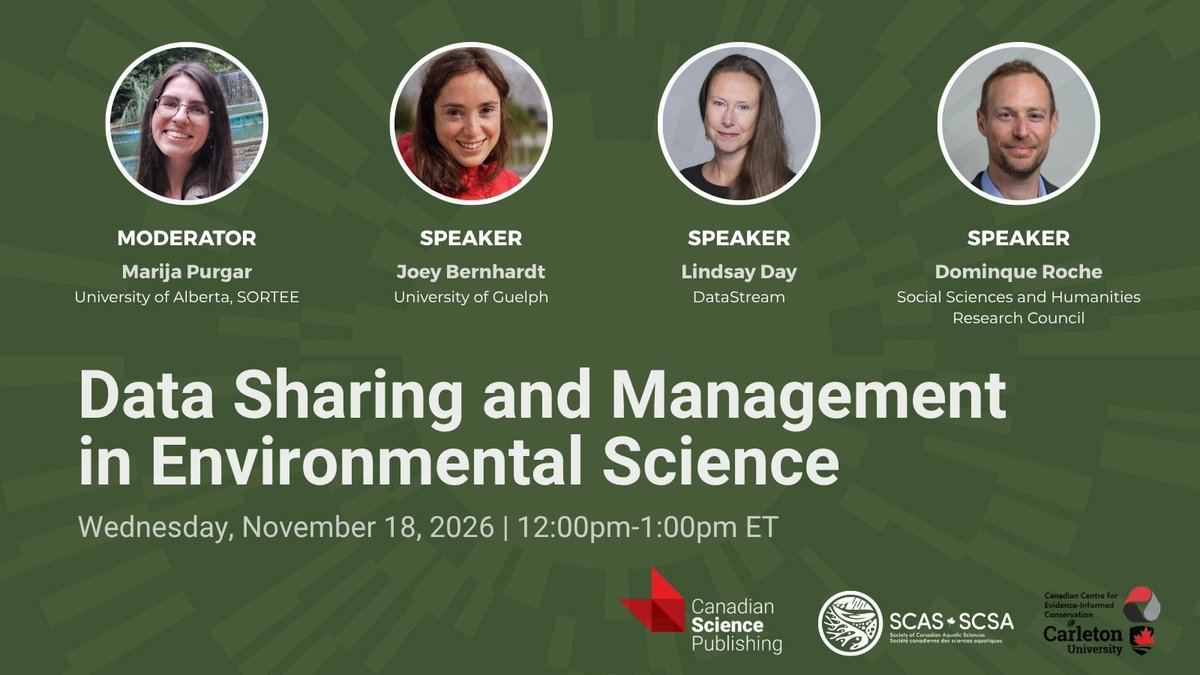
Join our Nov. 18 webinar on # EnvironmentalScience data management and sharing, plus a discussion on governance and infrastructure.
🗓️ Nov. 18 | 12–1 p.m. ET
🔗 https://t.co/jvlBxPZVtQ
#OpenScience#EnvSci@scas_scsa
📢Recently published! 📰The frequency of spawning and skipped migration in a central Canadian population of anadromous Arctic char inferred using acoustic telemetry. 🐟🐟
✒️Harris et al.
🔗https://t.co/mdOtQM1A8O
#ArcticChar#AcousticTelemetry#FisheriesScience#FishMigration
📢Recently published!📰 Response of permafrost to recent extreme warm conditions (2023–2024) in northwestern Canada
✒️Wang et al.
🔗https://t.co/bvS43JLwff
📷hclphotography
#Permafrost#ClimateChange#ExtremeWeather#ClimateImpact
Join us Nov. 18 for a webinar on data sharing, management, governance, and infrastructure in environmental science.
🗓️ Nov. 18 | 12–1 p.m. ET
🔗 https://t.co/WMDx2NlWNi
#OpenScience#EnvSci@scas_scsa
Arctic Science is looking to highlight a wide range of voices through Perspectives, including ECRs, retired experts, industry professionals, and underrepresented communities.
Share your viewpoint ▶️ https://t.co/Gcckt6UVzh
#ArcticScience#AcademicPublishing
More problems with the drinking water supply in Longyearbyen, Svalbard.
Residents have relied on separately treated water after elevated manganese last year. Now, nickel and sulphate levels also exceed recommended limits.
Contamination likely due to thawing of permafrost.👇
🧵(1/3)
https://t.co/HrlUqsIc6m
The increase in summer temps, as well as the shorter winter season, affect active layer depth, the top part of the ground that does thaw in summer.
This layer regionally increases around 10 cm/year in parts of Svalbard, see e.g.👇
https://t.co/DmOOBgkLdU
This climate-change phenomenon now may be affecting Svalbard's drinking water quality.
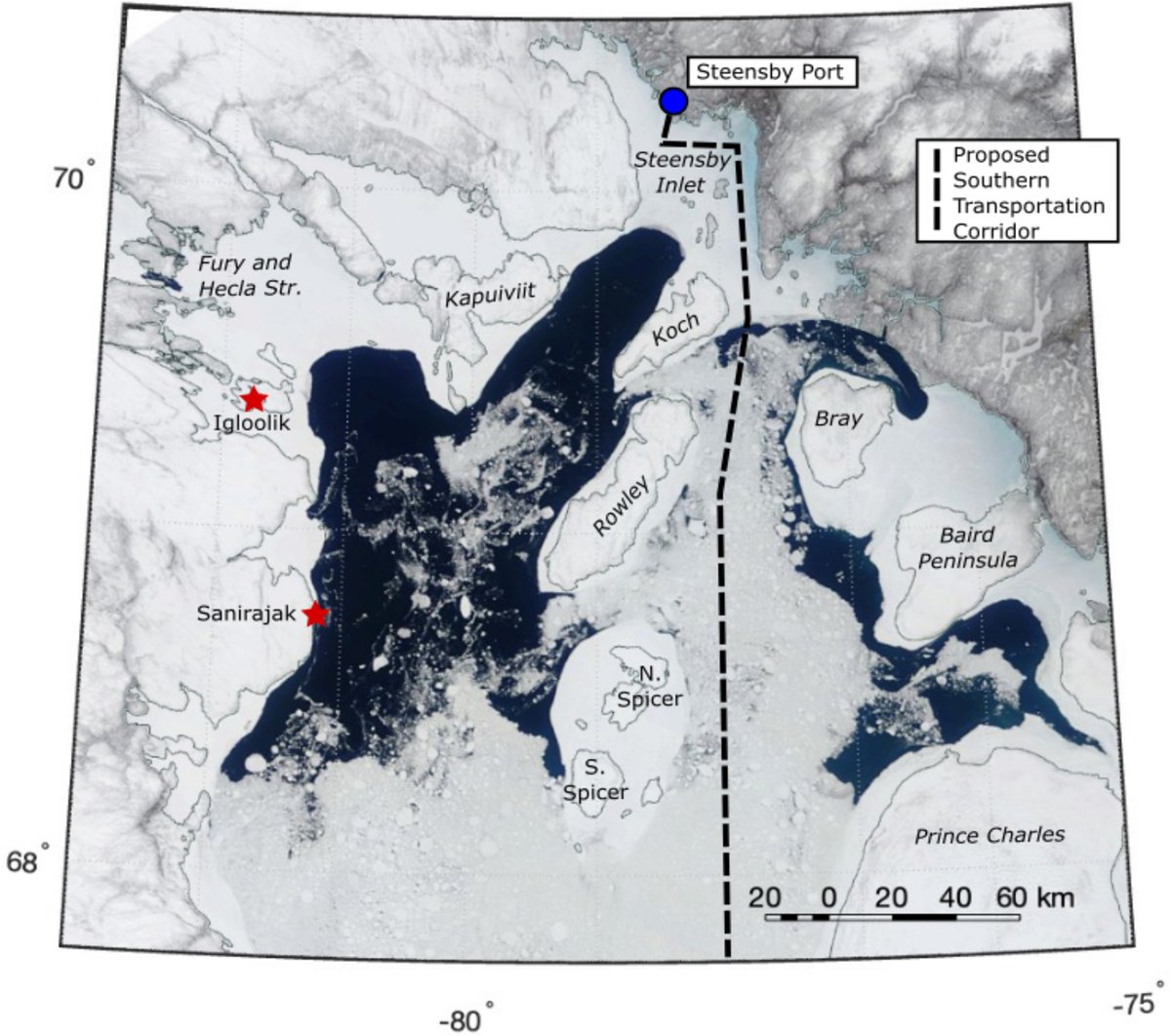
Just published!📰Sea ice dynamics in Foxe Basin: formation of a thick dirty seasonal ice cover along a proposed year-round shipping route.❄️❄️🌊
✒️Babb et al.
🔗https://t.co/nsRWCg7Ocj
📷as-2026-0008_f19
Arctic Science is looking to highlight a wide range of voices through Perspectives, including ECRs, retired experts, industry professionals, and underrepresented communities.
Share your viewpoint ▶️ https://t.co/Gcckt6UVzh
#ArcticScience#AcademicPublishing
Just published! 📰Viral production and decay in Arctic coastal waters during summer: estimates of viral-mediated carbon release.
✒️Wei-Yi Chen et al.
🔗https://t.co/XqAcTU86oN
📷as-2026-0015_f3
#ArcticResearch#ViralEcology#CarbonCycle
We’re pleased to be supporting @csz_scz through an expanded partnership, creating more opportunities for collaboration across the zoological research community!
▶️ https://t.co/TFqXGOmznW
#ZoologicalResearch#Partnership
The Tri-Agency Open Access Policy has been revised. If you’re publishing research supported by CIHR, NSERC, or SSHRC, here’s what you need to know 👇 #ArcticScience#CanadianResearch
The revised Tri-Agency #OpenAccess Policy brings important changes for researchers.
For @CIHR_IRSC, @NSERC_CRSNG, & @SSHRC_CRSH grants awarded from Jan. 1, 2027, new requirements apply to making peer-reviewed research openly available.
Researchers can publish in CSP journals and meet the new requirements.
Learn more: https://t.co/7jr5H0cZXB
#YourResearchHome
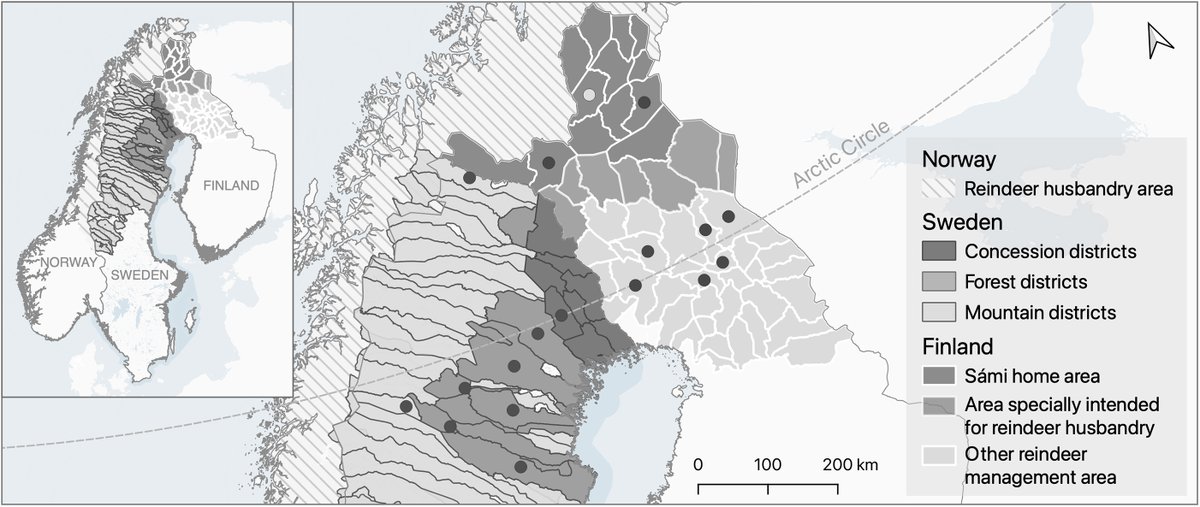
Just published 📰Reindeer herders’ perceptions of early and delayed effects of winter feeding on reindeer.🦌🦌🦌
✒️Rautianinen et al.
🔗https://t.co/6zjhQxAdg9
📷as-2025-0081-f1
#ReindeerHusbandry#SamiCulture#SustainableFarming
Arctic Science is looking to highlight a wide range of voices through Perspectives, including ECRs, retired experts, industry professionals, and underrepresented communities.
Share your viewpoint ▶️ https://t.co/UqqnzGmYbN
#ArcticScience#AcademicPublishing
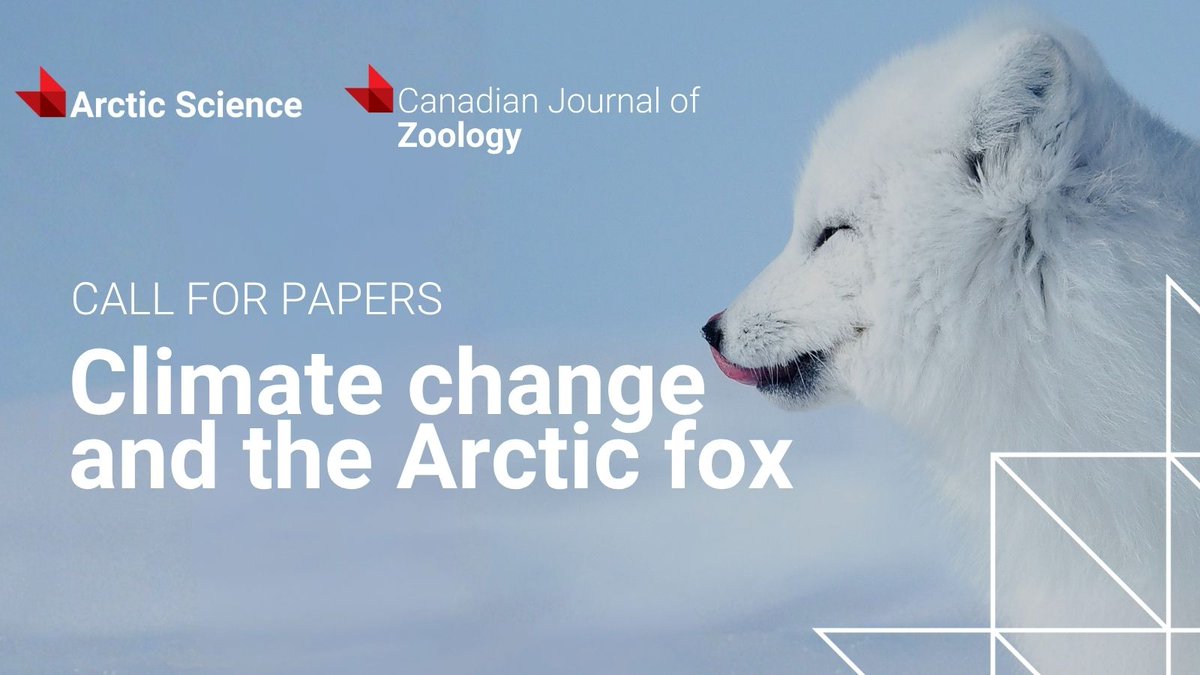
Upcoming collection: Climate change and the Arctic fox 🦊
@ArcticScience and @CanJZoology invite research on how Arctic and subarctic ecosystems are shifting under climate and anthropogenic pressures. https://t.co/YCfxS1485n
#ClimateChange#ArcticFox
@ArcticScienceJ now welcomes Perspective papers! This new article type provides space for thought pieces, emerging ideas, and critical reflections in northern polar research. Learn more about how to contribute ▶️ https://t.co/V1hq42EJYr
#ArcticScience#AcademicPublishing