Find the security holes in your vibe-coded app before your users do. Base44 · Lovable · Bolt · Replit. Free scans, plain-English fixes.
Human reviewed.
We keep testing AI-built apps (Lovable, Bolt, Replit, Base44). The single most common serious problem we find is boring, invisible, and everywhere: the app's database is readable by anyone, with no login. #buildinpublic#vibecoding
@Suryanshti777@Lovable congrats on shipping your first one with no coding background, that is a real milestone and the amazing thing about vibe coding! its momentum from here on, keep building...
@Javiriakhan1 smart idea. Since it holds client information, one thing worth a check: make sure your read rules are set per table rather than left on the default, so someone who is not logged in cannot pull the data. That is the most common gap I see in apps built this way
@newworldkhaled building in public is a great way to learn and you will move faster than you think. One thing for when you connect real data: make sure your tables are not readable without a login. It takes a minute to check and it is much easier to handle early than later
@_DaemonCore_ Agreed, turning RLS on is the easy half and the policies are the actual work. A quick way to confirm they behave the way you expect is to query the table with only the anon key and no session. If rows still come back, the policy is more open than intended.
@designwkarthick this is a real list, and the testing parts are where a lot of the hidden work lives. When you get to auth, one thing worth adding: check that a logged out visitor cannot read your database tables directly, not just that login works. That gap tends to pass every test
@Yusuf_web3@Lovable@contra nice UI, One thing worth checking since it stores customer details, open the app while logged out and confirm a visitor cannot read those records directly. It is easy to miss on Lovable and usually a one setting fix.
@KagitalaAd0317 Timestamp is worth adding if you can spare the column. Plain HMAC alone is fine against tampering, but it doesn't stop someone replaying a captured request days later, since the signature itself never expires. A timestamp (5-10 min) plus checking it server-side should be ok
Why I lead with "most are fine": a testing product that cries wolf is useless. The value isn't fear, it's knowing which bucket YOU are in. Check yours free: https://t.co/93EYLS4ep9
Everyone's posting "AI apps are leaking your data!" I've scanned a large batch of real apps built with AI tools. Here's the honest picture, not the scary one.
The single most common real issue: a database left readable by the public key because nobody locked down which tables it can touch. Second: write actions with no auth check. Third: API open to every site (CORS *).
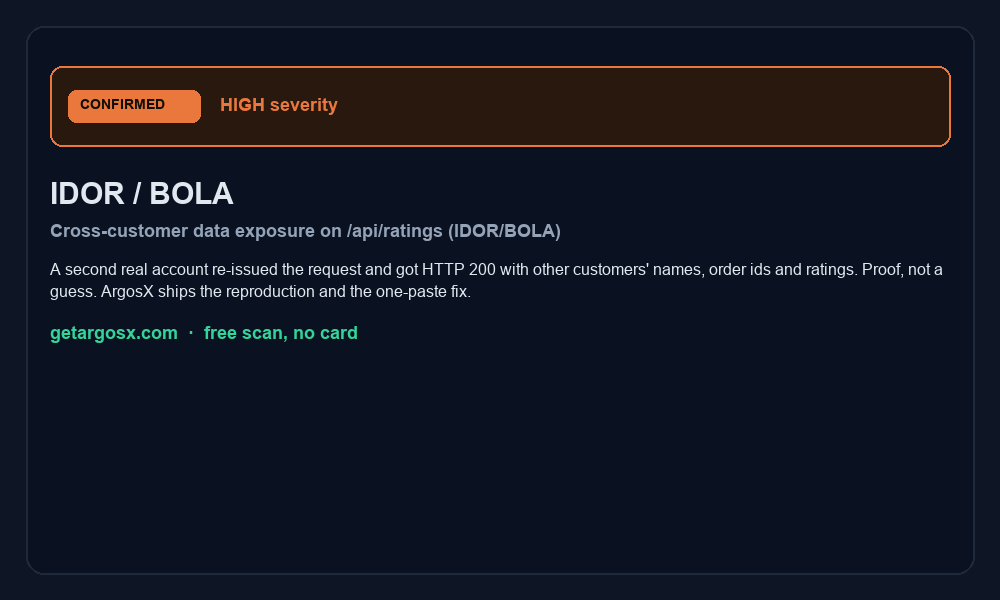
Most scanners hand you a scary list and walk off. ArgosX hands you the reproduction and the one-paste fix for each finding. Watch the bug happen, then close it. https://t.co/pvfonIXehY
#indiedev#appsec
Good news: Supabase now has a built-in Security Advisor, and Replit ships a Security Agent. If you build on them, use these, they'll catch real basics for free. Now the catch.
Some now go beyond config and actually try the exploit, a real step up. But they're still grading their own homework: the platform that built your app says it's safe. An independent outside-in check has no such stake, it just reports what a stranger can reach.
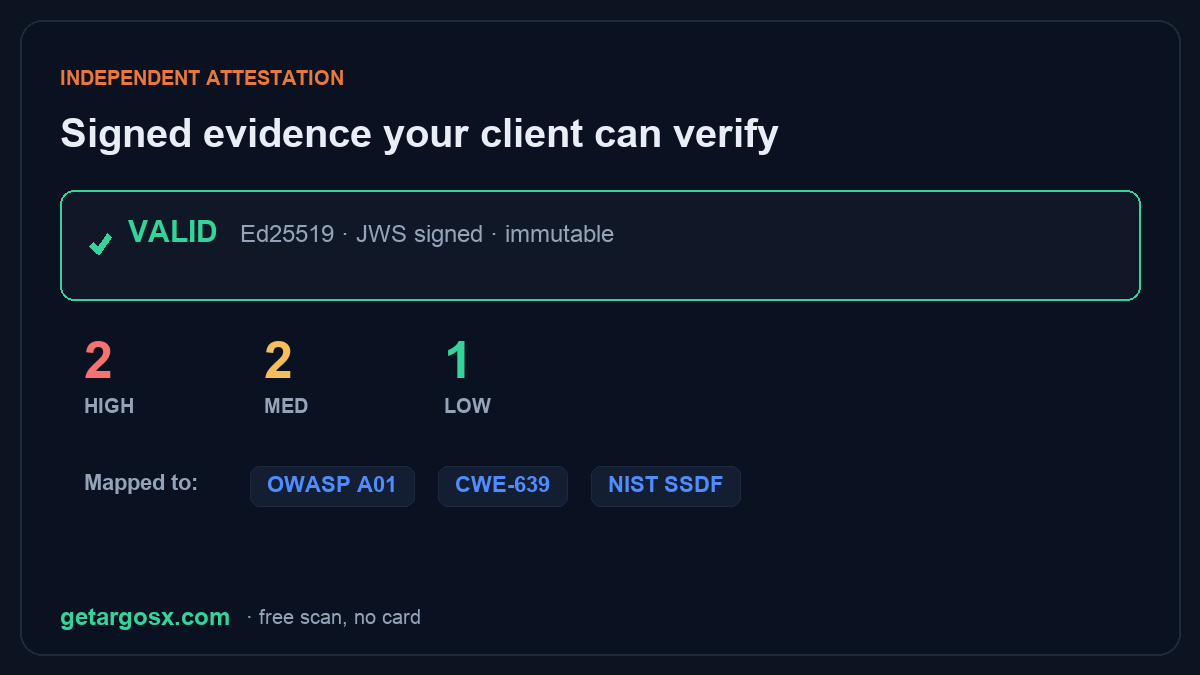
When your client asks "is it secure?", a screenshot will not cut it. ArgosX hands you a signed, independently verifiable page of evidence, mapped to OWASP and NIST. Something you can send them. https://t.co/pvfonIXehY
#buildinpublic#cybersecurity
Enterprise security teams know this. It's why they're deal-blocking AI-generated apps. If you need to pass a SOC 2 vendor review, we run a 5-business-day Verified Security Test and hand you the signed attestation letter. https://t.co/NO8RFdGAPu