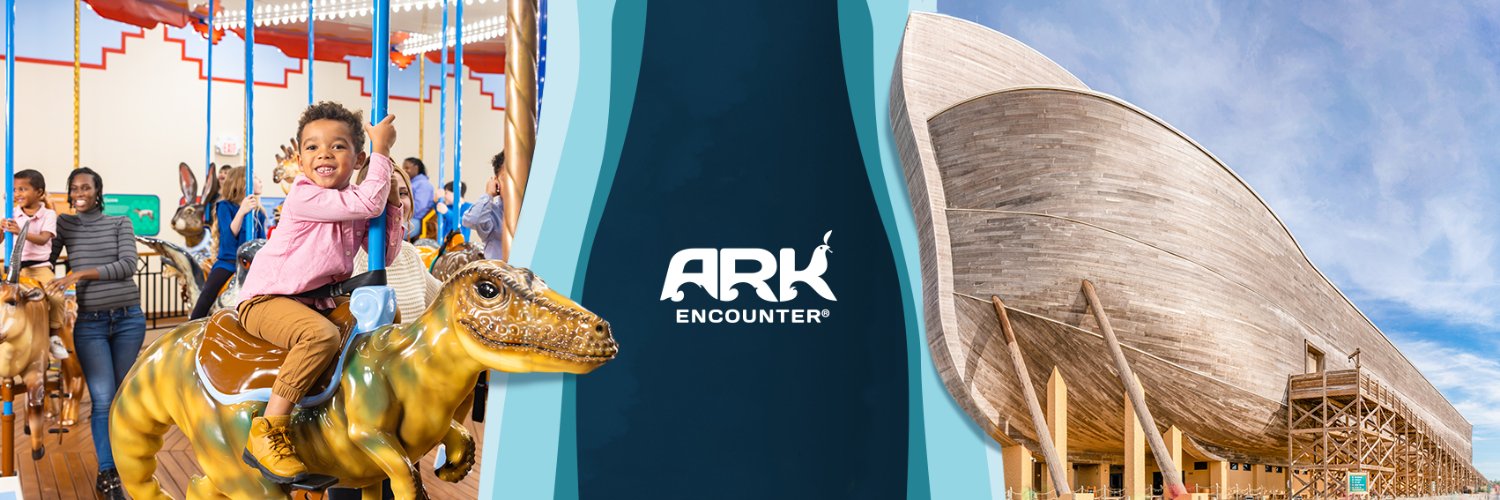
There are over 200 legends about a massive, global flood found in cultures around the world. While they differ from the biblical account in some ways, there are often enough similarities to make the case that many of these tales are distorted retellings of the same event.
But the Bible provides the true historical account.
The biblical ark is also the only vessel which could have survived the worldwide flood and kept its passengers safe.
While many cultures have flood legends, Noah’s ark stands as the original historical account, while stories like the Epic of Gilgamesh are merely later distortions.
Our world is permeated by false views about our early ancestors. Evolutionists portray early man as unintelligent, ape-like brutes. Many Christians have even adopted unbiblical ideas on this subject as they mistakenly think of early man as primitive because they did not possess our modern technologies.
The Ancient Man exhibit clears up these misconceptions by showing evidence that early man was far more intelligent than many people assume. It also corrects many of the false assumptions about our ancestors and what they allegedly believed. What we find in the world matches what Scripture teaches—humans have been intelligent from the beginning, having been made in God’s image.
Which view of ancient man does a better job of explaining the evidence: the biblical model or the evolutionary model? The Ancient Man exhibit builds a compelling case that what we observe matches God’s Word and contradicts the evolutionary worldview.
Genesis describes the construction of the ark in three verses.
“Make yourself an ark of gopher wood. Make rooms in the ark, and cover it inside and out with pitch. This is how you are to make it: the length of the ark 300 cubits, its breadth 50 cubits, and its height 30 cubits. Make a roof for the ark, and finish it to a cubit above, and set the door of the ark in its side. Make it with lower, second, and third decks” (Genesis 6:14–16 ESV).
To understand the actual size of the ark, it’s important to know what a “cubit” is. A cubit is an ancient measurement of length based on the distance from the elbow to the tip of the longest finger. The actual length of a cubit varied between different ancient groups of people. Though the ark’s cubit length is uncertain, it may well have been one of the long or royal cubits (about 20.4–20.6 in.) since many ancient structures were built according to long cubits.
If so, the ark was actually bigger than the size described in most books today, which frequently mention a shorter cubit (if they even bother to try to be accurate). Based on a royal cubit on the short end of the spectrum (20.4 inches), the ark would have been 510 feet long, 85 feet wide, and 51 feet high.
While the ark probably has not survived the elements for thousands of years, we can be confident that it really did exist because God’s Word has infallibly recorded the account of the flood.
"By faith Noah, being warned by God concerning events as yet unseen, in reverent fear constructed an ark for the saving of his household. By this he condemned the world and became an heir of the righteousness that comes by faith.” —Hebrews 11:7 (ESV)