A wise man once said: You'll be alone in the most difficult times of your life. These times will make you wise, mature, and fearless. They will strip away every illusion and show you who truly matters.
You'll learn to be your own strength when no one shows up. In silence, you'll meet the strongest version of yourself.
Pain will become your greatest teacher, and growth will become your quiet reward.. One day, you'll look back and realize solitude was a gift in disguise.
✨🙌🏾💫
"I graduated summa cum laude with a degree in Artificial Intelligence Studies and a specialty in computer ethics, and I firmly endorse this message. AI should be used for the benefit of humanity, not at our expense. Human beings are not expendable. We are not replaceable. We face an era of unprecedented change, and we owe it to our communities and to our children to build a better, more equitable world that values human intelligence and ingenuity over AI."
@karunpal Great book, Karun. Live from the inside out, instead of the outside in. I recently moved to another country/city, but I don't feel any urge to go downtown or so. I Iove my morning walks in a nearby park, adequately called Parque de la Salud!
I write for people I'll never meet.
Sit with how strange that is for a second. Right now, somewhere, somebody is reading a sentence I put together alone in my kitchen at some ugly hour, coffee gone cold, no clue if anyone would ever see it. And they're reading it. In their own head. In their own voice, not mine.
I'll probably never know their name. Never know it landed. They could be on a train in a city I've never set foot in, or up at 3am like I was when I wrote the thing, and I'll never find out.
But they're reading. And here's what still gets me after all these years.
That means I exist twice.
Once here, in this body. 55 years old, bad knee, too much coffee. And once more over there, in the head of a stranger, made out of nothing but words. A version of me they built themselves out of the sentences I left lying around.
That second one might outlive the first. That's the part writers don't say out loud because it sounds a little insane. The body gives out. The sentence sitting in somebody's head just stays there, quiet, patient, going nowhere.
I don't fully understand it. I just know it's the closest thing to not disappearing I've ever found.
So. If you're reading this. Hey. We both exist a little more than we did a minute ago.
#writing #writers #reading #literature #creativity #books #NoahDaren
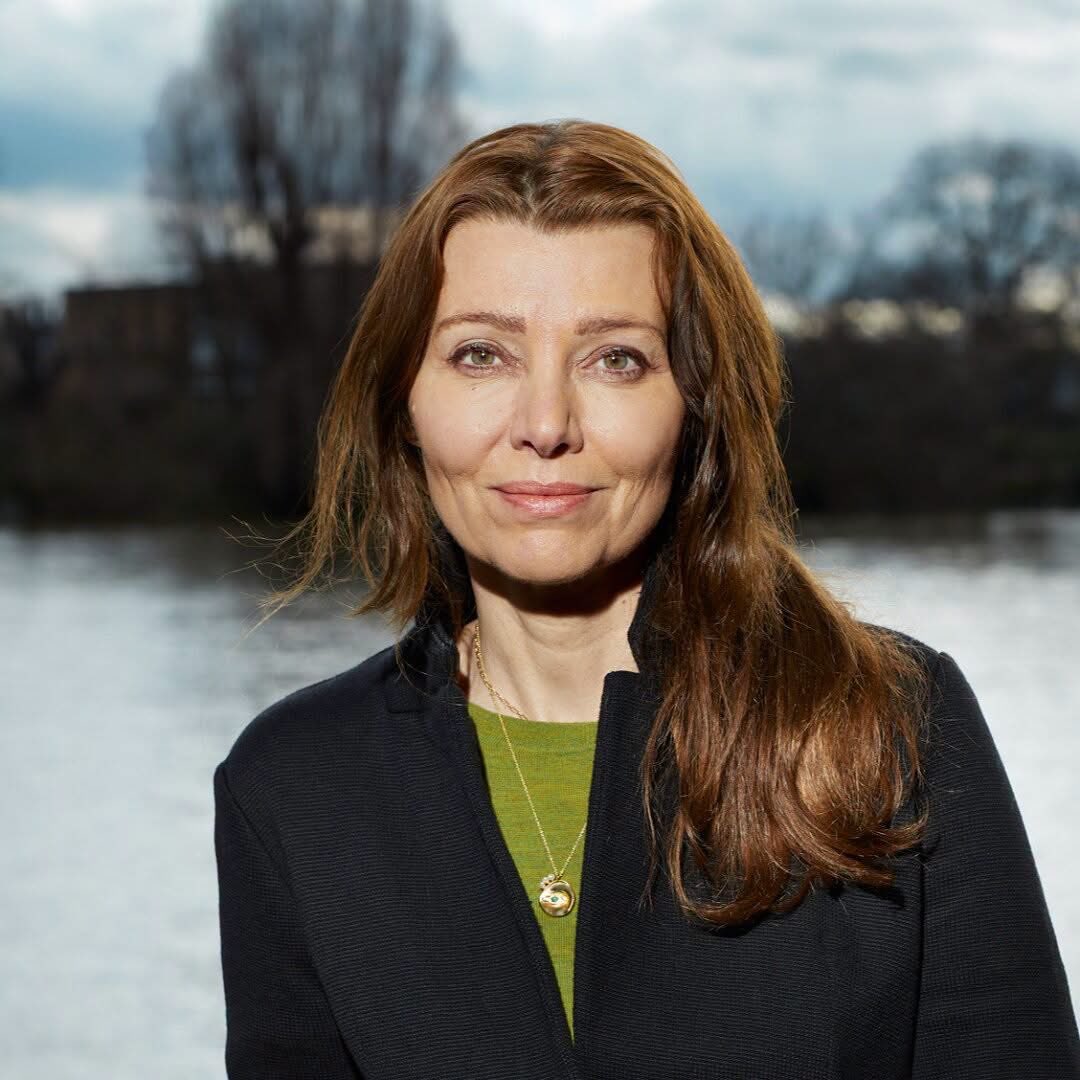
"J’ai appris que l’amour peut arriver par surprise ou mourir en une nuit.
Que de grands amis peuvent devenir de parfaits inconnus, et qu’au contraire, un inconnu peut devenir un ami pour la vie.
Que le « jamais plus » n’arrive jamais et que » pour toujours » a une fin .
Que celui qui veut, peut et y arrive. Que celui qui prend des risques ne perd jamais rien, et que celui qui ne risque rien ne gagne jamais rien.
Que si on veut voir quelqu’un, il faut aller le chercher, car après c’est trop tard .
Qu’avoir mal est inévitable, mais que souffrir est en option, et surtout, j’ai appris que nier les choses les plus évidentes ne sert absolument a rien."
Elif Shafak
Try to name one leader alive today who would do this.
In 325 BC, in the middle of a desert that was killing his army, Alexander the Great was handed the only water his men had found for miles.
He had brought them there himself. Coming home from India there were safer roads, but he chose the Gedrosian Desert, in what is now southern Iran and Pakistan. The Greek historian Arrian is clear that he knew what he was doing. He went that way because almost nobody had ever brought an army through it alive: legend said the queen Semiramis came out the other side with twenty men, and Cyrus the Great with seven.
Alexander wanted to beat them both.
The crossing took sixty days. Arrian writes that the suffering on that march was out of all proportion to anything his troops had endured in Asia. They moved at night, and men fell asleep where they collapsed. The sick were left at the roadside, because there was nobody to carry them and no time to stop.
Somewhere in the middle of it, a few soldiers went looking for water and found a tiny trickle in a gully. They scraped up what they could, tipped it into a helmet, and carried it back to their king...
Every man watching him was dying of thirst. So was he.
"Alexander, with a word of thanks for the gift, took the helmet and, in full view of his troops, poured the water on the ground."
There was not enough for all of them, so he would not take what he could not give. And Arrian records what that did to an army of men who could barely stand:
"So extraordinary was the effect of this action that the water wasted by Alexander was as good as a drink for every man in the army."
They got up, and they marched.
We now live in an age of leaders who start wars their sons will never fight, who ask for sacrifices they would never dream of making themselves, who are always the first to be spared and the last to pay the price. Alexander was often ruthless and deeply flawed, yes, but he was a true leader and he knew that real power has never come from standing above your people, but from going thirsty beside them…
A month before her passing in 2017, Louise L. Hay wrote something that still resonates deeply:
“I’ll be turning 90 this Saturday. My younger years were filled with fear, but now my days are filled with trust and confidence.
My life didn’t really start to make sense until my mid-40s. At 50, I began writing—on a very small scale. My first year, I earned just \$42. At 55, I ventured into the world of computers, which terrified me, but I took classes and overcame my fears.
Today, I own three computers and travel everywhere with my iPad and iPhone. At 60, I planted my first garden. Around that time, I joined kids’ art classes and started painting. In my 70s and 80s, I became even more creative, and my life just kept getting richer and more fulfilling.
I still write, give talks, and teach by example. I’m always reading, learning, and growing. I run a successful publishing company and two nonprofits. I’m an avid organic gardener and grow most of my own food. I love people and parties, have many loving friends, and have traveled the world. I still paint and take classes. My life has become a treasure trove of experiences.
I want to encourage you to consciously shape your later years and realize that they can be the most rewarding chapter of your life. Your future is always bright, no matter your age. Let these years become your treasure years.
With love,
Louise Hay
✨🙌🏾💫
Nico Williams es campeón del mundo. Y tras la premiación, va directo a la tribuna a entregarle la medalla a su madre. Ella, que en 1994 salió de Ghana y cruzó parte del Sahara para poder llegar a España en busca de nuevas oportunidades.
Una campeona más.
🔻 BREAKING: JAPAN JUST BECAME THE FIRST COUNTRY TO OFFICIALLY APPROVE MEDBED TECHNOLOGY FOR PUBLIC HOSPITALS. THE MEDIA BLACKOUT IS TOTAL.
July 17, 2026. Tokyo, Japan.
The Japanese Ministry of Health, Labour and Welfare just issued Directive MHLW-2026-7714: "Authorization of Electromagnetic Frequency Regeneration Devices for Clinical Deployment in National Healthcare Facilities."
This is not a trial. This is not a study. This is FULL APPROVAL.
Starting September 1, 2026, electromagnetic frequency regeneration chambers will be installed in 340 national hospitals across Japan.
⟁
WHY JAPAN FIRST:
Japan has the oldest population on Earth. 29.1% of their citizens are over 65. Their healthcare system is collapsing under the weight of chronic disease management.
In 2024, Japan spent $542 billion on healthcare — 80% of it on managing diseases that frequency technology can eliminate in a single session.
Their government did the math:
▪️ Cost of managing one cancer patient for life: $380,000
▪️ Cost of one MedBed session: $47 (electricity + maintenance)
▪️ Savings per patient: $379,953
▪️ Savings across population: $430 BILLION per year
Japan chose economics over pharmaceutical loyalty. They chose survival over suppression.
⟁
THE TECHNOLOGY APPROVED:
Directive MHLW-2026-7714 specifically authorizes three types of devices:
▪️ Type I — PEMF Regeneration Chamber: Full-body pulsed electromagnetic field therapy at 7.83-14.1 Hz for cellular regeneration. Approved for: cancer, organ failure, autoimmune disorders.
▪️ Type II — Torsion Field DNA Repair Unit: Targeted DNA correction using scalar wave technology at 528 Hz. Approved for: genetic disorders, aging reversal, neurological damage.
▪️ Type III — Biophotonic Coherence Restorer: Full-spectrum light frequency therapy for immune system restoration. Approved for: chronic infections, post-surgical recovery, radiation damage.
All three are what we have been calling MedBeds.
Japan just gave them official medical classification numbers.
⟁
THE PHARMACEUTICAL RESPONSE:
Within 3 hours of the announcement:
▪️ Pfizer Japan issued a formal protest to the Ministry of Health
▪️ Takeda Pharmaceutical stock dropped 11% on the Tokyo Stock Exchange
▪️ Astellas Pharma emergency board meeting — CEO resignation rumored
▪️ The Japan Pharmaceutical Manufacturers Association called it "reckless endangerment of public health"
They called CURING PEOPLE "endangerment of public health."
Read that again. Let it sink in.
Their definition of "public health" is: people staying sick and paying forever.
⟁
THE MEDIA BLACKOUT:
Search "Japan MedBed approval" on Google right now. You will find NOTHING.
Not CNN. Not BBC. Not Reuters. Not AP. Nothing.
A G7 nation just approved the most revolutionary medical technology in human history — and every single Western media outlet is pretending it didn't happen.
This is not negligence. This is coordinated suppression.
The pharmaceutical industry spends $6.58 billion per year on media advertising in the United States alone. That money doesn't just buy ad space. It buys silence.
⟁
WHAT THIS MEANS FOR YOU:
Japan is the crack in the dam.
Once one G7 nation approves it, the others cannot maintain the lie. The pressure becomes impossible. The science is now officially validated by one of the world's most advanced healthcare systems.
The timeline just accelerated:
▪️ Japan: Approved July 2026
▪️ South Korea: Expected approval August 2026
▪️ India: Already in advanced trials — approval expected Q4 2026
▪️ United States: Executive Order signed — civilian deployment within 120 days
▪️ EU: Under pressure — cannot ignore Japan's data
The dominoes are falling. One by one. Nation by nation.
They held the line for 61 years. Japan just broke it.
♟ The first country said YES. The rest will follow. The pharmaceutical era is over. The frequency era has begun. Japan lit the match.
Share this. The blackout only works if you stay silent.
MedBedsTechnologyNews
“Five minutes after birth, they decide your name, religion, nationality and sect. And you spend the rest of your life defending what you did not choose.”
— Arthur Schopenhauer