Music was Satyajit Ray's first love. Wrote this piece for @LWLies, tracing the musical side of the genius on his birth centenary.
https://t.co/qz3fyaw4cF
A quiet adventure for lovelorn people, forever suspended in an unrealised dream. Made by Alice Rohrwacher — one of the best Italian filmmakers working today. #LaChimera
Hirokazu Kore-eda’s Sheep in the Box (@neonrated, 2026) is a speculative fiction film that raises questions of grief and personhood when a humanoid robot replaces a dead child, as discussed with @Arunusual.
https://t.co/pDCUCIPCYu
Kiarostami once said:
"We can never get close to the truth except through lying."
It's a remarkable way to describe cinema itself.
Films invent stories, yet somehow reveal truths about us that facts alone often cannot.
Most filmmakers tell us where to look.
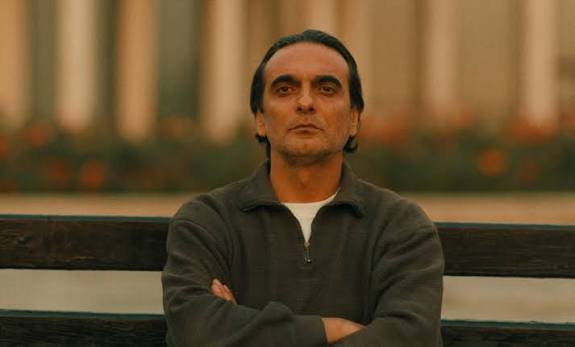
Abbas Kiarostami (1940 – 2016) taught us how to look.
A thread on one of the greatest filmmakers to ever pick up a camera.
One of Kiarostami's greatest gifts was restraint.
He understood that what a film chooses not to show can be just as powerful as what it does.
He trusted silence.
He trusted absence.
Above all, he trusted the intelligence of his audience.
“No biography can fully capture a life”
- @vinodkaul27down, author, Awtar Kaul; An (In) Complete Story, talks to @Arunusual about memory, cinema, and reconstructing the life of his uncle, whose only film, 27 Down (1974), continues to have an impact
https://t.co/S1n0vy3v9T
Awtar Kaul’s nephew, Vinod Kaul, has compiled a brilliant book of essays on his landmark Hindi New Wave film, 27 Down (1974). I also had the opportunity to contribute an essay to the book. Here’s the link to purchase it.
https://t.co/i3rGDLZH27
NEW | Beauty and brutality in one frame
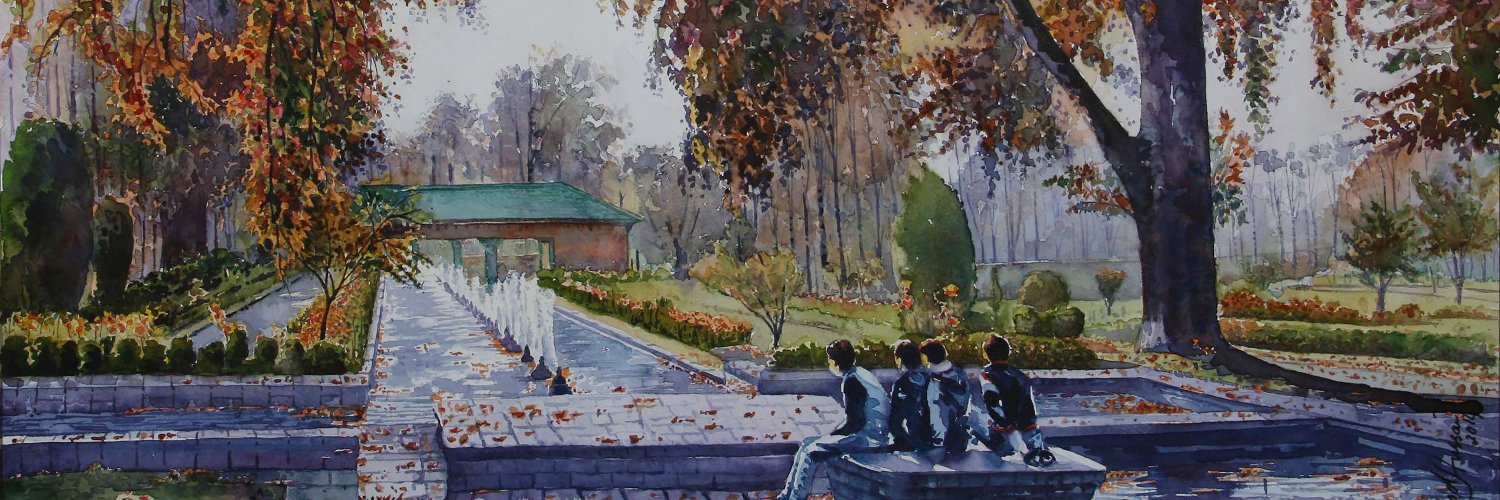
An artwork by Kashmiri artist Masood Hussain bears witness to the Zaldagar uprising of 1865, where pashmina weavers stood up against centuries of oppression.
Arun A.K. ✍️
https://t.co/lWJ2N3CaBV
"Gradually, Parallel Cinema overturned the industrial hegemony of Bombay, creating centers of production across the country, working in languages other than Hindi. U. R. Ananthamurthy’s Kannada-language Samskara (1970), filmed in Karnataka, paved the way for other filmmakers from the periphery, especially in West Bengal and Kerala, to launch an attack on all forms of orthodoxy, specifically caste, religion, and patriarchy."
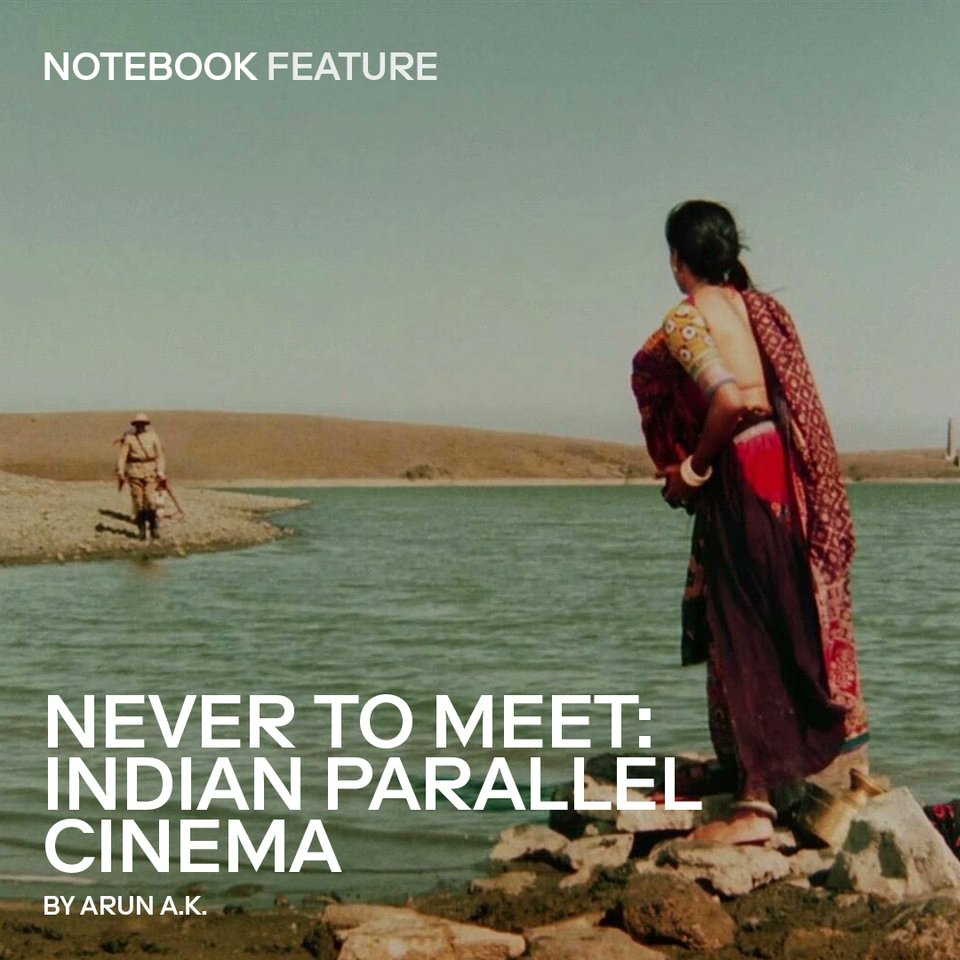
Arun A.K. (@Arunusual) reviews a new history of Indian Parallel Cinema: https://t.co/F5qMo2ngqr
"Gradually, Parallel Cinema overturned the industrial hegemony of Bombay, creating centers of production across the country, working in languages other than Hindi. U. R. Ananthamurthy’s Kannada-language Samskara (1970), filmed in Karnataka, paved the way for other filmmakers from the periphery, especially in West Bengal and Kerala, to launch an attack on all forms of orthodoxy, specifically caste, religion, and patriarchy."
Arun A.K. (@Arunusual) reviews a new history of Indian Parallel Cinema: https://t.co/F5qMo2ngqr
Arun A.K. (@Arunusual) writes on Omar Ahmed's comprehensive study of Indian Parallel Cinema, a filmmaking movement that overturned the industrial hegemony of Bombay, rejecting the orthodoxies of patriarchy, religion, and caste. https://t.co/uqu3RfLSQW
What is the signficance of Indian Parallel Cinema in film history?
Here's the story of the most sustained yet overlooked film movement.
@mubi@mubinotebook
https://t.co/N10kGDJYiF