I built the Academy alongside Shop Floor Showdown, my IE trivia game. Watch a lesson, then test yourself at https://t.co/MLws8hbjEL. Daily shop-floor tips at @EngineerSalcido.
Shop Floor Academy just got rebuilt mobile-first. Short vertical videos you can watch on the floor, in the break room, or between gemba walks. https://t.co/pUbspITniY 🧵
Daily #34 of Shop Floor Showdown, a game I built: 1806 of 2,000 at Senior Engineer, 5/5 in 19.4 s. Gear hobbing, blue-light scans and an over-constrained BIW part all showed up.
Your move: https://t.co/28J7sWE3yr
Daily shop-floor tips at @EngineerSalcido
Head of 🇩🇪 Giga Berlin „We won’t built another Model Y Factory“
Giga Berlin is planning for an annual production capacity of 500,000 Model Y vehicles in Giga Berlin and according to Tesla, equipment for 375,000 units has been installed so far.
This capacity was expected to be fully utilized for the first time in October, a milestone that has apparently not yet been fully reached: according to the report, the German Gigafactory is "approaching" the necessary output of 7,500 Model Ys per week. So ist close but not quite there yet.
Reports mentioned a second production facility north of the existing one, at 536,000 square meters, it is more than twice as large, yet also designed for an annual capacity of up to 500,000 electric cars. That will bring the total capacity to 1 Million vehicles per year.
Grünheide plant chief Thierig said 4680 cell production will start in mid-2027 in a hall that is already finished and and is currently being used for components for the U.S. production of 4680 batteries.
The plant is close to its target of 7,500 Model Y a week (one car every 45 seconds compared to the industry with 60 – 90 seconds) after hiring 2,000 people. He also said that if a second factory is built there, "we won't build another Model Y factory."
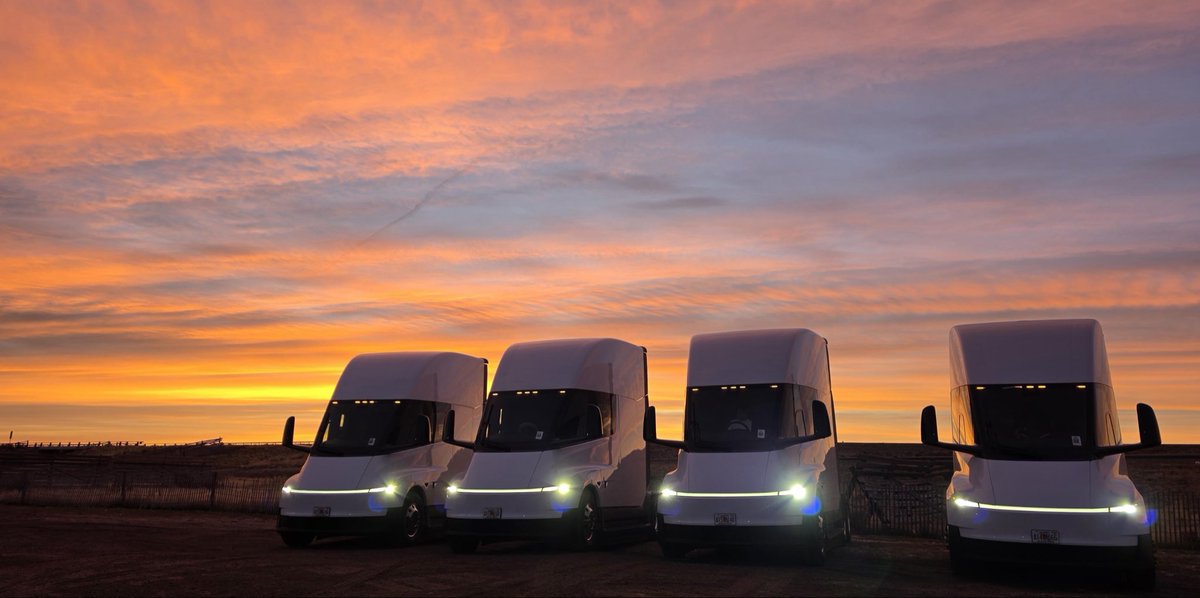
There is much speculation regarding which model will be manufactured next at Giga Berlin. It could well be the Model 3, but the Semi or the Cybercab might also be in the planning stages.
Each of these models makes sense for the European market, and given that the facility's floor area is significantly larger, I would surmise that several new models are being planned.
If SpaceX moves forward with building this 6 GW supercompute campus in AZ, it would purchase over $5 billion worth of Megapack batteries from @Tesla.
SpaceX says the project would include 24 GWh of grid-connected battery storage to provide backup power, stabilize the regional electric grid, support local voltage, and absorb fluctuations in electricity demand. This would be among the largest planned battery installations in the United States.
SpaceX has just announced that it has signed a major deal with SINGULUS to manufacture advanced, high-efficiency solar cells for its Starmind satellites at its facility in Bastrop, Texas.
The first production line is expected to be delivered in the first half of 2027, with plans to scale to more than 100 GW of solar cell production equipment.
“We have signed a supply contract with SpaceX for a turnkey production line for the manufacture of heterojunction solar cells.”
The agreement is part of a broader strategic partnership that could include multiple additional production lines as SpaceX rapidly expands its satellite manufacturing capabilities.
More info: https://t.co/Z0Oc9HZWml
Stopped by Giga Texas and stood next to Optimus.
Here's my IE take: when a humanoid joins a line, the rules don't change.
You still measure the work. You still balance stations to takt. You still need standard work, because a robot repeats exactly what you give it, waste included.
Robots don't remove the need for industrial engineering. They raise the bar for it.
What's the first station you'd give a humanoid?
4/ Check precedence before moving work. Torquing a bracket before the harness is routed looks efficient on paper and creates rework at the next station.