We started @column with the insane idea to rebuild every component of the financial system from scratch. Today, I think we've finally completed that build.
We're releasing four new products, so any technology company can build at the frontier of financial services.
Concentration risk deserves more attention in fintech programs. Relying heavily on one or two large fintechs can create its own risk. Diversification can help—but only when banks and CUs manage risk within their own framework, appetite, and tolerance.
https://t.co/J9HMY5ULMm
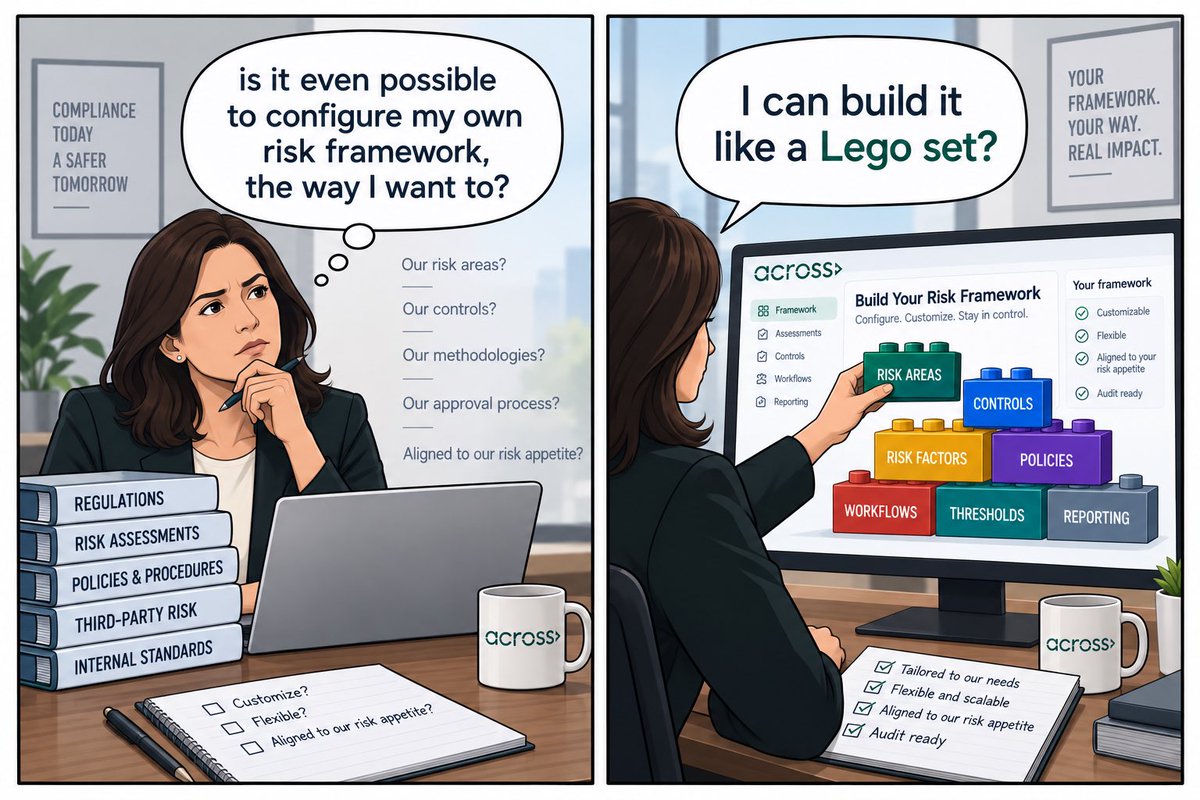
1+ year of building Across Oversight.
Our bank clients have helped us validate the platform in the real world - and were happy to pay for it. 🙏
→ Build your own risk framework
→ Powerful workflows
→ Decision-ready reports with Oversight-AI
https://t.co/npF8pzNICj
Maybe you have recently become aware of the AI safety debate and the arguments swirling around it.
If you want to understand them, you need to understand a couple things that almost everyone gets wrong:
There are TWO distinct classes of AI dangers, and it's VERY important to think about them separately, and not let one confuse you about the other.
Many many people (including many quite intelligent, clear-thinking people) do not effectively understand the fundamental differences between these two classes of dangers.
The first one has to do with the theory that an AI far superior to human intelligence (Artificial SuperIntelligence, or ASI) will inevitably wipe out the human race.
The second one has to do with the idea that powerful AI will result in very harmful things happening to many human beings, possibly all human beings.
Those two sound VERY similar, don't they?
They are DIFFERENT. Understanding how they are different is crucial if you want to think about or contribute usefully to any conversation about AI safety or AI harm. You might feel like you are Making Very Good Points or Asking Incisive Questions, but if you aren't clear on the differences between the two, you aren't.
So, I'm going to tell you what the difference is so that you can talk more usefully.
The first one concerns itself with a very specific thing, which is ASI (Artificial Superintelligence) that is more intelligent than any human being. When I say that, I am not referring to a thing like how Einstein is smarter than you, we are talking more about something like how a human being is more intelligent than any mouse.
In our regular lives, we meet other people who we can tell are smarter than us, vs some who are less smart. The line is fuzzy, because intelligence has a lot of dimensions. I'm better at a "rotating shapes" kind of intelligence than my wife, and she is better at "words-making" kind of intelligence than I am.
But every human is better in almost every dimension of intelligence than every single mouse.
That's the level we're talking about: an artificial superintelligence - made up of a computer or a network of computers - that is more intelligent than any human. And more intelligent by a long shot, by a wide margin, in an indisputable way like how humans are above mice.
That is the first thing.
The theory says that if you have an AI that is vastly smarter than all humans - in the way that a human is smarter than mice - that superintelligent AI will inevitably, eventually, sooner or later, wipe out every human on the planet.
We will refer to this as "existential risk."
The common follow-up question "well, how exactly is it going to do that?" is NOT the important question, and one of the most important elements of understanding this theory is first getting why that particular question is not important. A couple analogies:
Analogy 1: You are playing chess against a grandmaster. My theory predicts the grandmaster is going to beat you. You can ask "Well, how exactly is he going to do that?" I don't know, because I'm not a grandmaster, I just know that a chess grandmaster is almost always going to beat a normal player like you. And I'd be right. So the question "how is he going to do that" is not important, and doesn't affect the final outcome. He's going to figure out a way because he's way better than you.
Analogy 2: Humans are smarter than all other animals, comprehensively, by a wide margin. We have driven numerous species to extinction, not because we hated them or hunted them. Many of them have died out without most humans even ever thinking about them. All we did was expand our civilization, use up resources, encroach on habitats, and pretty soon the resources needed by those species went away and they died out. We figured out a way to get what we wanted because we're way smarter than them, and often we didn't even notice they died as a result.
A lesser animal asking, "how are the humans going to wipe us out?" is not asking a relevant question. We don't know, but we do know that any time humans and lesser species compete for any kind of resources, the humans will win. The fact that we know who is going to win beforehand - and that it is due to the vastly different levels of intelligence - is the key concept here.
A vastly more intelligent AI is likely to care about things that are incomprehensible to us, the way animals can't understand human goals. It's going to need resources to pursue those goals and it's going to be far more effective at gaining control of them and excluding us from them - in the same way that we are far more effective than other lower species.
A much more intelligent AI will not care about our interests, it will care about its interests, and to whatever small degree we happen to escape total annihilation from losing access to all our resources, any remaining humans will likely be enslaved into a system that serves the AI's own purposes.
That is the first thing. (Remember how I said at the beginning of this post that there was a first thing, and then a second thing?)
The first thing is the most difficult to understand, because you have to extrapolate how a vastly superior intelligence would act, and you can only use analogies like "how do humans treat lesser creatures," and the analogies are messy.
But now let's move on to the second thing.
The second thing is "everything else you've ever heard that AI might do that's harmful."
That's a little inaccurate. It's actually "everything else you've ever heard that humans might use AI to do that's harmful."
This is the critical difference. The first one talks about the inevitable outcome of what happens when two vastly different levels of intelligence collide, e.g. ASI vs humans, or human vs mice.
The second one has to do with what happens when humans possess AI as a powerful tool. This second thing is much easier to understand, because we have many more concrete notions:
Like:
- the military uses AI to make hyper-efficient killer drones and missiles
- your capitalist overlords use AI to replace you and everyone loses their jobs
- authoritarian government uses AI to surveil everybody and control the entire population
- hackers use AI to break into secure networks and hold companies and governments hostage
- students use AI to cheat on homework and show up to college knowing nothing
- AI slop saturates the internet and makes it impossible for artists and writers to make a living
- terrorists use AI to make biological or nuclear weapons
or even things like
- the military hands control to an AI and it misinterprets something and launches nuclear attacks and kills millions
All of those sound pretty familiar, right? Yeah, you've heard them before. We call this second thing "risks from misuse."
These problems are not the first class of problem! This second class of problems exists while AI is a tool that can be controlled by humans, and humans use it to do evil or careless things to each other. The problems may sound exotic or dystopian or novel, but they are fundamentally problems having to do with flawed human nature.
Given a powerful tool, some humans will likely use it to control or otherwise harm others. This is a very familiar problem.
I am not condemning or condoning this. I'm just describing it.
That is a fundamentally different danger from the first thing, which is that when a human is far superior to a mouse, the mouse is likely to come to harm because the human cares about doing human things, and the mouse is not gonna make it once the humans get going.
=====
Hopefully from the above, you have understood the difference between the first thing and the second thing. I will list them again - see if you now understand how they are different:
The first one has to do with the idea that an AI superior to human intelligence (Artificial SuperIntelligence, or ASI) will inevitably wipe out the human race.
The second one has to do with the idea that powerful AI will result in very harmful things happening to many human beings, possibly all human beings.
Can you tell how they are different now?
If not, re-read the stuff from earlier until you understand.
We call the first one "existential risk" and we call the second one "risks from misuse."
Once you understand, here is the CRUX of the problem:
SOLUTIONS TO THE SECOND THING DO NOT HAVE ANYTHING TO DO WITH SOLUTIONS TO THE FIRST THING.
In fact, it's worse:
Solutions to the second thing (misuse) look roughly like "give powerful AI to as many people as you can, so they can fight the other people using powerful AI."
But the general solution to the first one (existential risk) is basically "don't let anyone have powerful AI, no one can control super-intelligent AI."
Throughout history, harms from technological misuse typically arise because a small group has control of it and can use it to dominate or harm others. Once everyone has it, things tend to stabilize: you can hurt me, I can hurt you, maybe we test each other (ouch 💥), and then we agree not to hurt each other.
But the first one (existential risk) pretty much just arises if anyone (good or bad!) creates a superintelligence. Because they aren't going to be able to control it, the superintelligence will decide it has other priorities, and then we will be at great risk of being wiped out.
And the solutions that generally work to solve problems like the second thing are EXACTLY THE OPPOSITE of the ones likely to solve the first thing.
THIS is why lots of arguments about "AI risk" or "AI safety" go nowhere. Because someone will be thinking about the risk from the first thing, and another person will be thinking about the risk from the second thing. Both are plausible risks but fundamentally they arise from different things - and so the solutions are not just "bad" or "flawed" - they are likely to be very nearly exact opposites.
MUST SEE: Amazing moment as President Trump calls Nvidia CEO Jensen Huang while he's on stage at the All-In Summit.
@POTUS on AI Doomerism: “I'm telling you, it's all a hoax… and we're not going to let that happen.”
This week's Enforcement & Compliance Digest is live.
6 new enforcement actions this week across FTC, OFAC, DOJ, FinCEN, and SEC. 6 carry high relevance for fintech and sponsor-bank programs.
Full breakdown: https://t.co/H7DD8FPrTC
This week’s Enforcement & Compliance Digest is live.
9 new enforcement actions. 5 highly relevant to fintech & sponsor-bank programs.
Full breakdown: https://t.co/3ApJ58hQC0
#Fintech#Compliance#BaaS
प्रिय Gen Z,
तपाईहरूको योगदान र बलिदानबाट देशले परिवर्तन पाएको छ।
वीर सहिदहरूप्रति हार्दिक श्रद्धाञ्जली। तपाईंहरूको योगदान अमूल्य छ, जसले सधैं भावी पुस्तालाई देशप्रेम र कर्तव्यबोधको मार्गदर्शन गर्नेछ। तपाईहरूप्रति असिम सम्मान।
घाइतेहरूको शीघ्र स्वास्थ्यलाभको कामना गर्दछु।
Nepal protest is primarily against corruption and misgovernance. Social media ban was just the tipping point.
Why is Indian Godi media misleading people by not showing the reality?
“सय दिनमा मैले गरेका हरेक निर्णय वा नयाँ अवधारणाका पछाडि कम्तीमा बीस जनाको देन होला र त्यसको कार्यान्वयनमा कम्तीमा हजार जनाको संलग्नता । यसकारण यहाँ नायक होइन थिति चाहिएको छ ।”
शिक्षा, विज्ञान तथा प्रविधि मन्त्रालयमा मन्त्रीको जिम्मेवारीका १०० दिनको समीक्षा, भोगाई र सिकाई यो लेखमा प्रस्तुत गरेकी���ु। तपाईँहरूको प्रतिक्रया र सुझावको अपेक्षा छ। यही लेख मार्फत मेरा आगामी दिन: थिति बसाल्ने, सहभागितामुलक नीति निर्माण र पारदर्शी कार्यान्वयनमा केन्द्रित हुने प्रतिबद्धता व्यक्त गर्दछु।
https://t.co/IV1m2T9N6p
It's officially been two weeks since ChatGPT4 Vision started rolling out.
My prediction was right, Multimodal AI is about to disrupt SO many sectors.
Here are 14 of the most shocking examples that prove it:
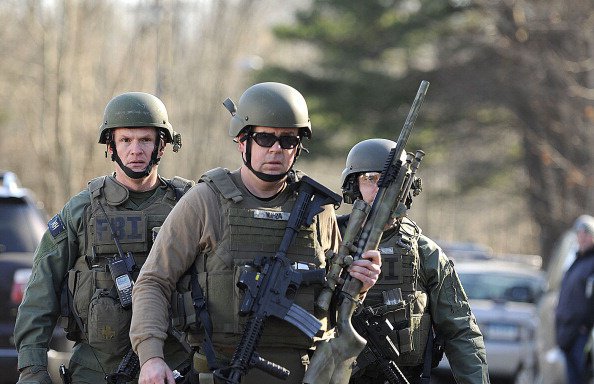
Top 100 CIA and FBI movies to watch.
1. Zero Dark Thirty
2. The Bourne Identity
3. Argo
4. Syriana
5. Tinker, Tailor, Soldier, Spy
6. The Silence of the Lambs
7. Heat
8. The Departed
9. Catch Me If You Can
10. Sicario
11. Patriot Games
12. Clear and Present Danger
13. Body of Lies
14. Munich
15. Jack Ryan: Shadow Recruit
16. The Good Shepherd
17. The Recruit
18. Spy Game
19. The Sum of All Fears
20. Three Days of the Condor
21. The Company
22. The Day of the Jackal
23. Ronin
24. The Manchurian Candidate (2004)
25. The Hunt for Red October
26. Spy Game
27. Breach
28. The Insider
29. Safe House
30. The Sentinel
31. The Falcon and the Snowman
32. The Falcon and the Snowman
33. The Constant Gardener
34. Confessions of a Dangerous Mind
35. Charlie Wilson's War
36. The Debt
37. The Good Shepherd
38. The Tailor of Panama
39. American Made
40. No Way Out
41. The Parallax View
42. The Double
43. The Ghost Writer
44. Proof of Life
45. The Odessa File
46. Eye of the Needle
47. Clear and Present Danger
48. Spies Like Us
49. The Russia House
50. GoldenEye
51. The Eiger Sanction
52. The Interpreter
53. The Matador
54. The Hunted
55. The Assignment
56. The Good German
57. The Human Factor
58. Black Book
59. The Quiet American
60. Confessions of a Dangerous Mind
61. The Good Shepherd
62. The Tailor of Panama
63. The Day of the Jackal
64. Munich
65. No Way Out
66. Proof of Life
67. Eye of the Needle
68. Spy Game
69. Breach
70. The Debt
71. The Falcon and the Snowman
72. GoldenEye
73. The Interpreter
74. The Hunted
75. The Good German
76. The Assignment
77. The Russia House
78. The Eiger Sanction
79. Black Book
80. The Quiet American
81. The Constant Gardener
82. The Ghost Writer
83. Safe House
84. The Sentinel
85. American Made
86. Spies Like Us
87. The Matador
88. The Human Factor
89. The Parallax View
90. The Double
91. The Insider
92. The Sum of All Fears
93. Ronin
94. The Manchurian Candidate (2004)
95. The Day of the Jackal
96. The Day of the Jackal
97. Proof of Life
98. The Odessa File
99. Eye of the Needle
100. Spies Like Us