I learned many transferable skills in the Bio1500 course, including how to analyze scientific documents, set up experiments, and use lab equipment. Thank you instructors for working w us students thro this unprecedented semester! #CUintheLab
which makes it especially vulnerable to climate change. Climate change is a huge problem in Morocco and worldwide and needs to be addressed! #CUinTheLab
Morocco is increasingly affected by #climatechange in its biodiversity, food insecurity, and human health. Morocco is known for its biodiversity, but many of its wonderful species are being threatened by human activities and the changing climate
diarrheal disease in children, heat-related deaths, and malnutrition all increasing. Malnutrition is especially worrisome, as 5.7% of Moroccans are food insecure, and the number is increasing. Morocco's agriculture sector is highly susceptible to drought,
Further experimentation could be done into finding the most effective dosage of these antibiotics or studying how quickly the bacteria builds resistance to each antibiotic. #CUinTheLab [3/3]
We ran a study comparing the #antibioticresistance of ampicillin and streptomycin on the bacteria strain Serratia marcescens. The study used a disc diffusion assay to compare how much each antibiotic inhibited growth [1/3]
We found that the zone of inhibition for ampicillin was statistically significantly greater than that of streptomycin. These results suggest that using ampicillin in patients sick from bacteria similar to Serratia marcescens will be a more effective treatment [2/3]
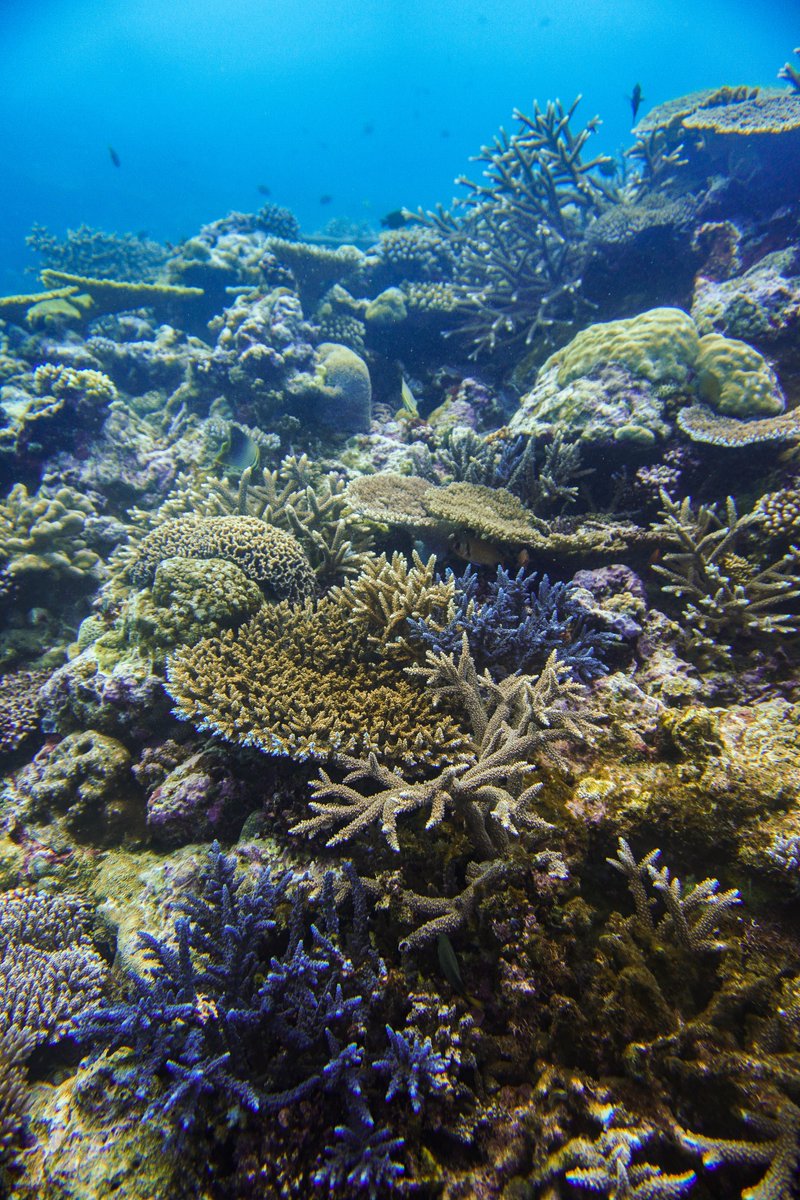
This is going to be a stressful day for lots of people, so here's some positivity: there are still beautiful, healthy #coral reefs to be found, and we can do things to stop them from disappearing (here from #Vanuatu). Can't wait to get to see them again @vanuatumoments
The best way to protect this endangered species and public health is by ensuring the gut microflora is healthy and has limited exposure to antibiotics. #CUinTheLab
The paper https://t.co/l3UQjq1tDE, published by the Department of Zoology @UnivofDelhi discusses about #antibioticresistance in the endangered fish species Tor putitora.
Because there is a mixture of helpful and dangerous bacteria, if the helpful bacteria declines it can lead to sickness in the fish. Additionally, horizontal gene transfer causes risk of threat to fish and human health.
The researchers located ideal targets for searching for life on Mars, as dense pockets of nutrients are likely to accumulate together, which include cracks, accumulations near objects that block wind, and sand layers separated by the heavier and lighter components. #CUinTheLab
I recently read this paper https://t.co/53xN9jVMiS by @DrAndy_Tomkins which discusses how #limitingnutrients can help scientists locate where water and nutrients coexisted.
the oxidation that occurs on Mars and differences in semimajor axis, the researchers also did fieldwork in the Australian desert to confirm an essential basis of the model: that the cracks in the surface accumulate dense particles.





![AshleyAltera's tweet photo. We found that the zone of inhibition for ampicillin was statistically significantly greater than that of streptomycin. These results suggest that using ampicillin in patients sick from bacteria similar to Serratia marcescens will be a more effective treatment [2/3] https://t.co/lPQa2W7d1q](https://pbs.twimg.com/media/Emj-RbCXcAAmAMB.jpg)