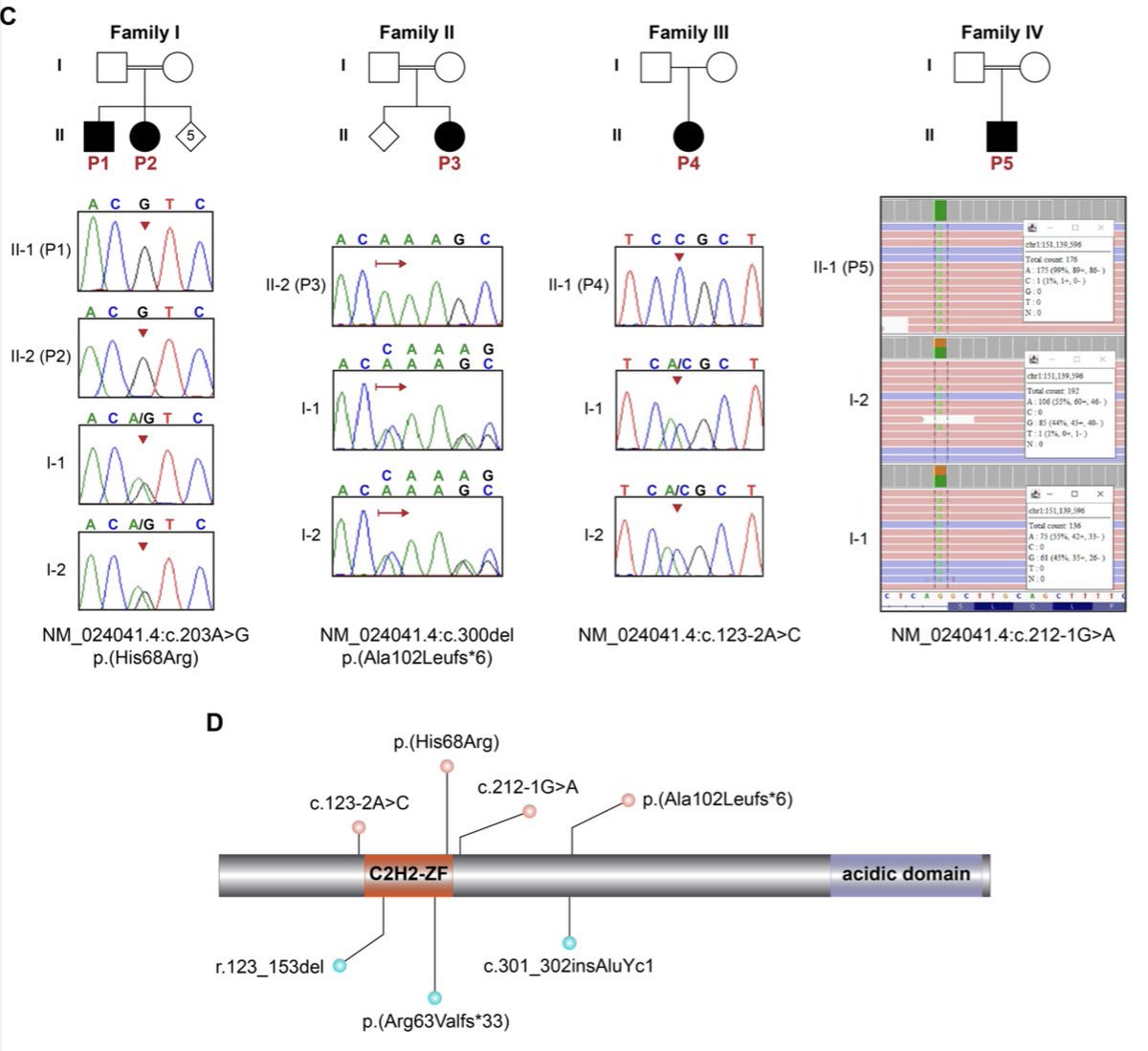
I’m very excited to share that our latest article “Expanding the phenotype associated with biallelic SCNM1 variants” is now online in Human Genomics! 🎉@HumanGenomics@IIBmCSICUAM@CSIC@CIBER_ISCIII
https://t.co/FkSmfBGp9x
Clinical evaluation of these new patients revealed novel features linked to SCNM1 deficiency, suggesting a more complex phenotype.
We also performed functional studies to confirm the pathogenicity of a missense variant, p.(His68Arg), identified in one of the patients.
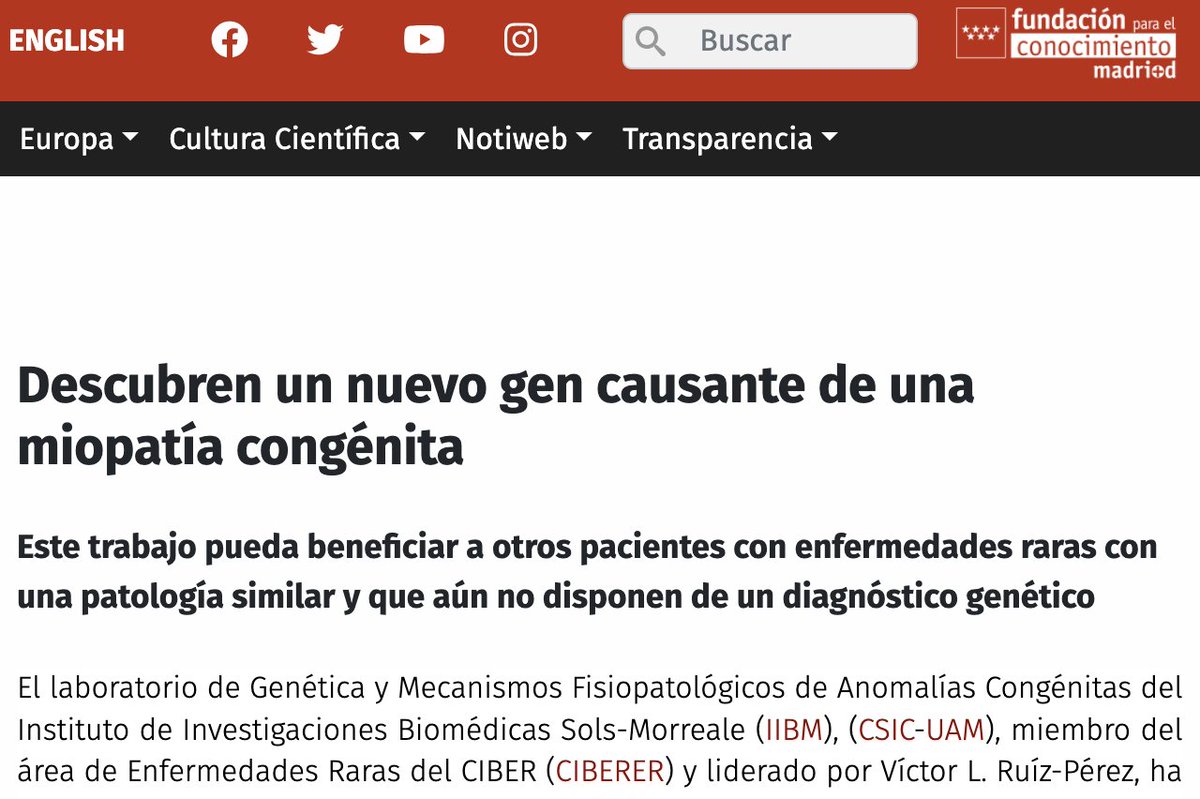
📢 El portal @madrimasd se ha hecho eco de la publicación realizada por @Asieritu del #IIBmCSICUAM 👏
🧠💡 Nos satisface comprobar cómo este trabajo continúa despertando atención y aportando valor en el ámbito de la investigación biomédica. 👇
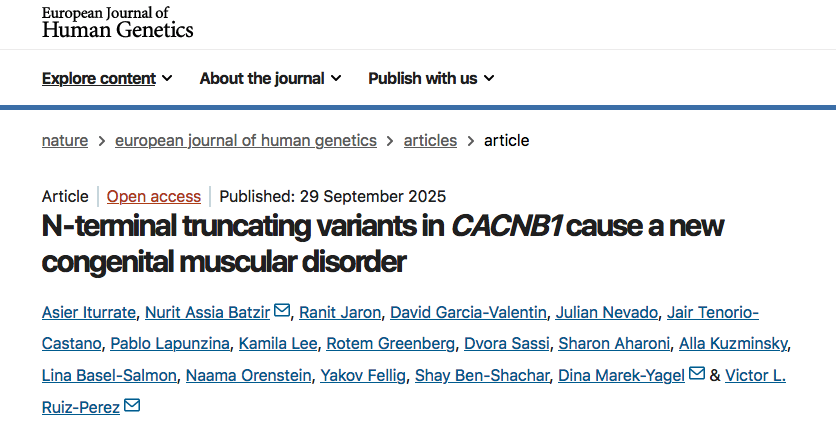
Just published in @ejhg_journal:
🧬CACNB1 N-terminal variants cause a novel congenital muscular disorder. Long-read transcriptomics in human myotubes provides detailed profiling of CACNB1 muscle isoforms.
Full paper:
https://t.co/Ov02bj7xMI
🌟 TODAY in the News from #IIBM
🔬A groundbreaking discovery by @Asieritu: the CACNB1 gene identified as a new cause of congenital myopathy.
🚀We move forward in the fight against rare diseases with a finding that can change lives.
👉 Check it out: https://t.co/2BqEka8xln
💡 HOY en las Noticias del #IIBM
✨Asier Iturrate y el grupo de Víctor Ruíz identifican que mutaciones en el gen CACNB1 causan una enfermedad muscular hereditaria.
Un avance que abre la puerta a nuevos diagnósticos en enfermedades raras.
👉 Echa un ojo: https://t.co/2BqEka8xln
We hope that this work will benefit other patients with a similar condition who do not yet have a genetic diagnosis.
We are very grateful to the patients participating in the study, as well as to our collaborators.
I am delighted to share that our article "N-terminal truncating variants in CACNB1 cause a new congenital muscular disorder" is now online in the European Journal of Human Genetics!! @ejhg_journal
https://t.co/6dk5nLi65p
@IIBmCSICUAM@CIBER_ISCIII@Raras_CSIC
Our work included clinical evaluation and genetic analysis of three affected individuals from two unrelated families, as well as functional studies carried out on a human myoblast cell line (long-read RNA sequencing, CRISPR-Cas9 base editing, etc.).
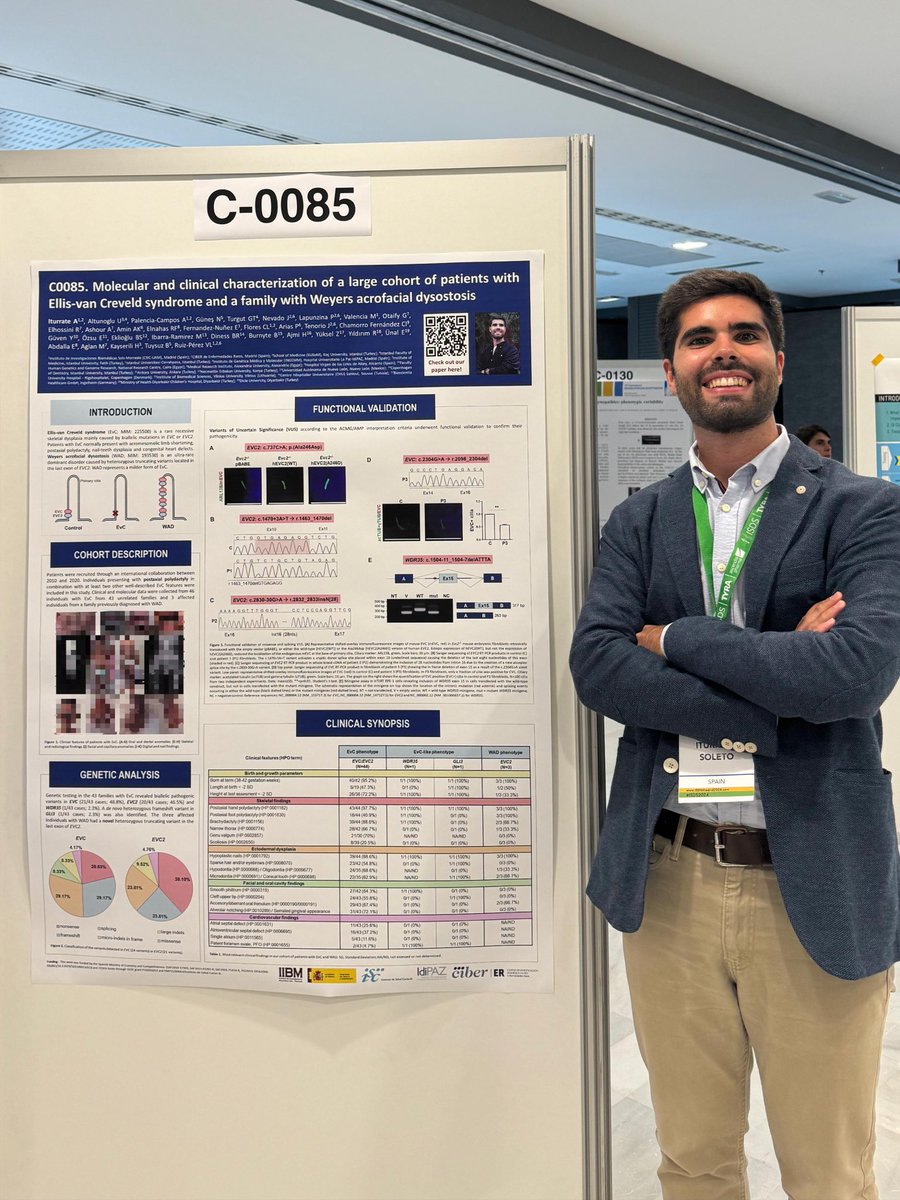
We're having a great time at the #ISDS2024 conference! You can find really interesting clinical and molecular data about Ellis-van Creveld syndrome and Weyers acrofacial dysostosis on poster C-0085 (🙄) @IIBmCSICUAM @CIBERER
📢 Hoy es el Día Mundial de la Osteogénesis Imperfecta #DiaMundialOI
🟡 El grupo de Genética y Mecanismos Fisiopatológicos de Anomalías Congénitas del #IIBMCSICUAM estudian la OI desde 2010
🎯 Mejorar el diagnóstico de esta patología
Es una enfermedad rara. Para saber más 👇👇