Write for us!
We're commissioning many more pieces at Works in Progress, and broadening formats too. https://t.co/dcIfNWRlib
I'll be commissioning & editing much more on science and global health. Here's a thread of some pieces I'm excited about –
New Essay: How to Build a Strep A Vaccine
Strep A is "one of the most important, neglected, and tractable pathogens to work on," says @JacobTref. Its disease burden rivals HIV/AIDS, yet annual funding is just $14M (vs. $1.5B for HIV).
How can we finally make a vaccine?
Newton took his stepfather's book and "began adding his own prolific...notes on mathematical problems."
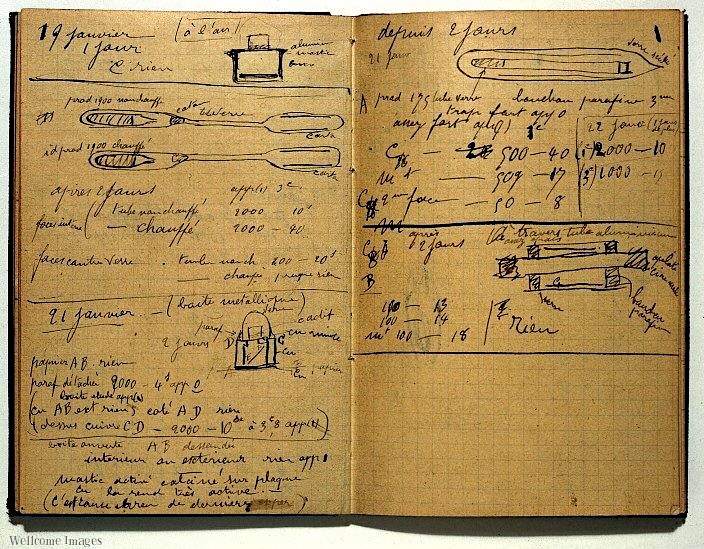
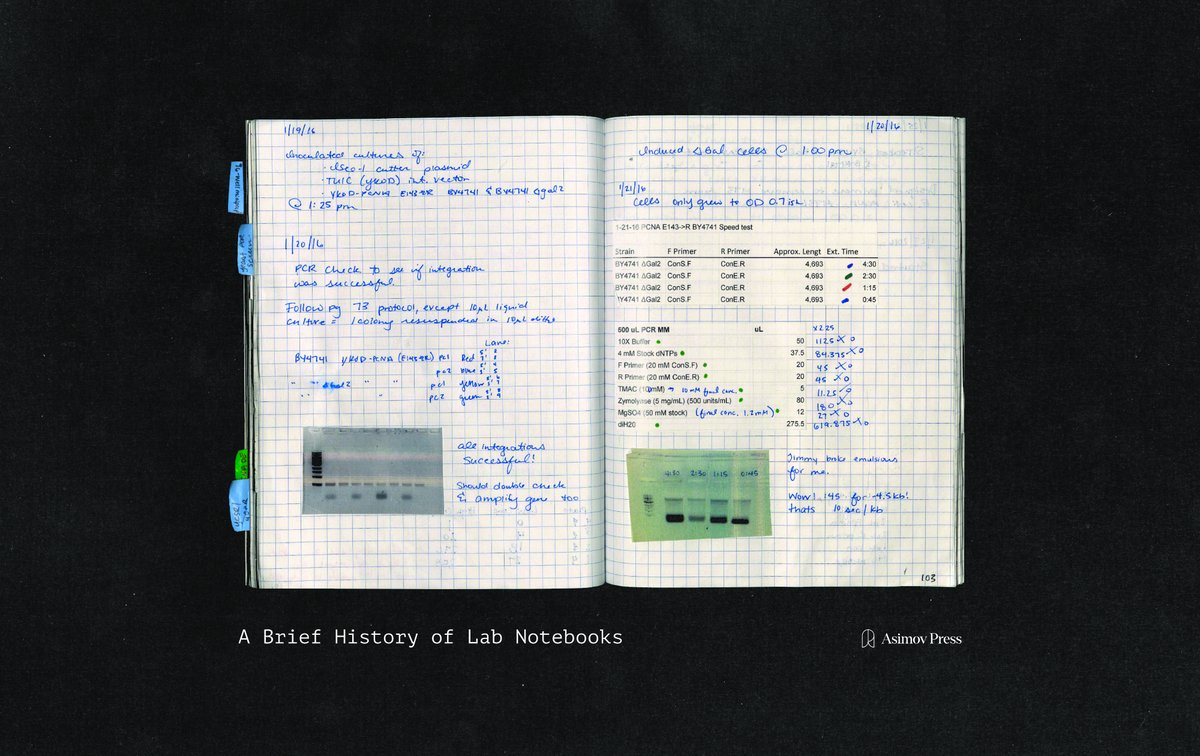
In the following centuries, from Faraday to Pavlov, lab notebooks evolved a lot. Excellent new piece by @ulkar_aghayeva.
Read: https://t.co/Xc0pJTiO3m
A Brief History of Lab Notebooks
Early lab notebooks were little more than pocket diaries, where "thinkers" collected quotes from classical Latin authors. Newton's first notebook was adapted from his stepfather's commonplace book (filled with "excerpted scriptural commentary")..
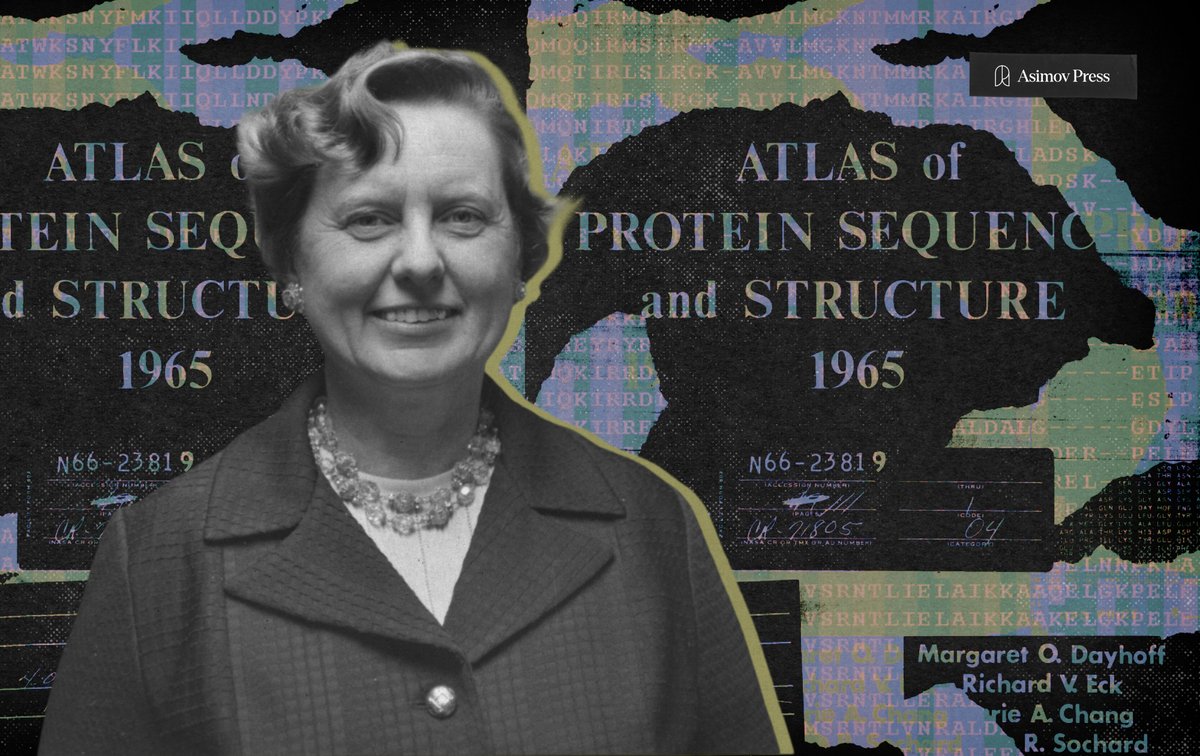
New essay: A Brief History of Bioinformatics Software
Although the word "bioinformatics" wasn't coined until 1970, the first computer program to analyze protein sequences, named COMPROTEIN, was published in 1962.
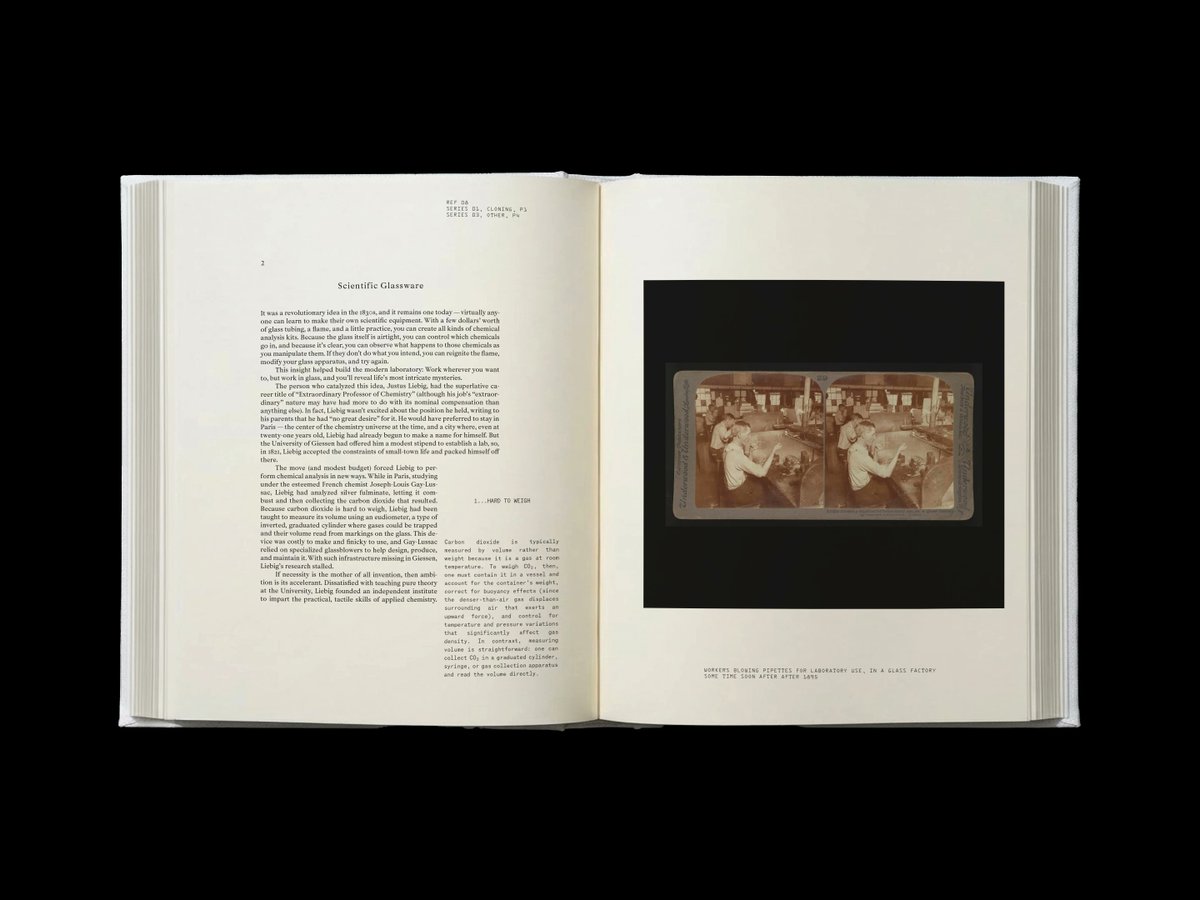
From our forthcoming book, "Making the Modern Laboratory."
We're pausing @AsimovPress for awhile.
Thanks to everyone who has taken this journey with us so far. We will plan to see you again in a few months :)
Read: https://t.co/Y98PtC1jmm
New essay in @AsimovPress on Designing AI for Disruptive Science!
AI is making science faster, but faster at what? Current models excel at prediction tasks within existing frameworks, but are not designed to do "paradigm-shifting" science. 🧵
Current AI models are not designed to do "paradigm-shifting" science. They excel mainly at prediction tasks within existing frameworks.
As AI becomes more central to scientific work, then, we risk falling into "hypernormal science," where we get ever better at prediction within current models, alongside a weakening capacity to ask new categories of questions.
Our latest essay, by @adjajadikerta, explains how we might break out of this and build visionary machines rather than merely predictive ones.
New Essay: CULTURE SHIFT
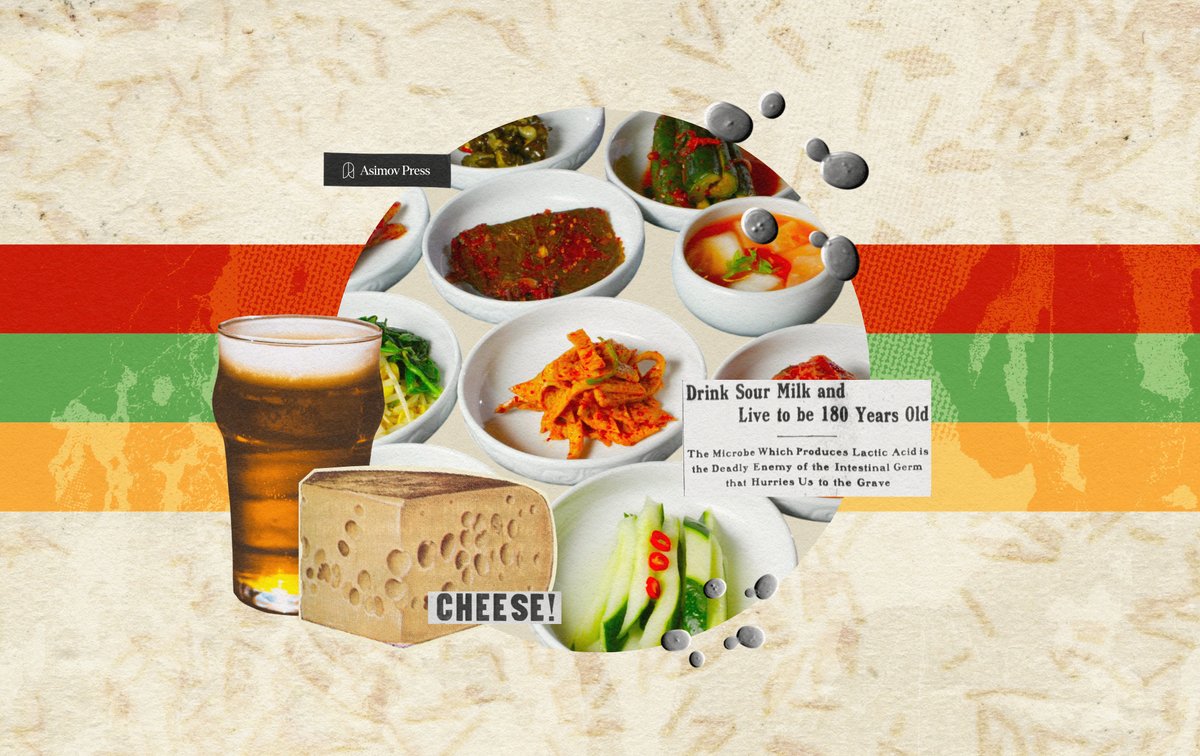
The human immune system is, in one sense, a detection mechanism. It has evolved, over millions of years, to scan the body for molecular signals that tell it whether to attack or stand down. Most of these signals come from pathogens, damaged cells, or the body’s own hormones. But in 2019, a lab in Germany published a finding that pointed to a much stranger source: one of the signals sensed by the immune system is found in sauerkraut.
When people eat sauerkraut, a molecule called phenyllactic acid (D-PLA) — found in fermented foods — enters their bloodstream and activates a receptor, known as HCA3, on immune cells, triggering an anti-inflammatory response. In addition to lactic acid, phenyllactic acid is one of many compounds produced by lactic acid bacteria during the fermentation of sauerkraut and related fermented foods. Prior to this study, other molecules had been found to bind HCA3, but D-PLA was a hundredfold more potent than any of them.
This discovery advances our understanding of how fermented foods can reduce inflammation, but more striking is what it suggests about hominid physiology. Although HCA3 is part of a larger family of receptors broadly conserved across eukaryotes, HCA3 is only present in humans and other great apes like chimpanzees and gorillas — and not even in other mammals. It is a recent addition to the genome, appearing only a few million years ago. Its existence seems to suggest that our immune system evolved to recognize the microbial metabolites from fermented foods.
We tend to think of fermented foods as something humans invented and then chose to eat. But, increasingly, scientific evidence suggests the causality runs the other way: Fermented foods appear to have helped shape human biology itself, and our bodies may have been built, in part, to expect them.
The case for this runs from changes in hominid gut anatomy millions of years ago to the HCA3 receptor, to a growing body of research linking fermented food consumption to immune function and gut health. And it raises an uncomfortable question about what happened when the Western food system, in the name of safety and efficiency, quietly removed these foods from our diets in the nineteenth and twentieth centuries.
Read the full essay: https://t.co/udEQu3YkUx
Have a photo from your research you'd like to see in print?
We’re collecting images for Making the Modern Lab, an upcoming book from Asimov Press about the tools, spaces, and experiments that define modern biology.
If your image is selected, we’ll pay $30 per photo and include a photo credit in the book.
Microscopy images, lab benches, instruments, experimental setups, and lab environments are all welcome. Phone photos are fine —we’re most interested in capturing the real look of modern research — but we are seeking well captured images with good composition. People are allowed in the photos, if the image clearly depicts the topic.
While this call is open, we have a list of images we are specifically searching for:
CHO cell microscope image
Liquid Handling Platforms (full view of instruments, action shots of liquid transfers)
A multiwell plate being fed into a plate reader.
Zebrafish (adult fish in tanks, microscope embryo images)
Biochemical buffers (labeled bottles lined up)
Bioreactors (any size)
C. elegans (full body or fluorescent microscopy. Ideal if neurobio related images)
Immunohistochemistry microscopy images
Electroporator setup
Liquid Chromatography setups (HPLC, HPLC-MS, or FPLC)
Mammalian tissue culture media
S. cerevisiae microscope image (ideal if you can get an image depicting cells in different parts of the life cycle.)
BONUS: Images of historical lab equipment in your lab.
Submit here: https://t.co/UHR2jzK2lv
We published a fun little essay today about why lab coats became white :)
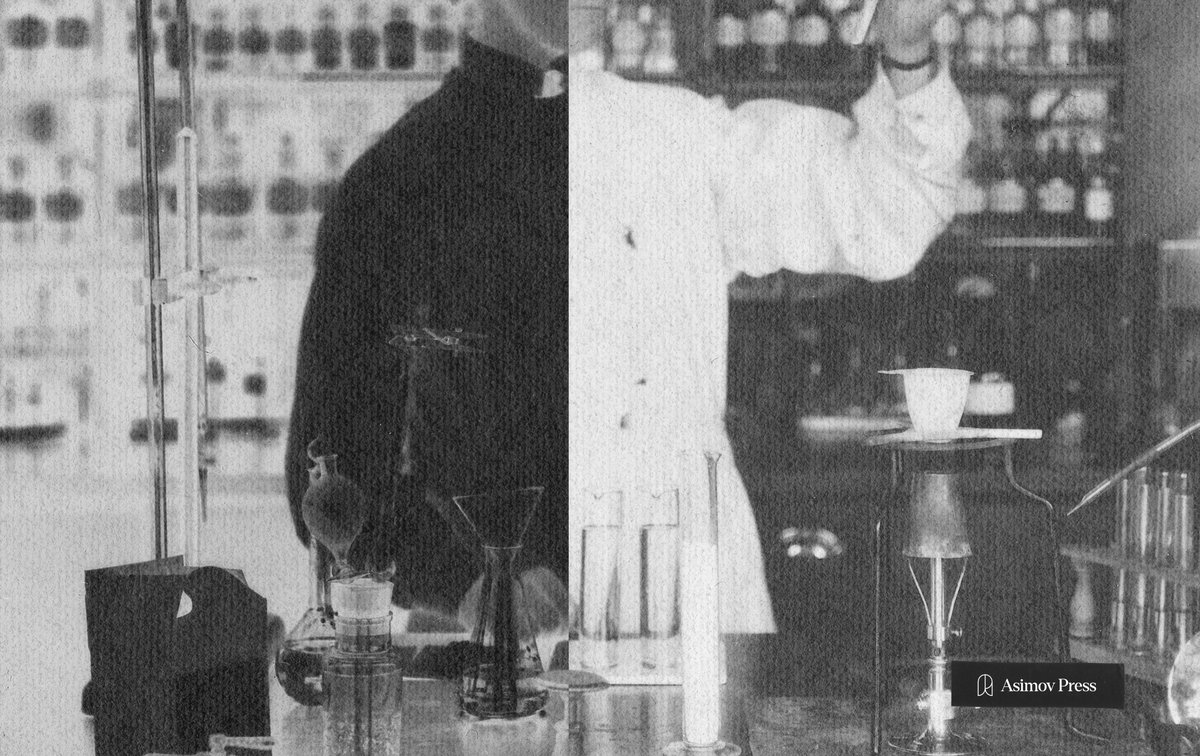
In 1800s England, so-called “gentlemen of science” dressed in dark frock coats. In his 1885 portrait, Louis Pasteur stood in his laboratory, rabies sample in hand, in a black frock coat, waistcoat, and black cravat. Charles Darwin, whose personal home was his “laboratory,” sported a similar style. John Snow, the epidemiologist best known for tracing the source of London’s cholera epidemic, inspected the Broad Street pump while dressed like a banker, in a multipiece suit and tie.
White frocks started to be adopted during the hygienist movement.
By the 1880s, Robert Lawson Tait, a gynecological surgeon, donned a white apron. Tait used soap and water on patient skin, boiled instruments, applied freshly “laundried” towels around wounds, and had a regimented hand-washing ritual before operating. His surgical attire was a visual signal meant to attract paying clientele.
These styles eventually moved into the research laboratories, too. Lots more in the essay!
Our next book is coming in a few months. It's a history of the research laboratory, and how it came to be.
And we are looking for photos to include!
We have a list of stuff we're looking for, but are open to other images, too. Please submit! We'll pay + credit you, of course.
Form here: https://t.co/R70aMjRzPi
New Essay: The Quest for Oral GLP-1s
The majority of patients inject weight-loss drugs, rather than take them orally. While oral formulations are beginning to enter the market, they are less effective and more expensive to manufacture. In clinical trials, Ozempic (2 mg weekly injection) delivered a 15-20 percent body weight reduction over 68 weeks. Rybelsus at the approved 14 mg daily dose (oral) achieved just 4-5 percent.
Why is it so hard to make oral versions of peptide-based drugs? In part, it's because the body destroys them.
For a GLP-1 molecule taken by mouth to reach its target, it must first pass through the stomach, where hydrochloric acid and peptidase enzymes cleave these amino acid bonds. Most ingested peptides are simply broken down into their constituent amino acids and absorbed as nutrition, indistinguishable from the protein in food.
Even if GLP-1 survives the stomach, it faces another threat in the bloodstream: a proteolytic enzyme, dipeptidyl peptidase-4 (DPP-4), binds to and destroys GLP-1 molecules in the blood in minutes.
Chemists have solved this second problem by swapping the alanine at position 8 in GLP-1 for alpha-aminoisobutyric acid (Aib), a modified amino acid that DPP-4 cannot recognize or cleave. Drug chemists also fused a fatty acid chain to the GLP-1 peptide, coaxing the drug to bind to human serum albumin, a large transport protein abundant in the blood.
The combined effect of these modifications increase the drug's half-life from minutes to approximately 168 hours.
To tackle the stomach problem, Rybelsus works by co-formulating semaglutide with SNAC, a small synthetic molecule that functions as an absorption enhancer. SNAC raises the pH of the immediate environment around the drug, protecting the peptide from pepsin degradation. But one pharmacokinetic study showed a modest bioavailability of only 0.8 percent for oral semaglutide — meaning massive doses are required.
Our latest essay explores whether peptides, expressed inside edible algae, could solve these problems. If the drug could be swallowed inside intact cells, the massive cost of purification to make these weight-loss drugs would disappear. Studies have also shown that over 70 percent of the expressed proteins in spirulina (a type of cyanobacteria) remained intact after two hours of incubation under simulated gastric conditions that would fully degrade the same protein in a purified form within minutes. The cell wall acts as a natural enteric capsule, shielding the GLP-1 molecules from pepsin and the acid bath of the stomach.
Read our latest essay: https://t.co/5qDadrcPOr
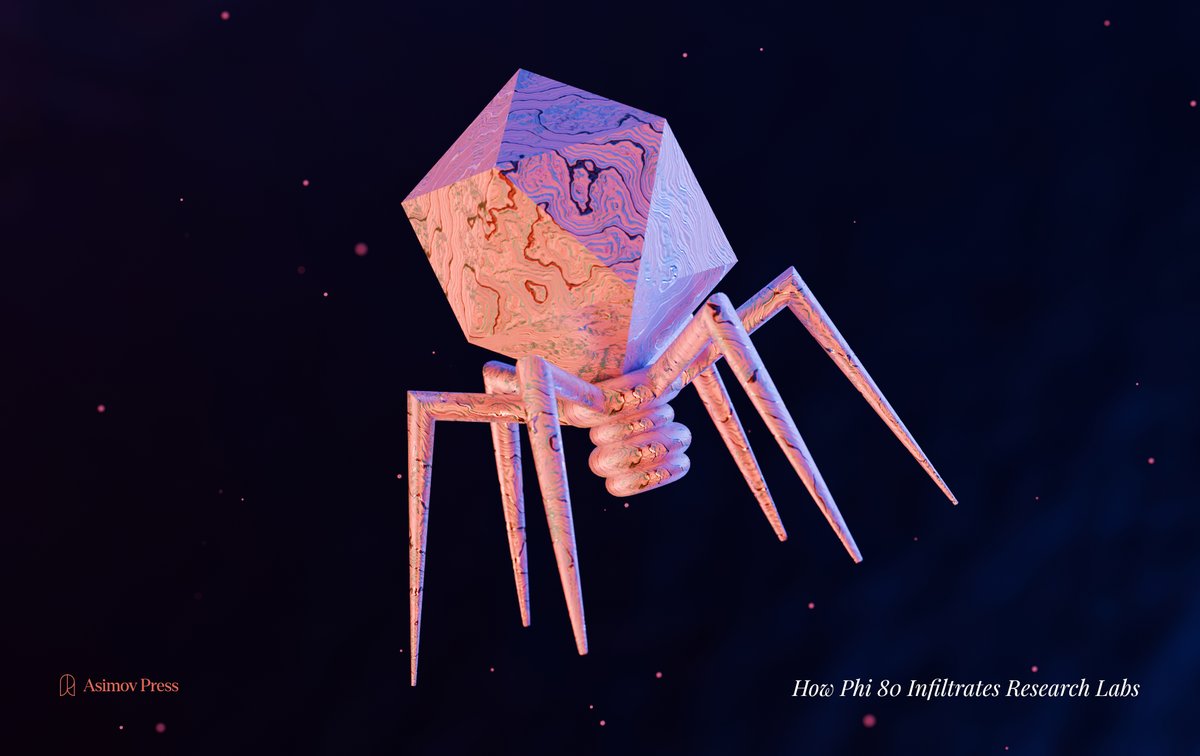
There is a little-known bacteriophage, called Φ80, that has quietly been infilitrating microbiology labs.
It is difficult to detect because it replicates when nobody is watching. Hidden contaminations of Φ80 have led to paper retractions. In a 2017 paper, for example, the authors wrote:
"...beyond the confusion created by our erroneous interpretation of results obtained with Φ80-infected strains, we are worried that we have sent these strains to many research groups.”
This is the story of Φ80, how it sneaks into labs, and what we can do about it. By Malmesbury.
A few years ago, designing an antibody on the computer was extremely difficult.
Today, there are several open-source tools which allow anyone to design antibodies from home.
Out today: A step-by-step guide to antibody design. By @btnaughton.